
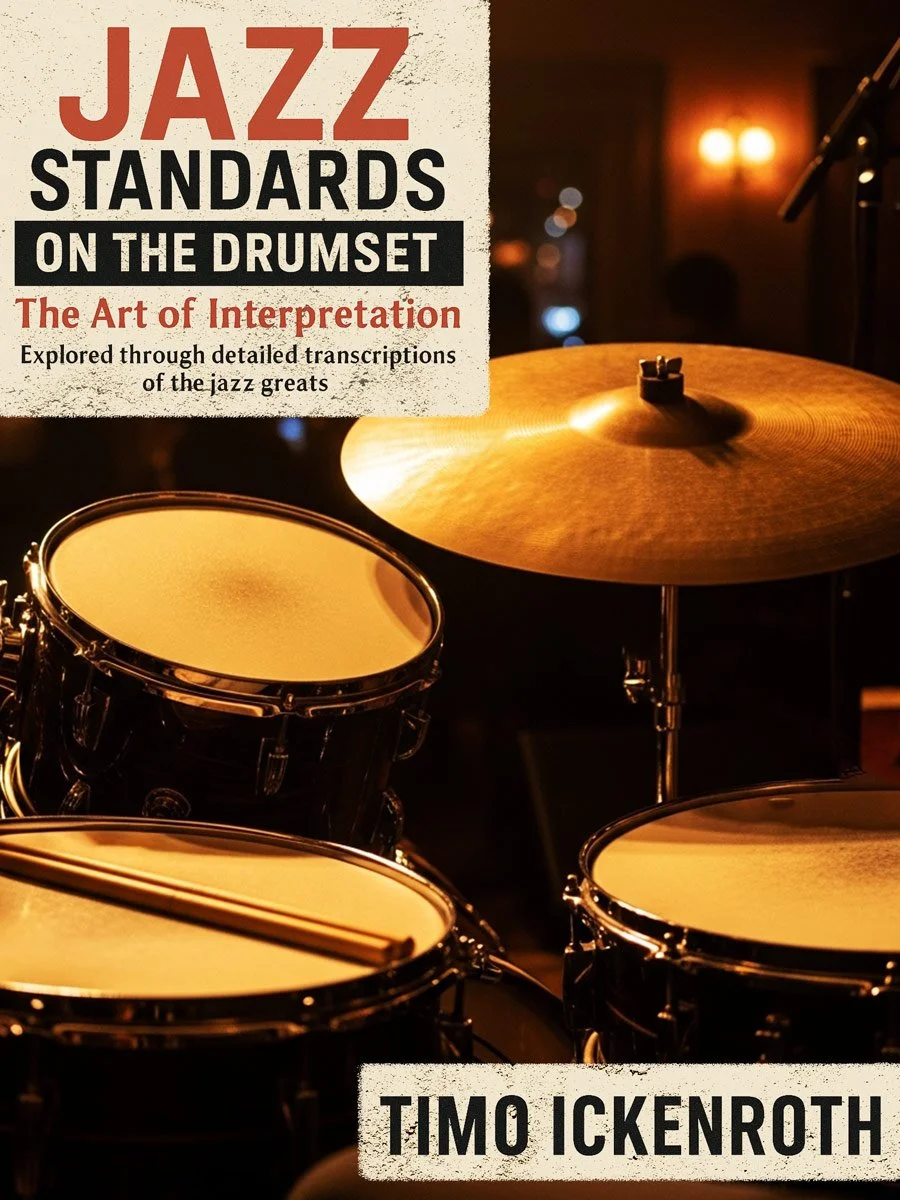
Editor’s note - This subject is close to my heart. Even if you do not know how to write drum music the info in this thorough article will help you to listen to and learn songs. I have transcribed almost EVERY SONG that I played with every band that I played with since I was thirty. It helped me memorize songs. And it helped me to not have to memorize songs. I used the charts in a three ring binder as a song list. I might not even look at the chart other then the title. Even the simple standard songs I knew by heart I would write at least the main groove. I would write the name of the drummer on the recording if known. I kept these charts in three ring binders in a large filing cabinet. I could use those charts with different bands. I could hand the chart books to my subs. I just recently let all those charts go when I moved to a new house and retired. It was like looking at my career of the past fifty five years on paper. Songs are our stock in trade. That I could transcribe led to opportunities that I might not have had otherwise. Timo’s article and book hits the transcribing nail on the head. This is a deep dive into one of the skills of drumming. The techniques he describes here can apply to any type of music, not just jazz. -George Lawrence
Transcribing – Listening Beyond the Notes: A Call for Analytical Listening
Training your ear – Learning to listen consciously, not just hear
Every transcription begins with active, concentrated, and very patient listening. You start by identifying rhythm, notes, articulation, dynamics, and phrasing.
Transcribing primarily develops:
Aural accuracy – The ability to identify rhythmic placements precisely.
Rhythmic awareness – A keen sense of time, rhythm, and pulse.
Sound perception – Recognizing touch, mood, and timbre.
It's one thing to just read about “playing behind the beat.” It's quite another to actively listen to Tony Williams, for example, and then realize that his snare placement changes the direction of a phrase.
Understanding the music – structure, context, and intention
The process of transcription naturally leads to musical analysis. Once the notes are on paper, you begin to recognize structures:
How sections are organized.
How they interact.
How musical tension and release are built through texture and space.
You learn to hear and understand phrasing, balance, and ensemble communication—the invisible architecture behind a performance.
That's why transcription is not just for drummers, of course. It's for all musicians. You begin to recognize the logic behind musical decisions, the “why” behind the “what.”
From copying to creating – making it your own
The goal of transcription is not imitation. It is transformation.
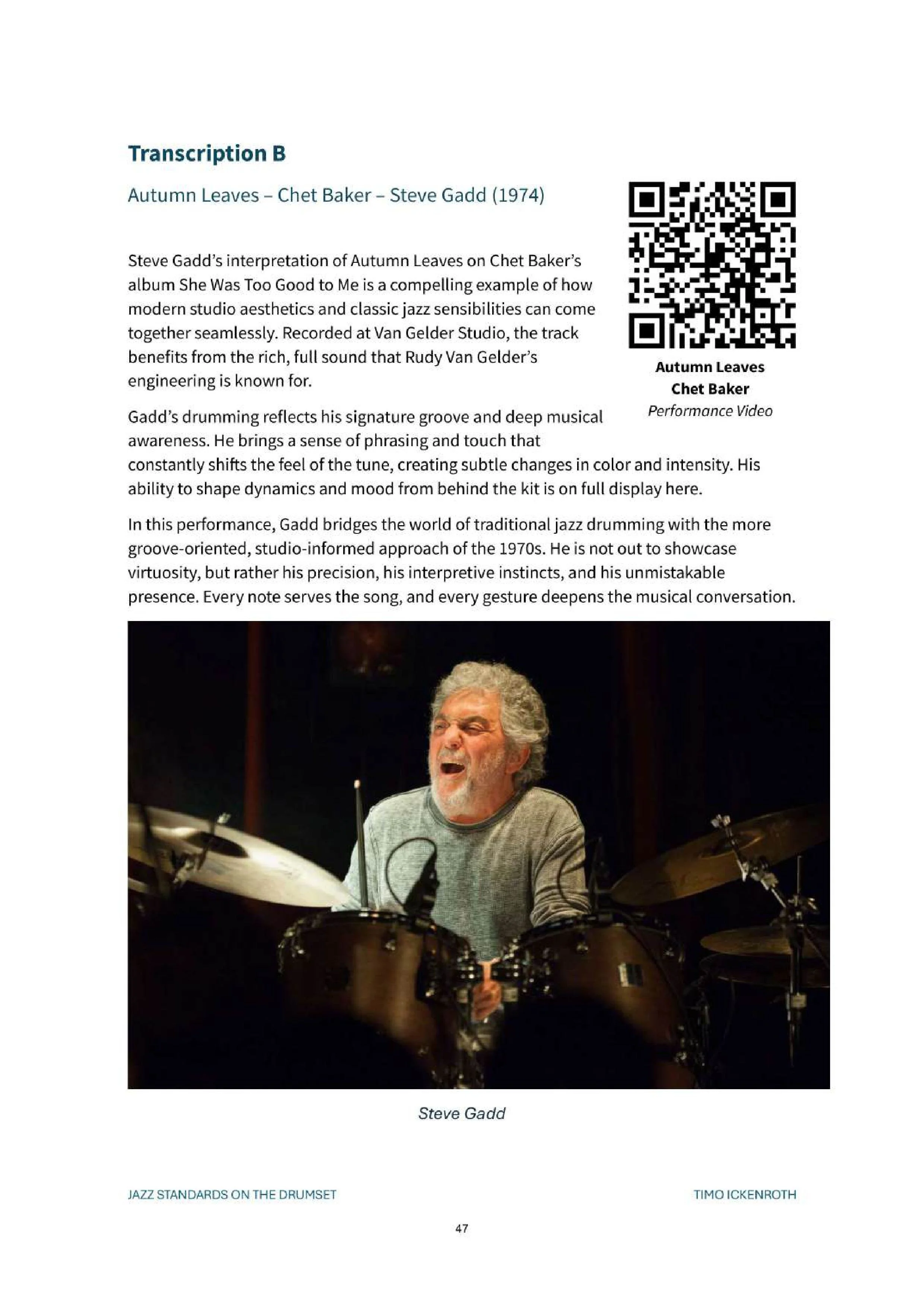
When you study how Max Roach phrases or how Steve Gadd forms a groove, you absorb part of their language, but you don't become them. You learn their logic, their vocabulary, and eventually develop your own.
If you take a bar from a transcription and change it, you change the sound source, the orchestration, or even the subdivision. You will find that each variation teaches you something new about touch, space, and storytelling.
Transcribing provides access to a living tradition. It connects musicians across generations and helps you recognize where you fit in this continuum.
Playing what you transcribe – turning notes into music
One of the most important but often overlooked steps in the transcription process is playing what you have written down.
Writing captures your understanding on paper but playing transforms that understanding into a physical experience.
When you sit down at your instrument and reproduce what you hear, you internalize details and nuances that sheet music alone cannot convey: micro-timing, phrasing, touch, and feel.
Playing a transcription allows you to align what you have learned with what you hear. The music moves from your mind to your body.
Then you really begin to “speak” the language instead of just reading it.
However, playing a finished transcription and creating your own are two completely different experiences.
When you work with someone else's transcription, most of the analytical process, the actual detective work, has already been done. You interpret someone else's conclusions instead of discovering them yourself.
The process of transcribing on your own, wrestling with time, layers of sound, and phrasing, is where the most profound learning takes place. It forces you to question (including yourself), compare, and decide what is happening musically. This process develops not only your ear, but also your judgment, your ability to interpret, and your own musical storytelling skills.
Nevertheless, ready-made (well-made) transcriptions are invaluable, especially for less experienced musicians. They provide a foundation for understanding phrasing, vocabulary, and stylistic nuances, offering a safe entry point into the process. By playing them, beginners can internalize the authentic language before attempting to discover and decipher it for themselves.
My invitation, no, my challenge is therefore: Try transcribing something yourself!
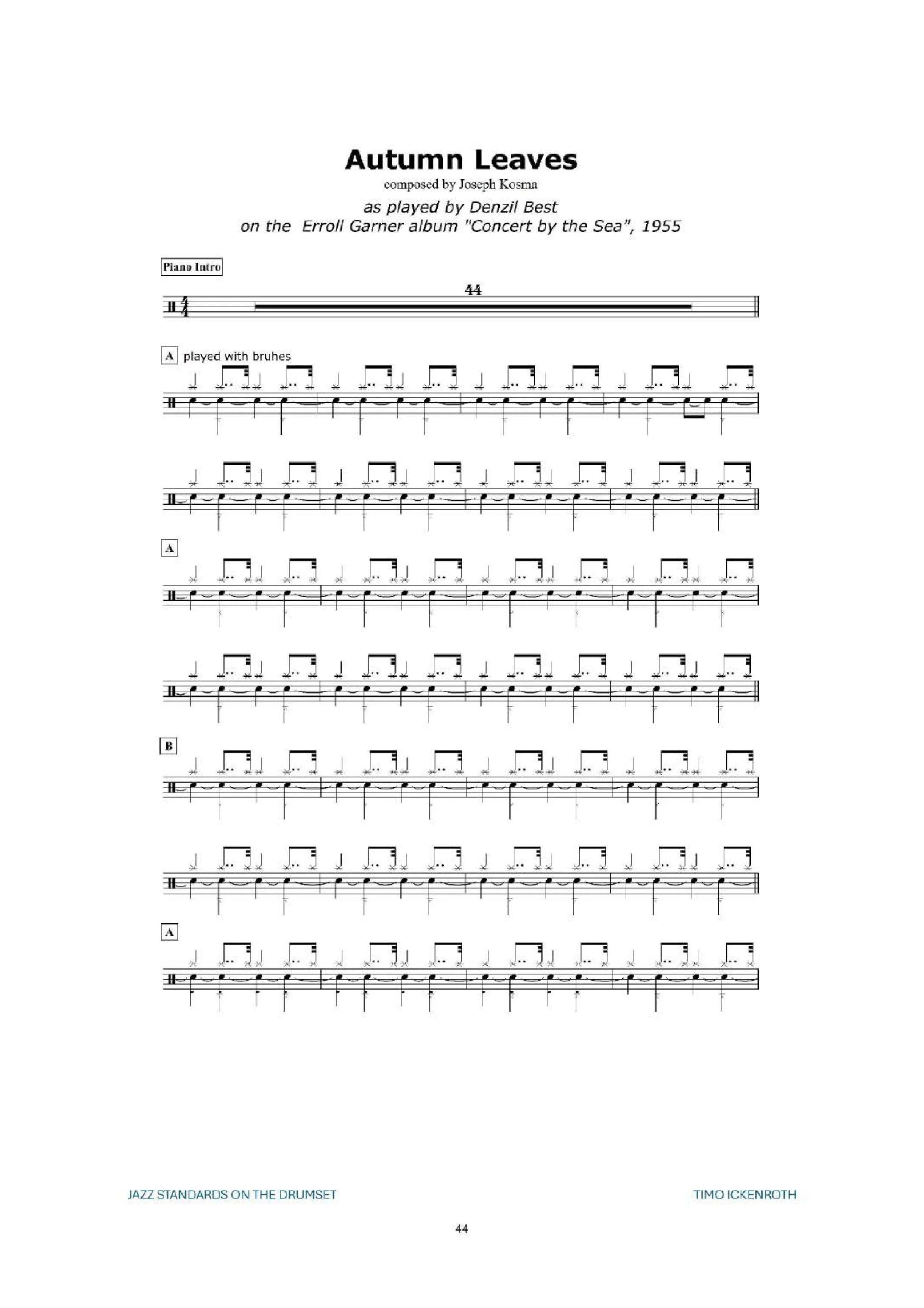
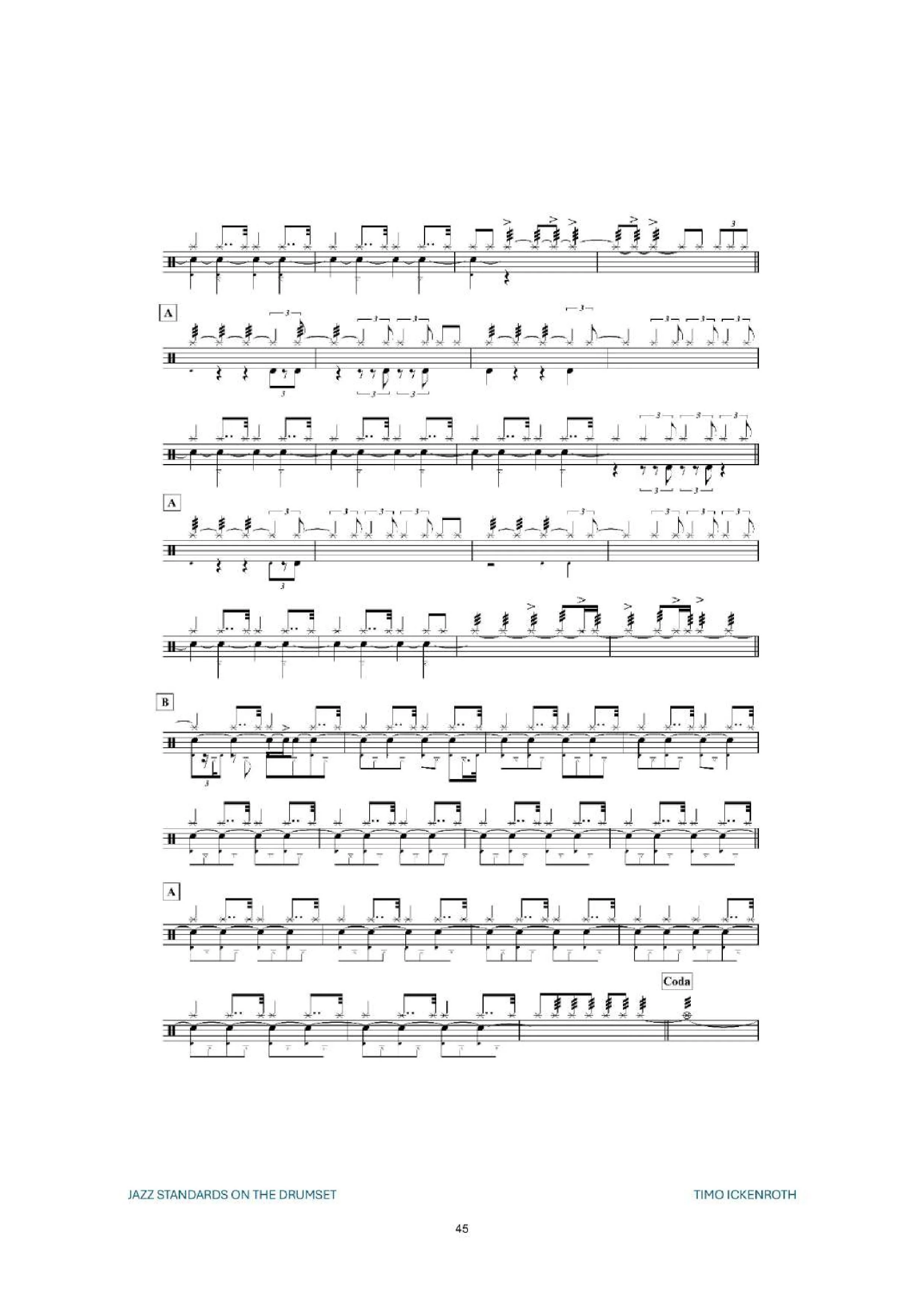
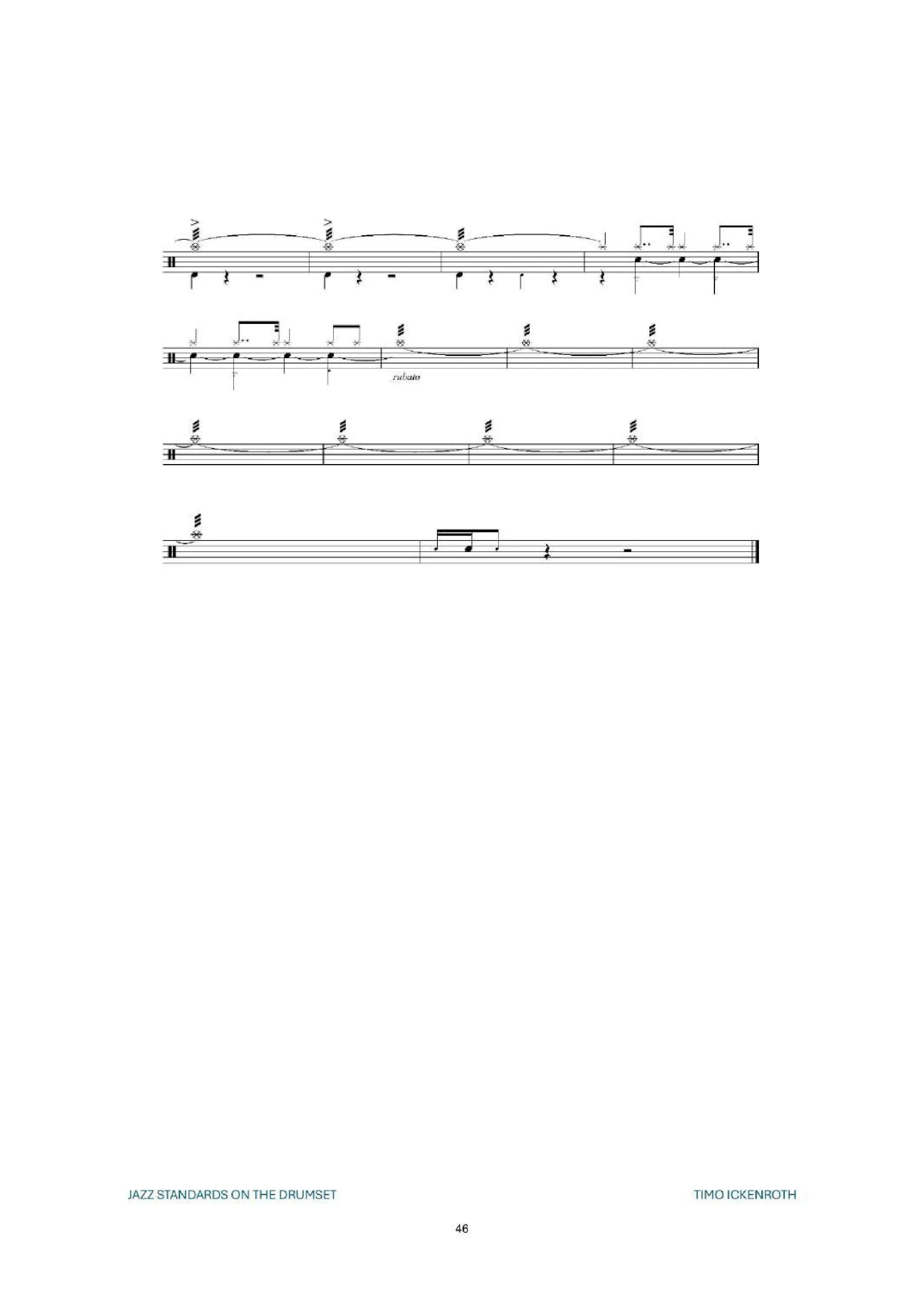
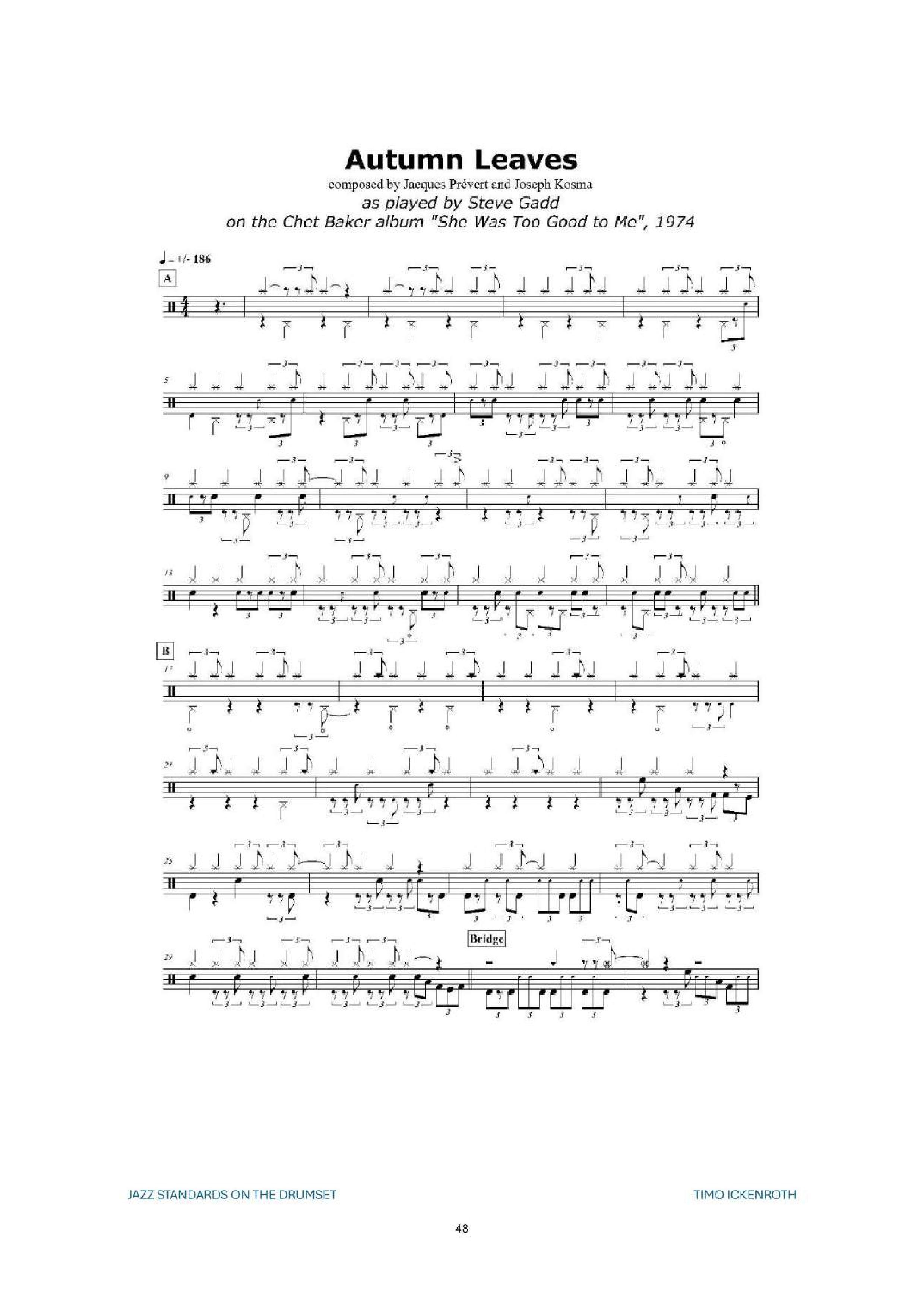
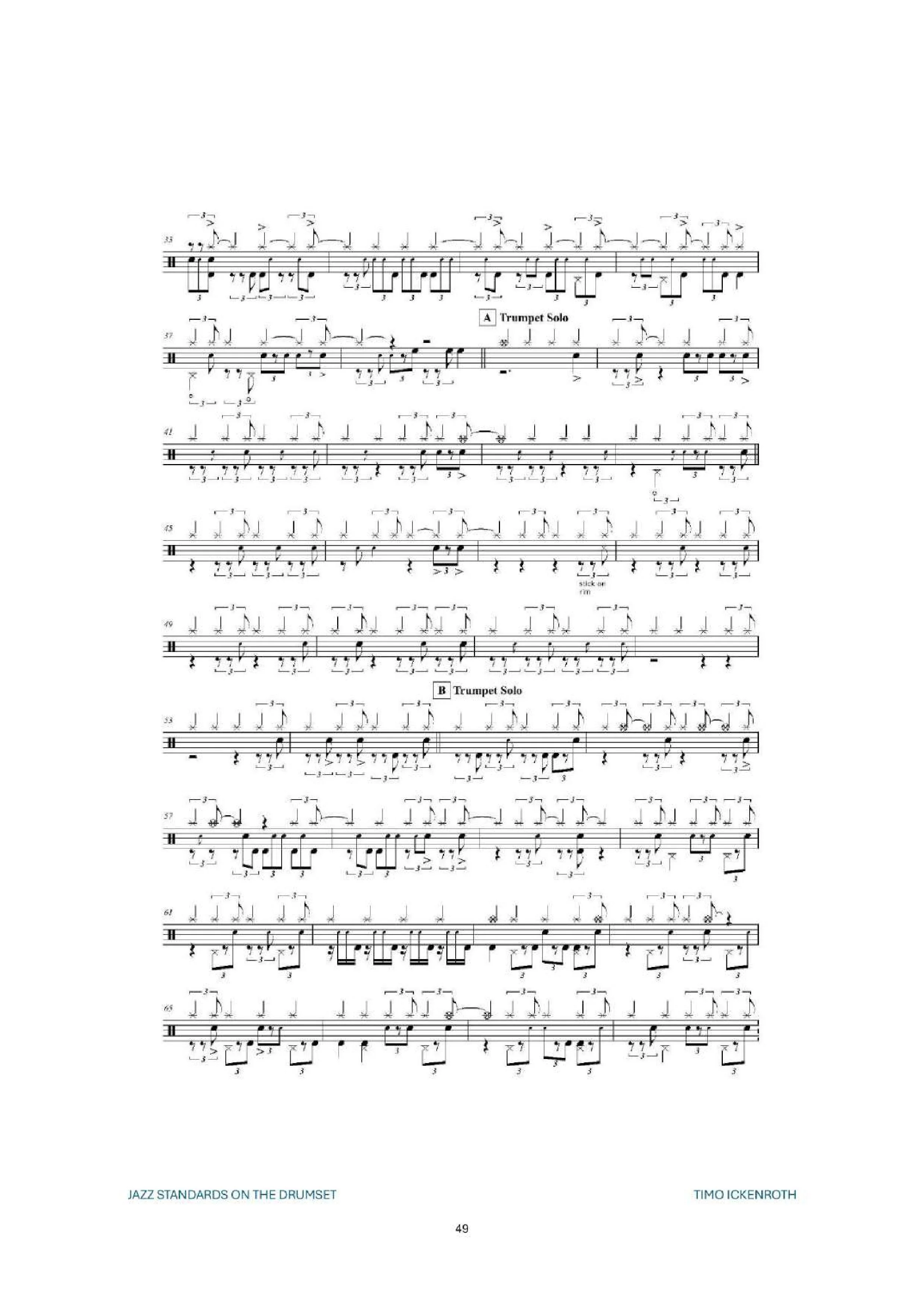
Listen carefully, write down what you hear, and then compare it with other transcriptions of the same piece. If you want to immerse yourself in the world of jazz, you can find many transcriptions in my book Jazz Standards on the Drumset (Hudson Music) as well as on my YouTube channel “Jazz Drummer's Corner” and available for download on my Patreon page.
And please remember: my transcriptions are by no means perfect. They are my interpretation of what I hear; they reflect my listening experience. Someone else may hear something different, and that's what makes it so exciting. Every transcription is also an interpretation!
The limits of notation – What cannot be captured in notes
As instructive as a transcription is, it also has its limits. Most of these are due to the Western notation system itself.
Traditional musical notation was developed primarily to represent pitch and rhythm within a mathematically defined grid. But music often exists between these lines.
Musical notation cannot truly describe how a note sounds, i.e., its texture, warmth, roughness, or brilliance. It cannot capture the timbre that makes a performance and a musician unique. Articulation and phrasing are often reduced to general markings such as slurs, staccato dots, or textual notes that only approximate the expressive nuances of the original.
In many styles, especially jazz, blues, and Latin American music, phrasing often falls between conventional divisions. Standard notation can only approximate these rhythmic variations, which naturally reduces authenticity.
Even aspects such as intensity and micro timing, the subtle pulling back and forward of notes that define the feel, are impossible to notate precisely. The truth often lies in tiny deviations from the metronomic grid, and forcing these into rigid notation can rob the performance of its organic flow.
Free sections such as rubato passages or performances that are determined more by elasticity than tempo are particularly difficult to capture accurately. At best, musical notation can suggest the rhythmic contour, not the actual tempo or emotional weighting.
There are also practical limitations to transcription. Dense arrangements, poor audio quality, over compression, or overlapping frequencies make it nearly impossible to isolate and hear every detail. Even the most experienced transcribers are ultimately interpreters of what they hear. Two musicians can produce two subtly different versions of the same passage, both valid, both filtered through personal perception and legitimate.
I therefore make no claim that my transcriptions are perfect or definitive. However, they are honest attempts to translate sound into musical notation, shaped by my own listening habits and (unfortunately) my personal limitations.
Transcription will always remain a form of interpretation, a bridge between hearing and understanding.
Ultimately, one could say that every transcription is also a personal compromise. It is an invaluable analytical and educational tool, but it can never fully represent the living, breathing essence of a performance. Notation may tell us what was played, but not how it felt.
What I often say to my students:
“Notes are just dead dots on a sheet of paper; it's up to us to turn them into music!”
Educational value – Why every student should transcribe
For teachers, transcription is a real gold mine. Teachers can adapt passages to the level of their students, simplify them, or rearrange them. They can create études, warm-ups, or exercises based on real musical situations, not just abstract patterns.
And perhaps most importantly, transcription preserves musical details for future generations. Every nuance that might be lost in oral tradition, such as dynamics, timing, and articulation, becomes visible, analysable, and playable.
Conclusion – Hearing beyond the notes
When you transcribe, you're not just documenting music, you're internalizing it.
You learn to hear intentions, emotions, and history. It is the bridge between theory and practice, between knowledge and intuition.
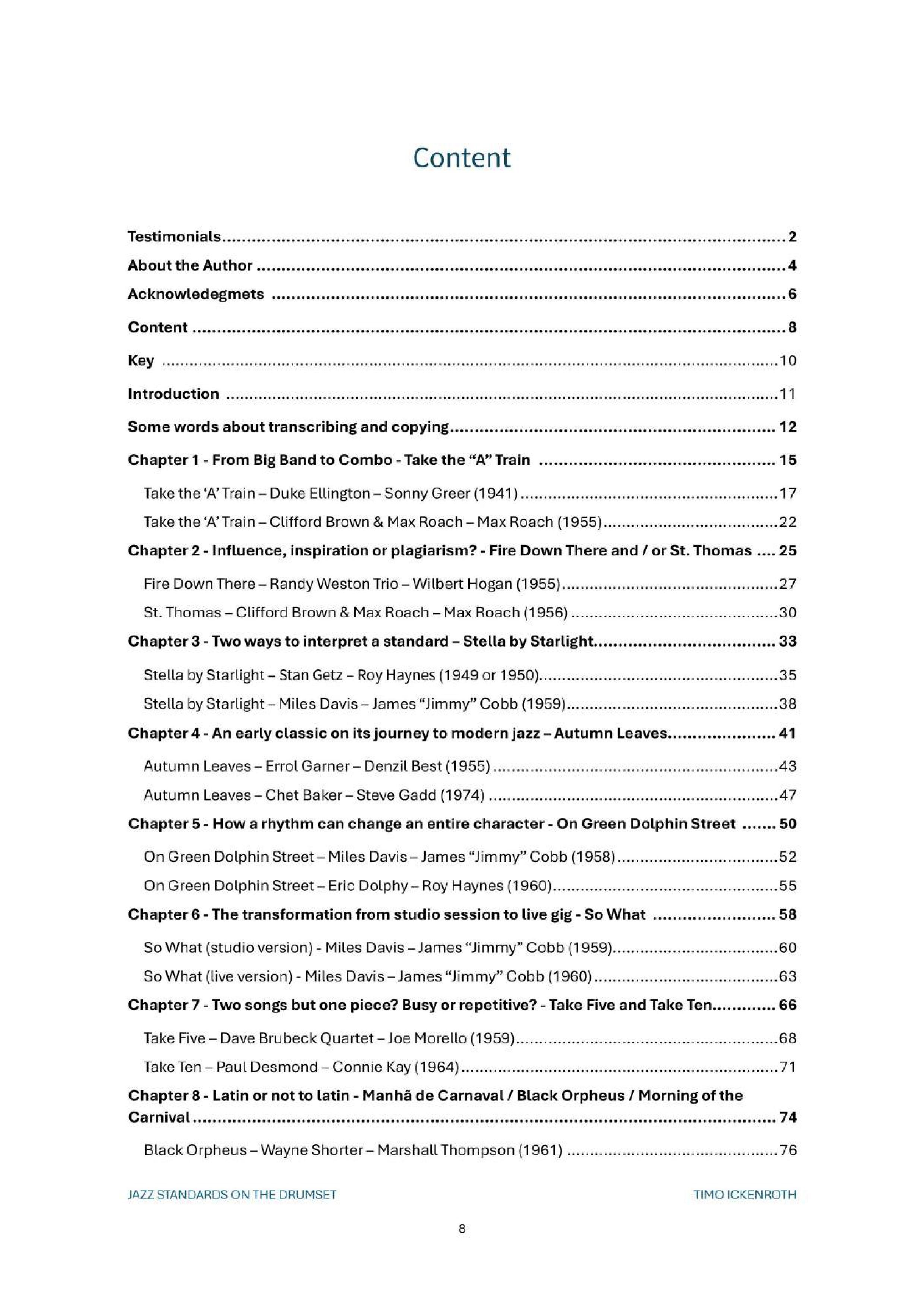
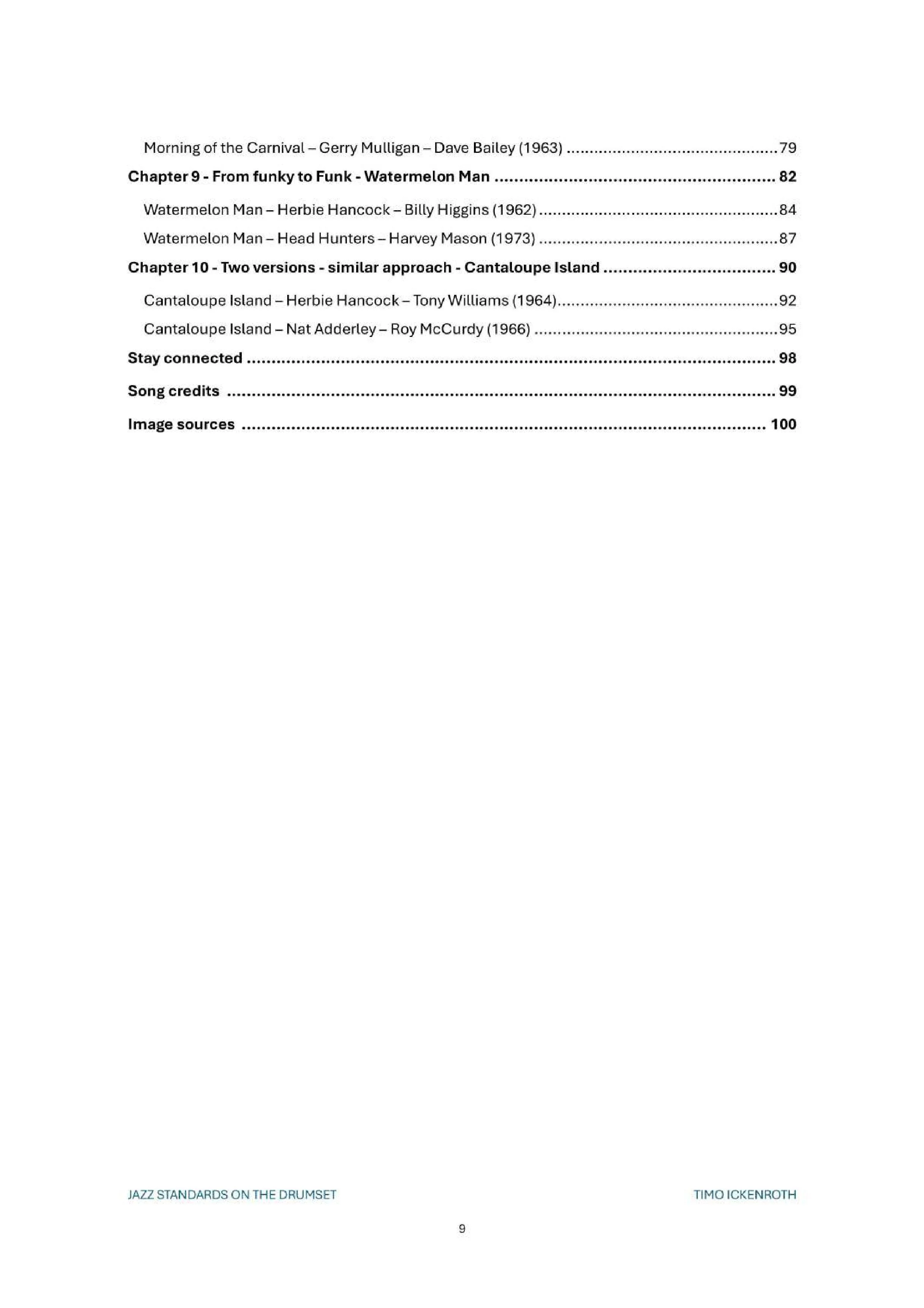
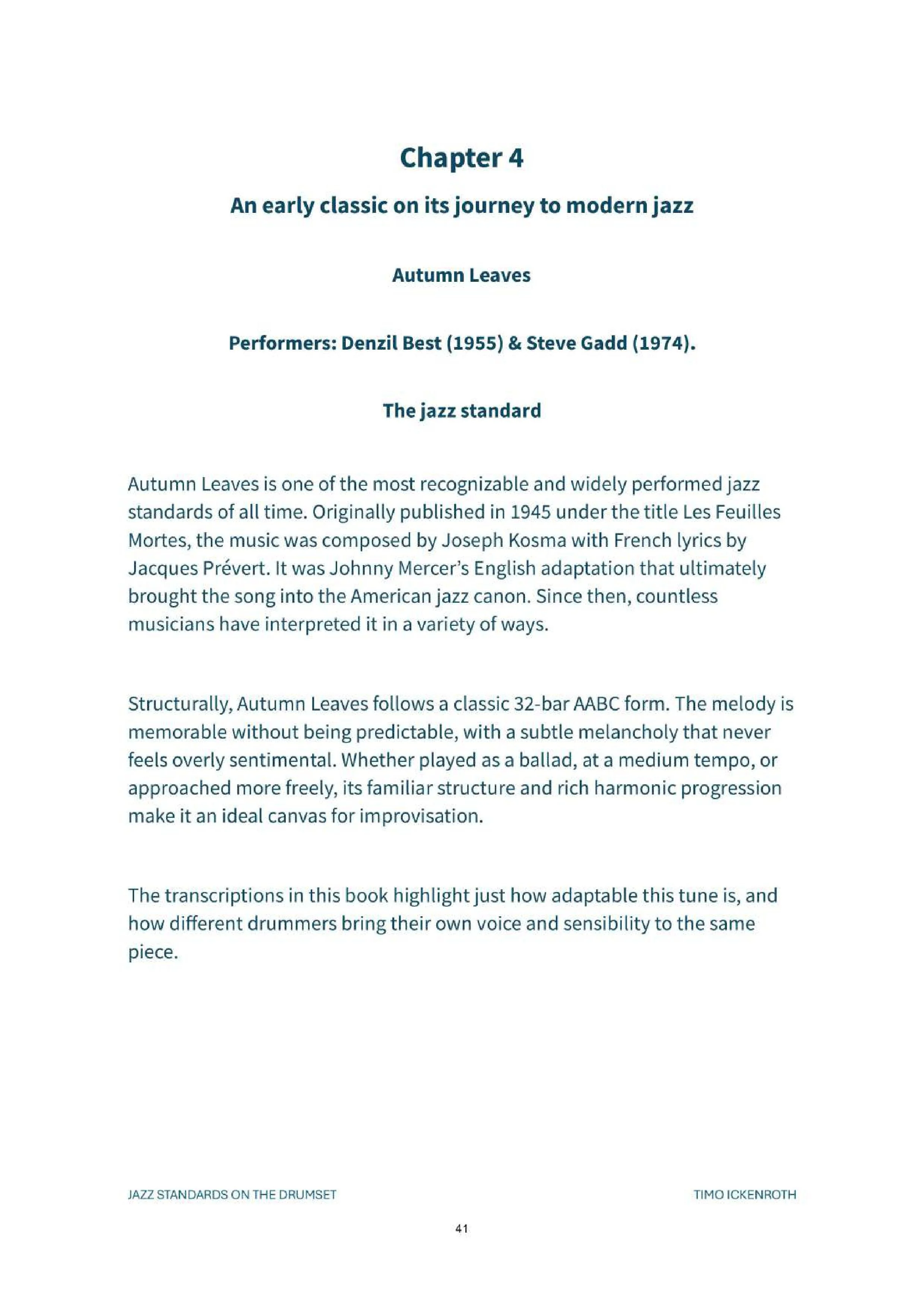
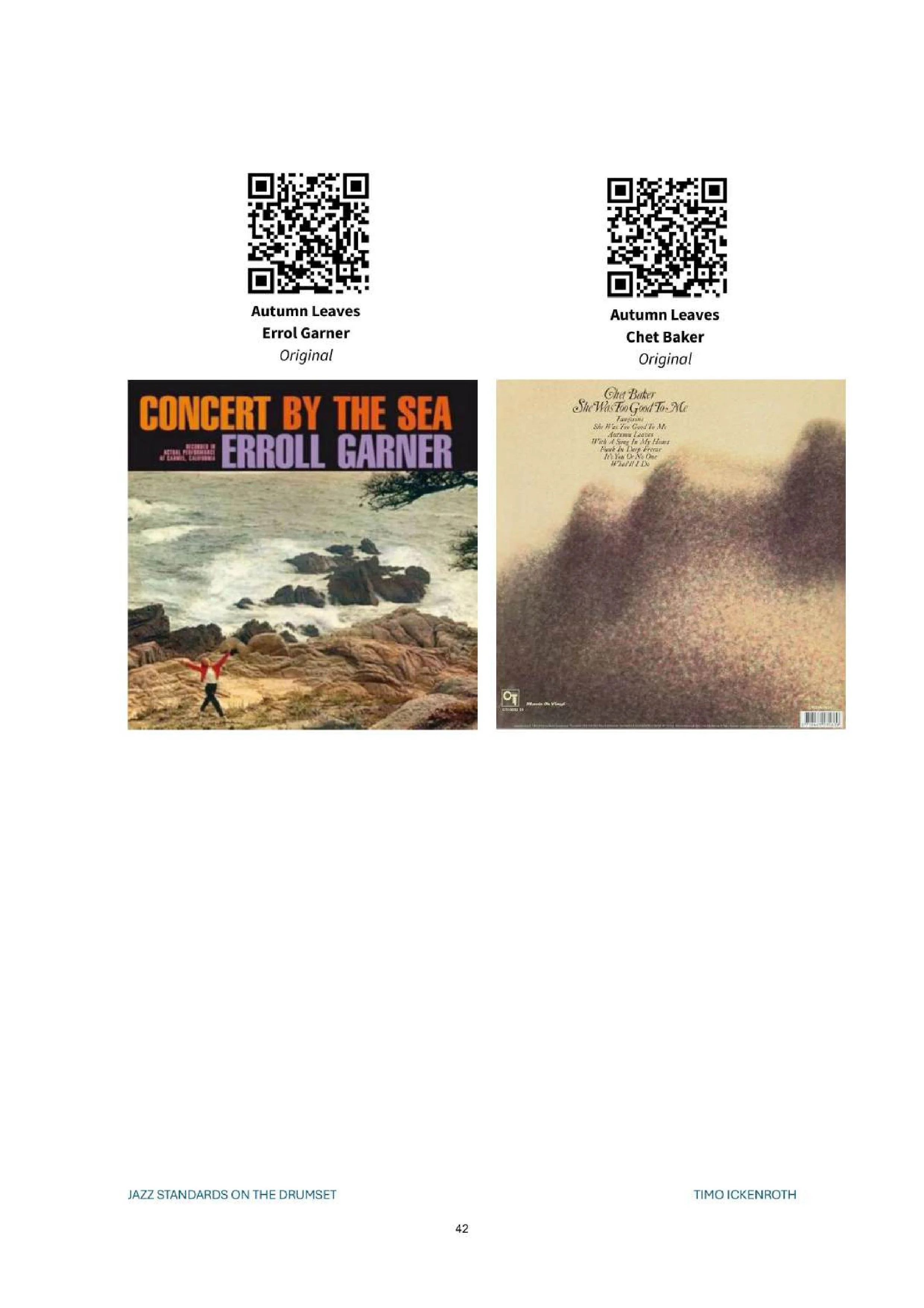
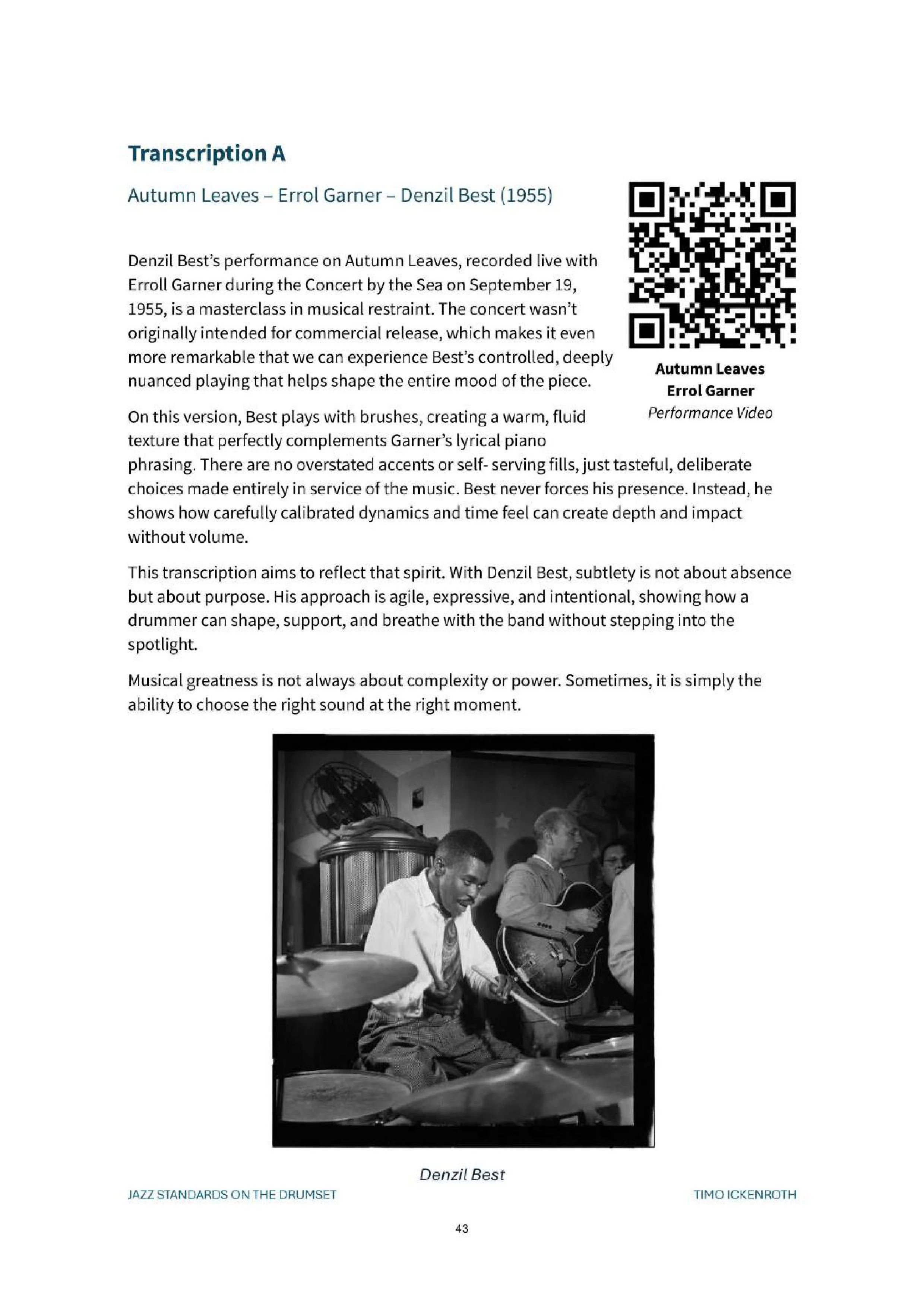
That's why I built my new book around this process. Each chapter in Jazz Standards on the Drumset – The Art of Interpretation compares two versions of the same jazz standard and shows how legendary drummers made personal musical decisions based on the same material.
If you want to explore this world further, you can find many more of my transcriptions and video analyses on my YouTube channel “Jazz Drummer's Corner” as well as downloadable transcriptions on my Patreon page.
So, go for it! Grab your headphones, pick a song you like, and start transcribing. The journey is the destination. The more you do it, the easier it will become. Listen, write it down, play along, compare, and above all: make it your own.
Start today and keep listening between the lines. Enjoy your journey!
Timo Ickenroth
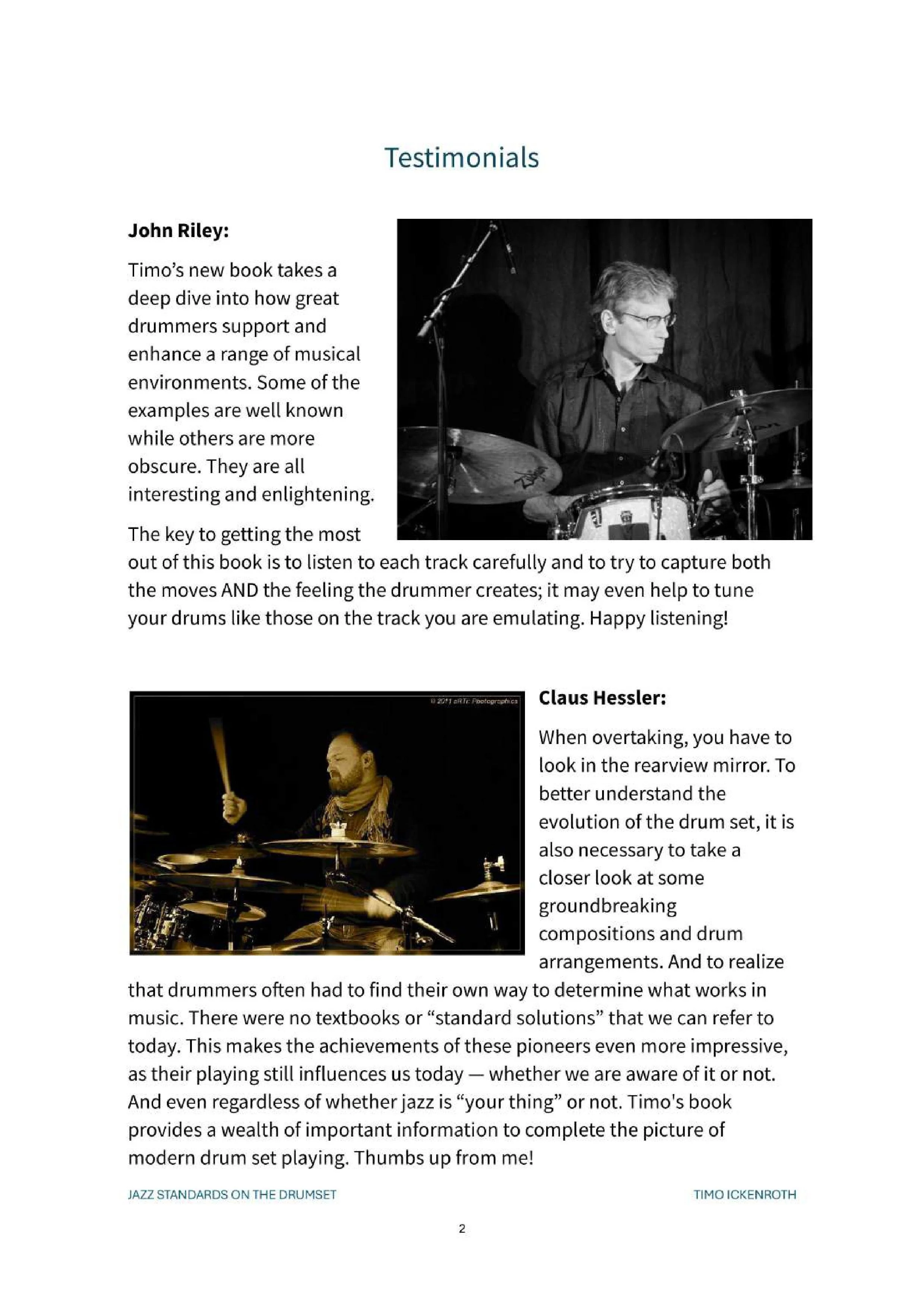
The author:
Timo Ickenroth is a drummer, educator, and author living in Germany. He teaches at the University of Koblenz-Landau and the RPJam Academy, co-hosts the podcast “Schlagabtausch,” and has written several textbooks for drummers. His latest work, and the reason for this article, is Jazz Standards on the Drumset – The Art of Interpretation, available via Hudson Music: https://hudsonmusic.com/product/jazz-standards-on-the-drumset/?wcacra=1961717
Further Resources by Timo Ickenroth
◼️ YouTube: https://www.youtube.com/@JazzDrummersCorner
◼️ Patreon: https://www.patreon.com/JazzDrummersCorner
◼️ Instagram: https://www.instagram.com/timo.ickenroth/
◼️ eBook: https://hudsonmusic.com/product/jazz-standards-on-the-drumset/?wcacra=1961717