
In the early 1900’s the proper term for a professional working drummer was a “Trap Drummer,” this was short for “contraption drummer.” These musicians were much more than simple timekeepers. They provided live musical accompaniment and sound effects for vaudeville acts, silent films, and theater productions. The drummer’s “trap kit” was filled with dozens of unusual noisemaking devices used to re-create the sounds in a movie or theater scene. Drummers had to learn how to play a large array of sound effects, whistles, bells, tom-toms, cymbals, as well as more complicated devices like rain machines, anvils, and train imitators. Trap drummers had to imitate everything from a simple doorbell ringing to a galloping horse, and even a train or a gunshot. Furthermore, trap drummers had to buy (and know how to play) all these sound effects, along with tympani, bells, xylophone, and the drum set, for their gigs. Trap drummers had to be diverse and play the parts that, in previous bands and orchestras, would have been played by up to three drummers. Yet the trap drummers were generally paid less than other band members.
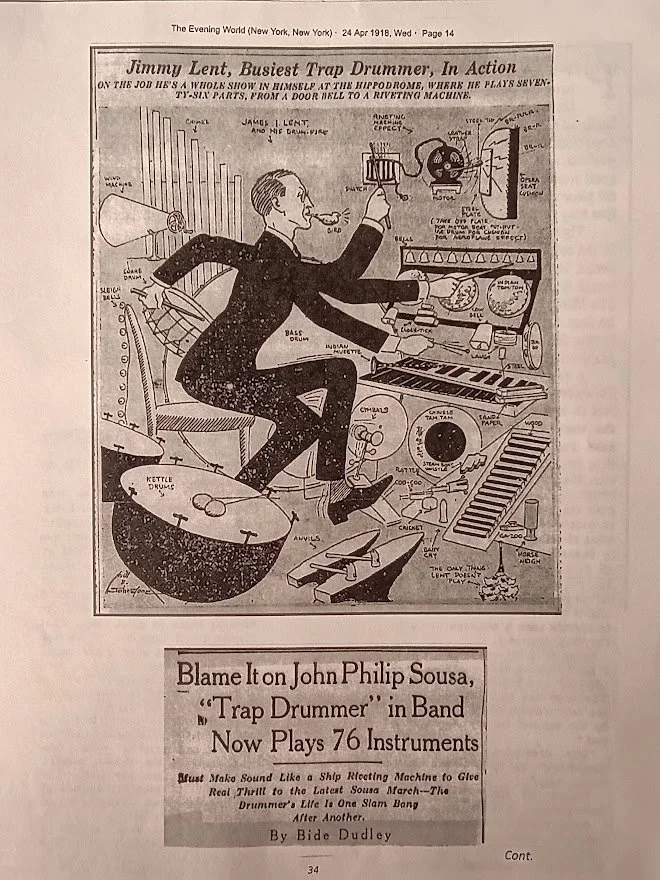
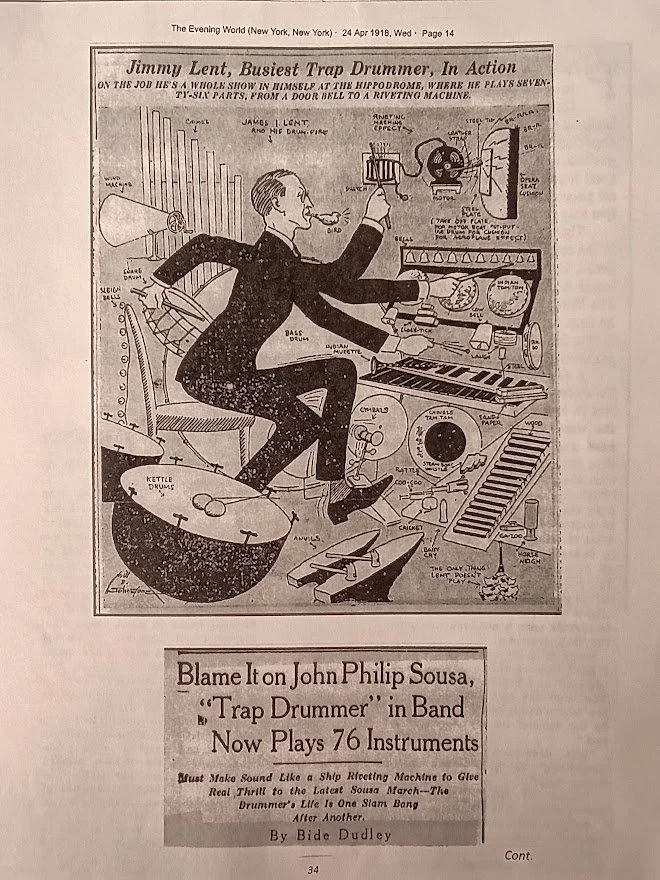
The illustration shown here, titled Jimmy Lent, Busiest Trap Drummer, In Action was published in New York’s Evening World Magazine, on April 24, 1918. The detailed illustration shows Lent as a four-armed man surrounded by a vast array of percussion equipment, including a drum kit, timpani, and sound effects such as an anvil, tom-toms, bells, and a wind machine. In 1927, the commercial success of the film The Jazz Singer, one of the first films to use synchronized sound, proved that “talkies” were a viable replacement for the silent film age. This meant that trap drummers were no longer needed to add live sound effects to silent films, and employment plummeted from approximately 26,000 in 1926 to just over 4000 by 1934. In the 1930s and 40s, many drummers found new work in radio shows and playing in jazz and dance bands. Drummers were also employed by live vaudeville shows and performances that toured across the country. However, the trap drummer’s influence did reach into new forms of media. The sound effects used in early radio shows and Disney and Warner Bros animated feature films and cartoons were inspired by the early trap drummers. A new job of adding sound effects in film became known as a “Foley Artist,” named after sound pioneer Jack Foley. These sound effects were everyday noises created and recorded in a studio during post-production to enhance the audio quality of a film. As seen in previous articles, early drum kits were basically a bass drum, a snare drum, a foot pedal, and a cymbal clanger attachment on the bass drum. This month we will look at the collection of traps, sound effects, and strange objects that were found on drum kits between the 1920s and 40s. All the pictured traps and instruments can be found and played at The Northup Drum Museum.
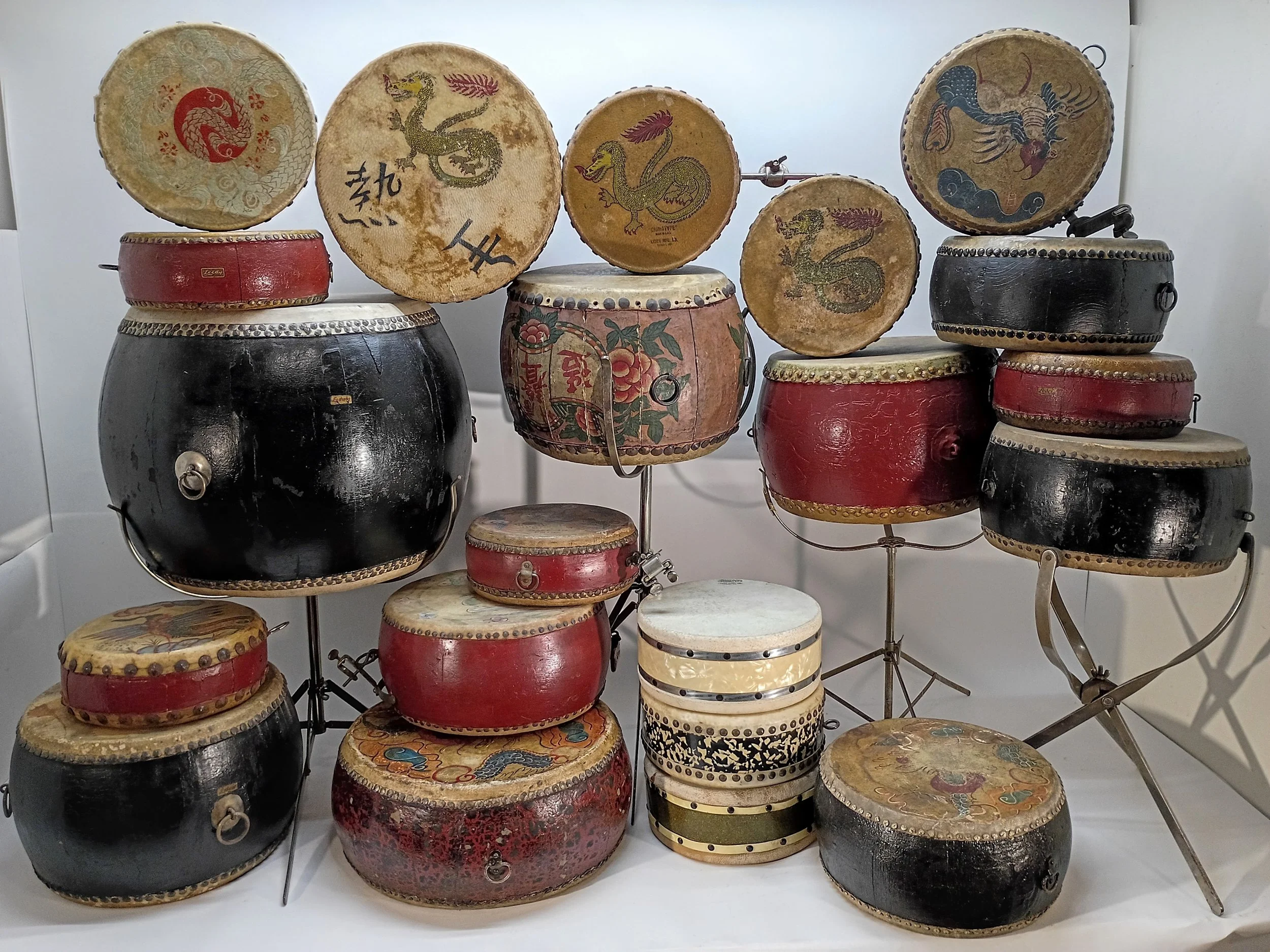
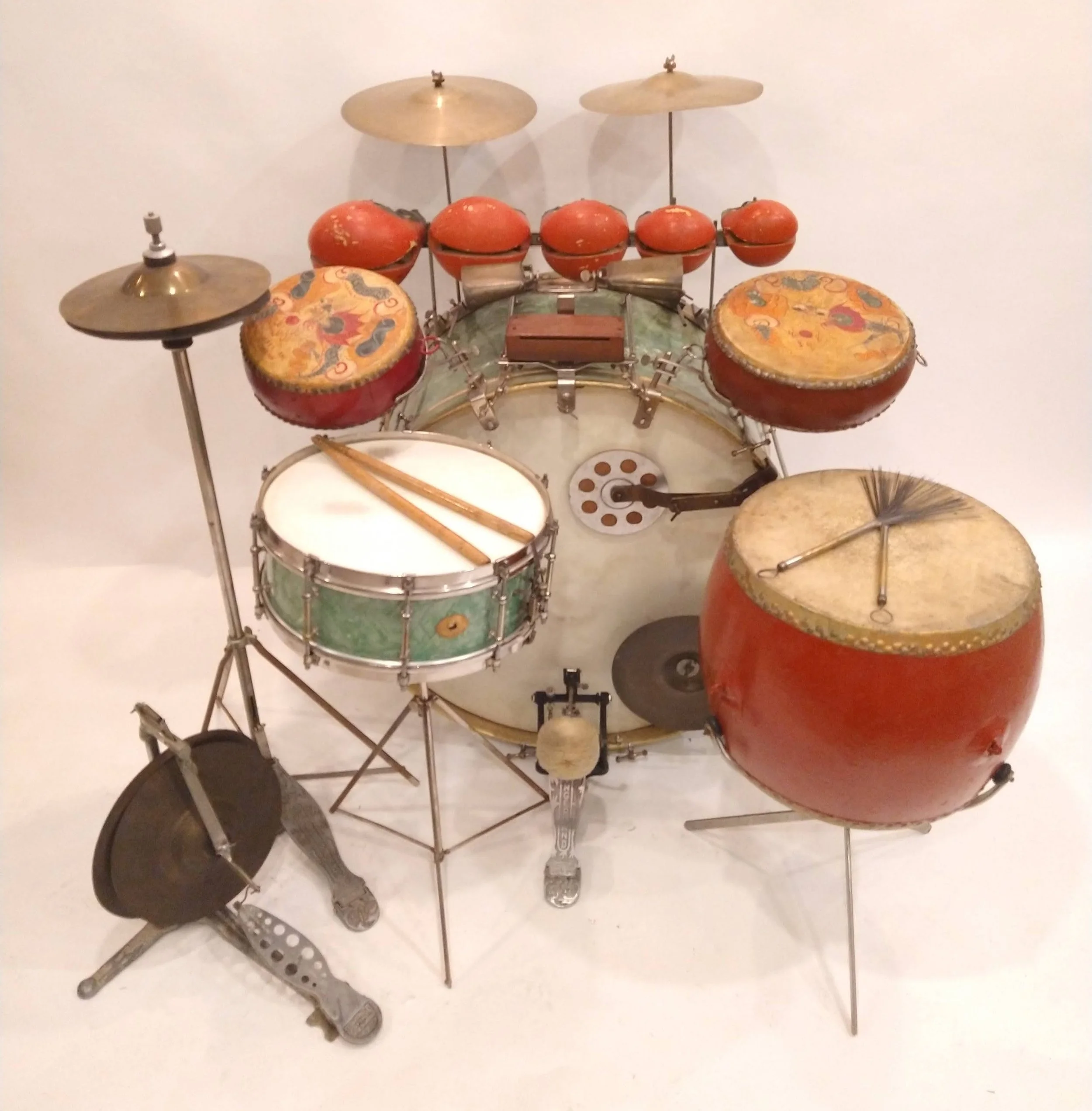
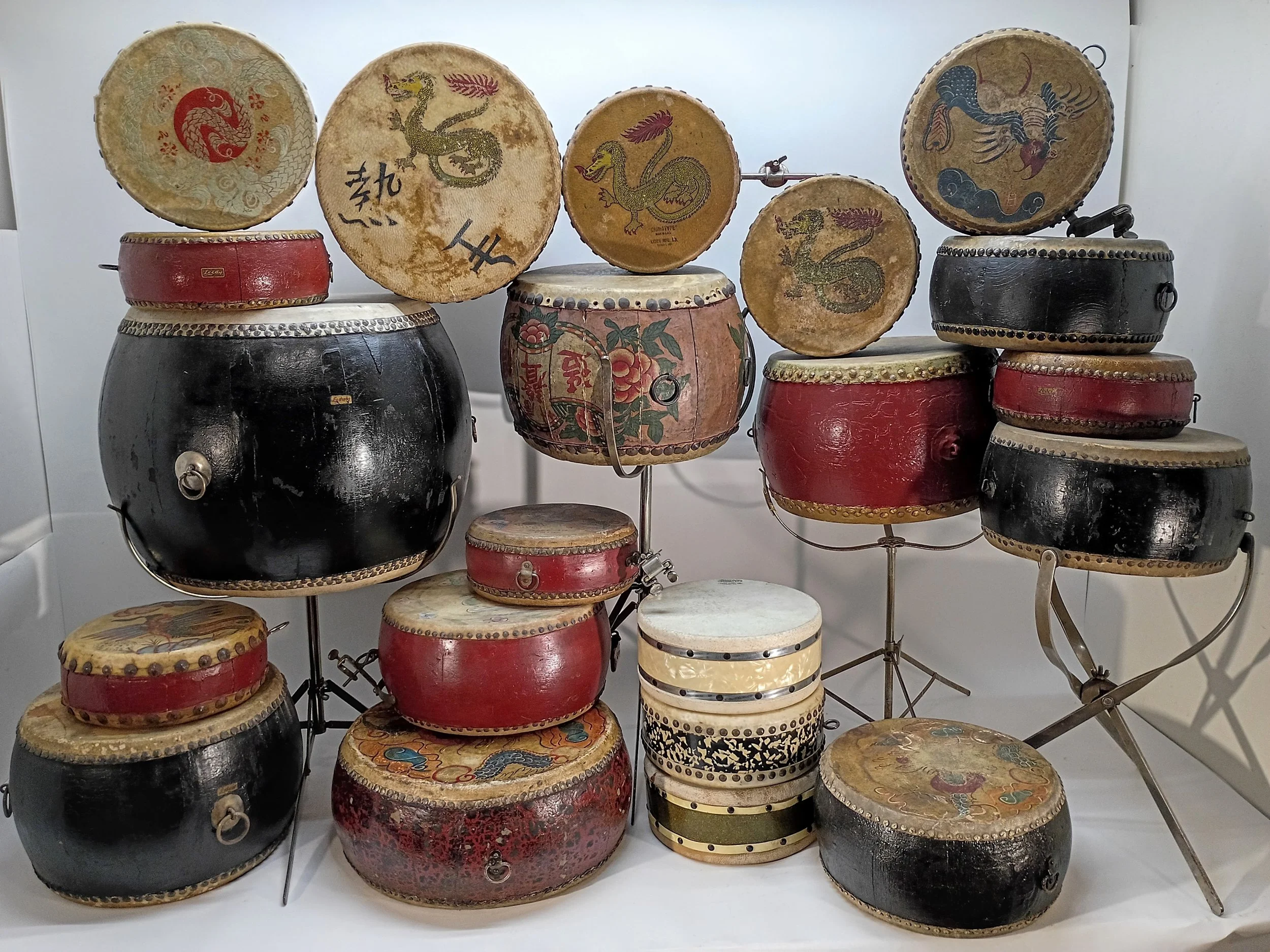
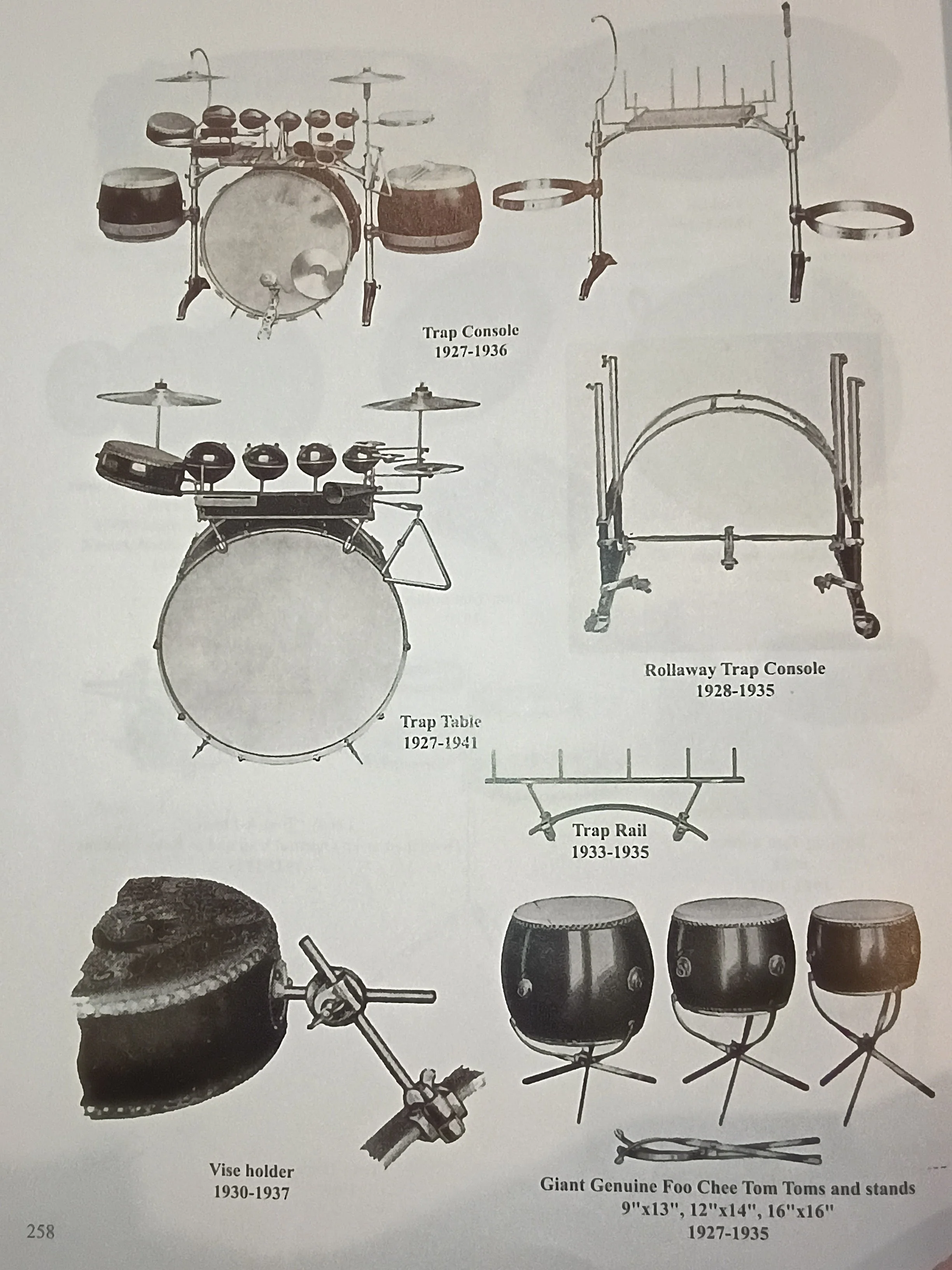
The first tom-toms came from China and were ceremonial instruments. Ludwig, Leedy, and Slingerland began importing these toms, putting their labels on them, and offering them in their catalogs. Double-sided, tacked-head, tom-toms of various sizes with painted scenes became popular. Smaller toms were mounted on the bass drums and larger toms were put in cradles on the floor. Different types of cradles held “Giant Genuine Foo Chee Tom Toms” that ranged in sizes from 9x13” to 16x16.” Do these sizes look familiar? These Chinese tom-toms led to the modern day mounted tom and floor tom. In the 1930s and 40s, Leedy launched their own line of factory-made Chinese toms in various sizes that (sometimes) featured a decal of a Chinese dragon or Chinese writing. Pictured in this article is the museum’s collection of Chinese toms, it is one of the largest and most complete collections of vintage Chinese toms and their many different Walberg and Auge holders.
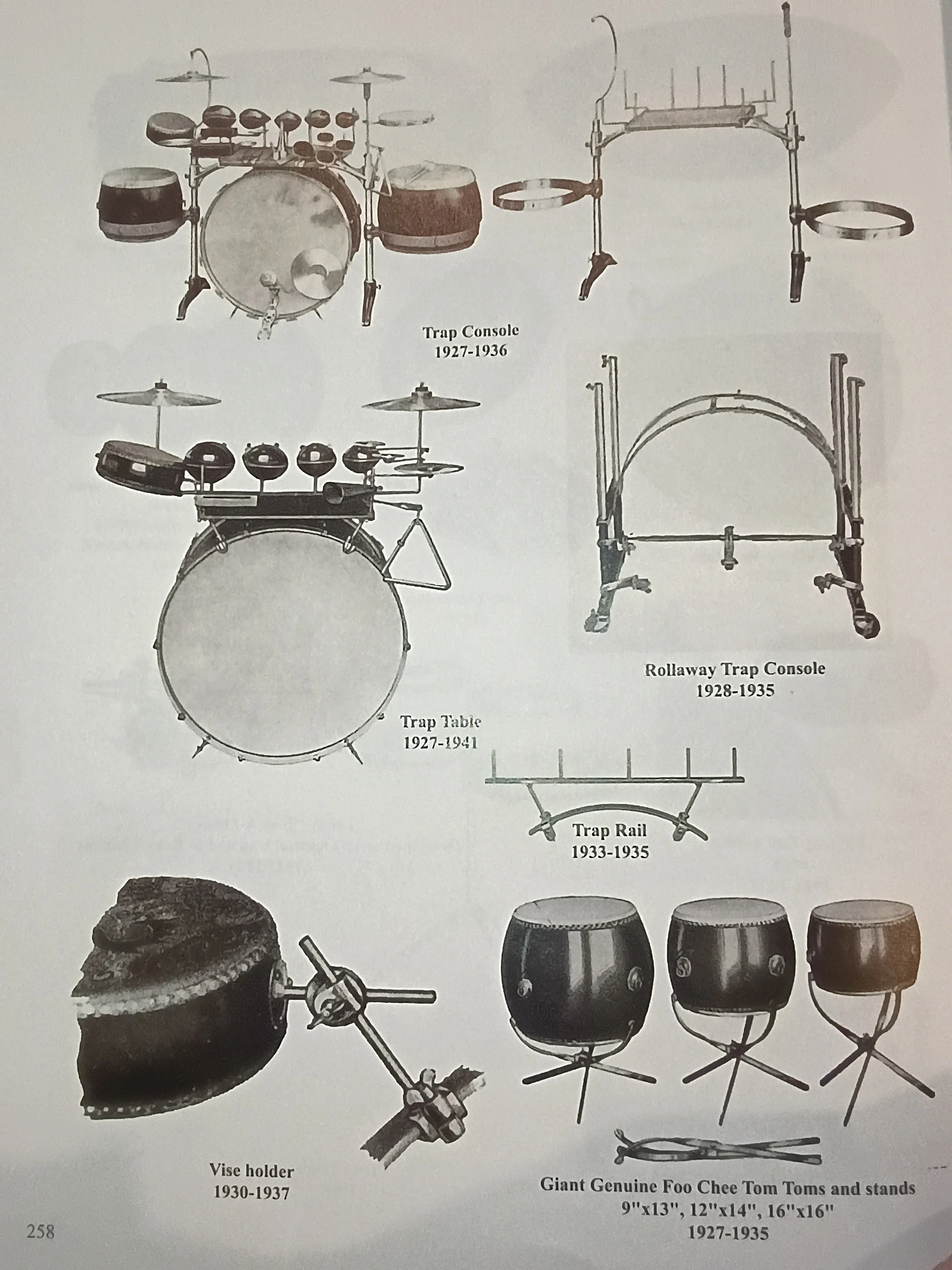
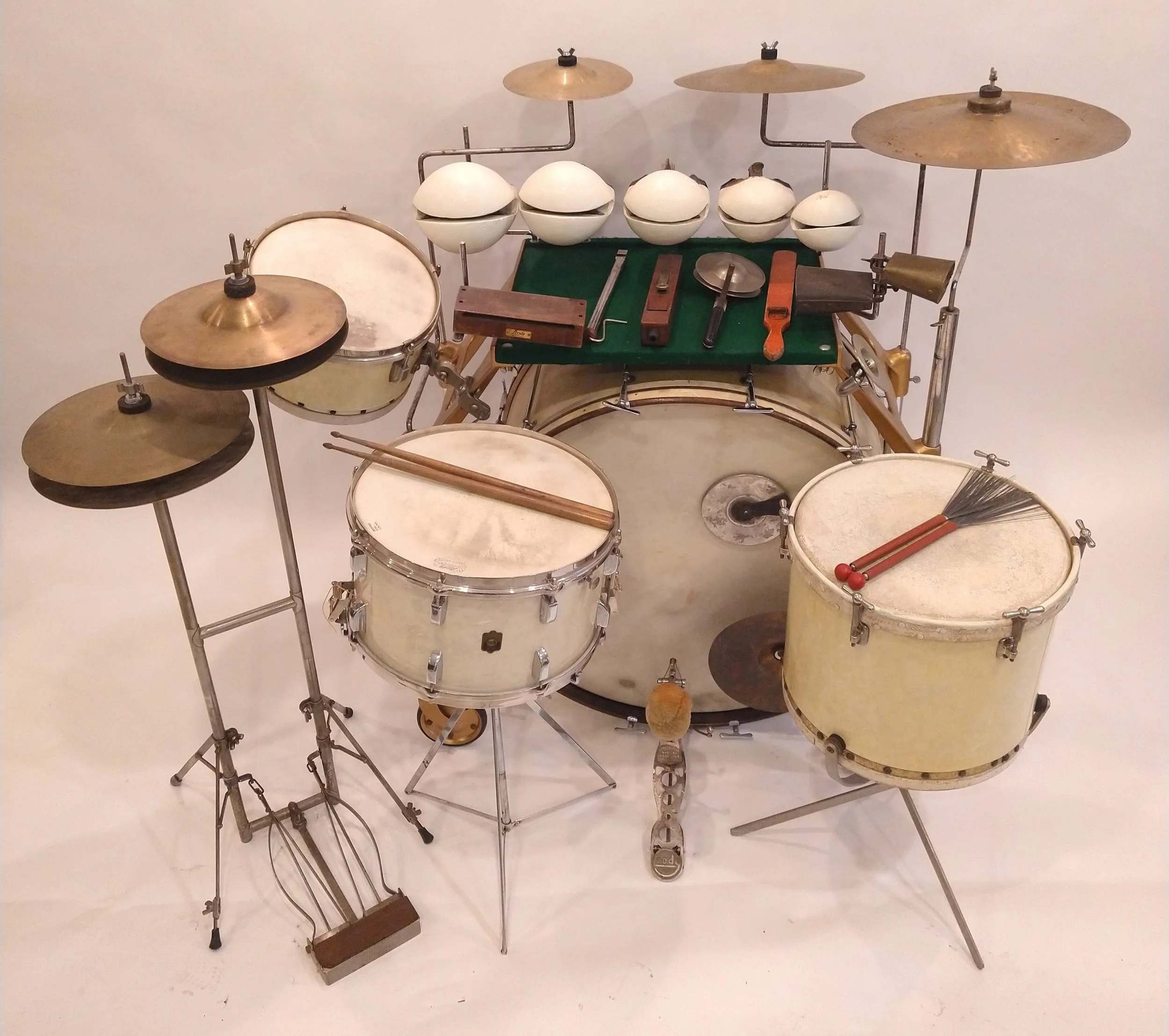
The first cymbals were usually a hand-hammered brass deep cup Chinese type cymbal that hung from a leather strap and holder attached to the bass drum. They tended to have a trashy sound, were not very stable, and cracked easily. As seen in the picture accompanying this article, other sound effects such as cowbells, wood blocks, and hand carved and painted Korean or Chinese tuned temple blocks, were attached to a trap table, and were standard accessories on drum kits of the early 20th century. The first trap tables were mounted to the bass drum. In the 1930s, more elaborate trap stands and tables on wheels, called trap consoles, became popular. Everything was mounted to the consoles, and they were rolled on and off stage. The Northup Drum Museum has a Leedy rolling trap table kit, and an early 1920’s Ludwig traps rack and trap table on display, complete with temple blocks and Chinese cymbals.
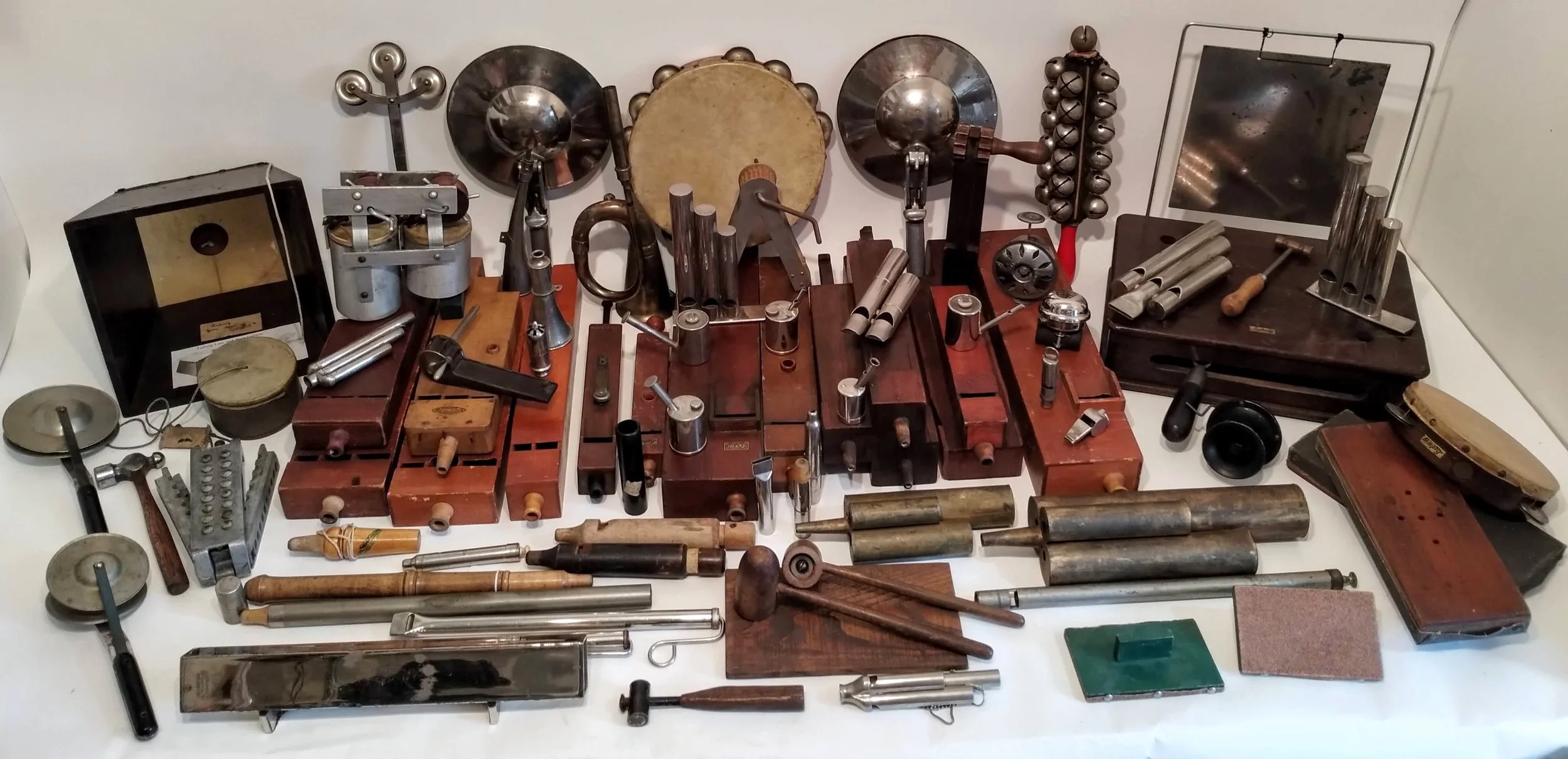
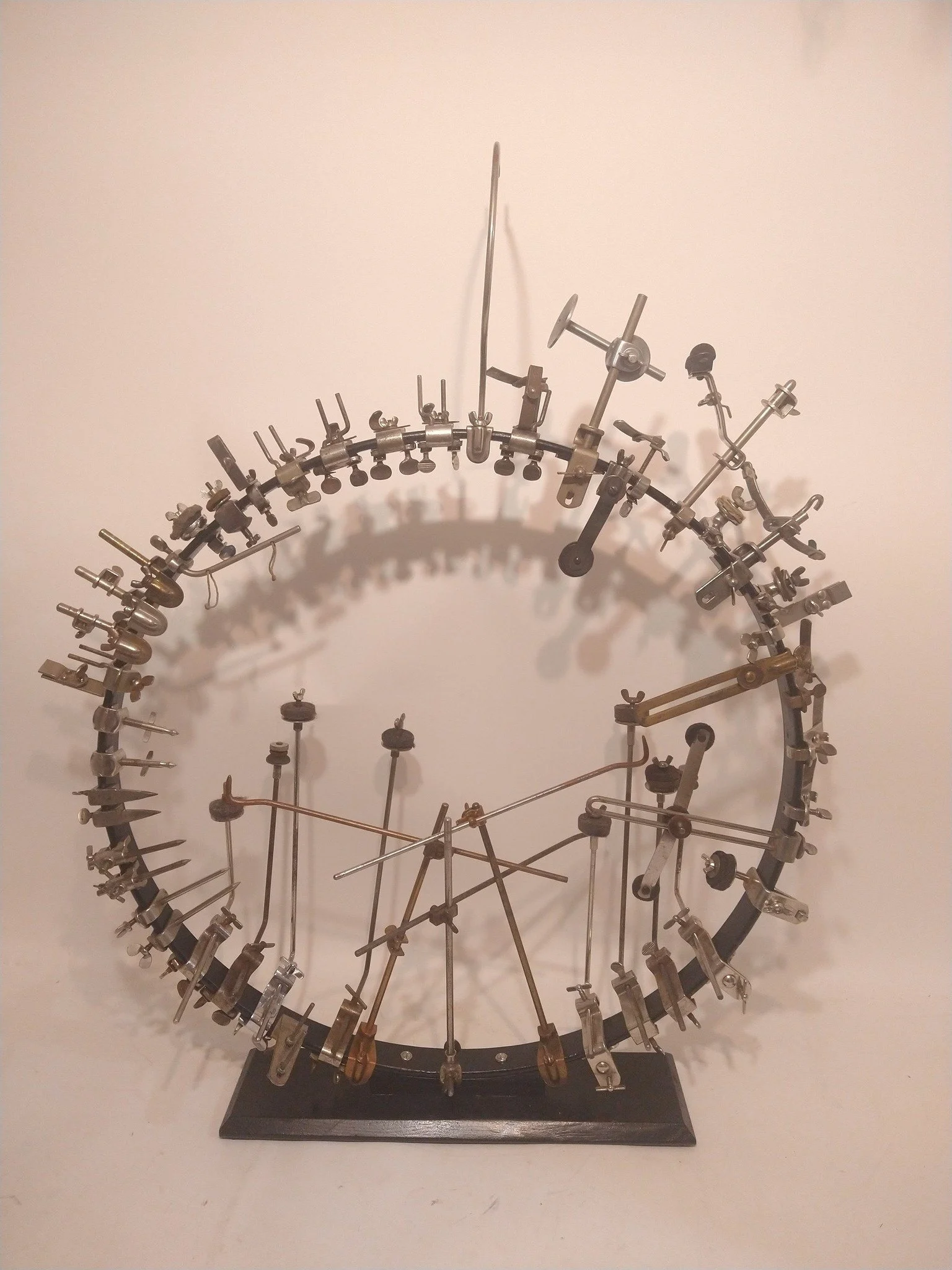
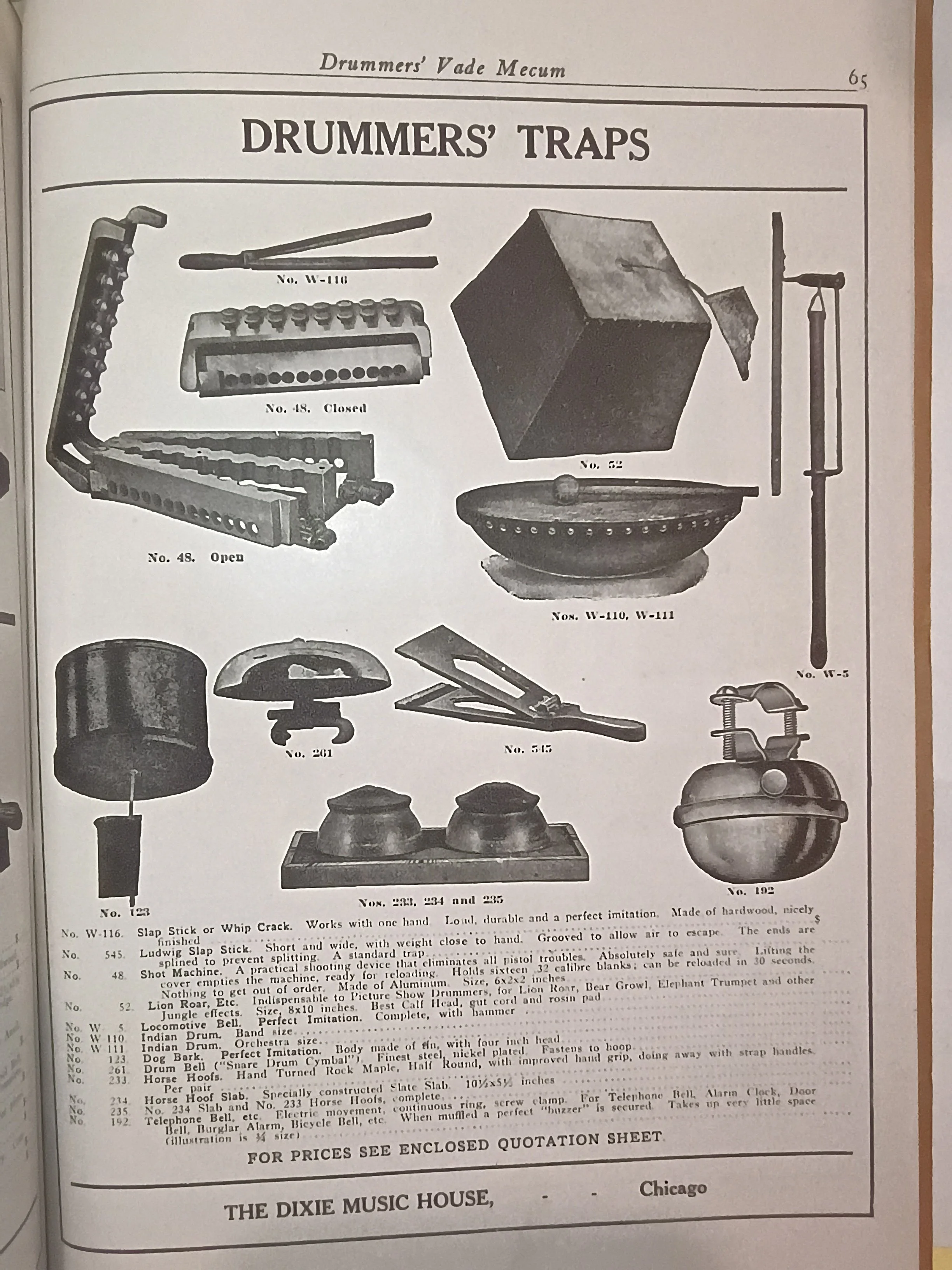
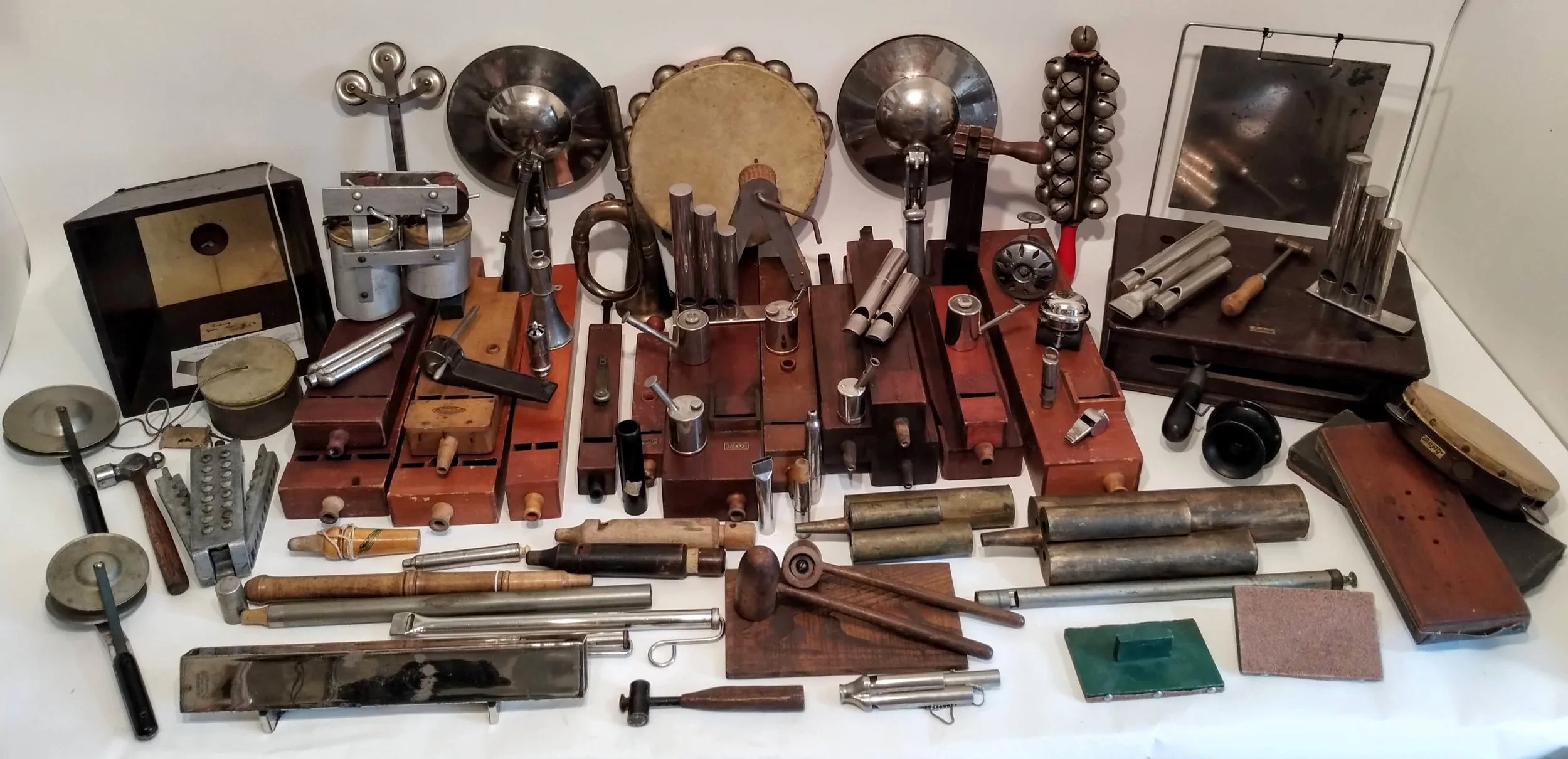
In the early 1900’s, the first drum catalogs featured several pages of drummer’s traps and sound effects. In those early years, most of the traps were manufactured by Walberg and Auge and known as Perfection Drummers’ Supplies. Walberg and Auge were also responsible for inventing and manufacturing most drum hardware of the time, including the various holders that attached to the bass drum, snare and tom stands, cymbal holders, cymbal stands, as well as most of the sound effects. Pictured here is the Northup Drum Museum’s collection of sound effects including just about every type of bird, wooden train, steamboat, and cuckoo whistles. The whistles sit in an extensive display of wood blocks, cowbells, dog bark imitators, a very rare Ludwig Lion Roar effect, a Ludwig gunshot machine, and a railroad train imitator with bell and whistle! We also have many different Chinese toms, temple blocks, and Chinese cymbals, all set up on kits that you can play! If you would like to see and hear these instruments, and learn how they played an important part in making the sound for early 20th century vaudeville, theater, and silent films; come visit the Northup Drums Museum. Or visit us at northupdrums.com for many more detailed photos of trap sets, and sound effects!