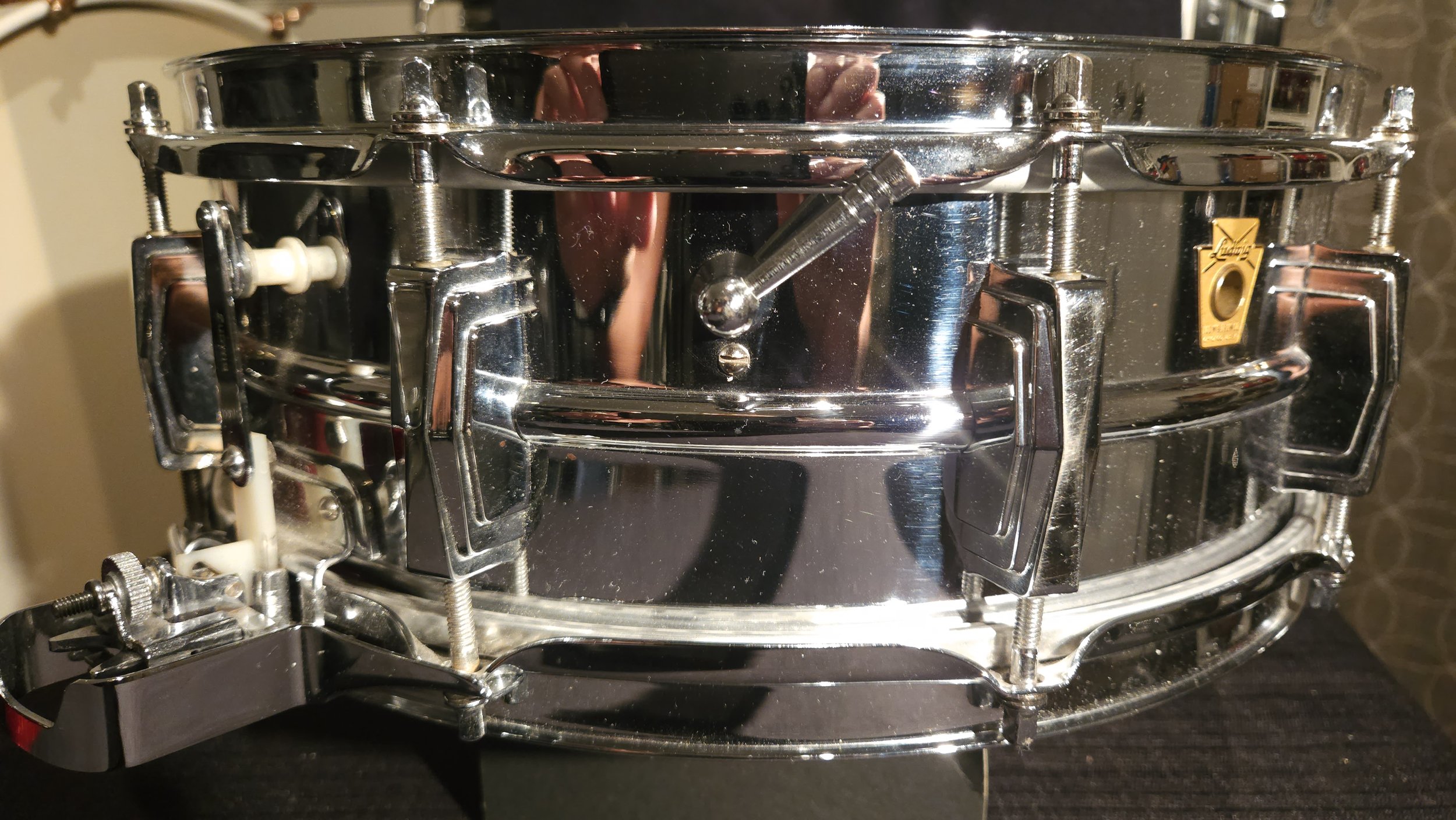
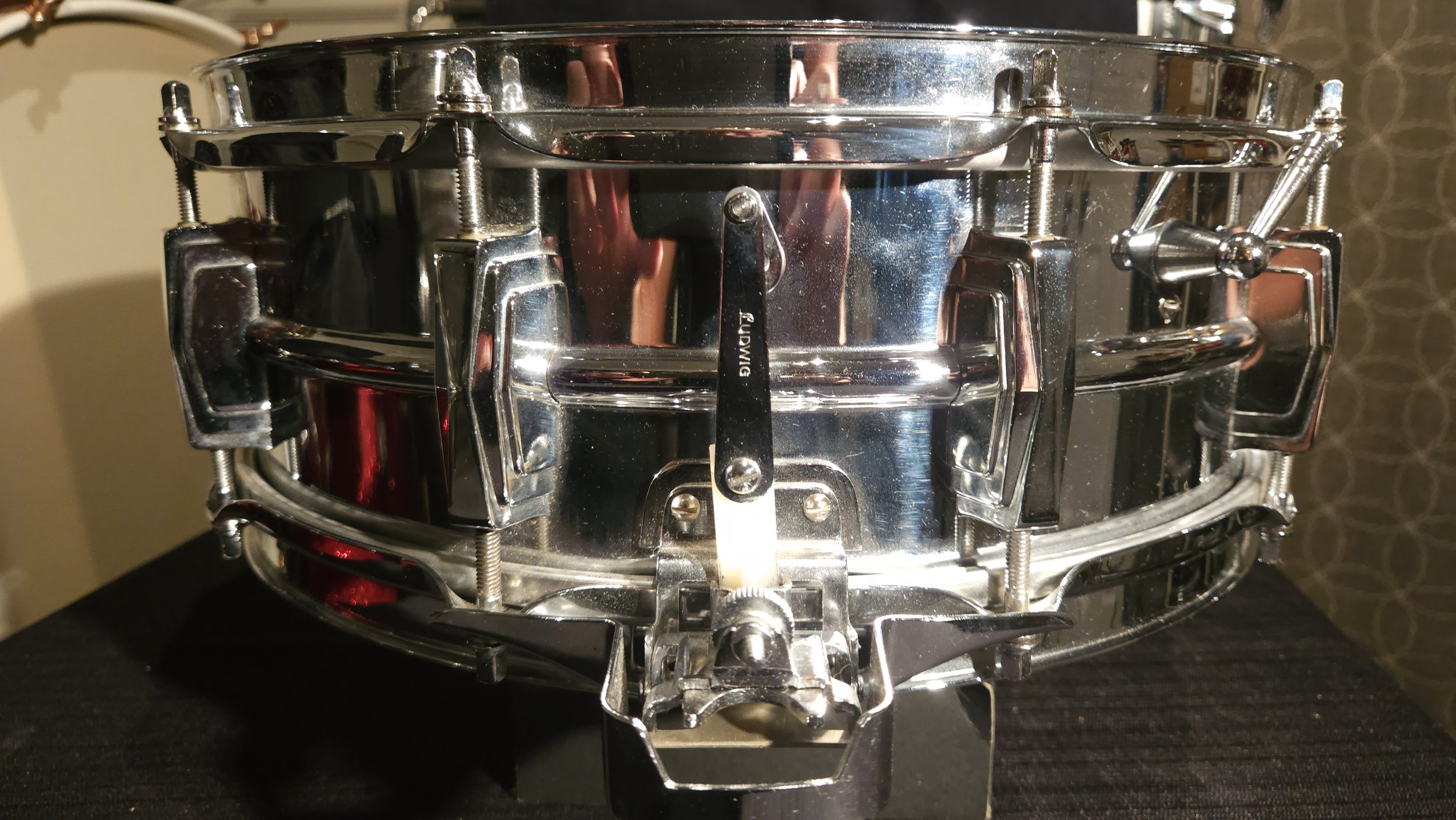
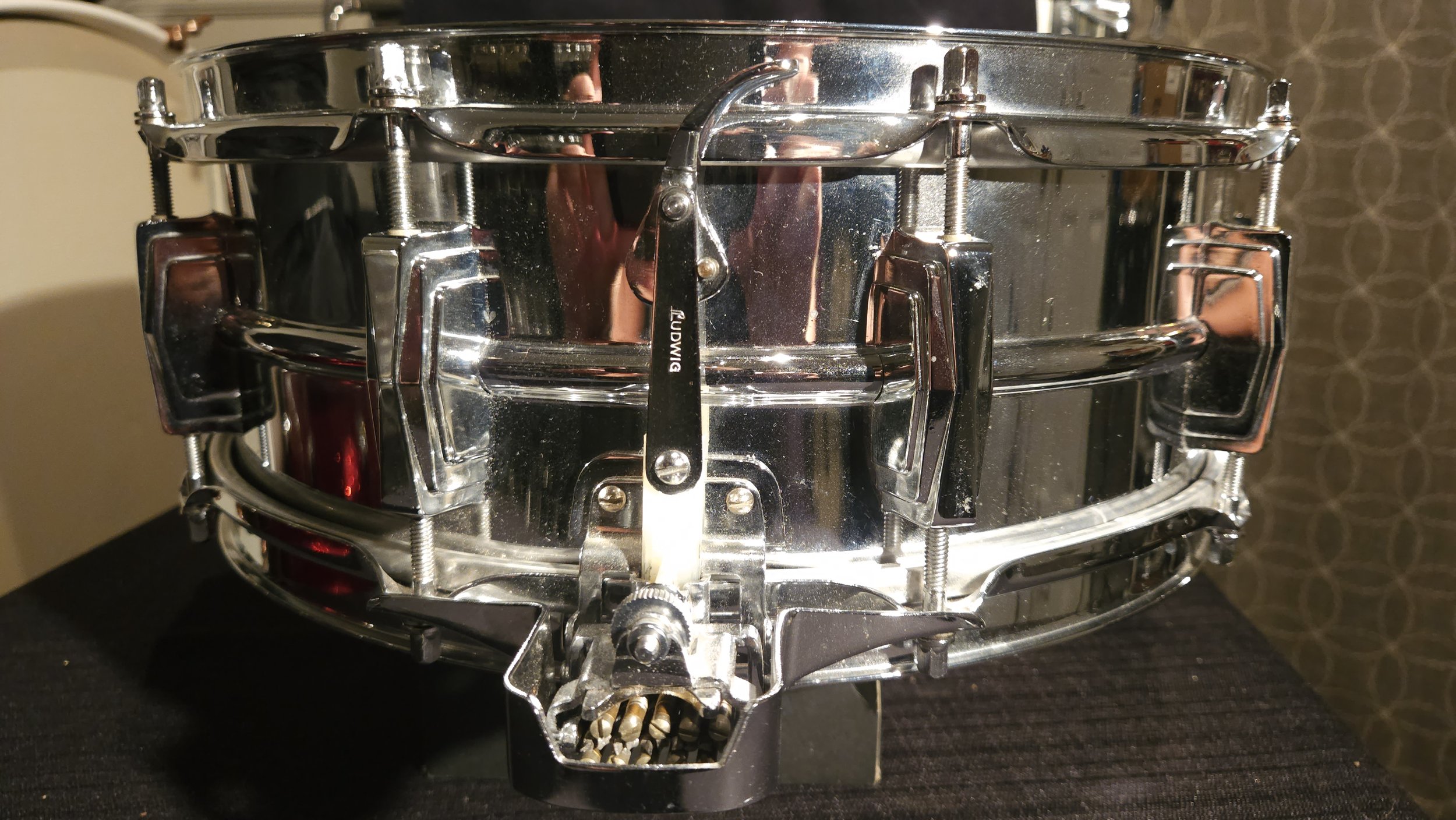
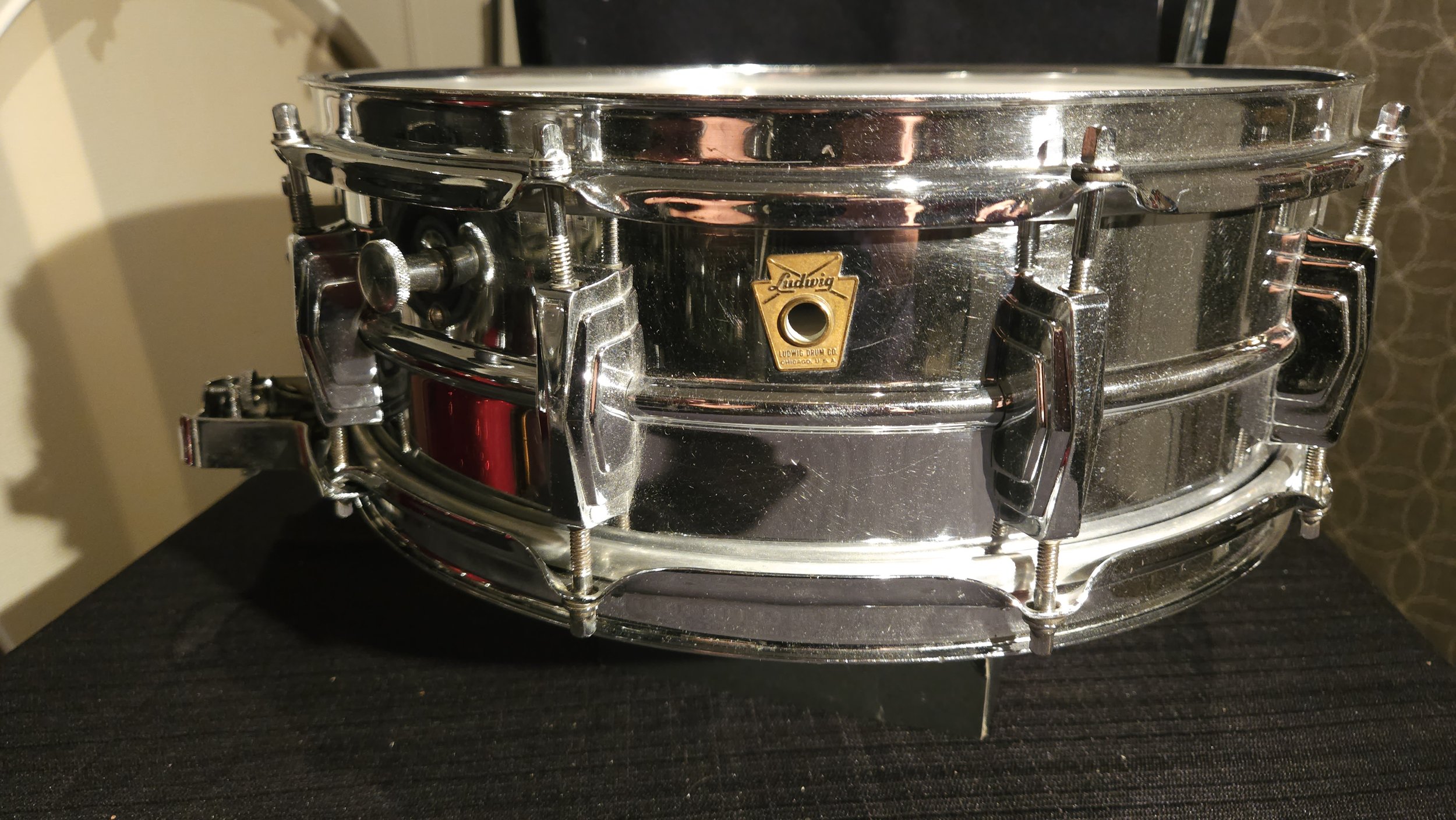
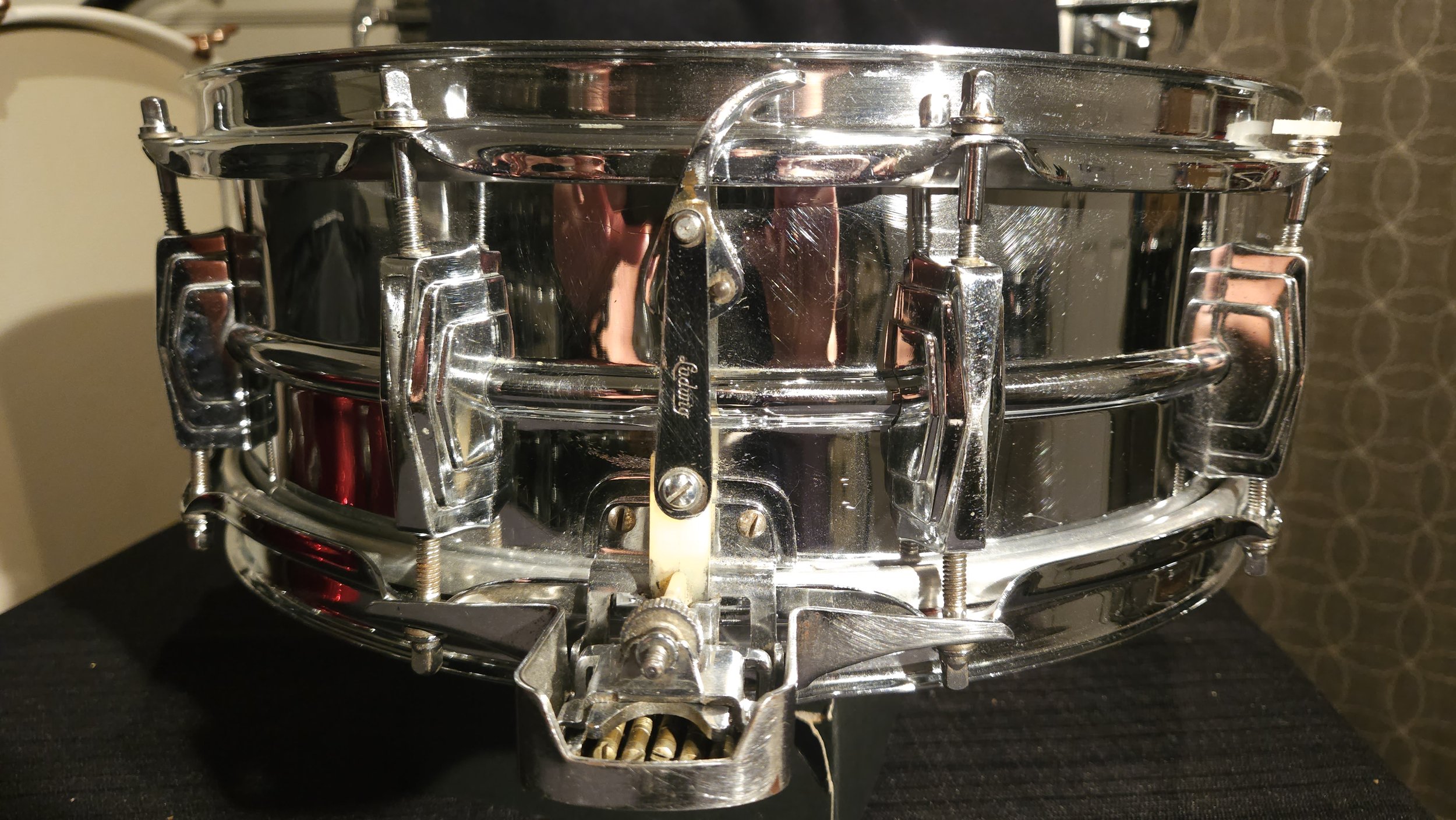
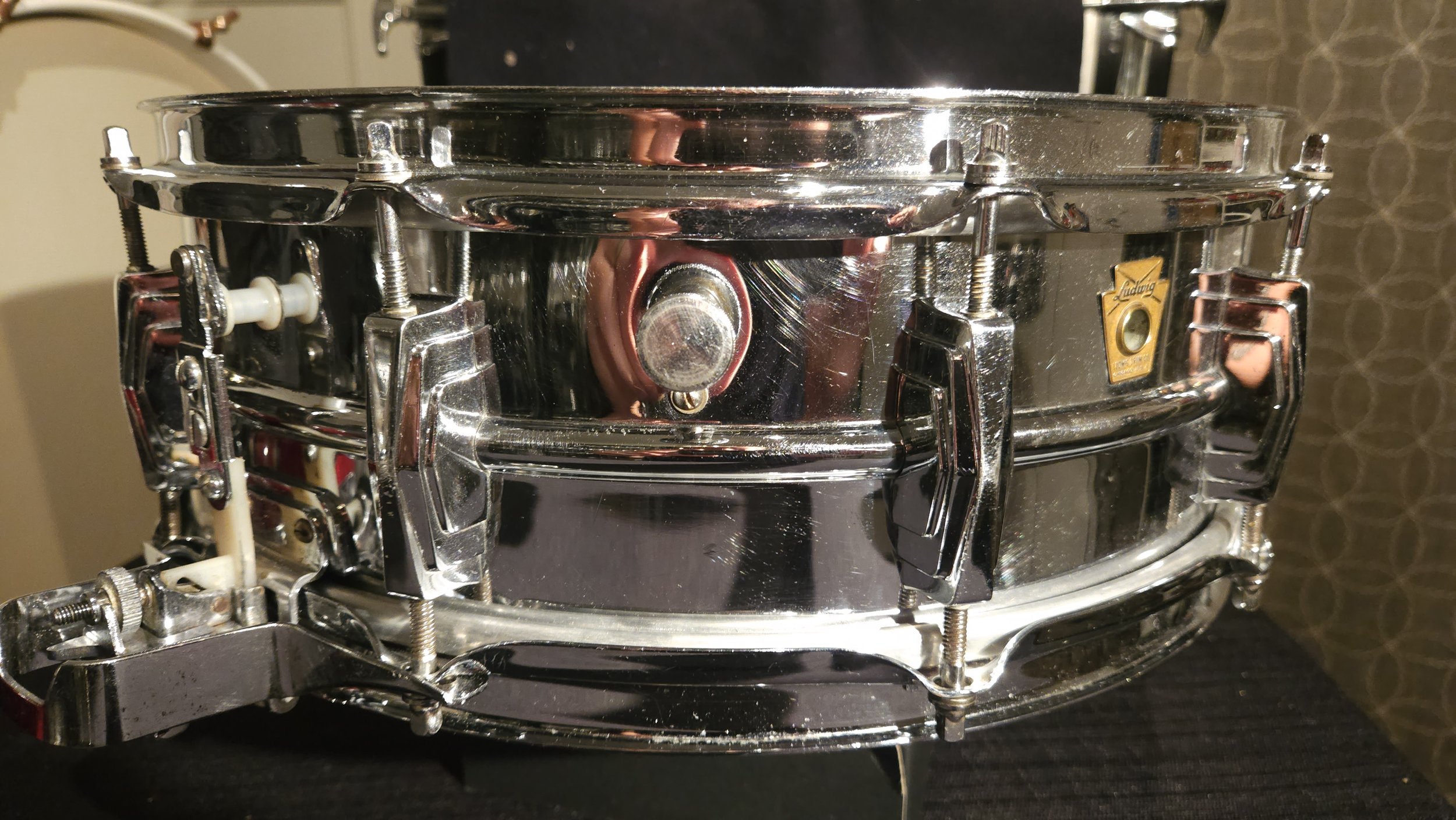
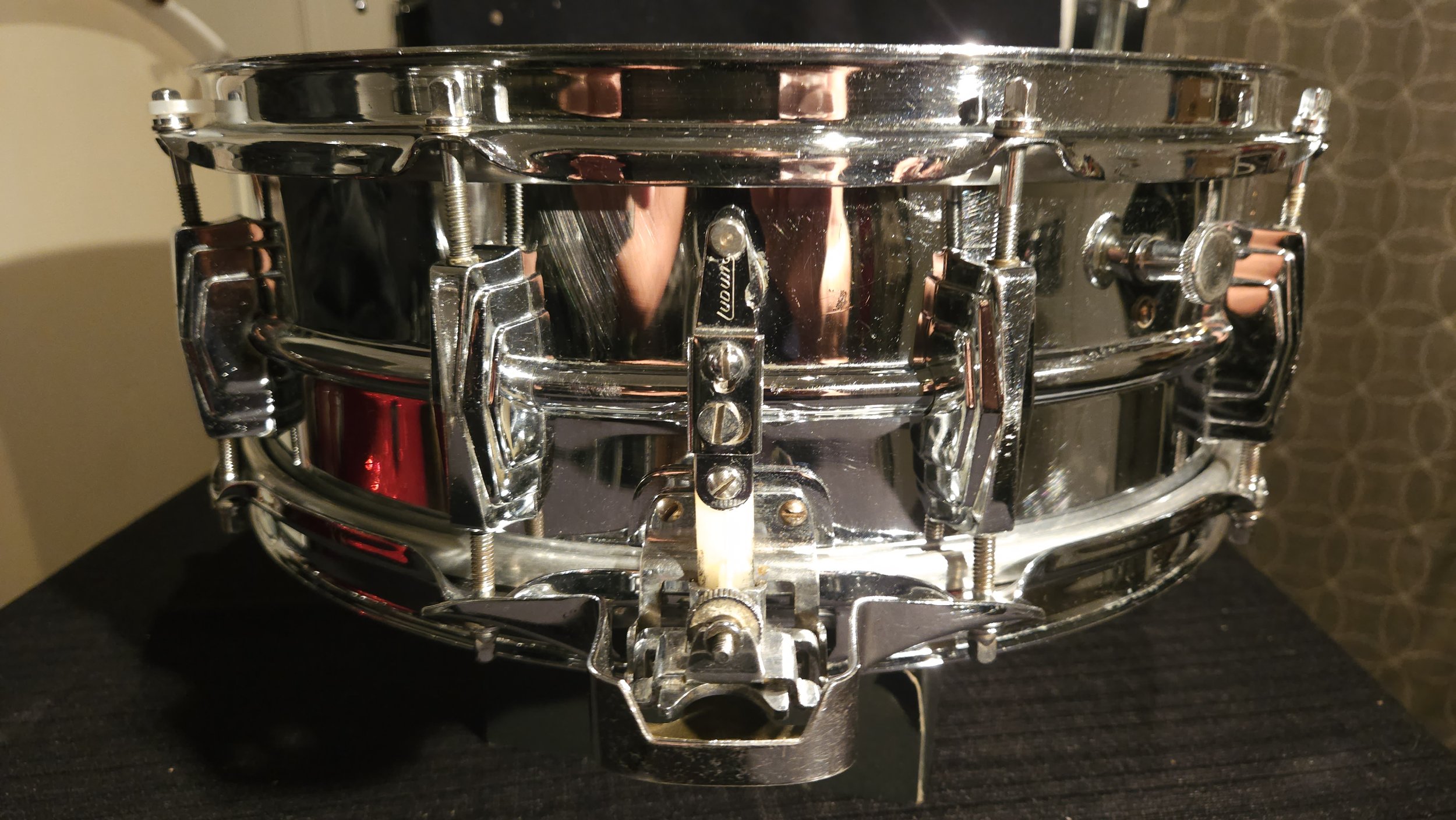
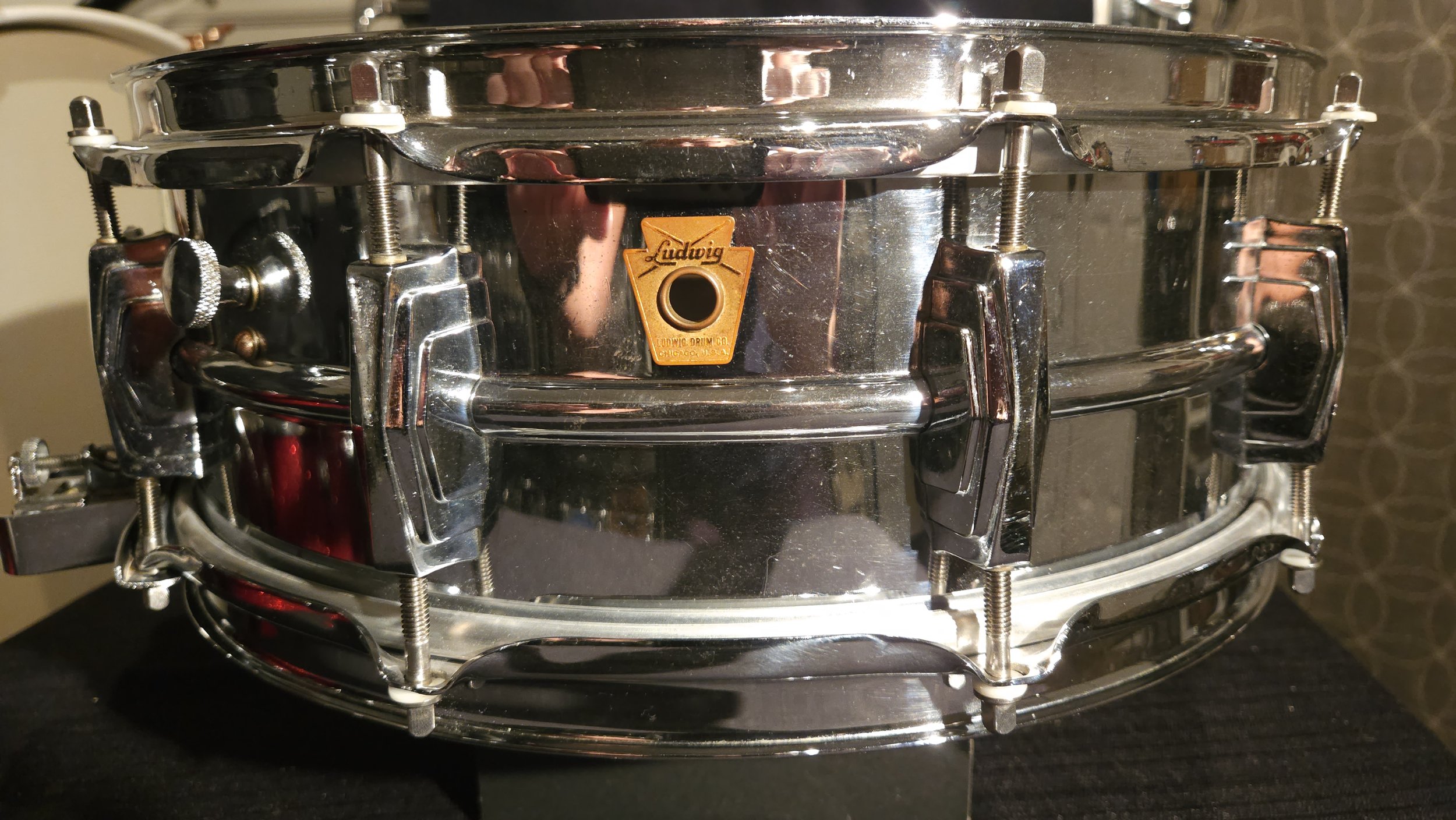
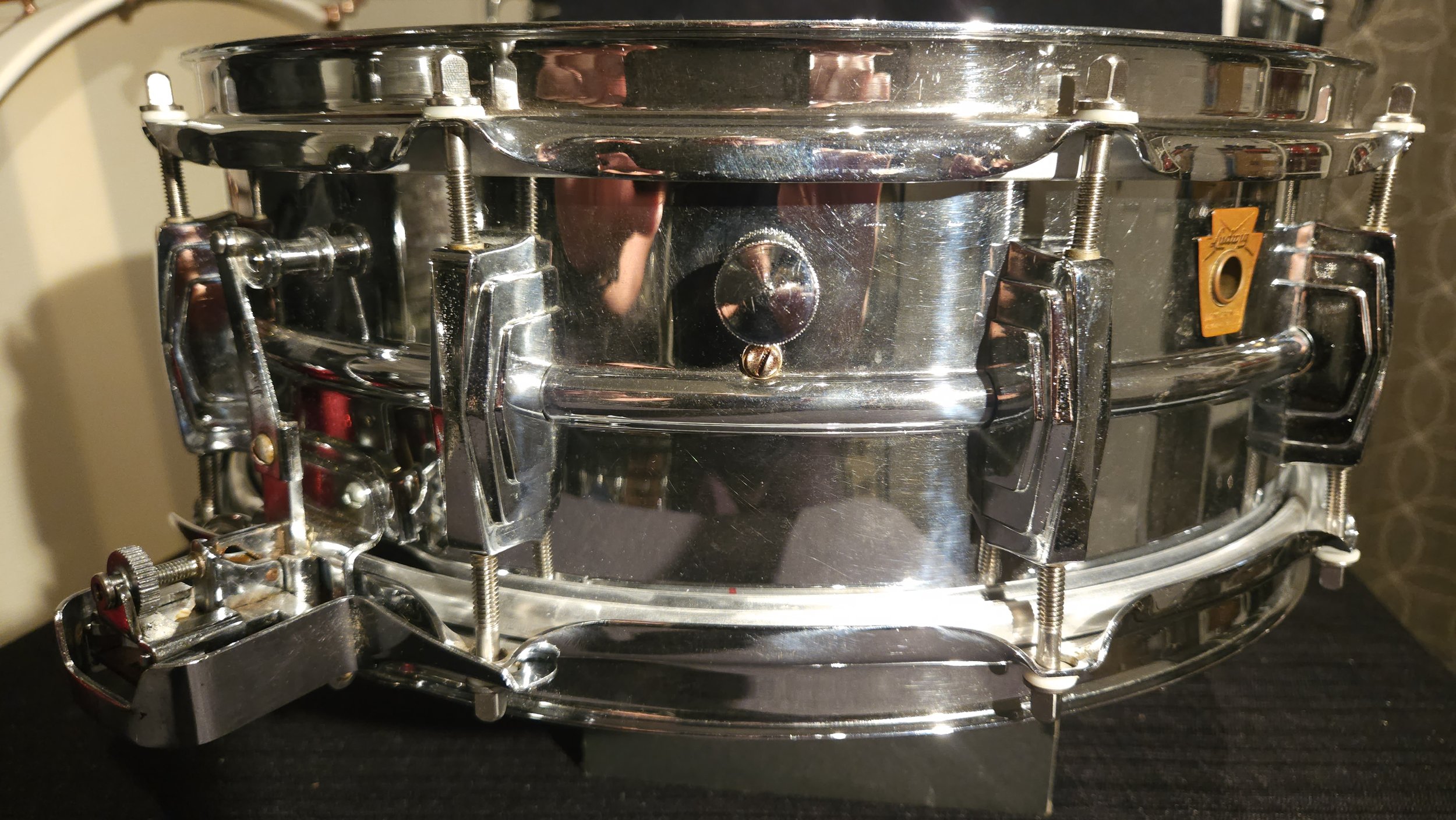
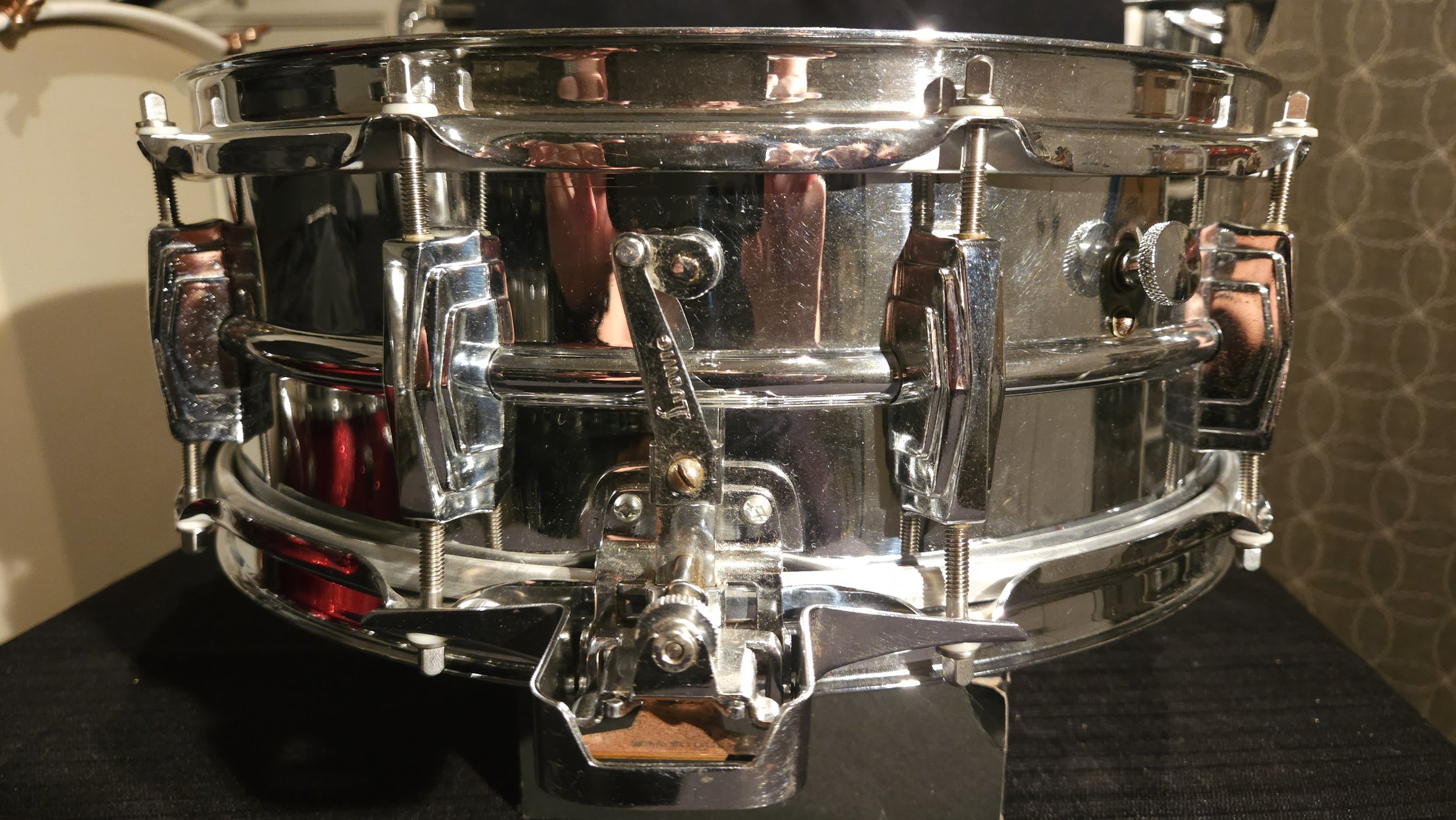
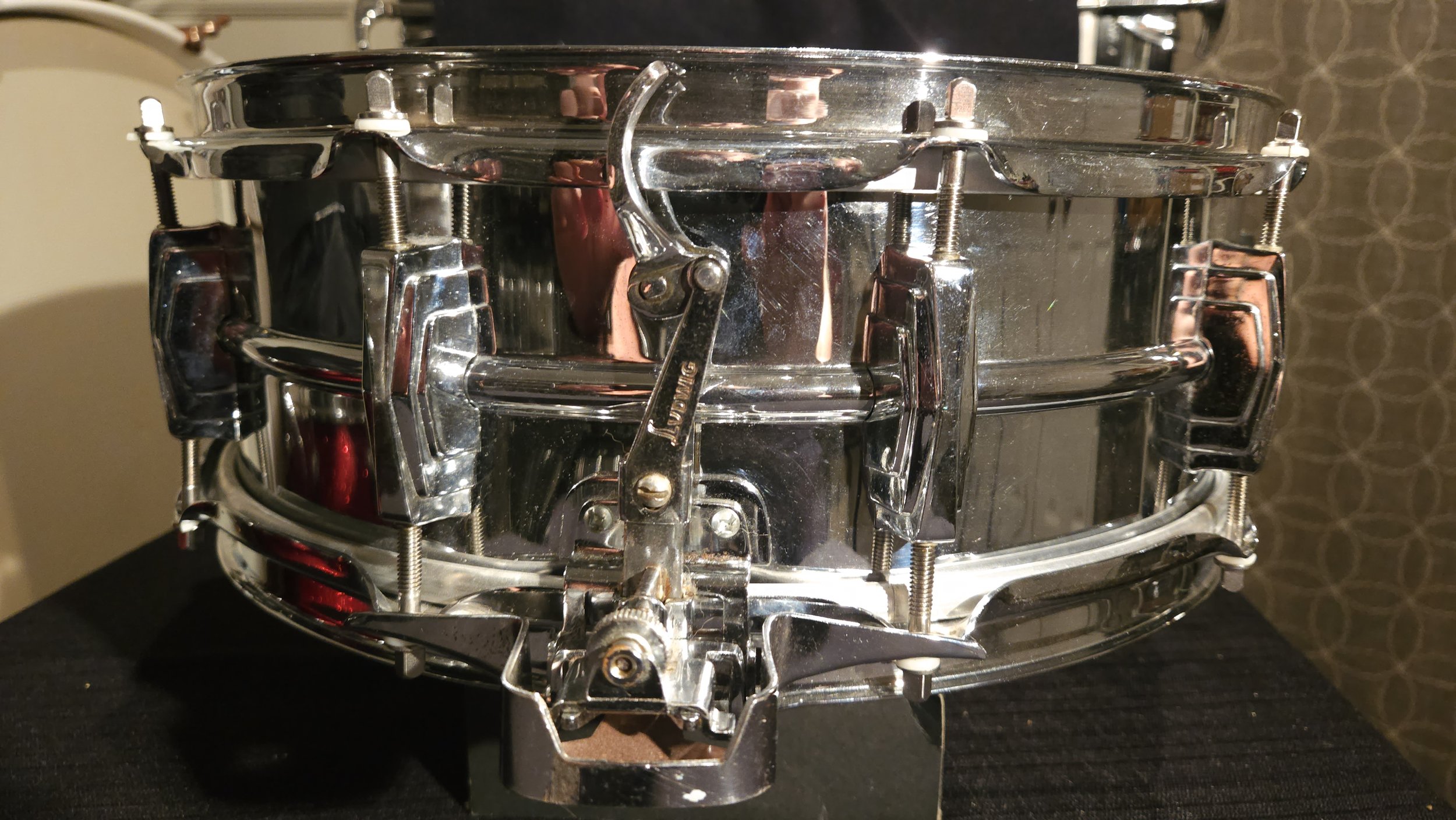
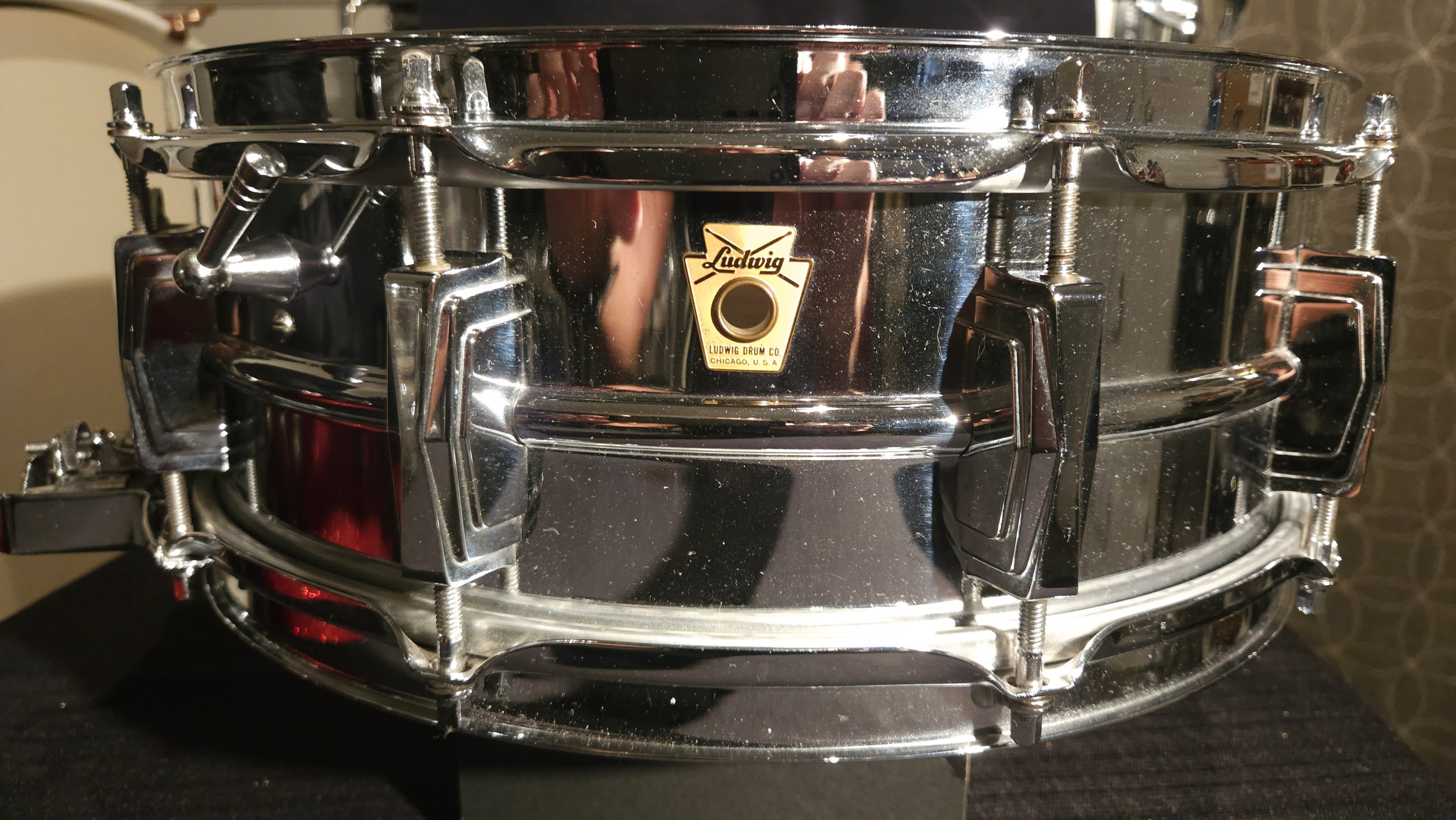
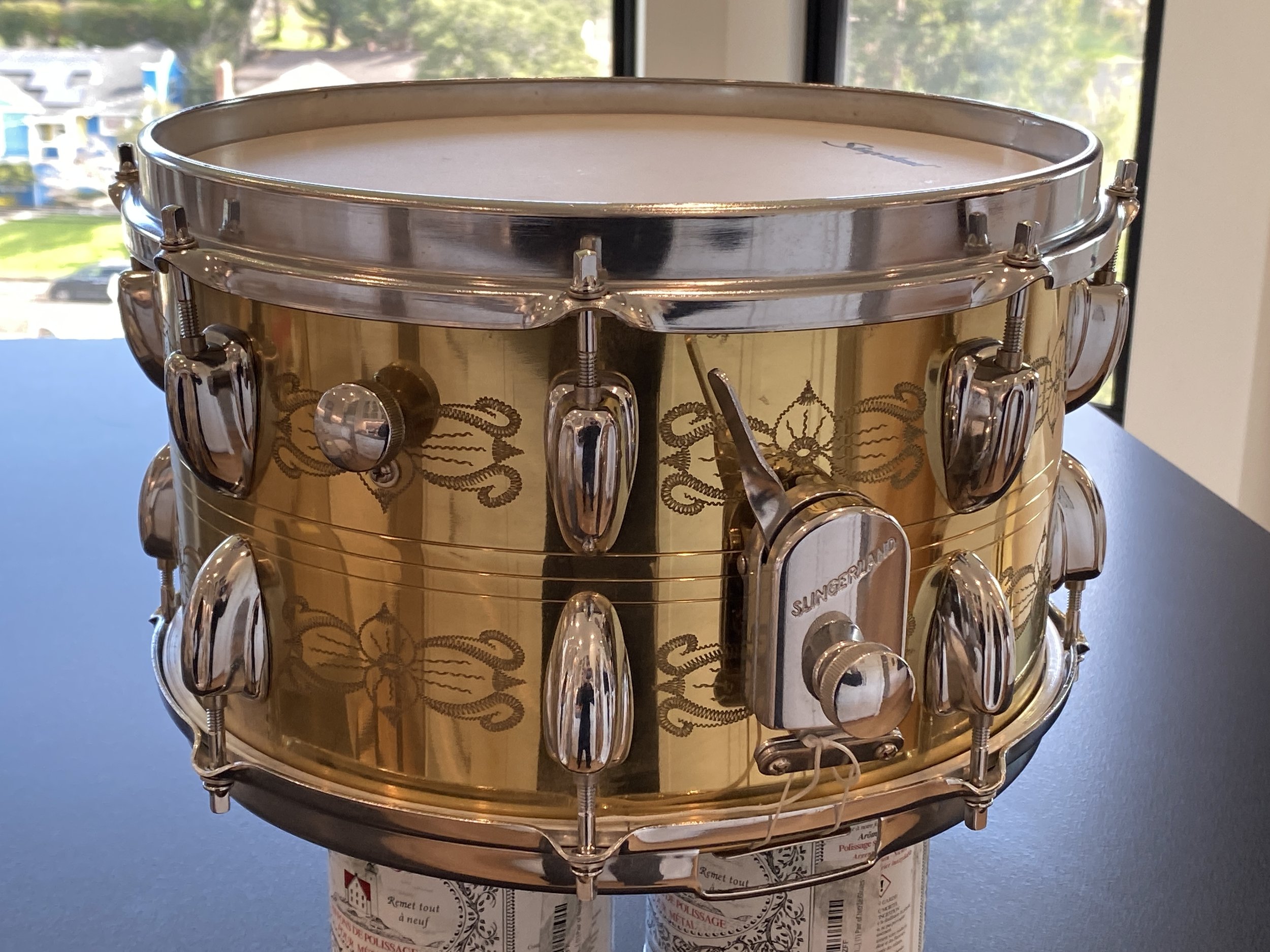
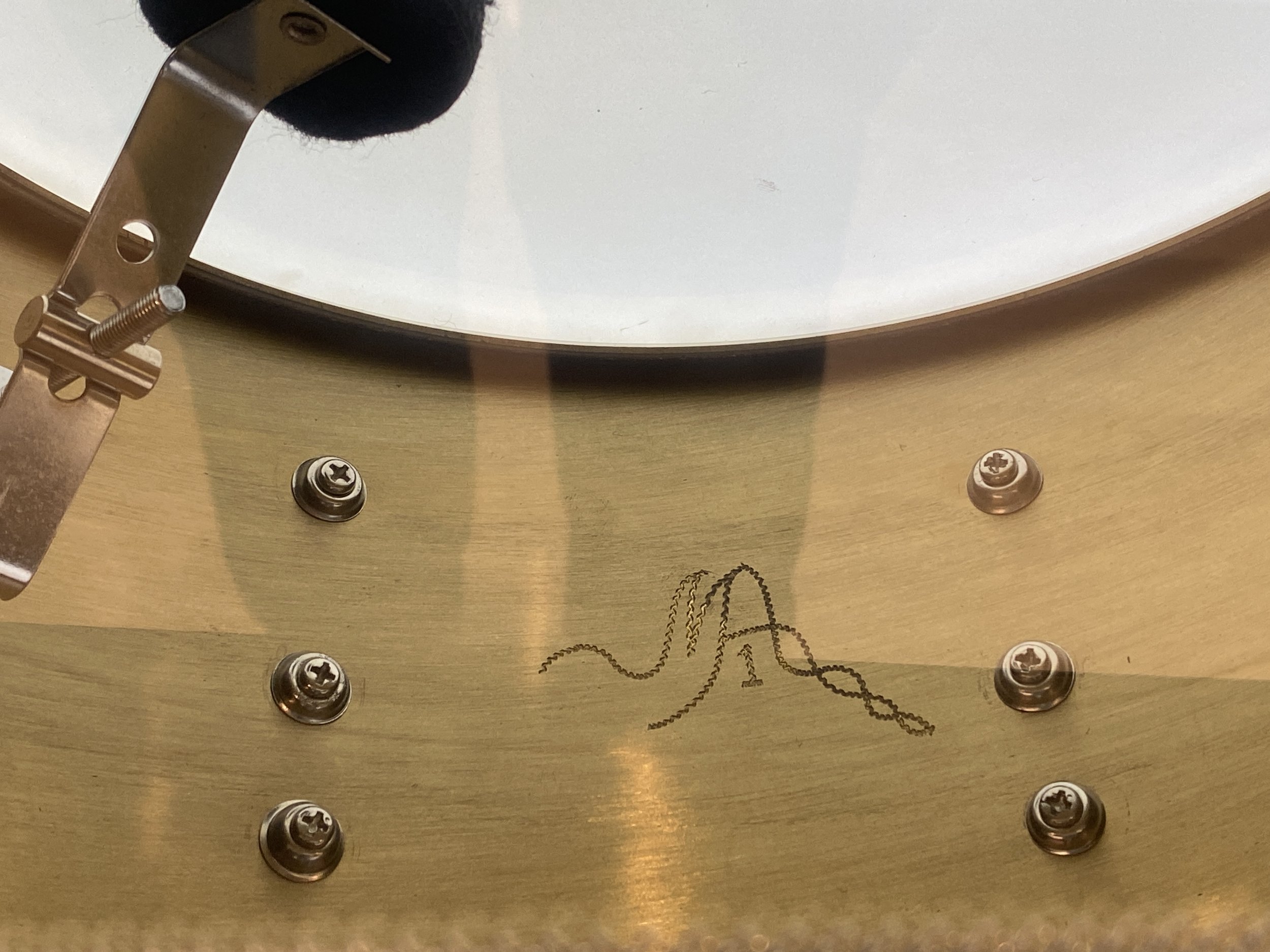
It took me years to finally find a Ludwig Las Vegas 4 x 13 Snare Drum. I finally got the opportunity in May of this year to purchase one from a private seller in the U.S., although it did come at a bit of an inconvenient time. I was lying on a stretcher in the hospital waiting to go into the operating room for my scheduled spine surgery when I received a text message from the seller wanting to discuss my interest in purchasing this snare drum.
Read more The Japanese drum companies used the traditional conical design but using lugs, hoops, and wraps that their drums used. Pearl and Star appear to be the only two manufacturers of bongos in Japan.
Read moreThe vintage drum collecting world mourns the passing of Mark “Whitey” Cooper, a great friend and colleague, as well as one of the most important experts on many aspects of drums and drum set history. Mark was one of those guys that every one, and I mean every one, liked and loved. The first time that I met Mark at a drum show I knew that he would be one of my favorite people. Instant comrades.
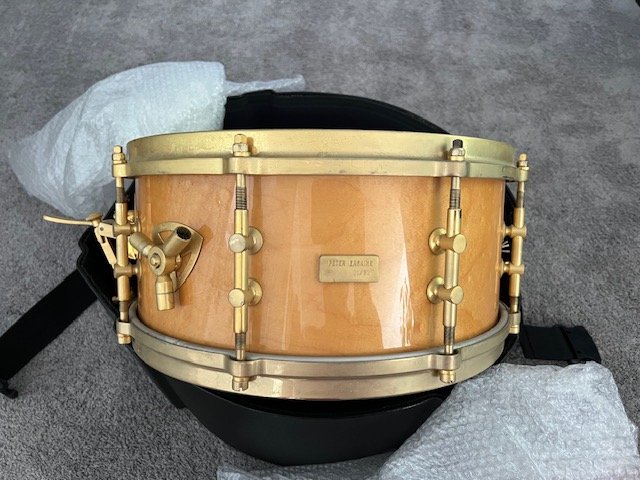
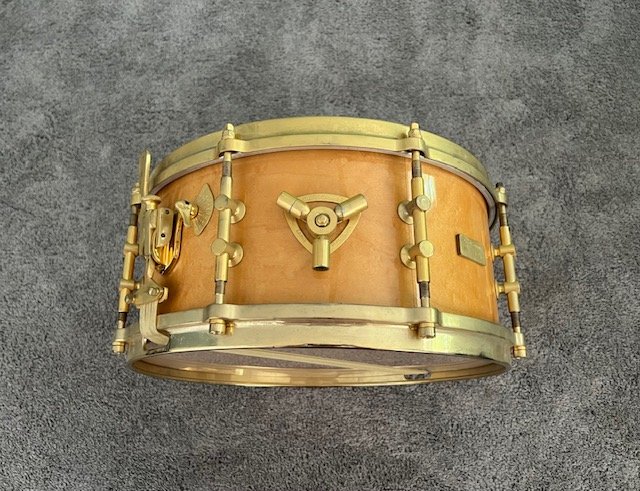
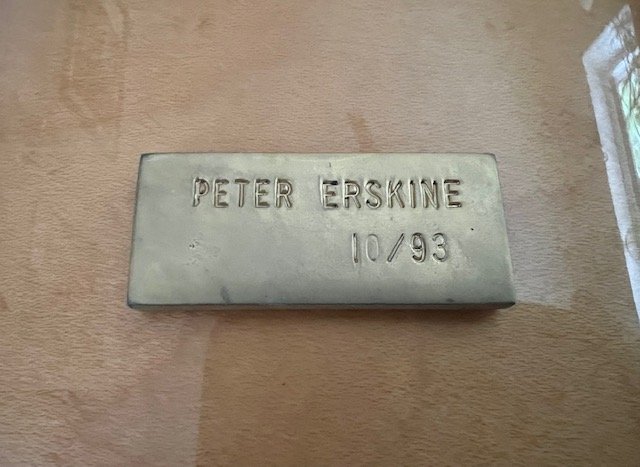
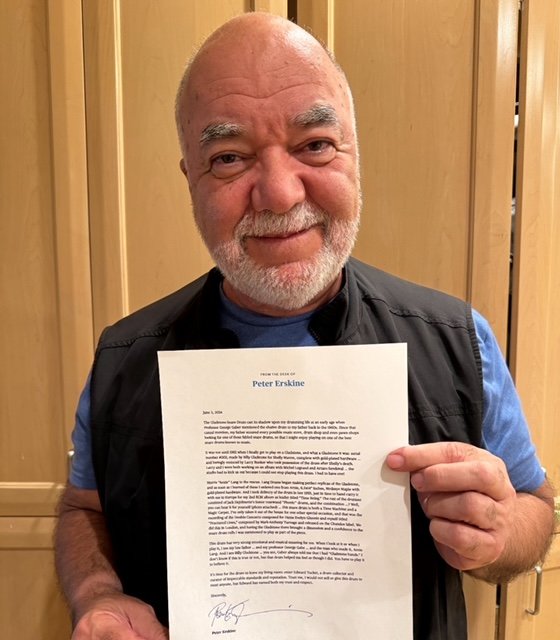
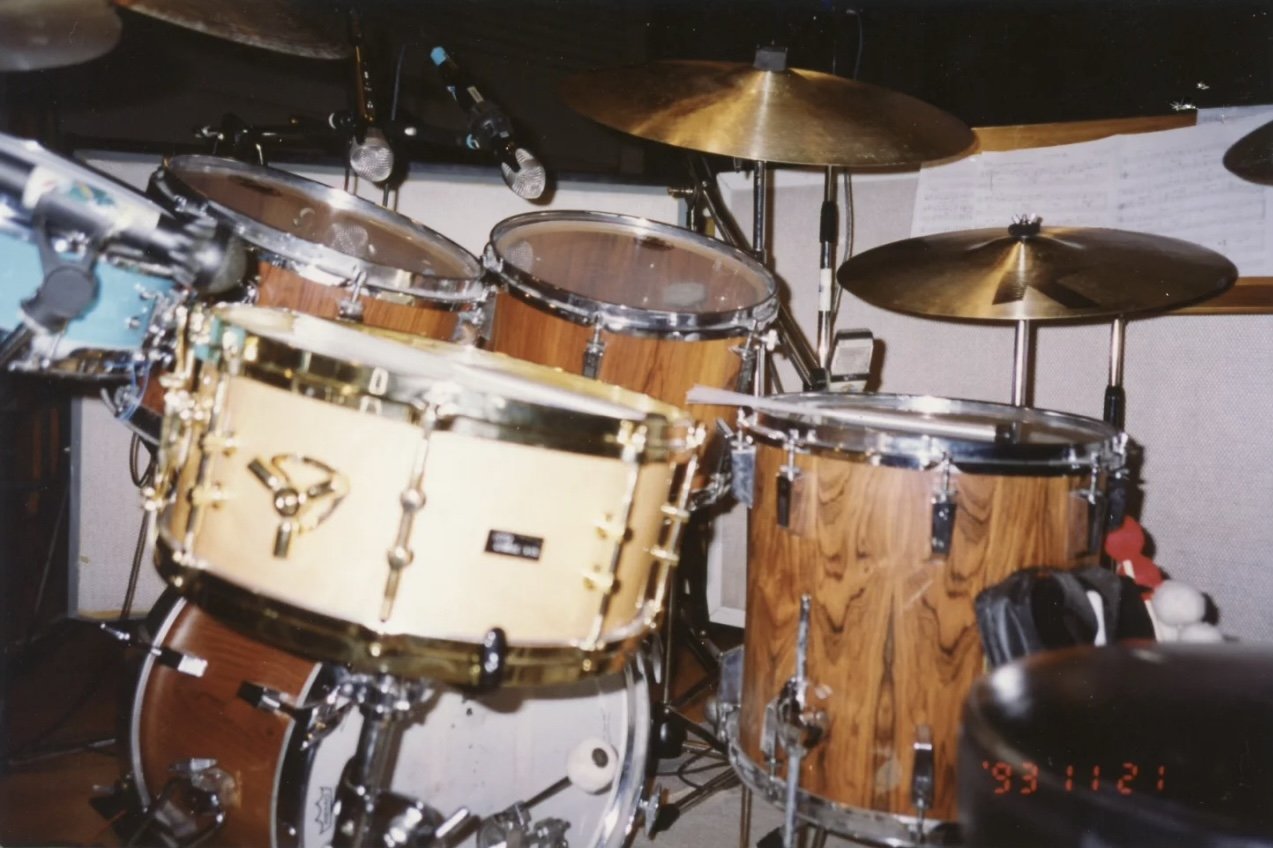
Read more To say I am beyond thrilled to be the new caretaker of this incredible piece of snare drum history from one of the greatest drummers of all time, my friend, the incomparable Peter Erskine, is an understatement.
This is what Peter calls “…my legacy snare drum…” and I am fully aware that this is/was one of his most prized and personal snares of all time, and I am so grateful that he has entrusted me to watch over it.
Read moreOne of my favorite parts of the vintage MIJ drum genre is simply admiring all the badges, the styles and types and even the brands. A badge on a drum (especially a stencil) lets you know who sold it. Any kind of badging usually accomplishes at minimum the tasks of identification and advertising, and sometimes a little deception with the styling.
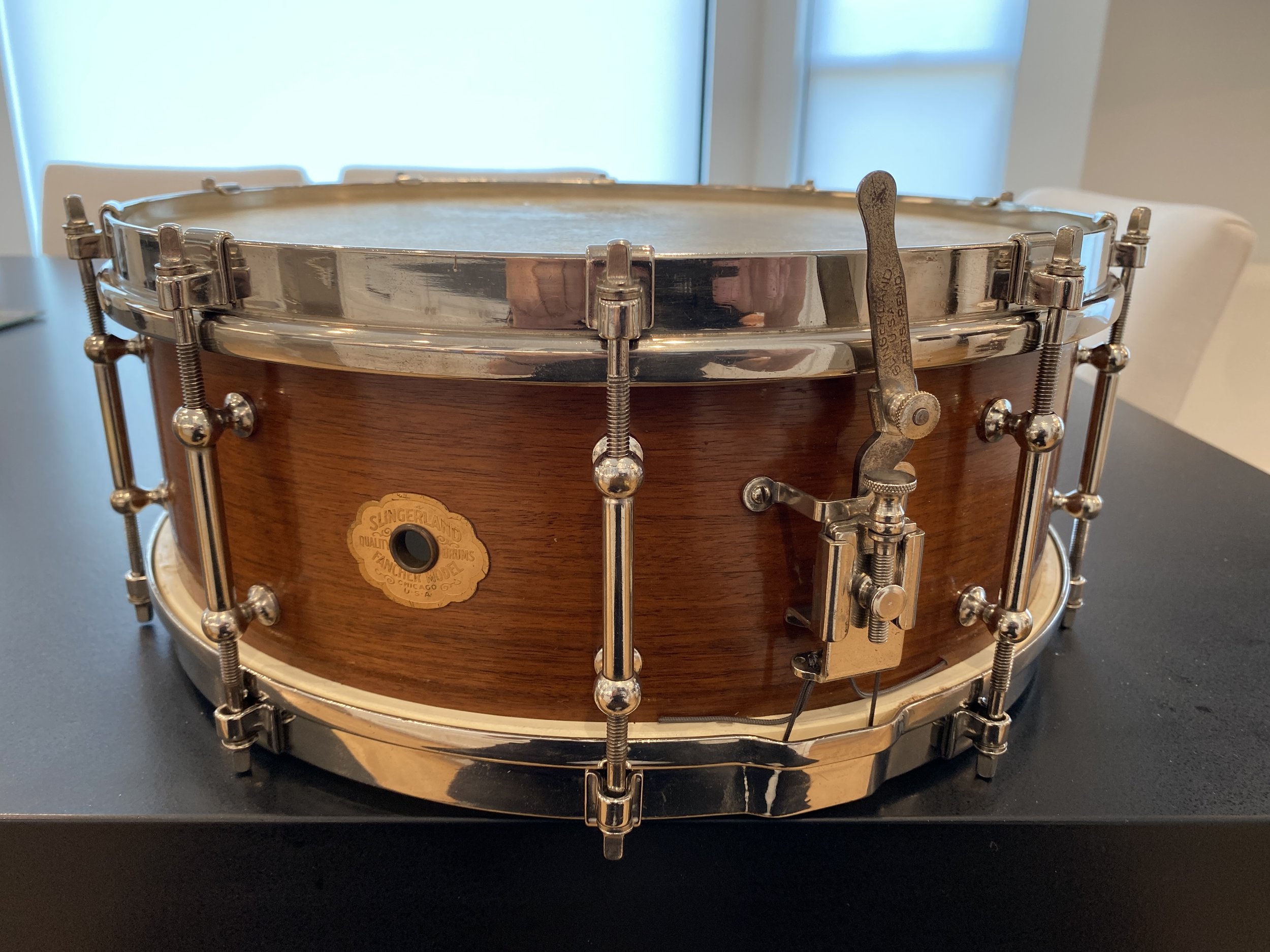
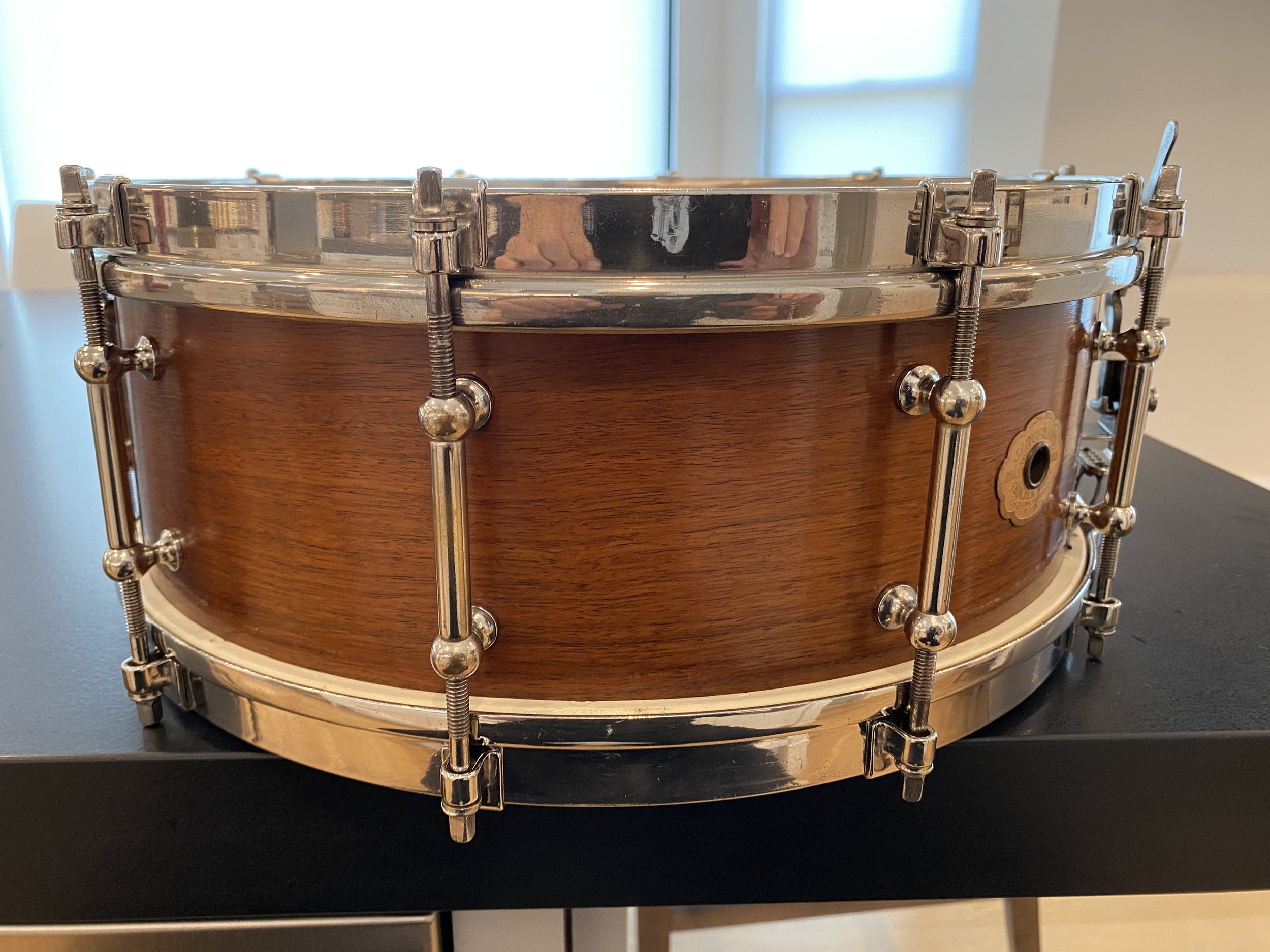
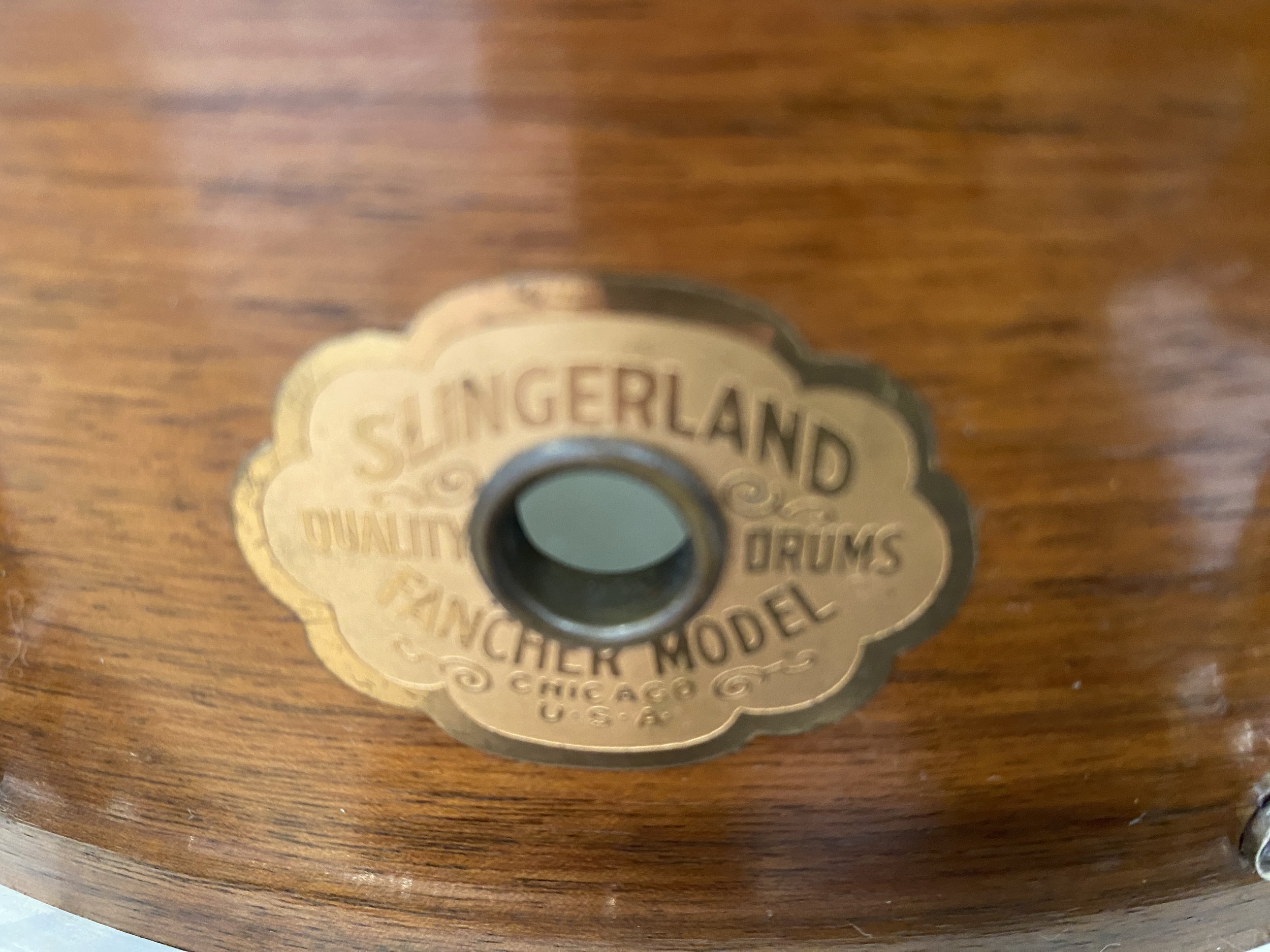
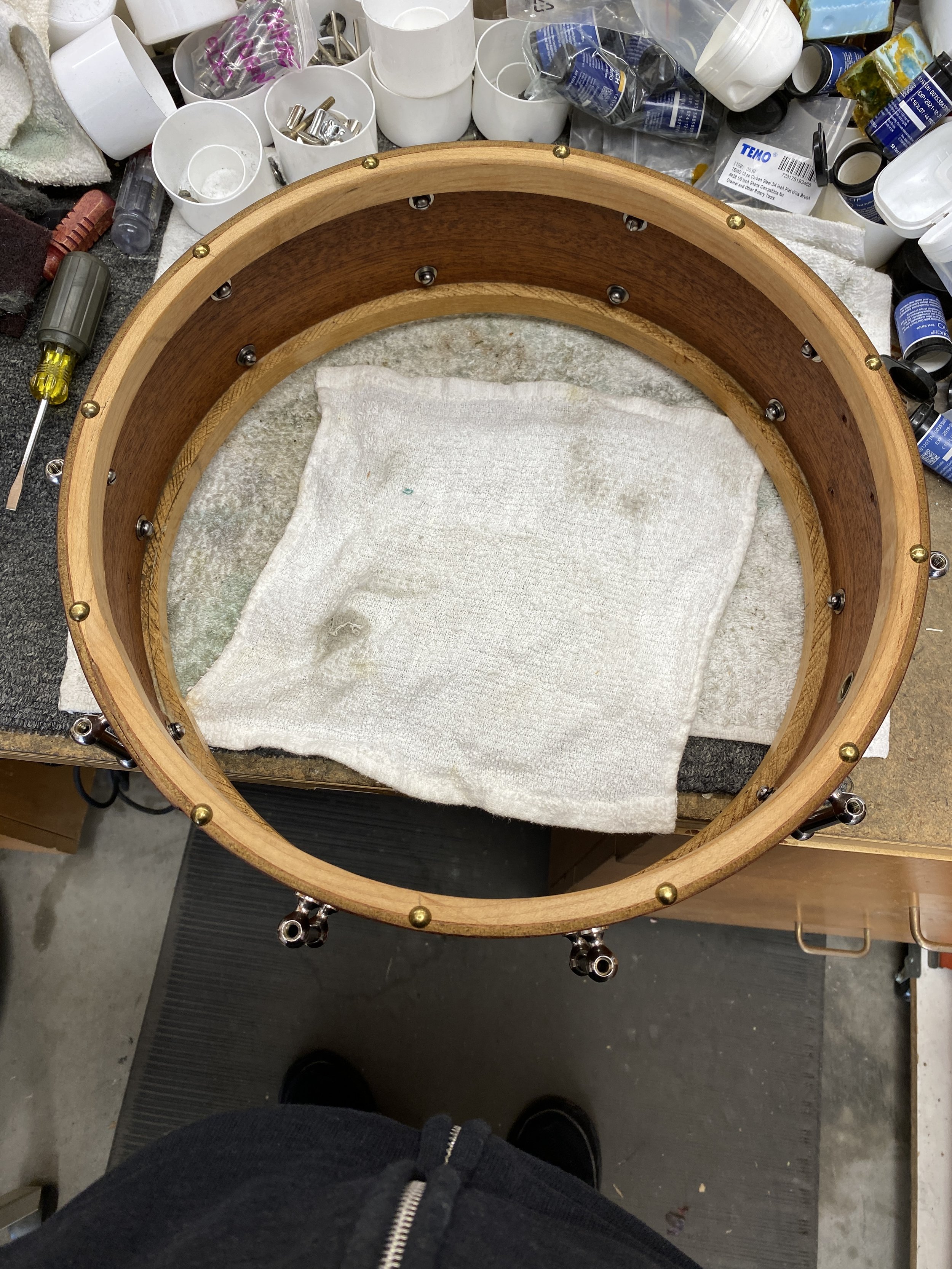
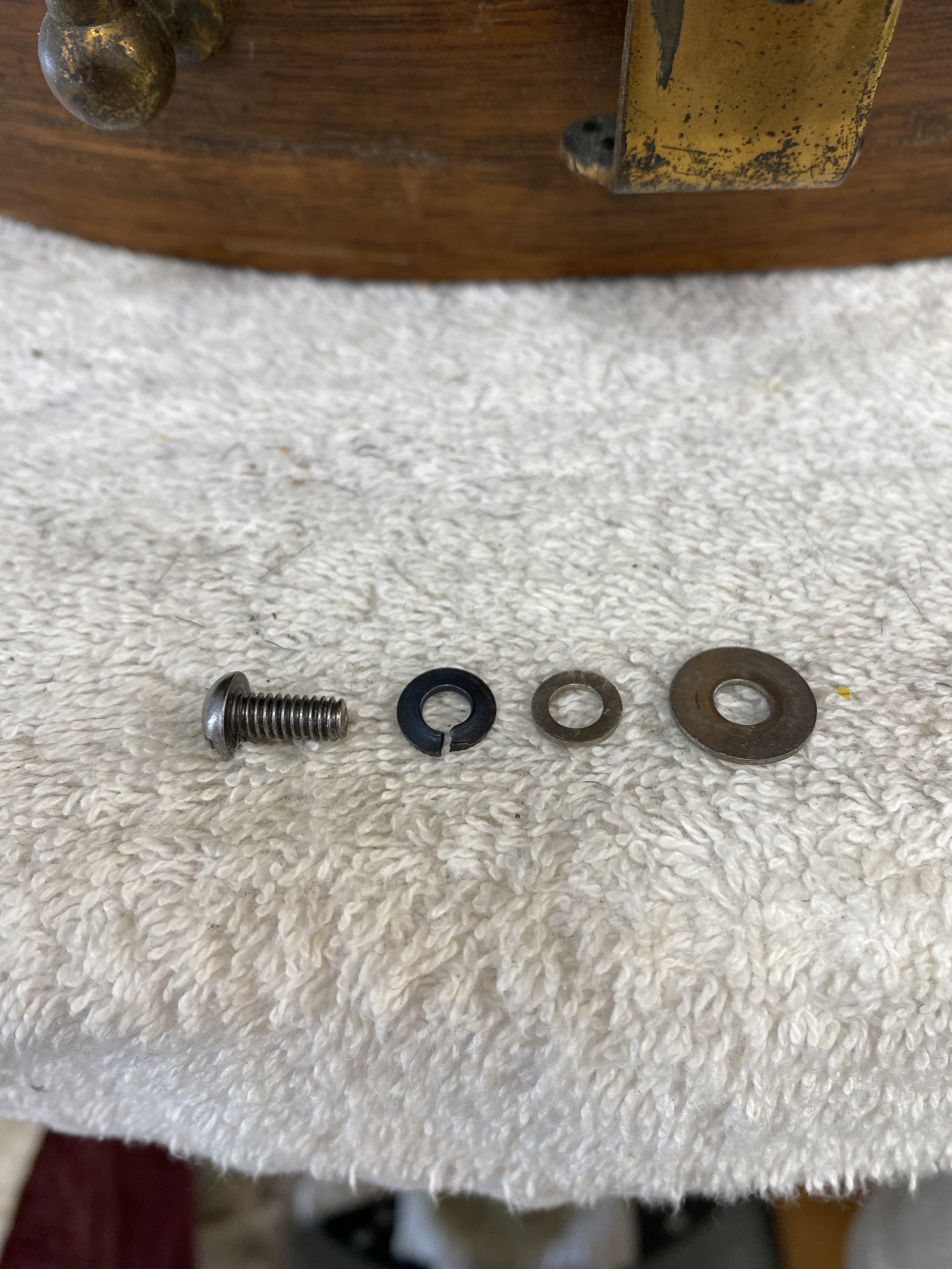
Read moreMost of these drums have 10 brass wood screws or 10 brass brads on the top bearing edge that are in line with the tube lugs and are there to allow the brass ring of the Tone Flange to seat. This drum is a tad different, there are12 brass brads that do not line up with the lugs (see photo). I also noticed a difference in the internal attachment hardware. On Slingerland snares of this era there is usually a washer, a lock washer and a screw. This drum has a larger washer, smaller washer, lock washer and a screw for the lugs, 3 point strainer and butt plate.
Read moreBob Campbell shoots great photos, period. Especially of drums and drummers. He got some great shots of both at the 2024 Chicago Drum Show in May. Too many to post here. They are uploaded on the NSMD Facebook page https://www.facebook.com/notsomoderndrummer Go check it out.
Read moreI really like the Ludwig pre-serial # Super Sensitive snare drum. I have 10 of them in my collection from the 1920’s – 1970’s. This month I will feature 3 of them that are from 1961 – 1964.
Read moreI’ve always been a fan of the blue and black “bowling ball” oyster finishes that Ludwig introduced in 1971. The blue is my favorite and I have had a couple of Hollywood kits (12, 13, 16, 22) over the years, but I’ve always wanted a Downbeat kit (13, 16, 22) with a rail consolette.
Read moreThe word “rare” is a very subjective term and quite overused in the drum world, but in this case I think it’s appropriate. There are many parts of this drum which are rarely seen, or not seen at all, and they don’t appear in any known catalogs.
Read moreThis article documents the types and sizes of drums recorded in a large database of 1960s Ludwig Keystone badge drums to provide a glimpse into Ludwig’s 1960s production.
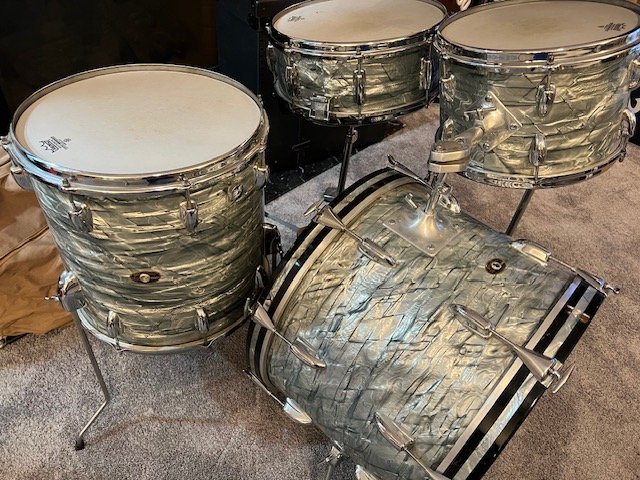
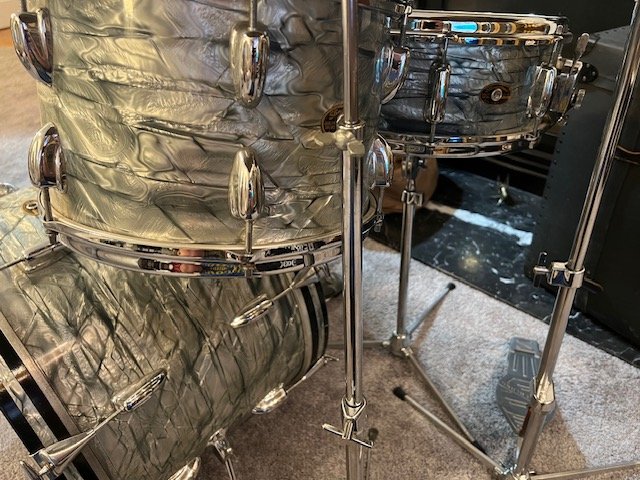
Read moreYou are looking at a one owner 1968 4-piece Slingerland Brass & Black Badge, w COB Rims, Milk Chocolate Interior “Modern Jazz Outfit” No. N9 in Light Blue Pearl in absolutely remarkable condition! 12” tom, 14” floor, 20” bass, 5” x 14” 8-Lug “Buddy Rich Artist Model” snare. All ordered and born together with all the original period Zildjian Cymbals including a 20” ride, 18” crash and 14” hi-hats.
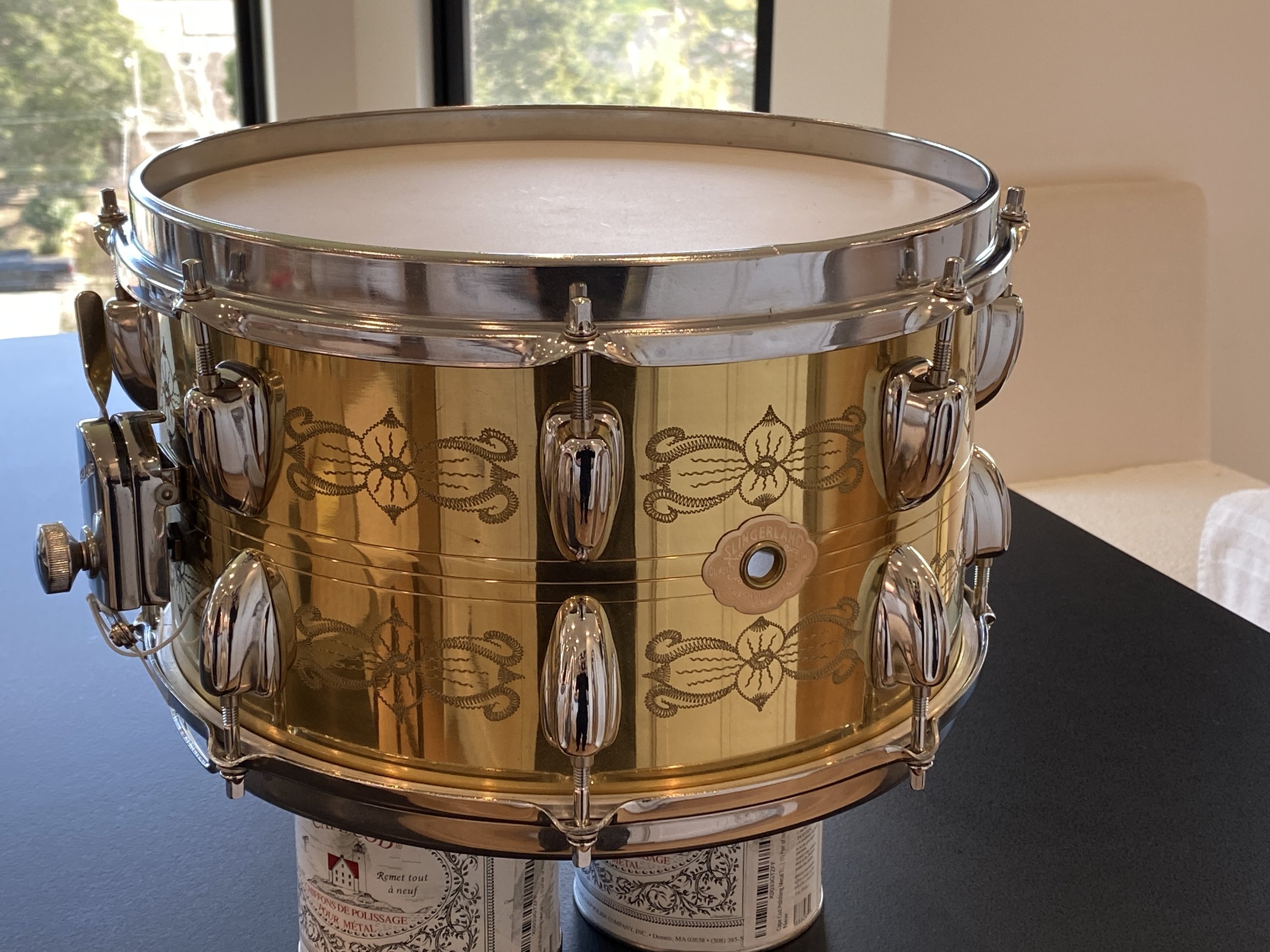
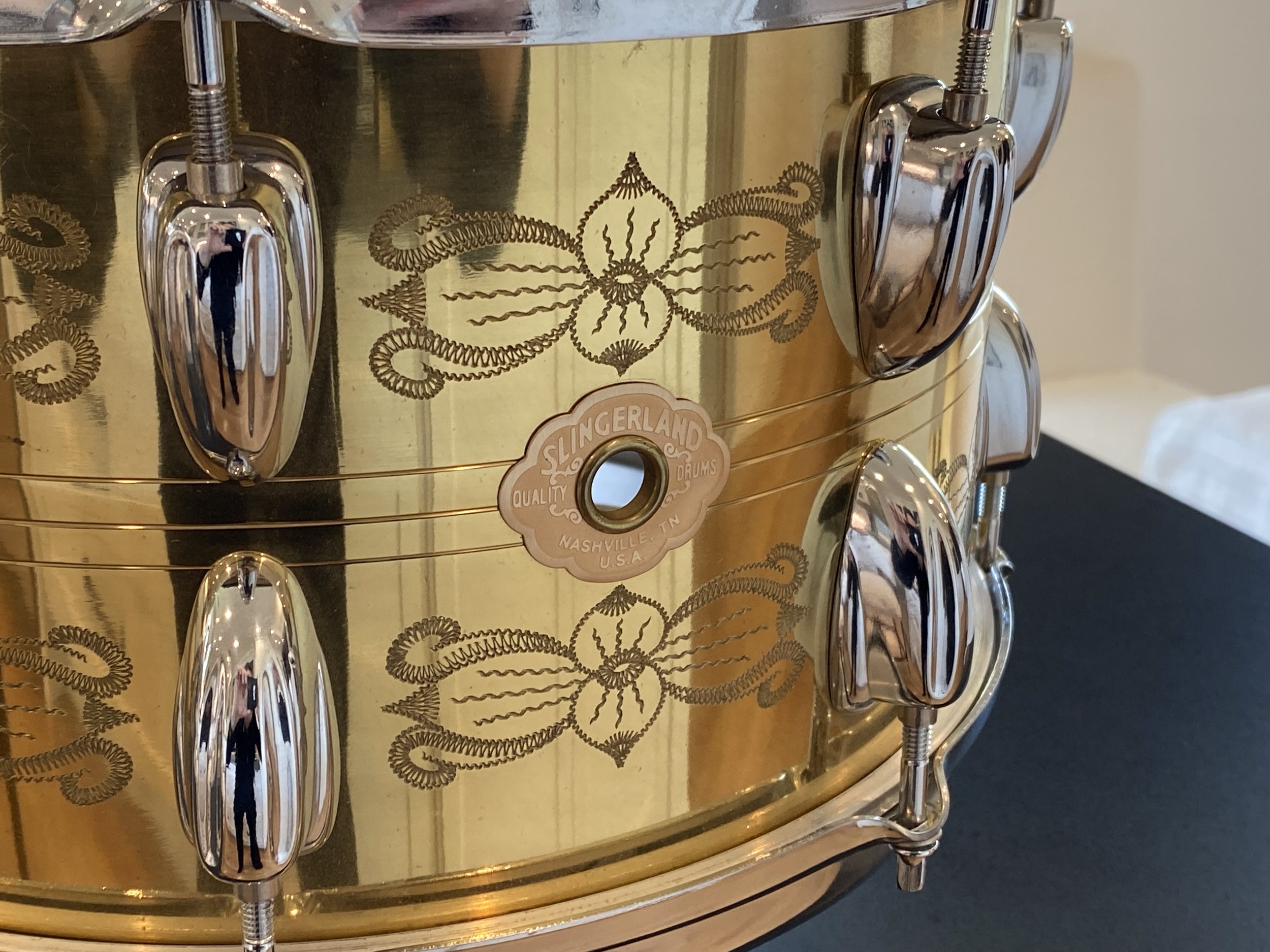
Read moreThe engraving pattern is based on the engraving pattern that was used on the 1928 Slingerland Gold Plated Artist Models
Read moreMETJAZZ is a french brand created just after WWII by Jean METZGER. He was working with his 3 sons, Henry, Jean Claude & André, and the workshop was located in SUCY EN BRIE near Paris. They made banjos and drums, and quickly knows a great success for their high quality instruments because METJAZZ was a very innovative brand, by design, and patented inventions.
Read moreEvery now and then a vintage Japanese kit comes on the market with one of the “fun” wraps. For Star made drums, that would be: the Pearl Fantasia, or the Lava Pearl, or the Peacock Pearl, or what I have today, the Fibre Gold.
Read moreThe set is pretty rare having the Starlight Sparkle wrap that was available from 1958 to 1962 only. It has a beautiful light lavender tint in the light.
Read moreThis one has me stumped. I’m not an authority on DW even though I was a dealer since 1985 and bought one of the first kits made. I’m thinking this is one of the first, if not the first, badge of kits made in the Fender plant in Encenada Mexico.
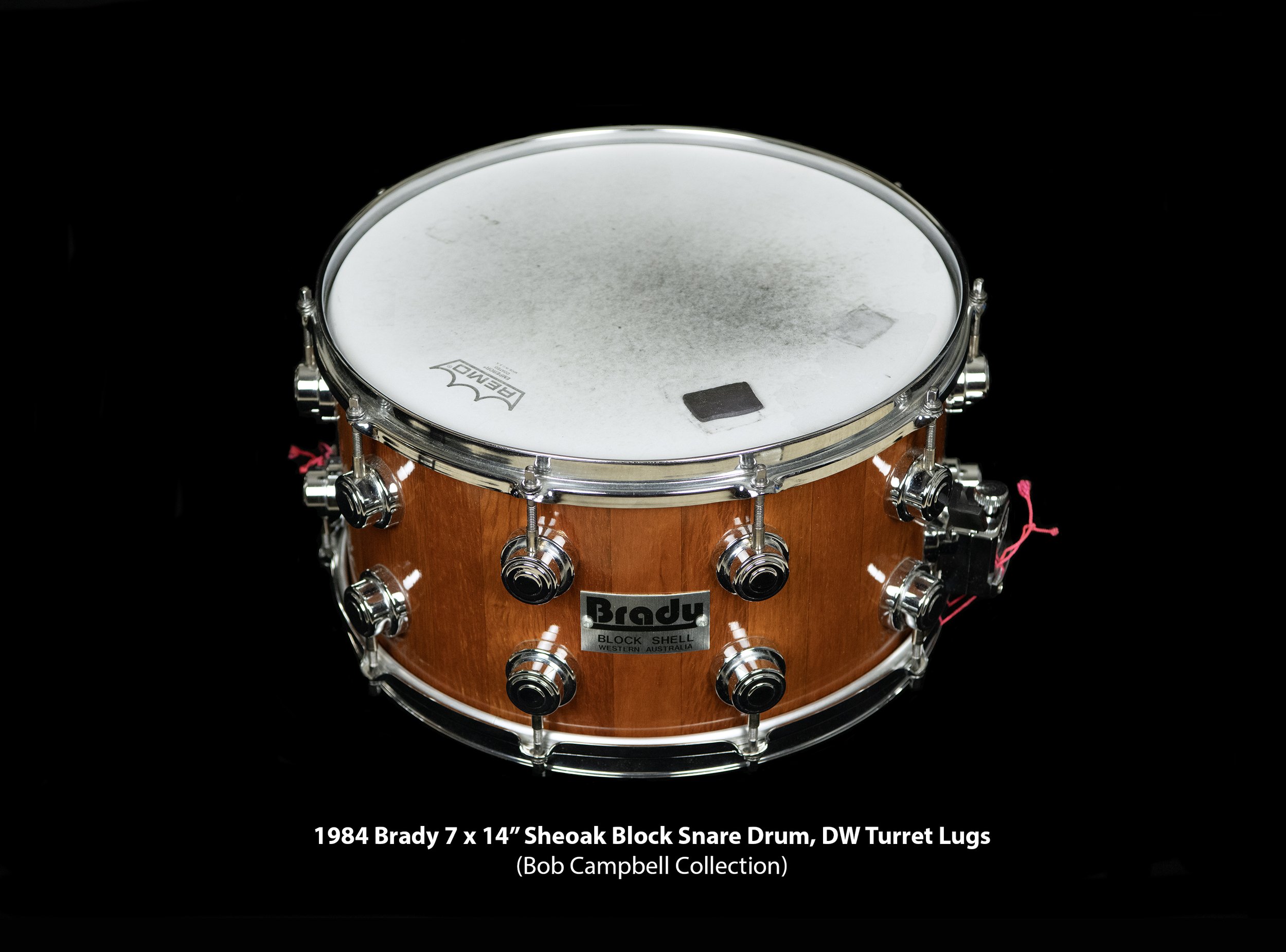
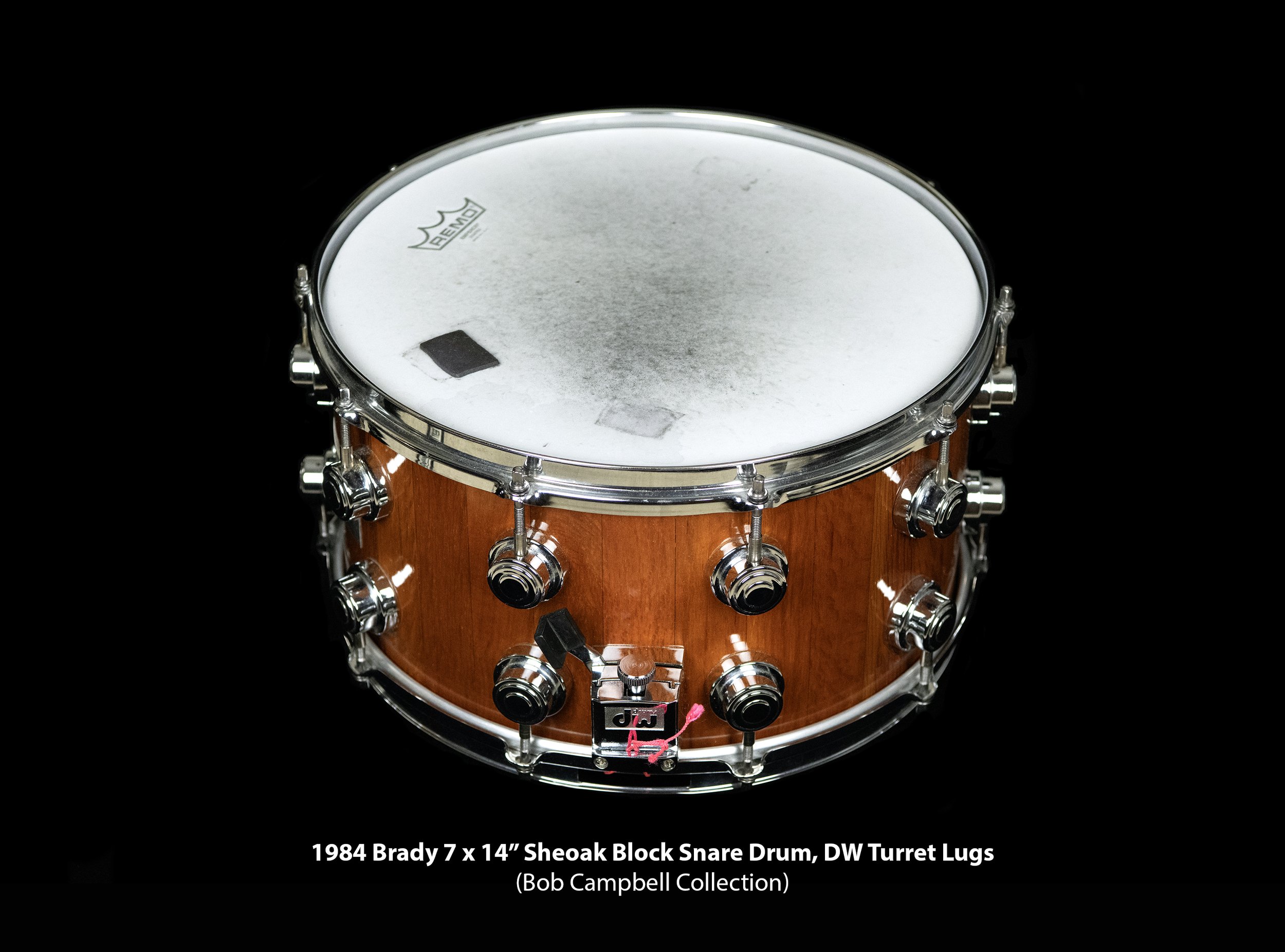
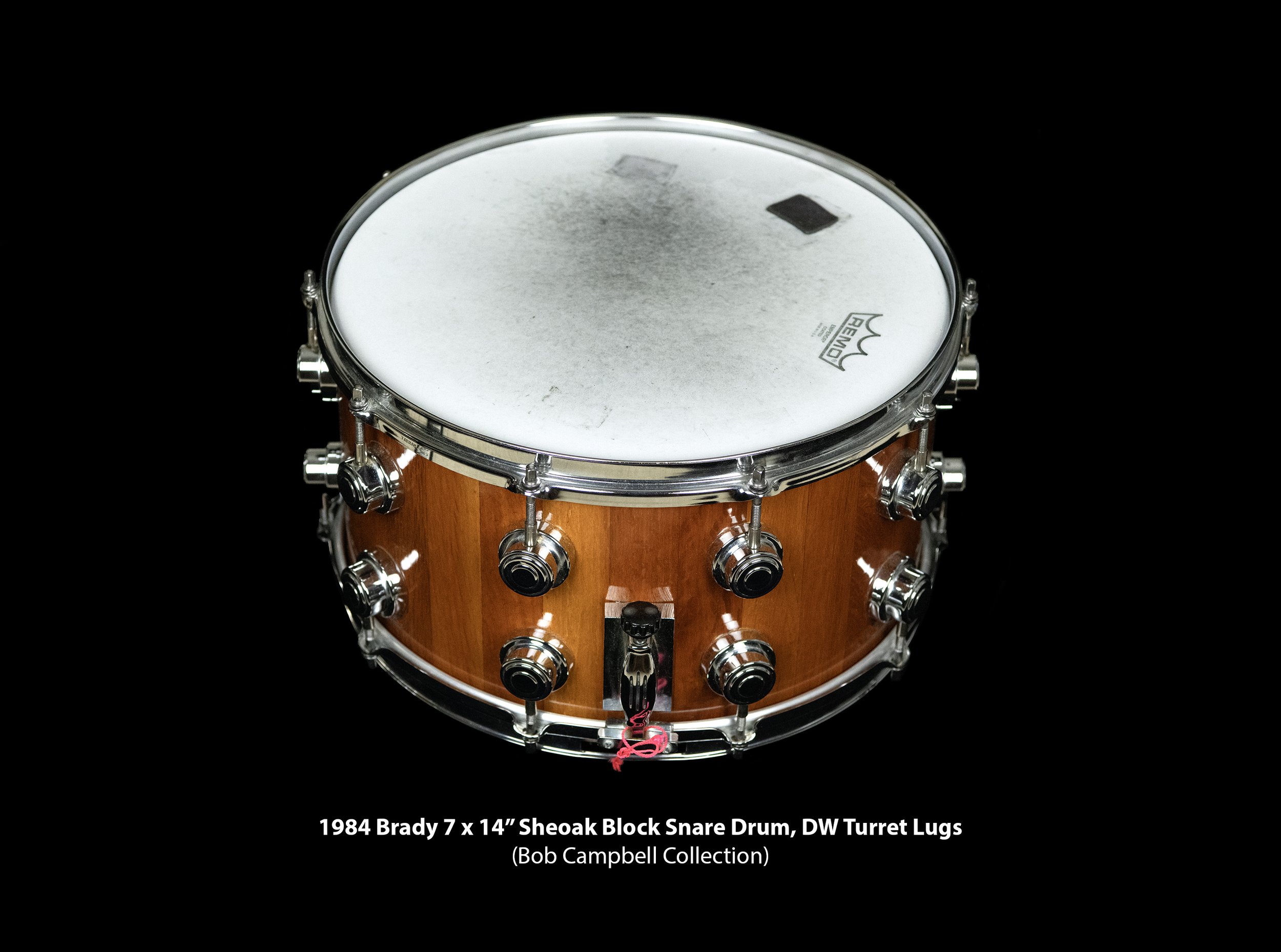
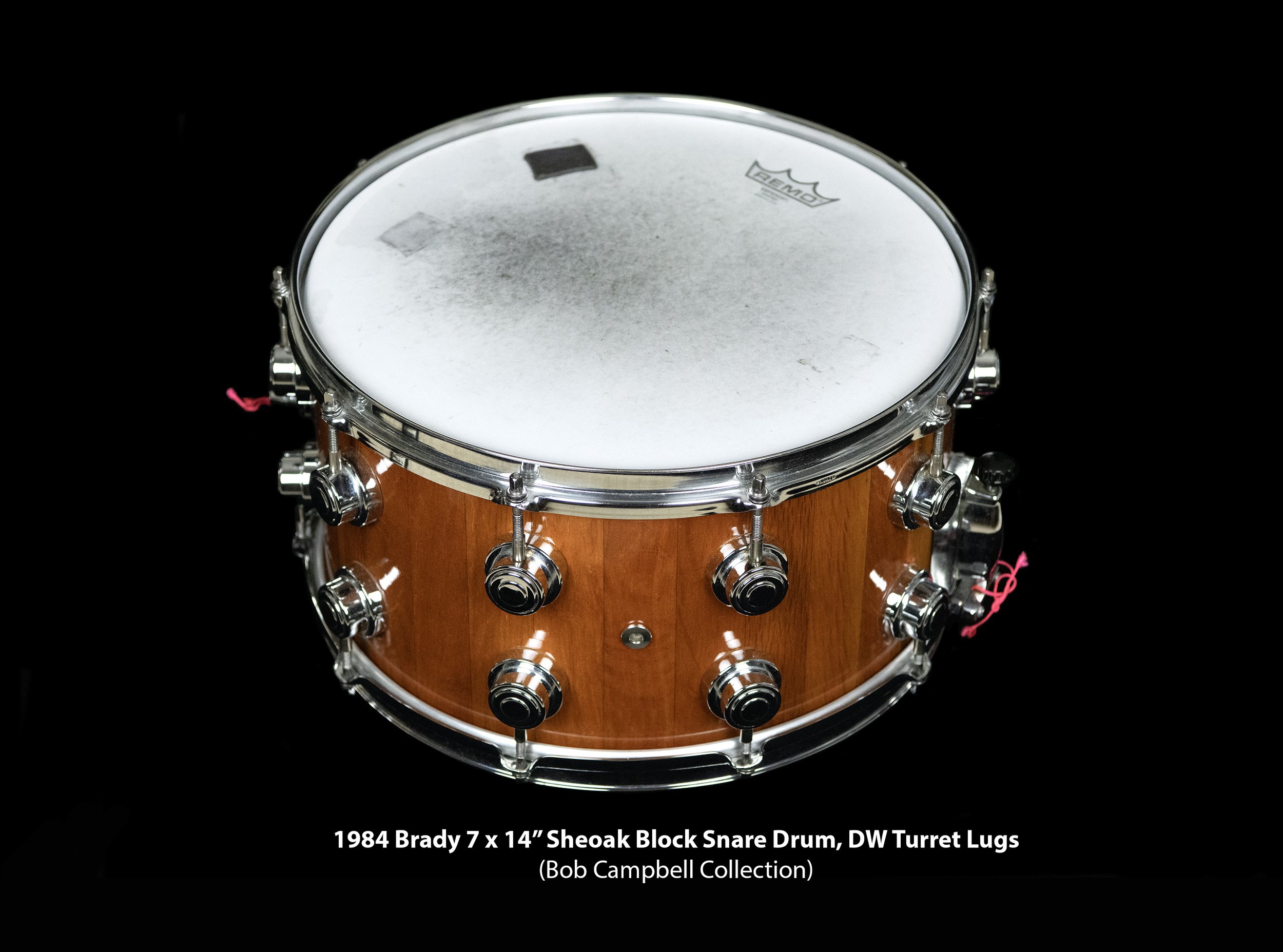
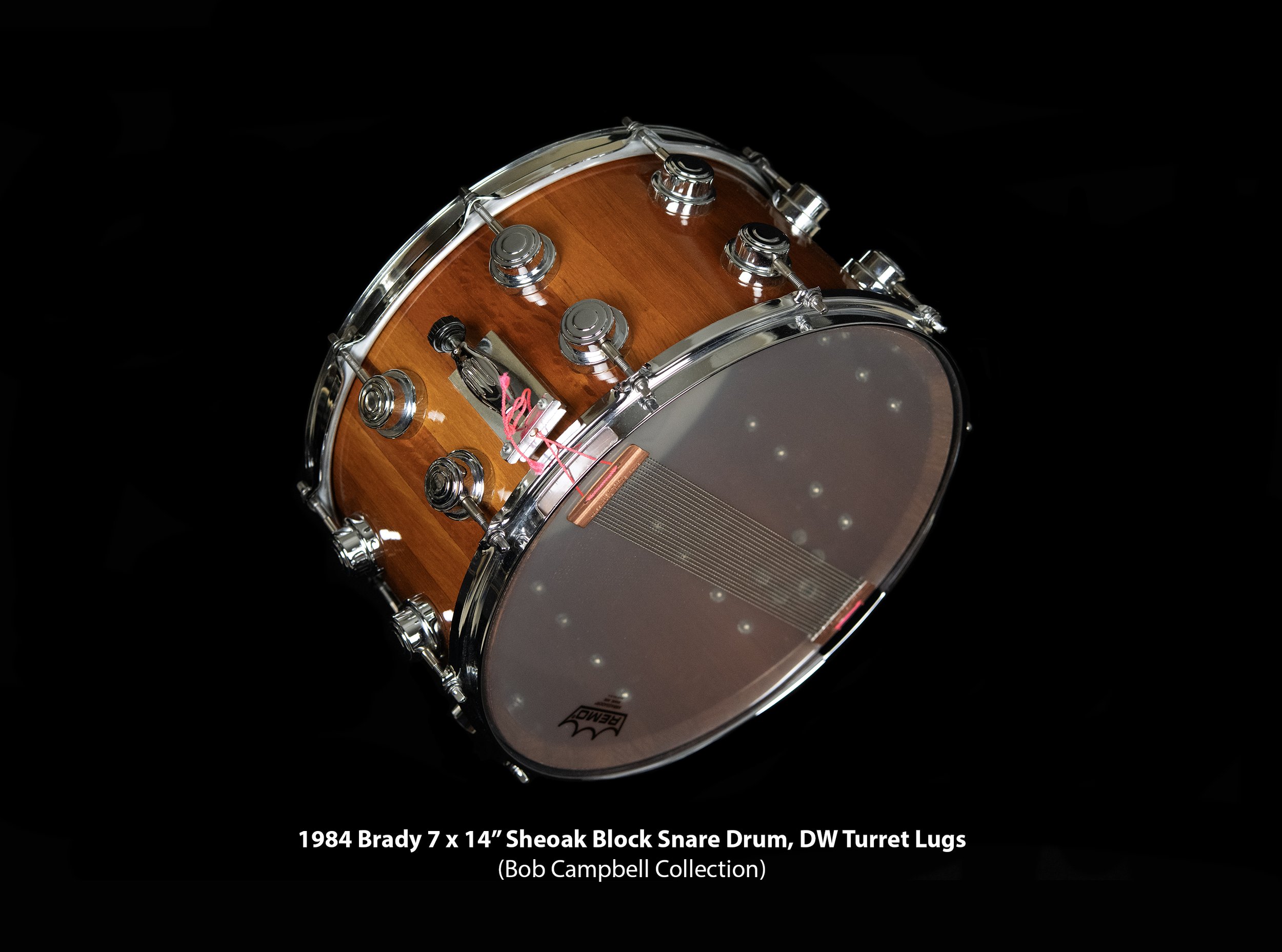
Read moreI kept in touch with Chris and when he told me he was going to the states and would be in New York, I asked him to bring me a snare. We met in N.Y.C., and I picked up my snare–an amazing Sheoak stave, (block), fitted with large DW (Camco) lugs and DW dual tension adjustment. It sounded fantastic. I’m not a scientist but I’m convinced that the thick Sheoak shell combined with the large, round lugs creates an outstanding snare sound. At the time I played a 1970’s Gretsch kit and the combination was fantastic.
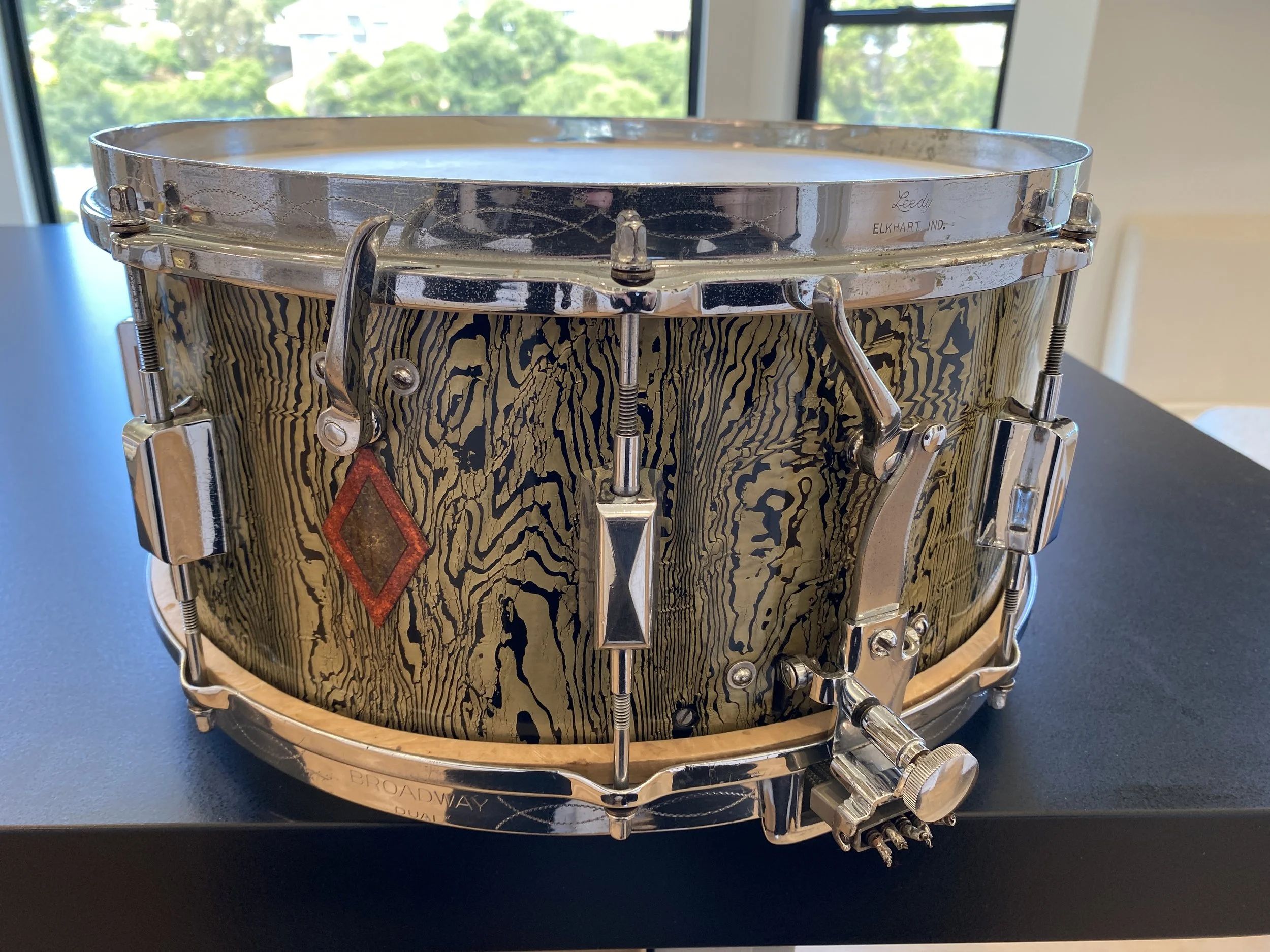
Read more*Collectors of the same 1930s era Ludwigs and Slingerlands know this finish as Abalone Pearl but Leedy chose to call their finish Oriental Pearl.
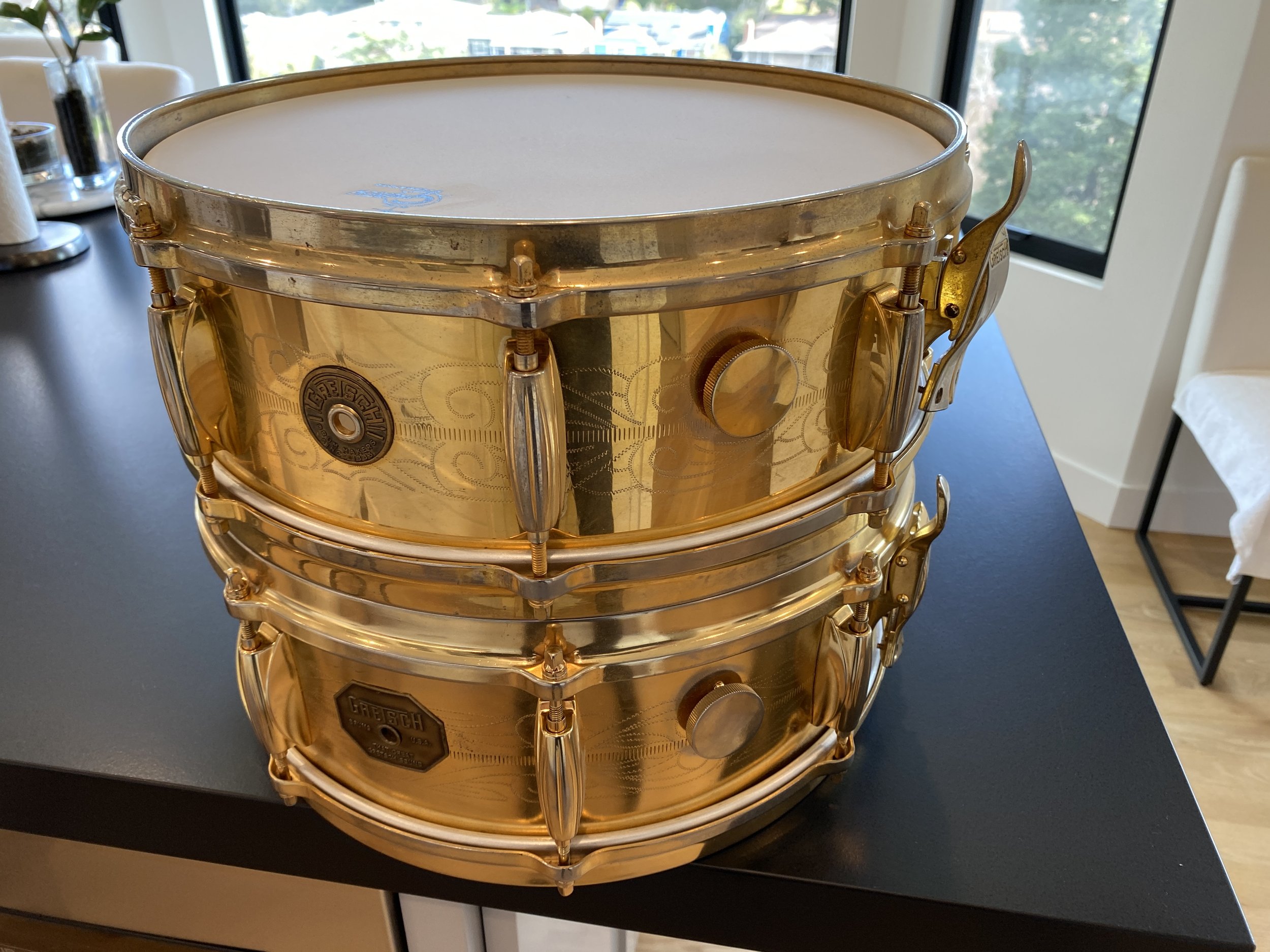
Read more“The gold Gretsch snare was circa 69-70 and done right on the cusp of the transition from Round Badge to SSB.” -Steve Maxwell
Read more