
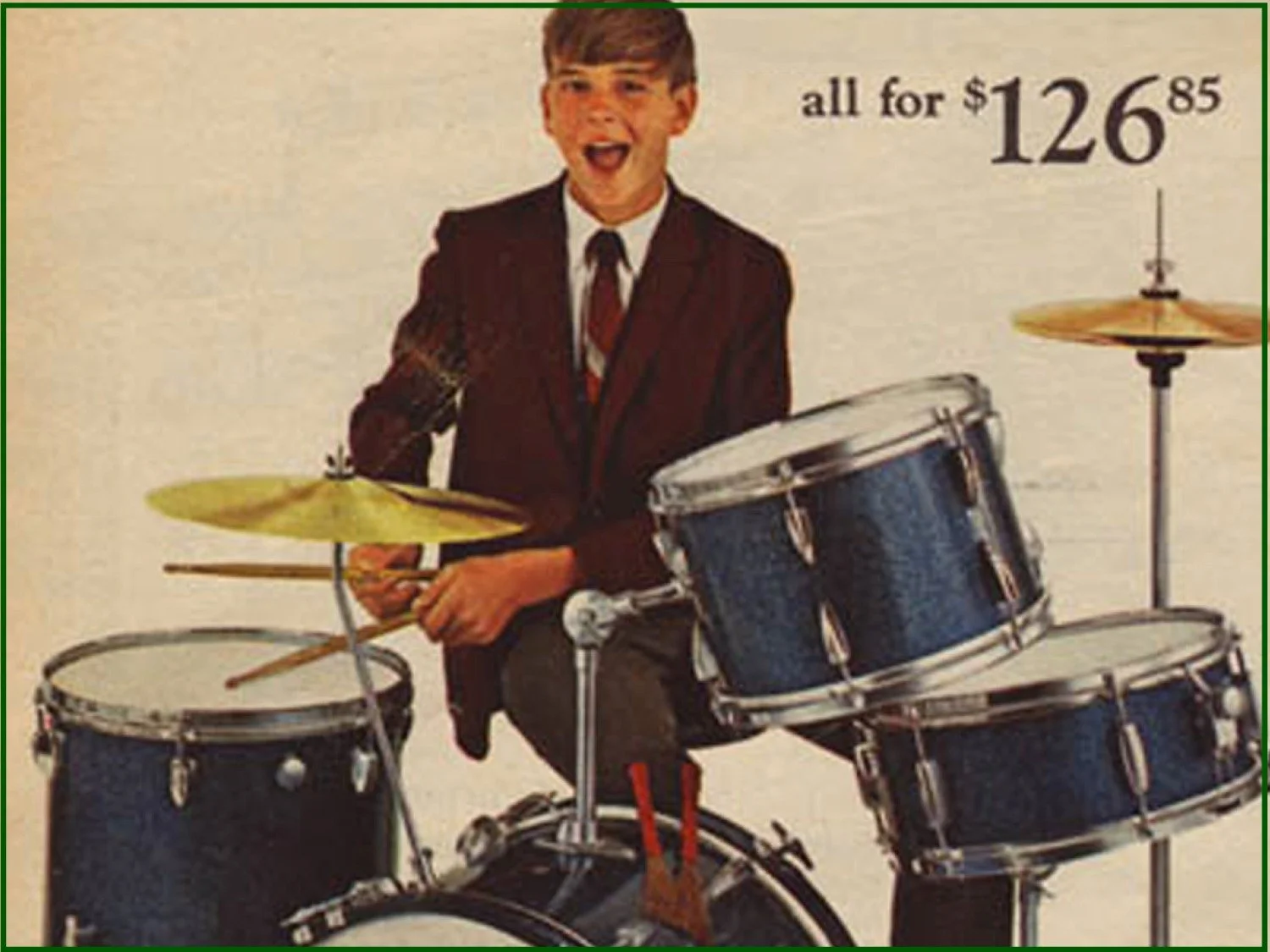

Coming up on Christmas again, I still go back to the days of being a kid and browsing through the Sears Christmas Catalog (AKA: The Sears Wish Book) and going straight to that one page dedicated to drums and guitars. That one page didn’t display that much, but it was more than enough to spur on my imagination. Little did I know that I would be doing a deep dive into those very drums almost fifty years later.
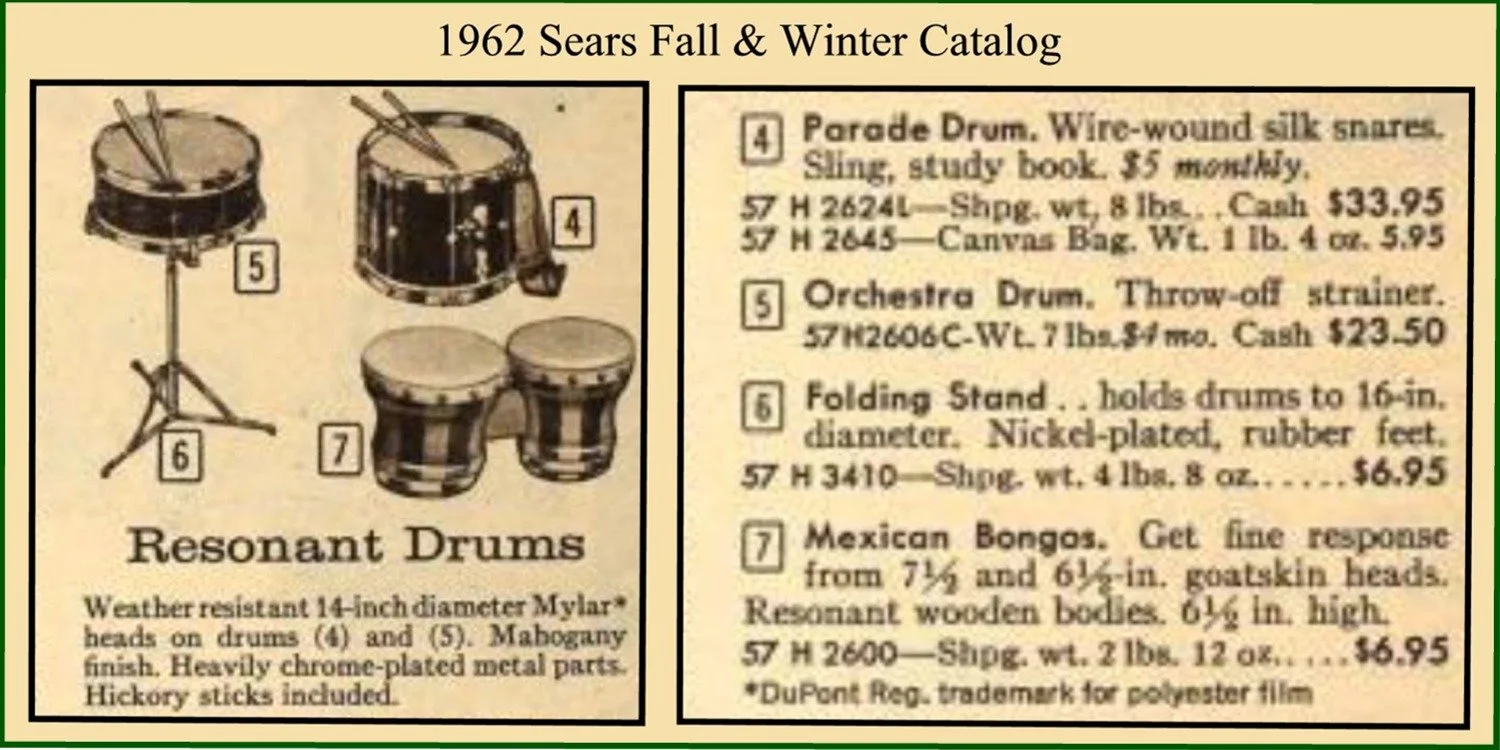
In the early 60’s Sears didn’t have full blown drum sets in their catalogs any more, just an orchestra snare and a marching snare for school. These drums were made right here in the USA by Kent in New York. Kent was also a supplier for JC Penney’s and Montgomery Ward on top of the Revere brand, Whitehall, Lido, and more prominently, their own brand E. W. Kent.
Note that a decade or two before that Sears had a small catalog dedicated just to drums and even had endorsers.
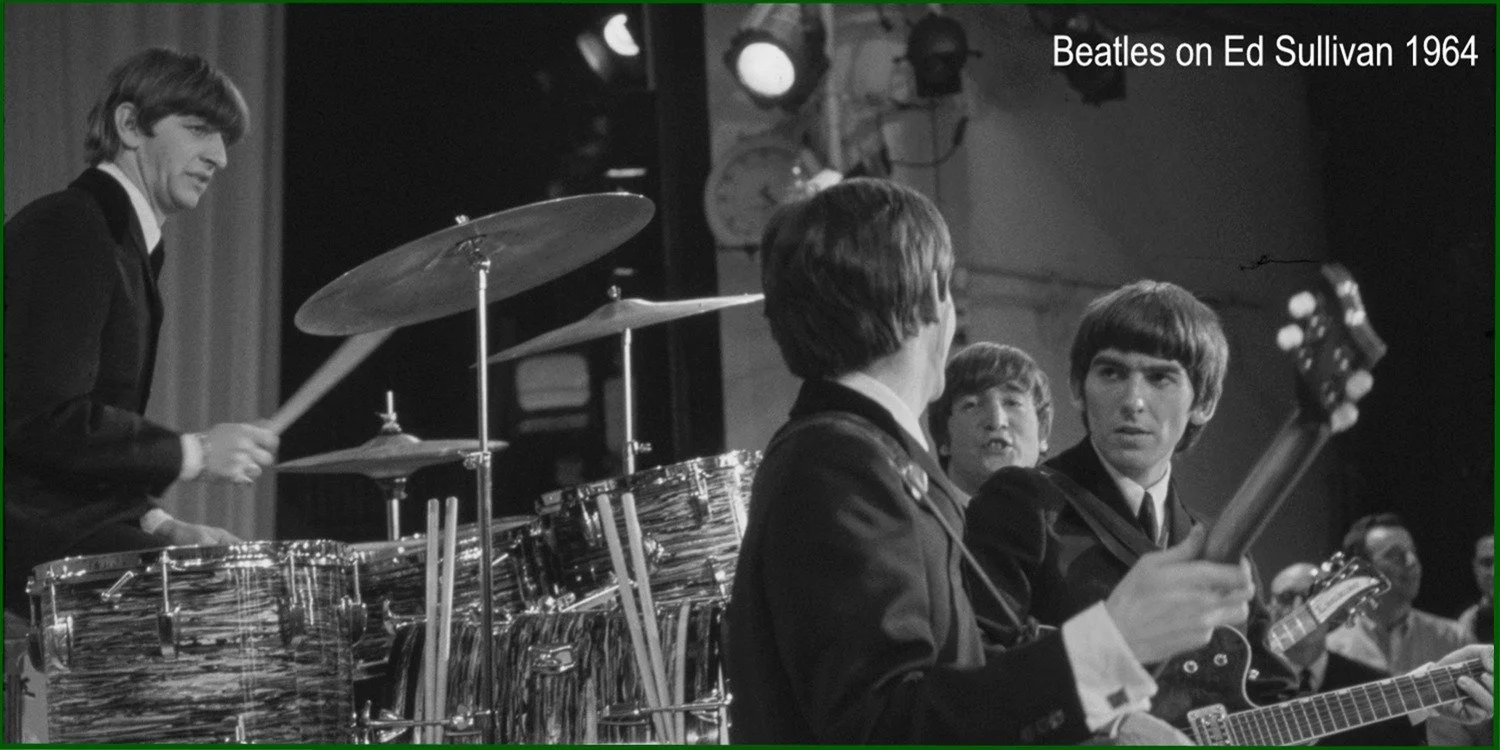
But in 1962 rock music began to burst through with their new champions, the Beatles, with their hit song “Love Me Do”. By 1963 the Beatles had their first American hit song, and on February 9 of 1964 the world was forever changed with their appearance on the Ed Sullivan Show which birthed an endless number of bands and every one of them needed a drummer and every drummer needed a drum set. And there was a zero percent chance that the little drum manufacturer Kent could keep up with the impending demand for inexpensive drums.
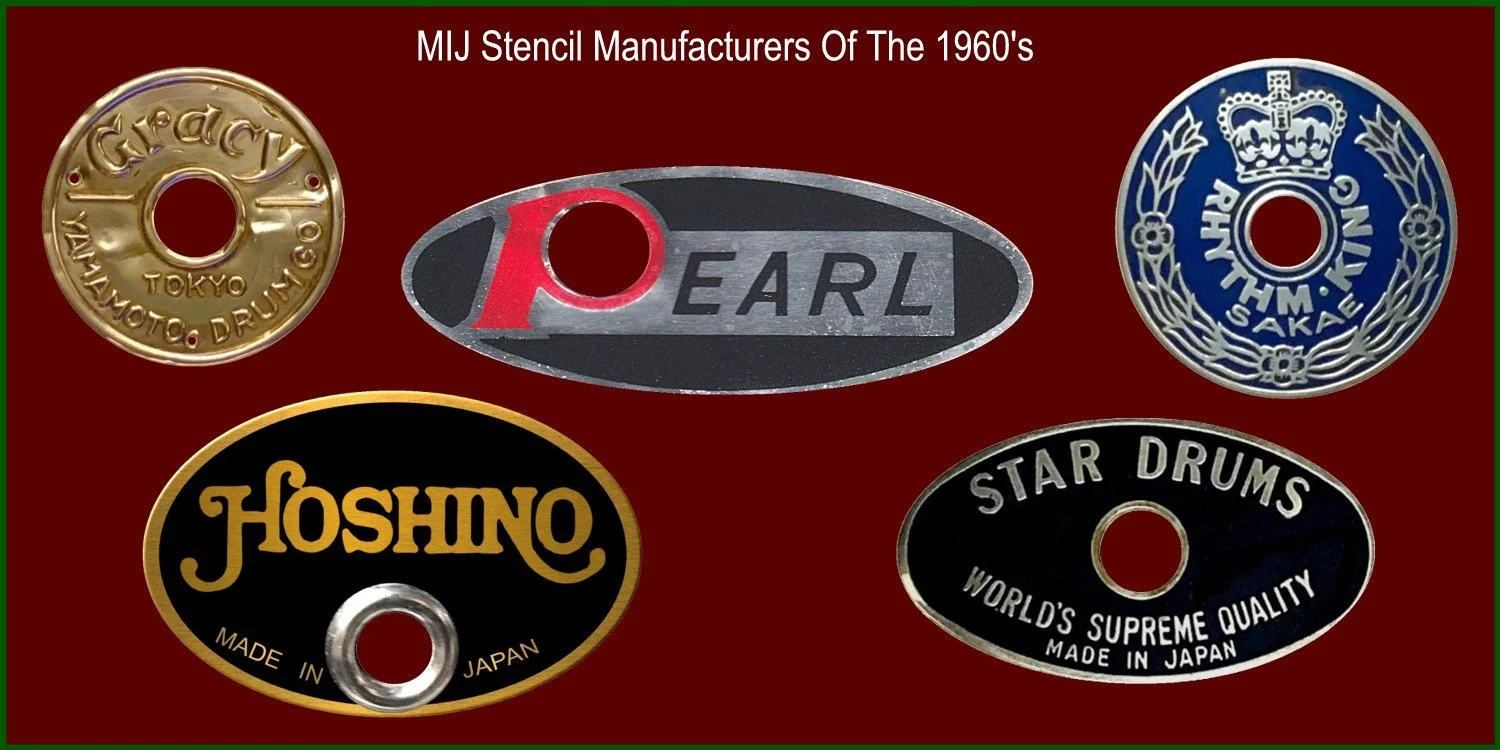
By 1961 Sakae, Pearl, and the brand-new manufacturer Star were all up and running and they all were willing to sell unbranded, and stencil branded drums on top of their own brand name drums. Gracy and Hoshino were in the mix at some point in the mid 60’s but their beginnings are not documented. It took all these Japanese companies on top of Kent to keep up with the demand for inexpensive drums.
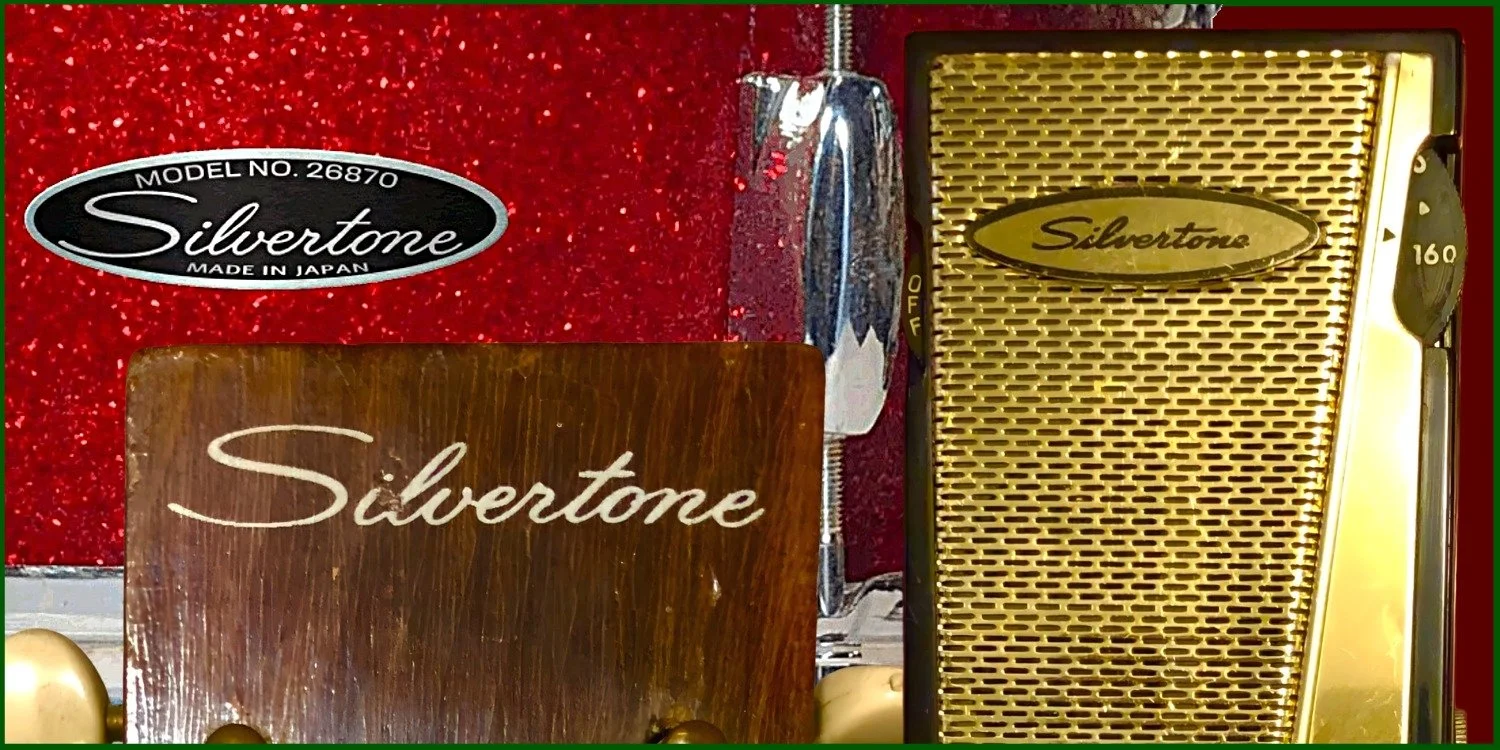
Sears not only owned the Sears brand name, but they also owned the Silvertone name which they used for musical instruments and their electronics, but they were also okay with not branding their instruments at all. In fact, most of the drums that came through Sears had no branding at all. It does seem that the drums with the Silvertone badge came from exclusively from the Pearl factory. I do know that there were some early Sears badges, but they are believed to all be from the Kent era of manufacturing or earlier.

The story on the Japanese stencil drums at Sears begins 1963 with their Christmas Catalog that featured a red sparkle 3-piece, center lug, Pearl drum set for only $99.95. On this same page they listed a snare drum outfit made by Kent in the USA, so it wasn’t a hardline switching to Japanese imports, but a soft transition.
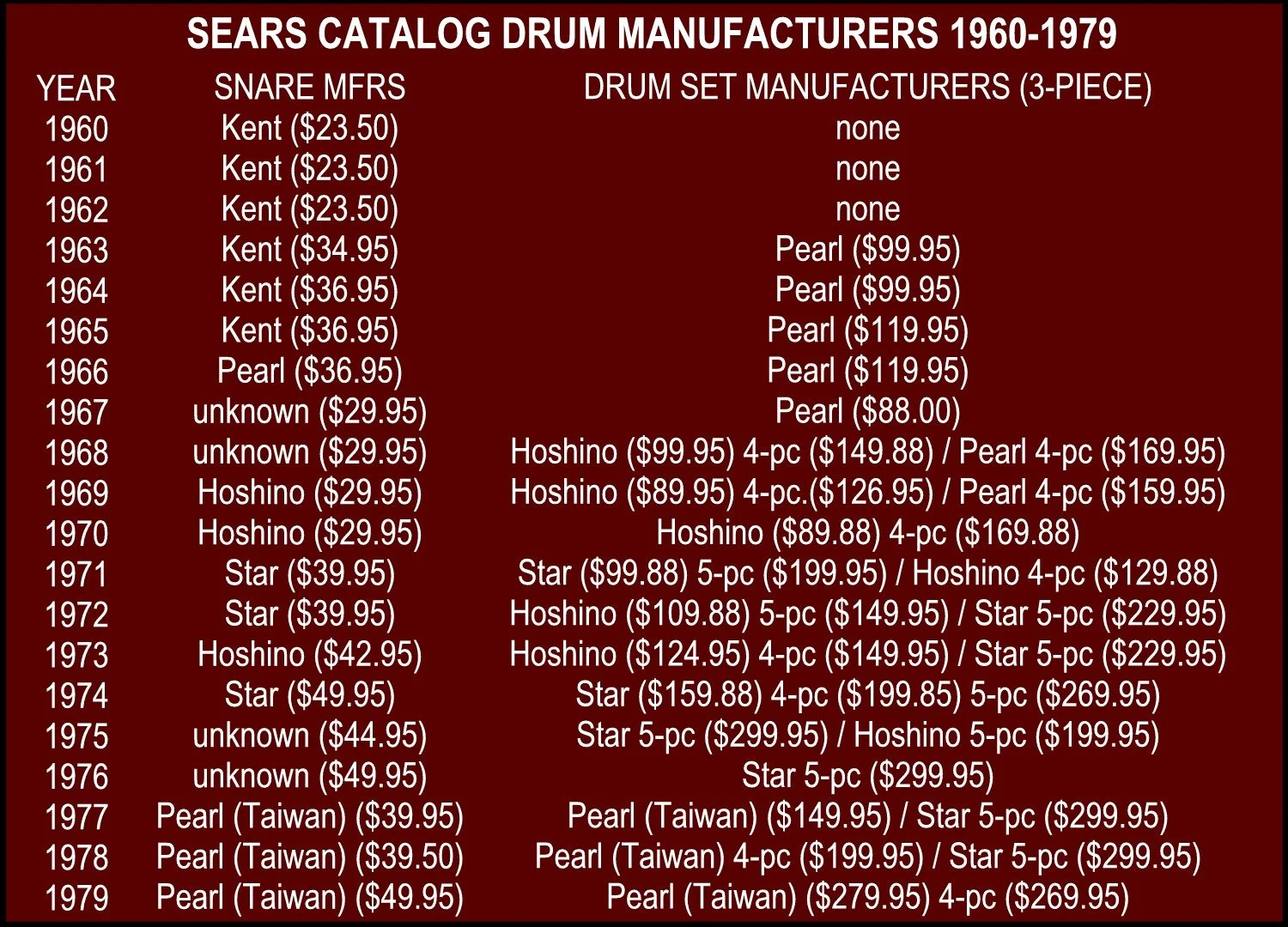
Sears in those years cranked out three catalogs a year and each catalog may have a different picture of a kit, or they may have used the same picture for several years in a row. Because of that we can’t really use a catalog to determine exact information of who made it and when it was made, but it can get us in the ballpark.
For the 60’s and most of the 70’s a three-piece kit was the standard entry-level setup with four and five-piece kits becoming available in the late 60’s. In many instances a floor tom was an add-on, which is why many MIJ kits have mismatched drum manufacturers. Even in some of the catalog pictures you may see a mixture of manufacturers.

For most of the 60’s and 70’s the drums from Sears were only offered in blue, red, or silver sparkle, nonetheless, these were still beautiful drums. I know looking back we snicker at the staging of the drums and the actor poses that were over the top goofy, but in advertising, catching your eye and showing everything that’s being offered is the main goal, and it worked!
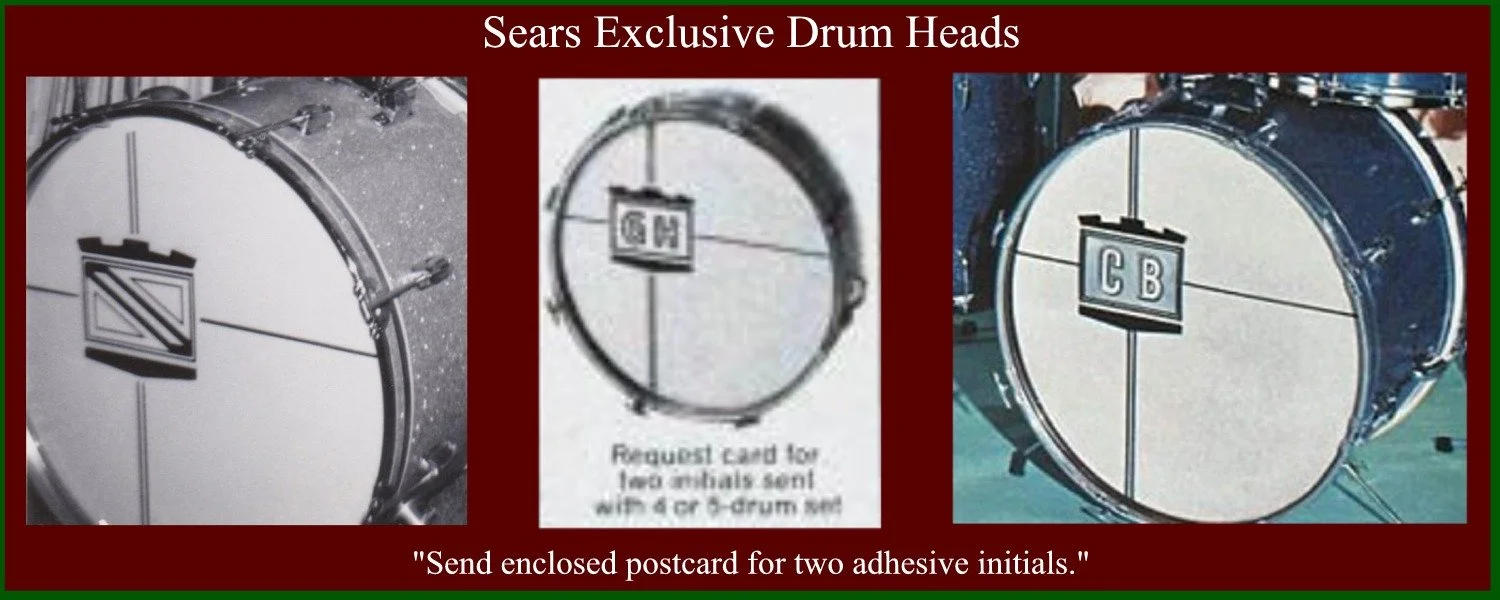
Sears even had their own bass drumheads that they offered from 1968 to 1972. The head featured a fancy “S” with a blocky crown on top. And if you sent in the postcard that came with the kit, you could put your monogram letters to stick over top of it, like a Gene Krupa or Buddy Rich drum shield.
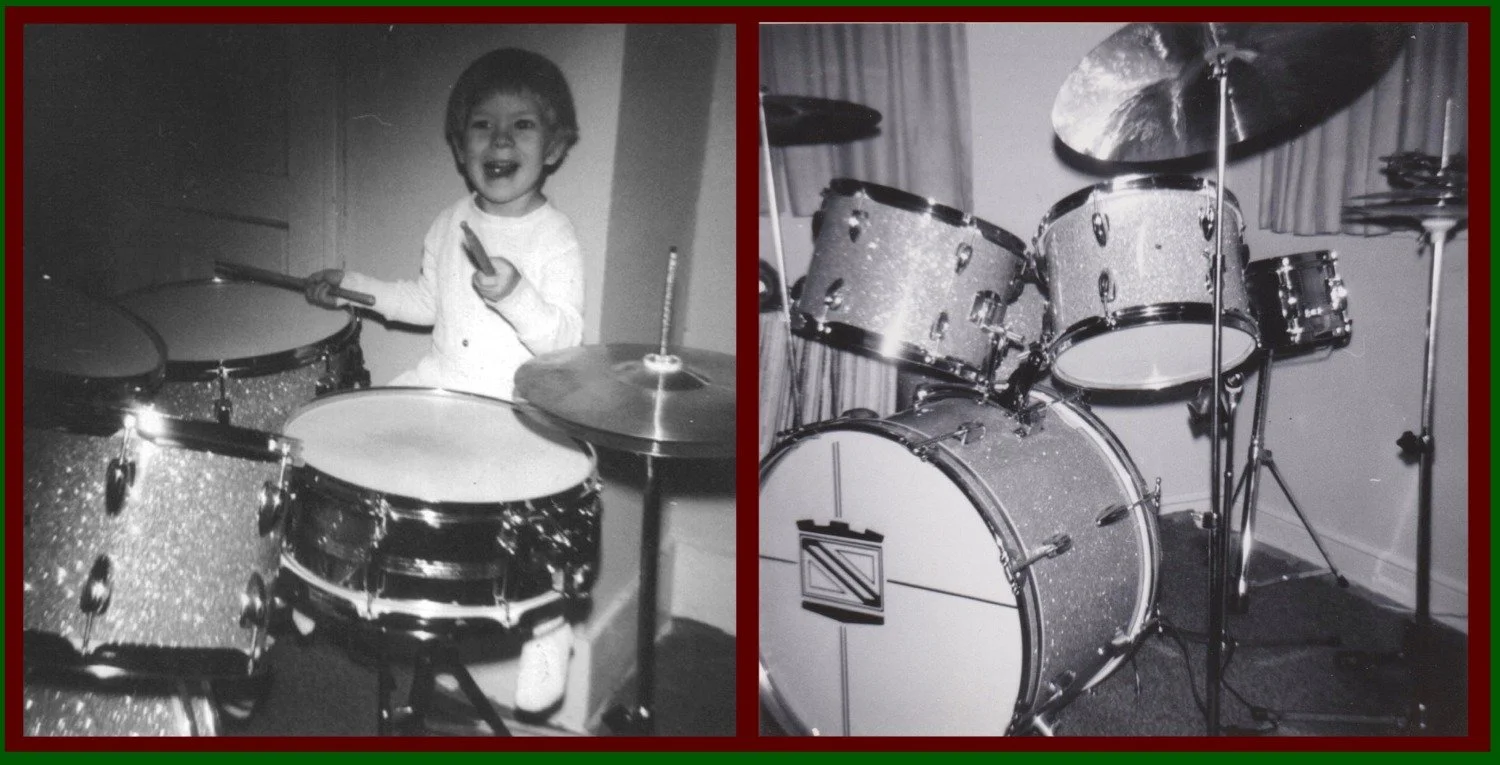
One of the reasons that Sears drums are special to me is because the very first picture of me behind a kit was on my dad’s brand-new silver sparkle Sears 5-piece made by Star. (I’m like three, so no I don’t know what I am doing.)
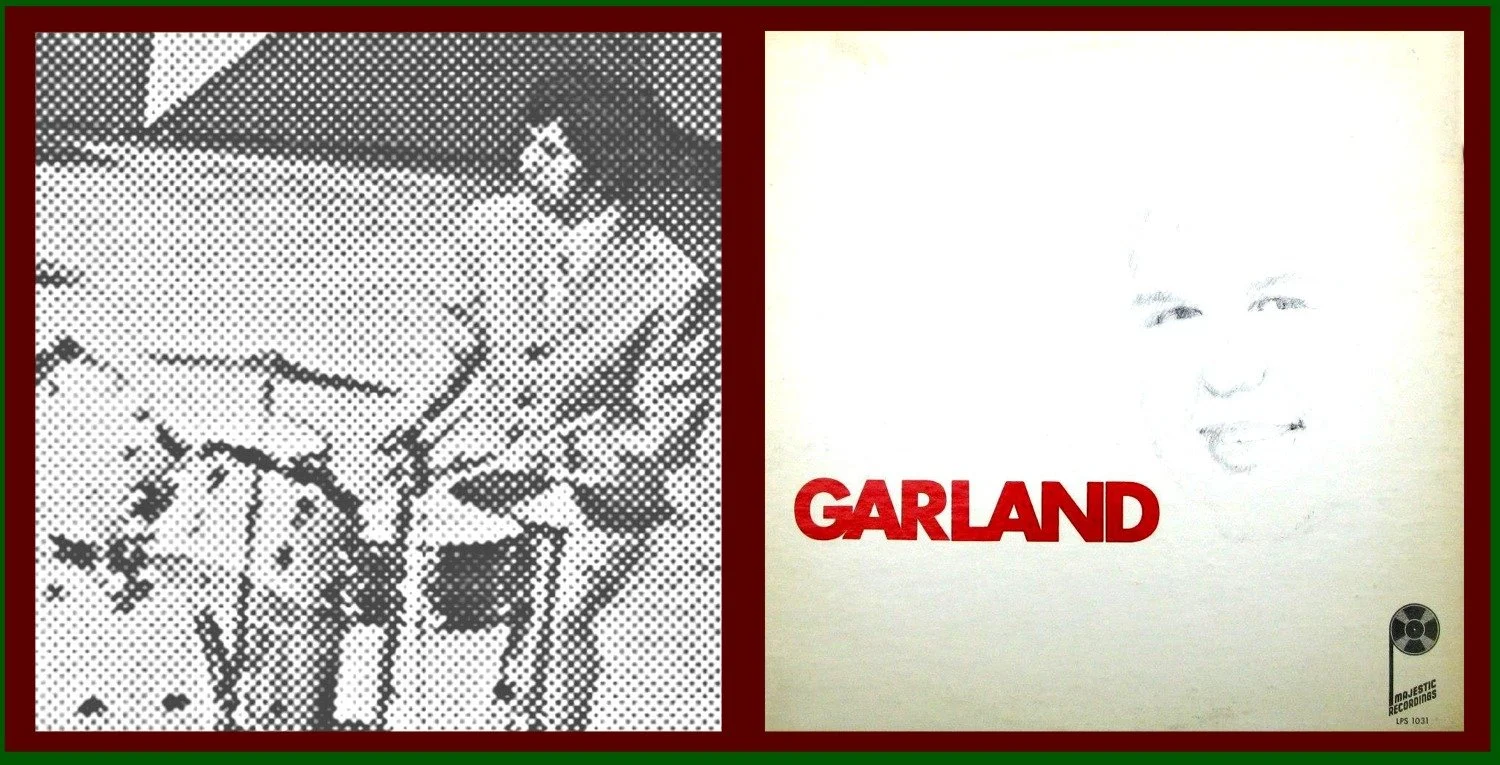
My dad LeRoy Patch used the kit on tour with a group called the Keystones back in 71 (pictured with his Rogers kit in 72). He also used it on the amazing pianist and songwriter Garland Craft’s debut solo album in 1971. So many family musical memories are tied to a drum set made in Japan, that went through the doors of a Sears, so many years ago!
Merry Christmas and have a happy musical holiday season!!!