
Story & photos by Bob Campbell
With Greg Eklund
Story & photos by Bob Campbell
With Greg Eklund
True to my belief that every drum tells a story, these two remarkable Brady drums have a particularly fascinating tale to share. Their story spans more than three decades. The tale began in the skilled hands of legendary drum maker Chris Brady, continuing onto the stage with Greg Eklund of Everclear, and ultimately finding its way to me via two wonderful friends in the drumming community. It’s a journey that reflects not only the craftsmanship and musical history behind these instruments, but also the friendships and shared passion that make the drum community so special.
The Brady Drum Company was founded around 1980 by Australian drum craftsman Chris Brady, whose passion for innovation and experimentation would eventually produce some of the most distinctive and sought-after drums in the world. Handcrafted from native Australian hardwoods, Brady drums were offered in block/stave, ply, and highly coveted solid-shell configurations (and by solid, I mean truly solid—not single-ply!). Chris embraced exotic Australian timbers such as Sheoak, Jarrah, and Wandoo, each possessing its own distinctive sonic personality. The remarkable sounds produced by these woods helped give rise to the now-legendary phrase: “Nothing sounds like a Brady.”
But Chris wasn't content to simply build conventional drums from unconventional woods. He continually pushed the boundaries of drum design, introducing snares in less traditional diameters, including 10", 12", 13", and even 16". Among his more intriguing innovations was the unusual “Baritone” snare, featuring a shell with two different diameters—the interior portion lathed to a smaller diameter than the outer edge regions. It was this willingness to experiment with materials, construction, and design that made Brady drums truly unique.
And drummers took notice! Brady's unmistakable sound quickly earned a devoted worldwide following, particularly among leading studio and touring musicians. Legendary players such as Jeff Porcaro, Chad Smith, Steve Jordan, Larry Mullen Jr., Mick Fleetwood, and Nathan Followill were among the many who embraced these extraordinary instruments.
What began as one craftsman's vision in Australia grew into a worldwide phenomenon, establishing Brady as one of the most respected and distinctive names in custom drum making. Chris Brady didn't just build beautiful drums—he created instruments with a sound and personality all their own.
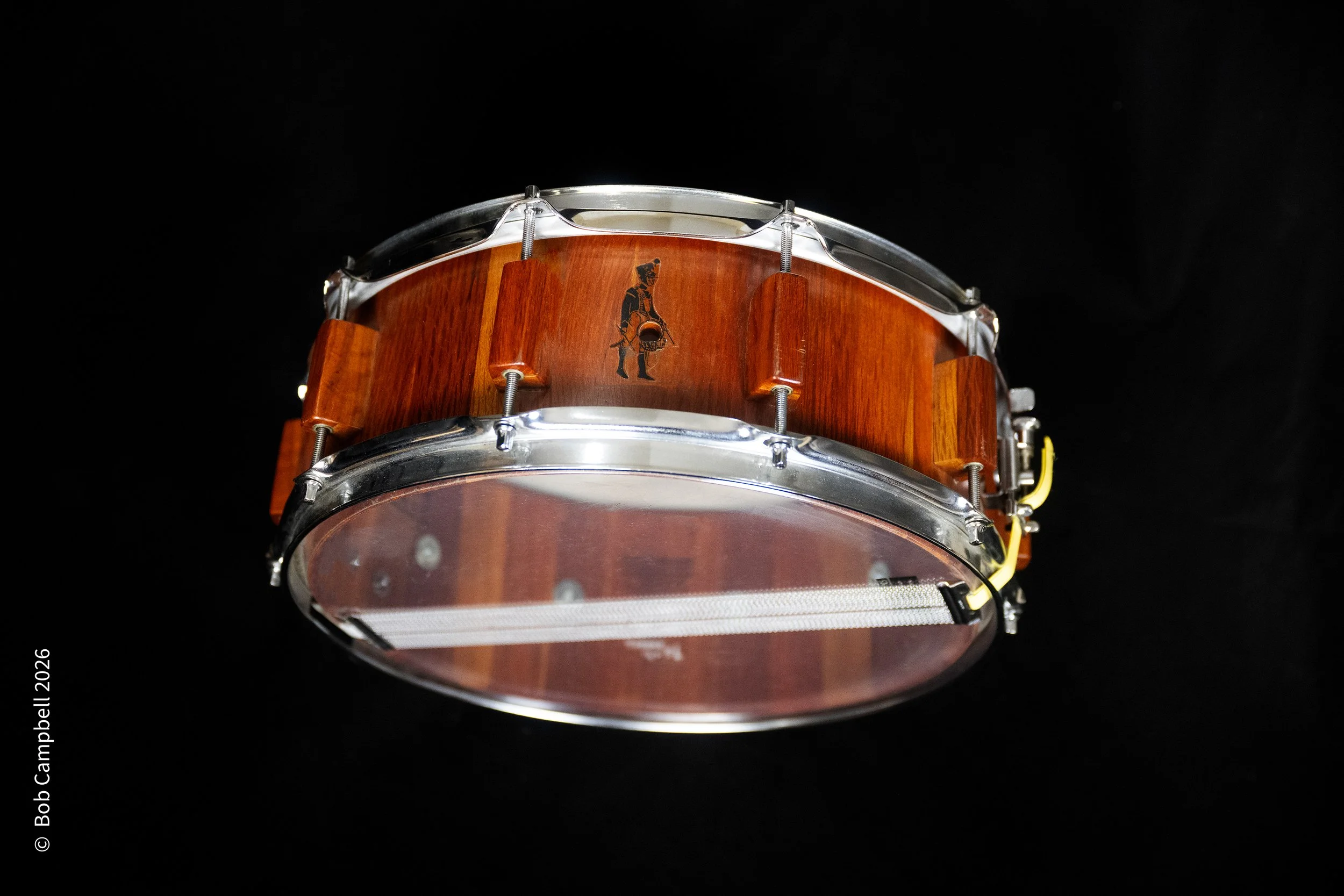
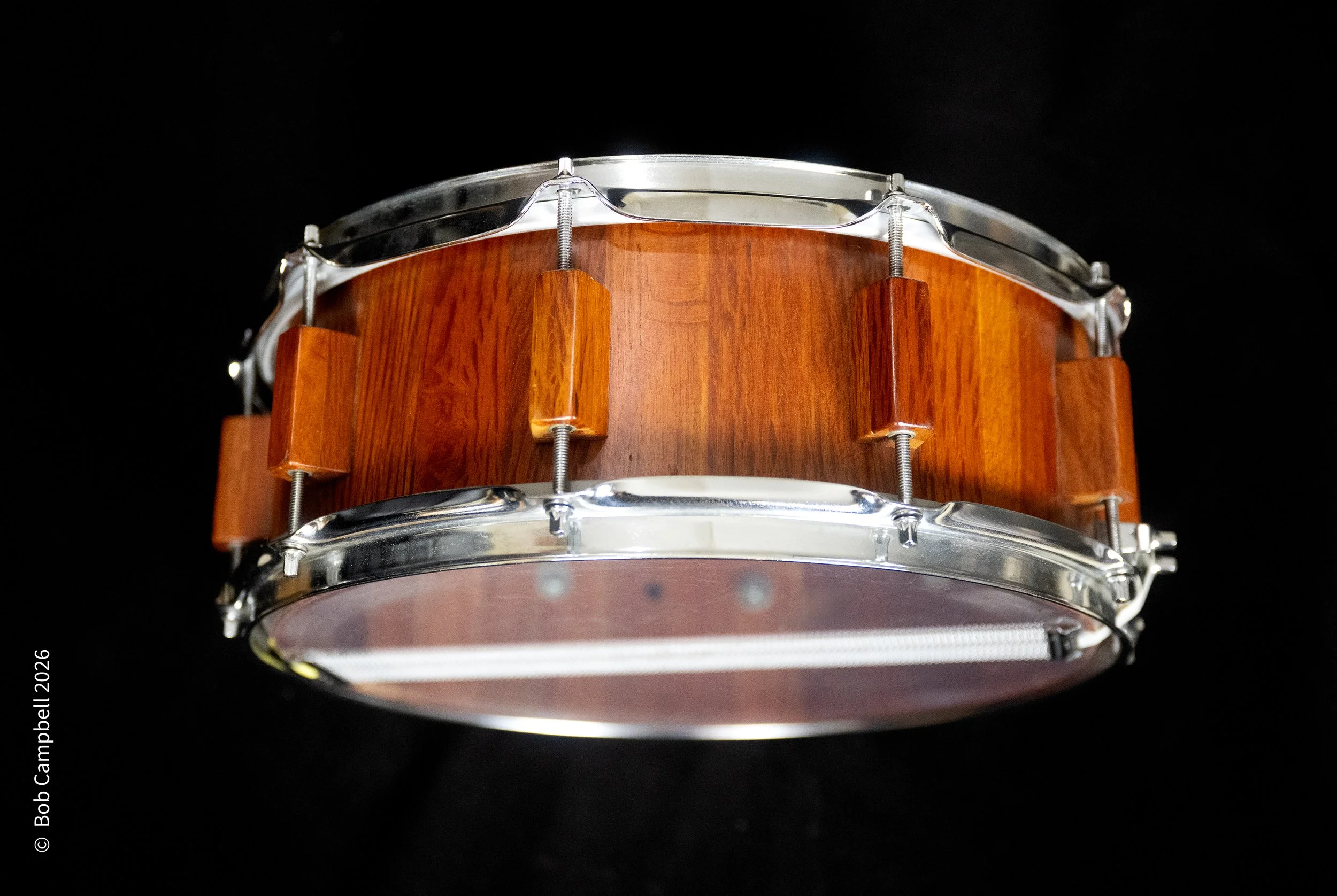
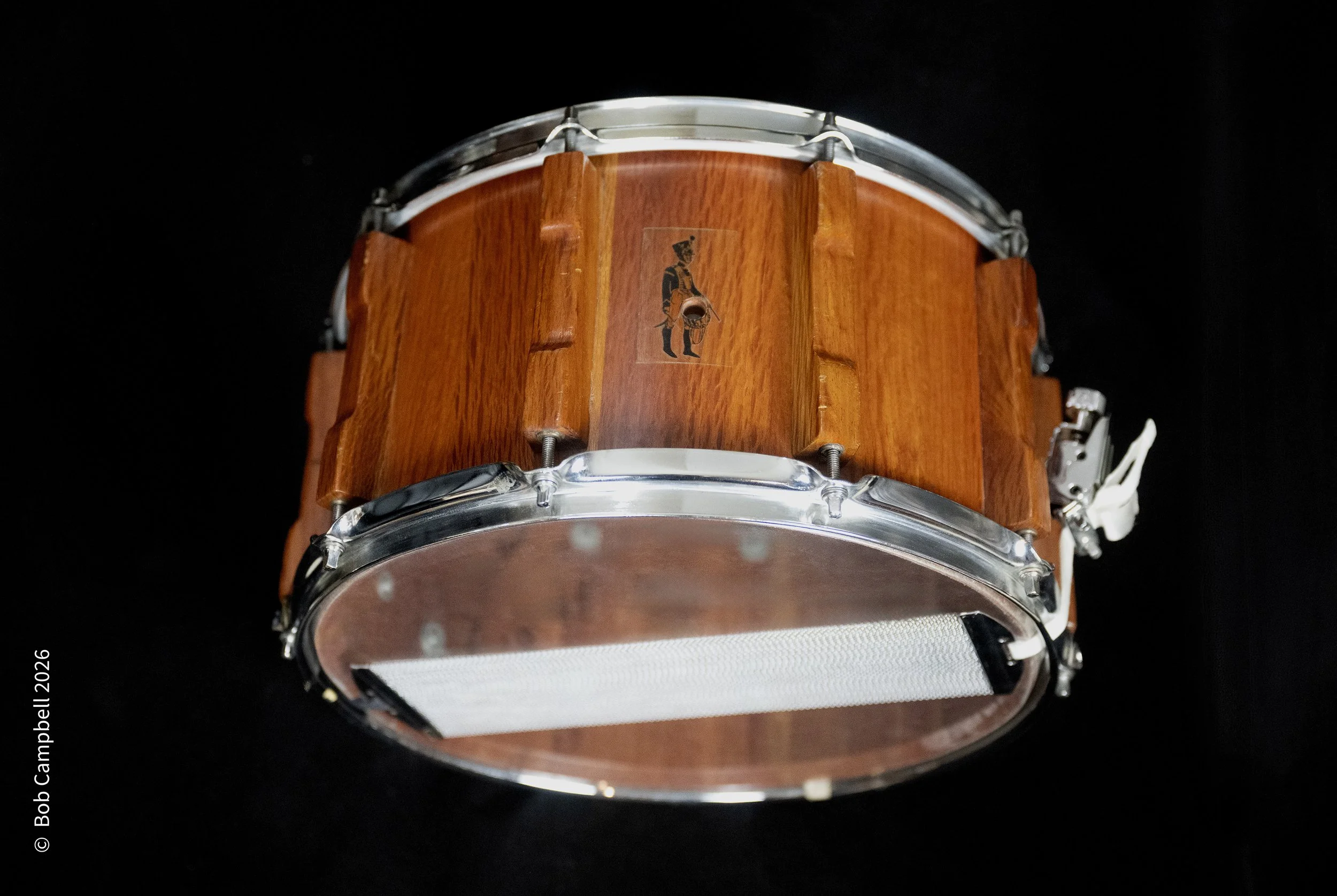
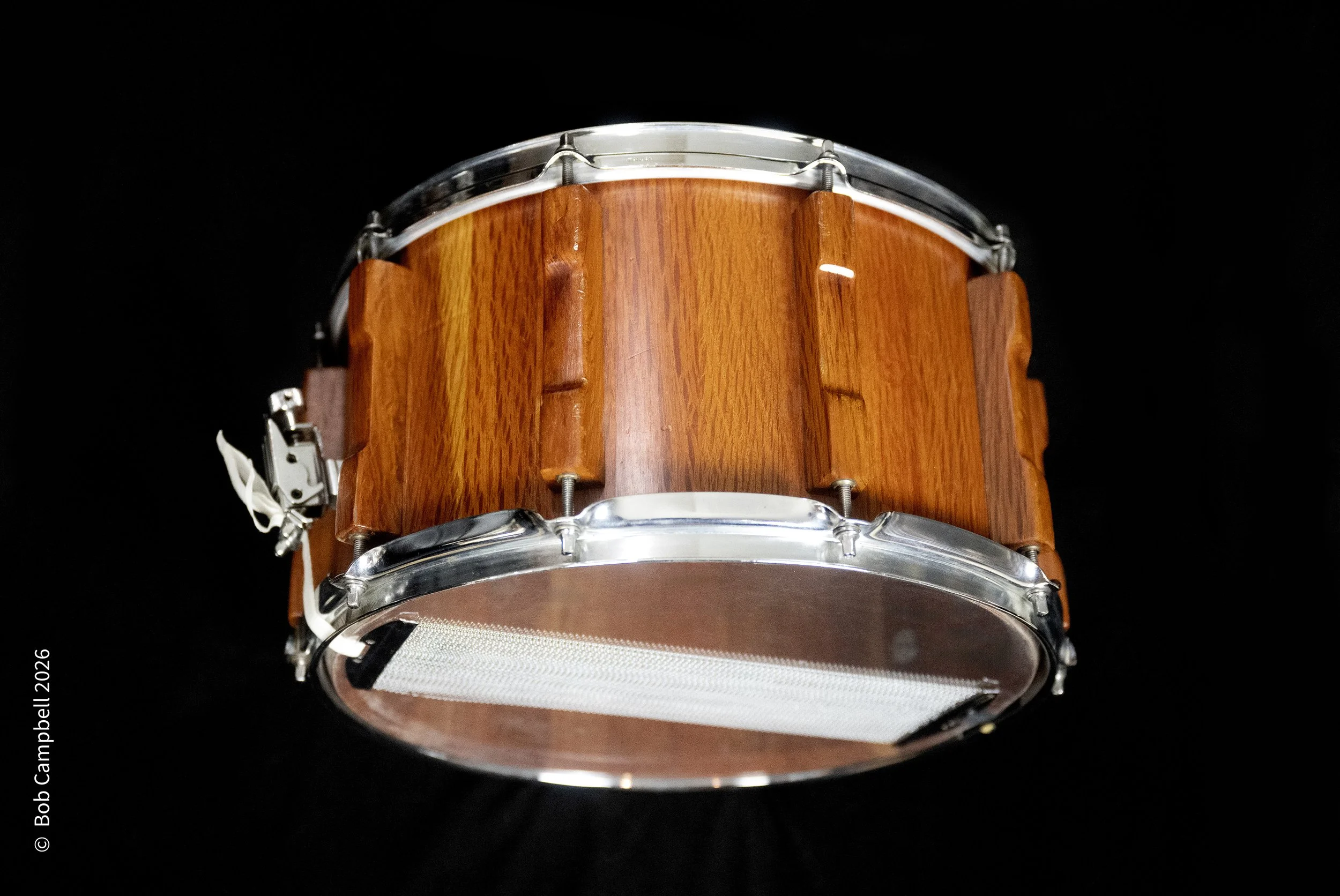
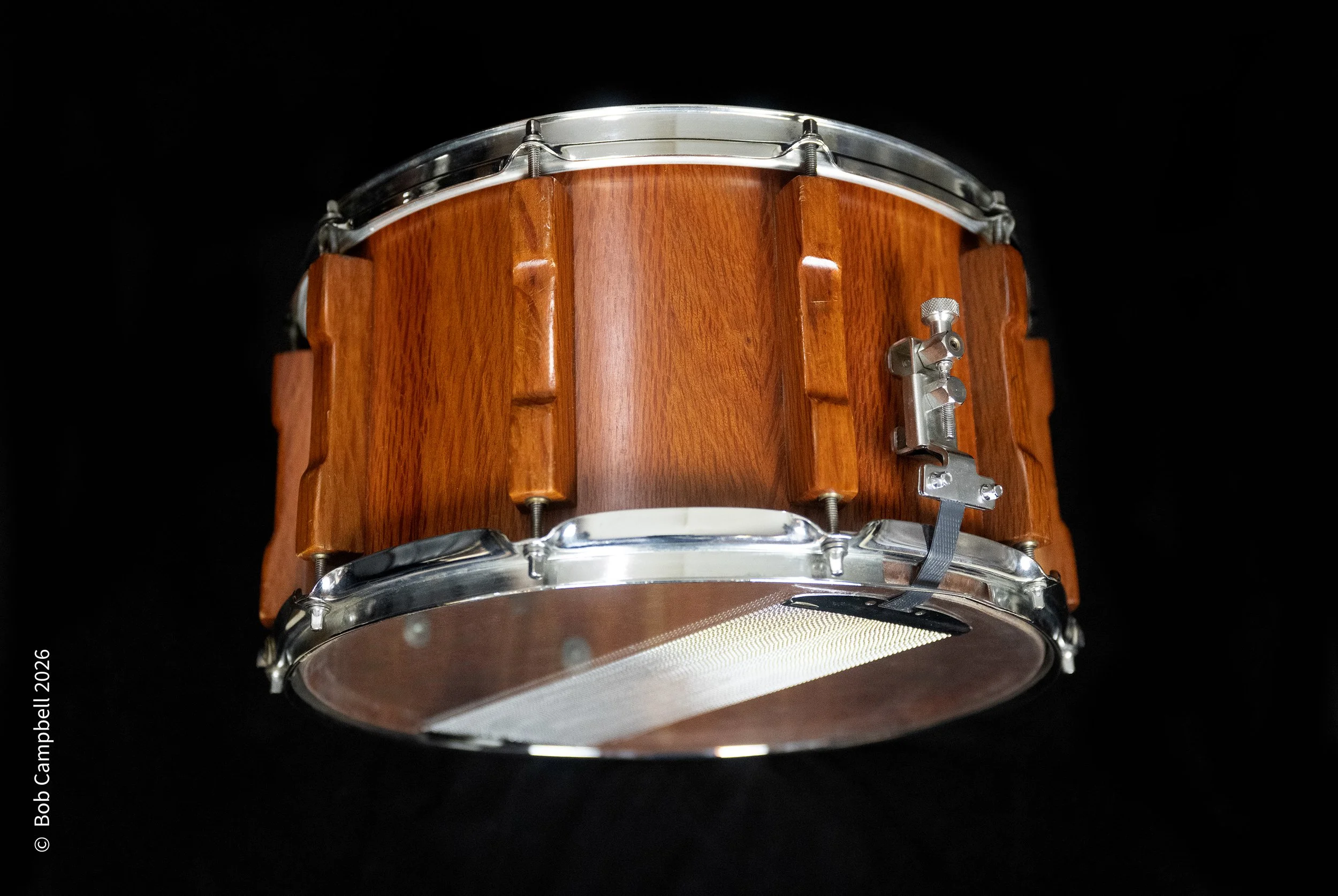
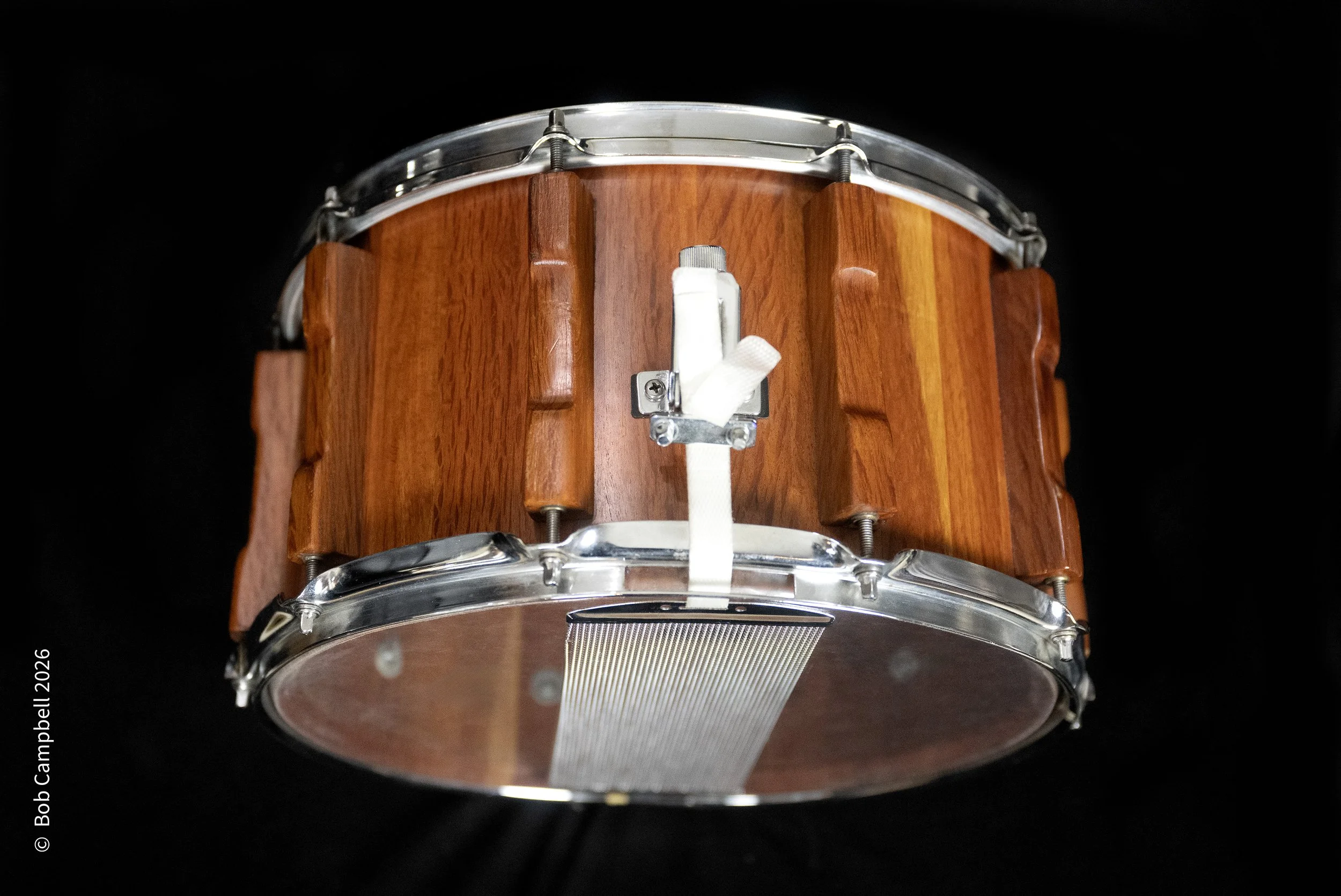
Chris Brady was always experimenting with his drum designs, and that included making snare drums with wooden lugs. I asked Chris what motivated him to do so. Chris stated, “Using wood lug casings changes the sound because it lowers the mass of the drum compared to all-metal lugs. But you’ve got to remember that there’s a point where you can go too far with mass on the shell and vibration. If the shell is vibrating crazily, then you know, it sort of robs it of its vitality. So, you need to find balance.
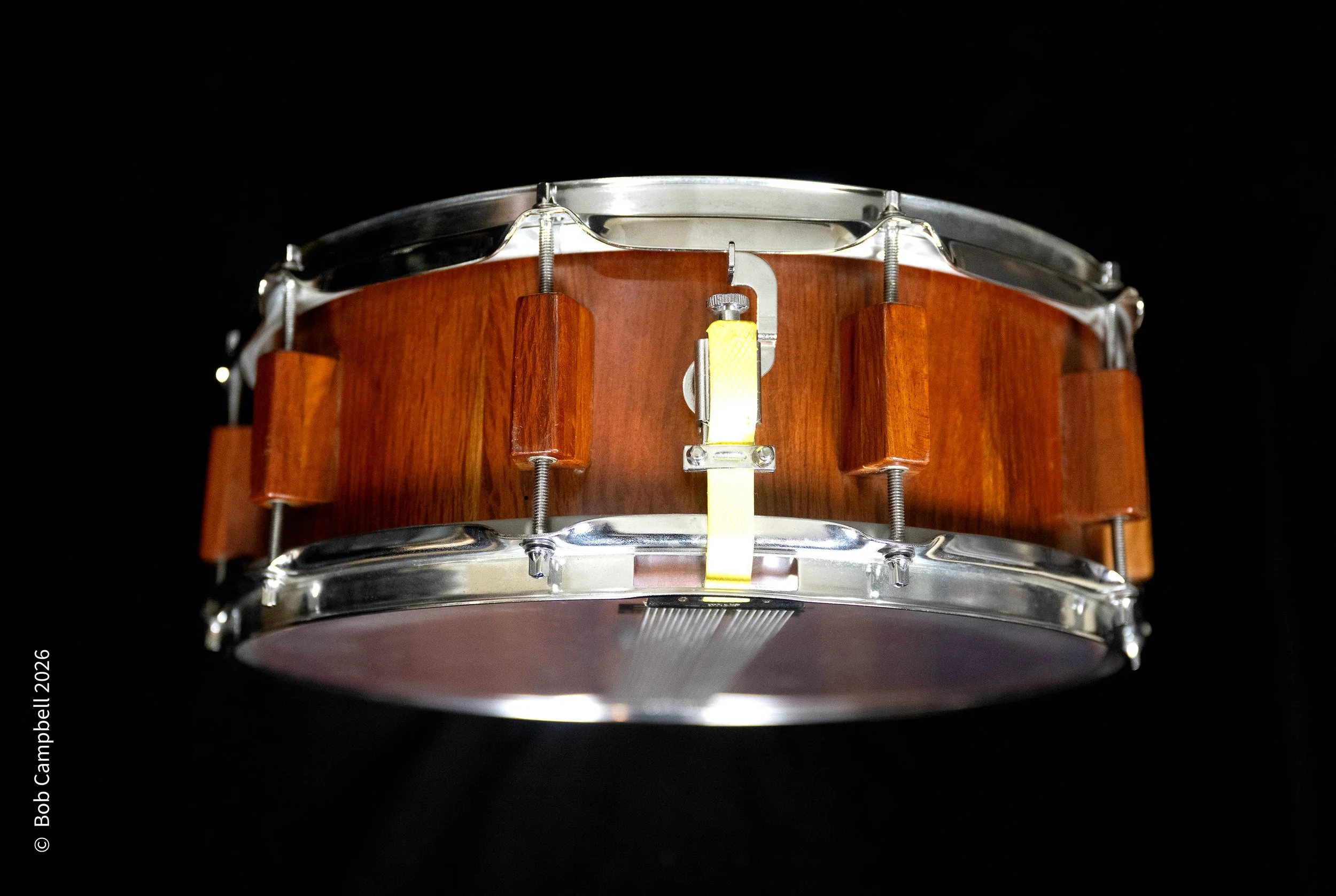
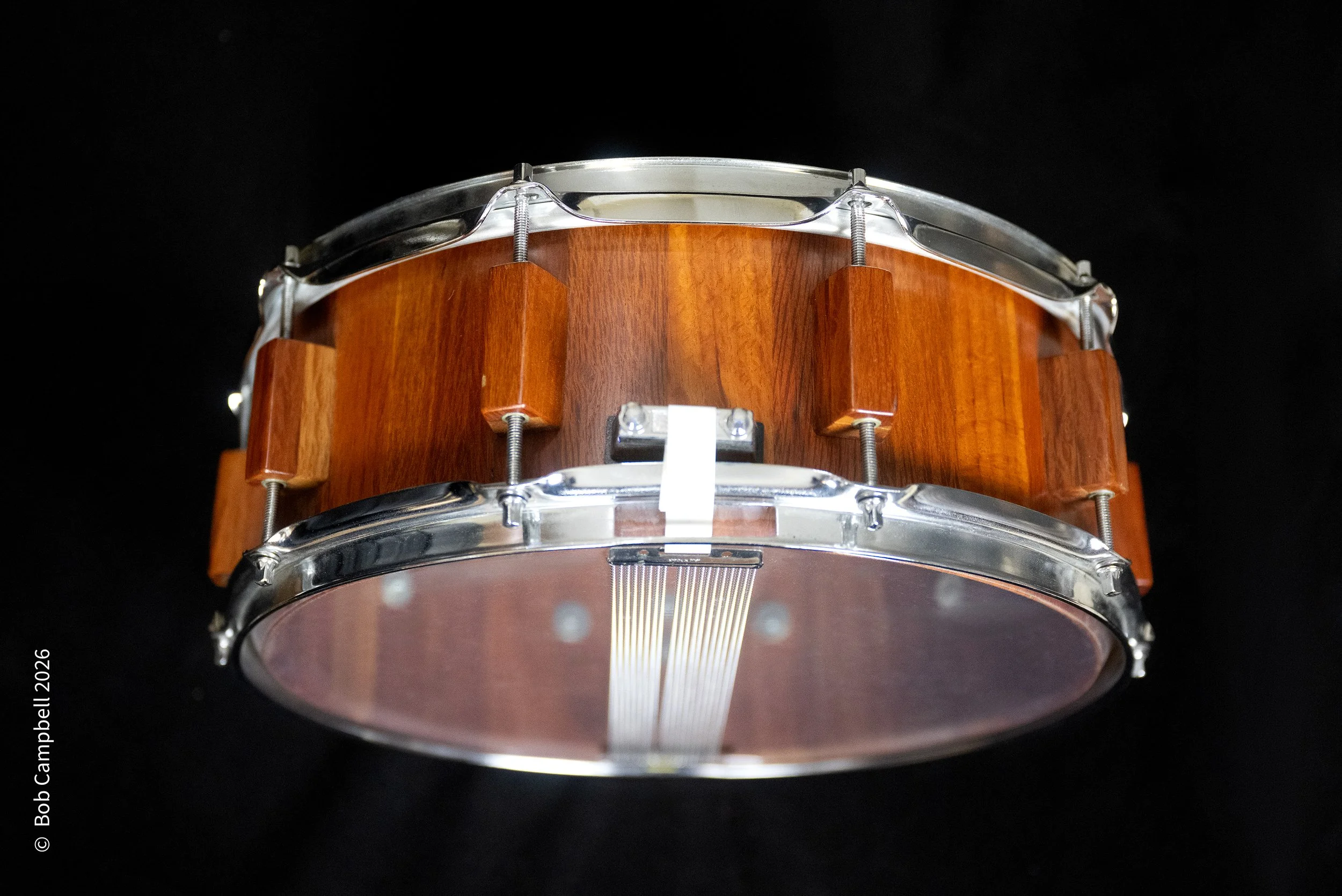
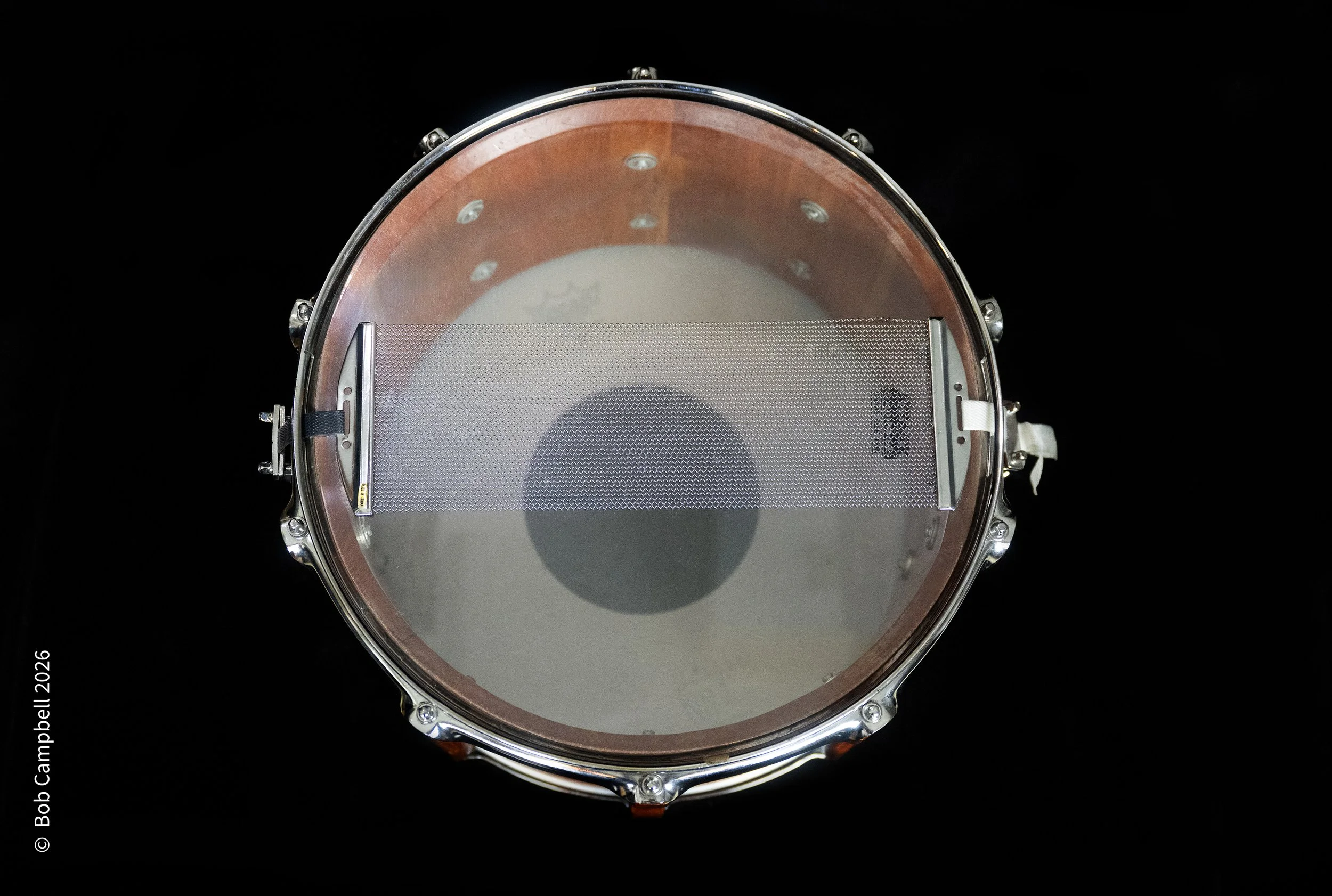
Also, my lugs are not really wood. They’re metal lugs with wooden casings on them. Basically, how it works is that they have a metal barrel going through them with two small pins going through holding them up. In other words, they look like a hinge on a drawer front if you like. I was doing those by hand on a lathe. The problem I had with those was that if you let the screws go loose on the inside, then the barrel pulled down against the wood and crack it off. I later tried to steer away from wooden lugs because it meant I had to sit on the lathe at night and stop working on other things. There were many other drums I’d rather make. It was still an interesting idea.”
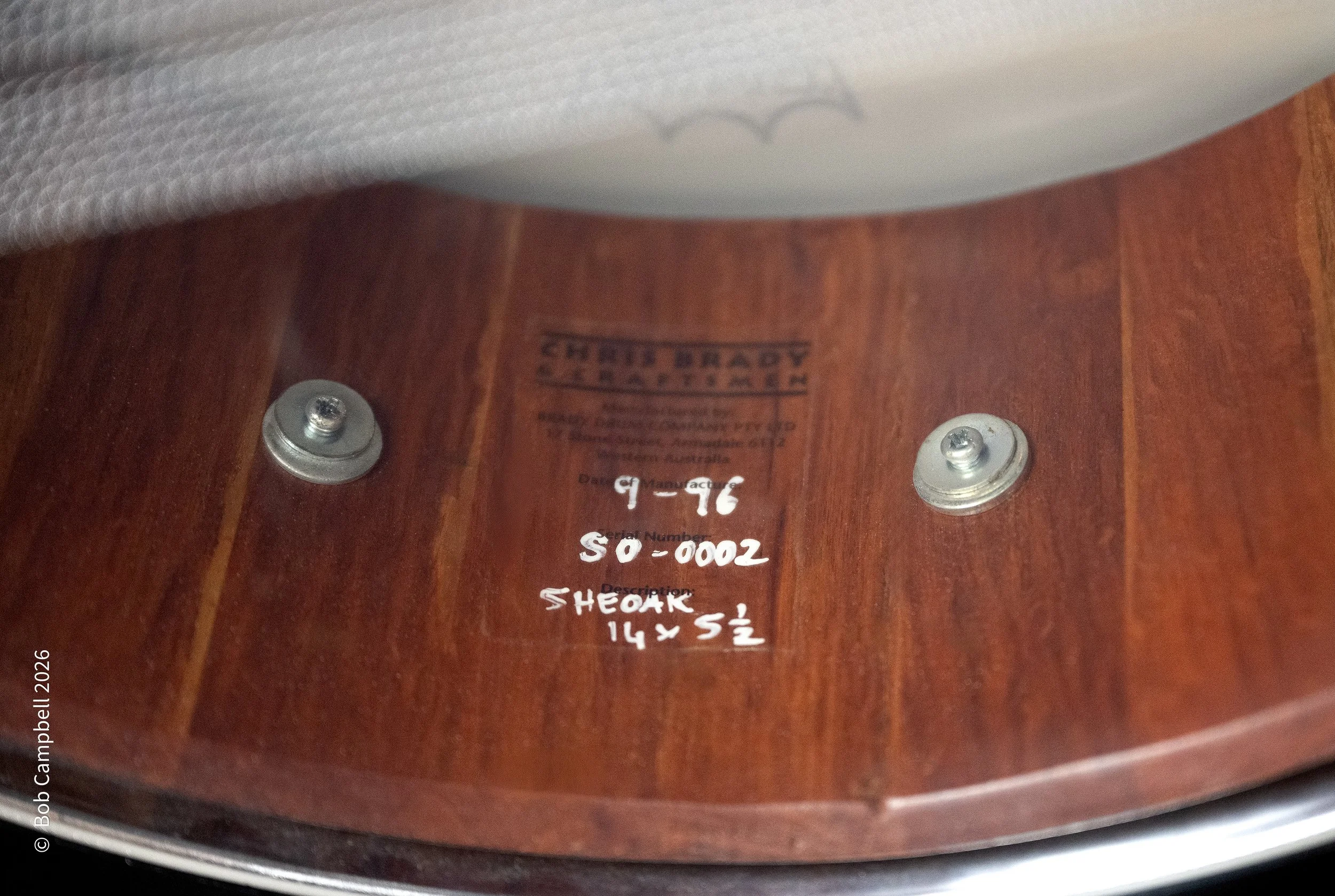
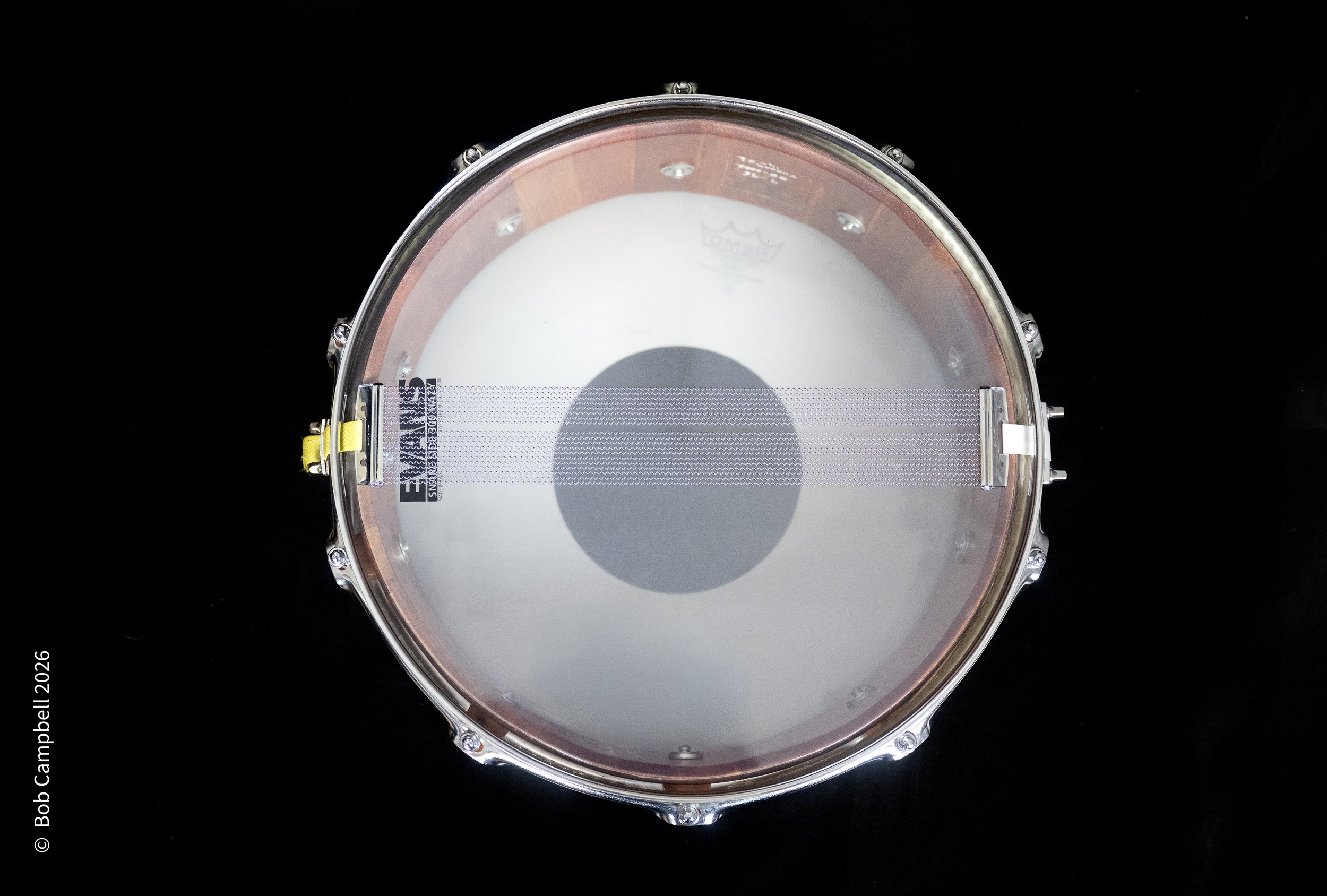
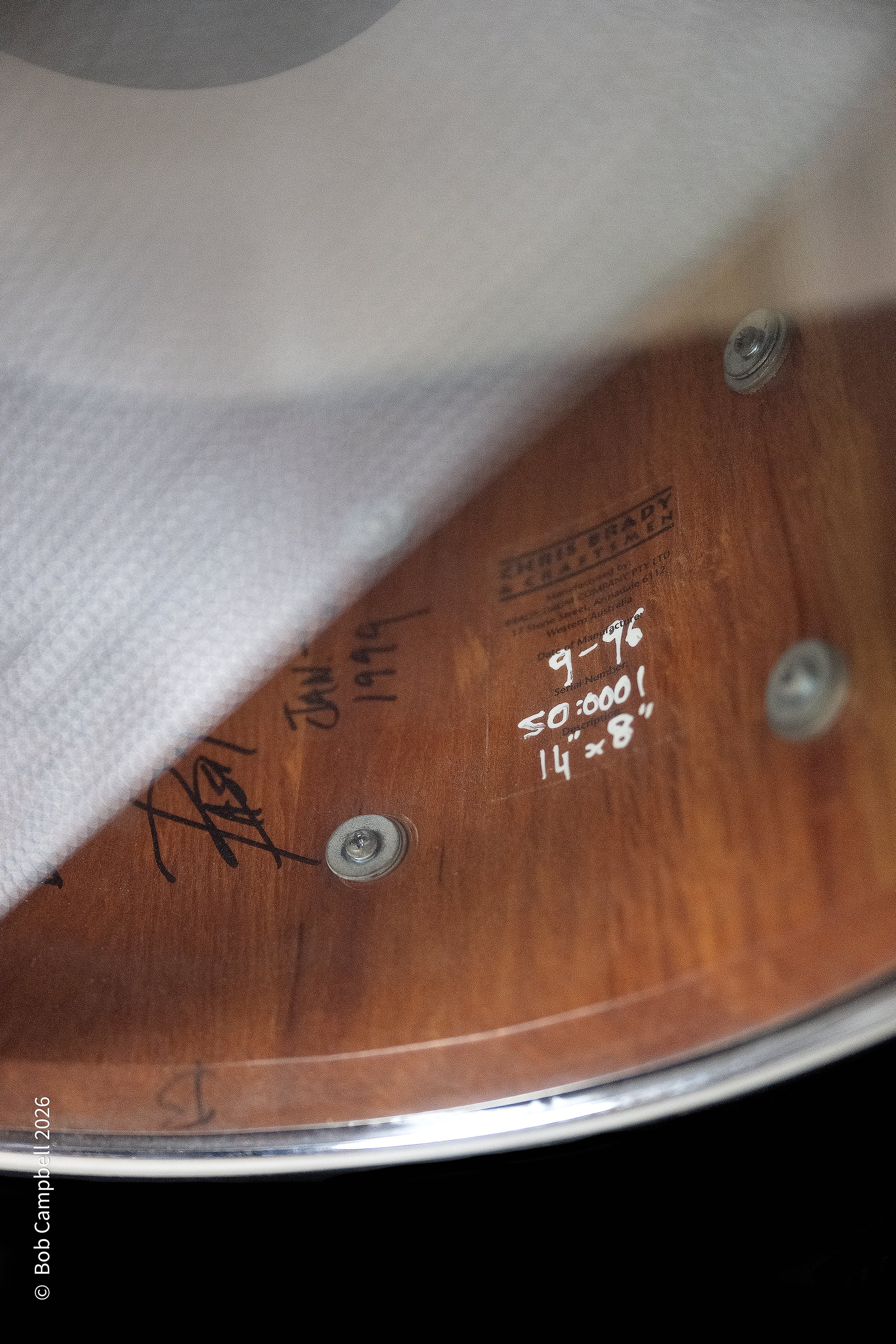
In 1996, Chris made two prototypes of Sheoak wooden lugs on Sheoak block shells: Serial Numbers SO:0001 (14 X 8”) and SO-0002 (14 x 5 ½”). These went to drummer/singer/writer, Greg Eklund, of the band, Everclear. Greg was kind enough to share the story of how he came to acquire and use these two very unique drums:
Greg: “I joined Everclear in 1994 right before we got signed to Capitol Records. So, from ‘94 to ‘96 even though we were signed, we were still playing in bars. The next time we'd roll through town, we'd have more people in the bar, and the next time it was a club, and more people each time after, and that went on for like two years. And then 1996 was when “Sparkle and Fade” sort of hit, and our first major label record, and we started to tour Europe. But Europe was really in the throes of its British rock, Brit pop phase and so they didn't really want too much to do with American rock bands. So, we didn't do very well in Europe, but we did great in Australia; they really liked us there. We started to tour Australia. When we got signed, I bought my DW kit, because everyone was playing DW at the time.
I had heard of Brady drums, but I was not a connoisseur of drums. But the name Brady was coming into my orbit, which means that they were making way in drumming circles. I’d heard of them because the touring drummer for Pearl Jam, Dave Abbruzzese, and the dude from the Spin Doctors (Aaron Comess) were playing them. Also, all the studio guys were using Brady drums.
So, we were in Perth in 1996 and Kelly Brady (Amoroso), Chris Brady’s daughter, showed up. I think she and someone else from Brady Drums came backstage at soundcheck with these two Brady snare drums asking if I’d check them out. I put the deep one up on a stand, an 8 x 14”, and just hit it a few times, and said something like, ‘Oh yeah. That's pretty good!’ Kelly explained that these two snares were prototypes; they were playing around with the wood and the wood lug casings. These drums did not have special Brady throw-offs or anything. They just had just a little soldier sticker on there instead of a badge. So, they looked kind of unimpressive in that way.
But I fell in love with the sound of them. I was a really heavy hitter back then. There was something about these drums that you could wail into, and it would almost kick the stick back into your hand without any sort of jarring. And I played rim shots every time, because well it was the ‘90s. You know, some drums, you hit it, and it's like, it's like a metal baseball bat or something and sends vibrations up your arm. I don't know much about the mechanics of making drums. My feeling was that since there was less metal on the drum, compressing it, and more wood, you could hit it hard, and it just felt like you were hitting toilet paper, except that it would fling the stick back into you so you didn't have to pull the sticks back out of the drum.
The thing that I really hold dear about that moment was that it was at a time in my life where we were having a little bit of success. Those two Brady drums were the first purchase where I never had to, say, ‘Oh, God, can I afford this? Or, you know, I can't afford both. I'll take one.’ It was the first time where I was able to say, ‘Yes, call my business manager and they'll take care of it.’ And that was kind of a big deal, because for a long time before that, I was just a musician trying to hustle the gig. Cymbals and everything were so expensive, and Brady's and DW were crazy expensive. But I just remember throwing that Brady up and going, bam, and going, ‘Yeah, that's it - I gotta have that one.’ And then I decided to get both.
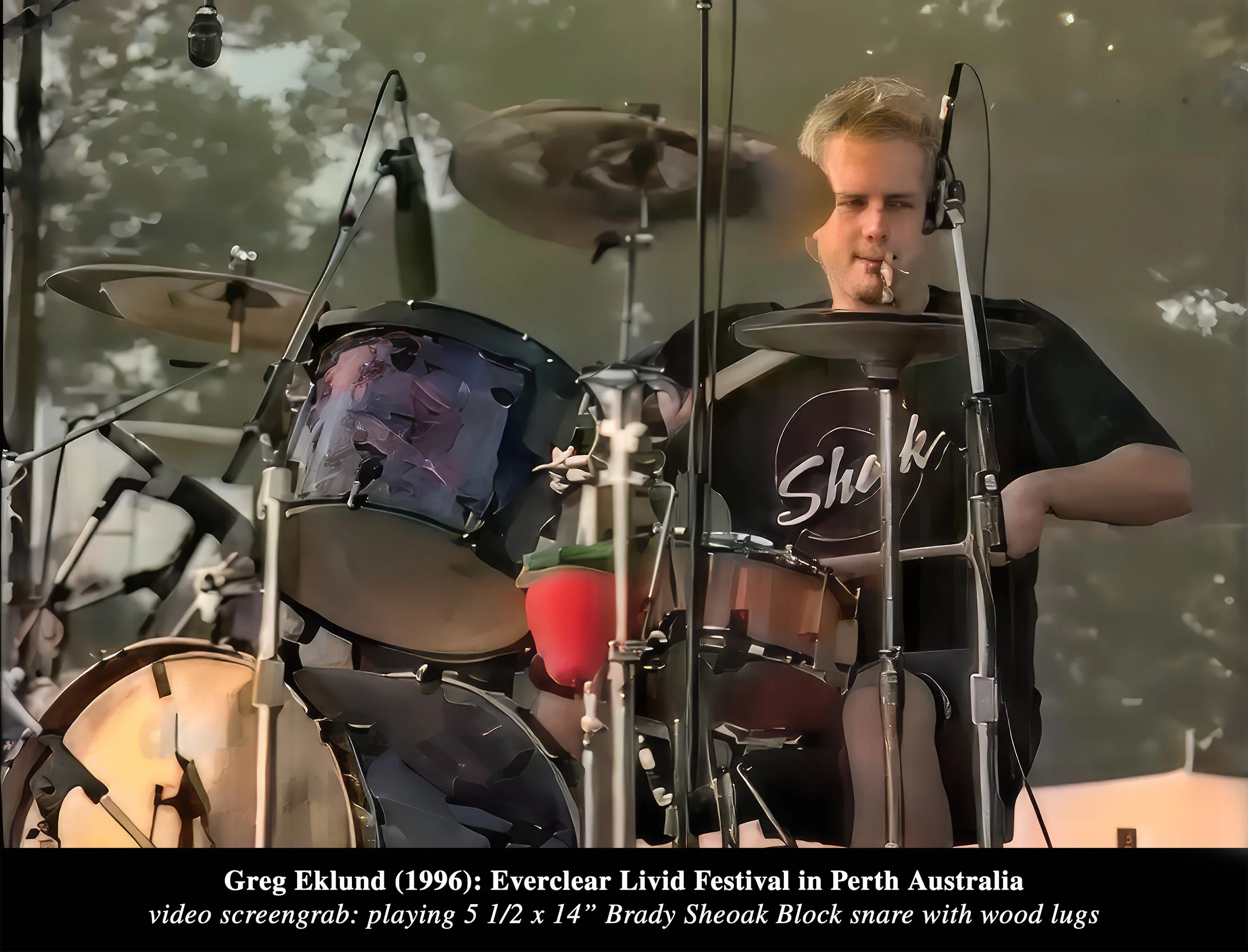
I used those drums pretty much right away on the tour. As a matter of fact, there's YouTube footage of me at like, Livid festival in Australia, which is kind of like their Lollapalooza kind of thing, playing the 5 1/2 inch one probably later in the 1996 time frame:
https://www.youtube.com/watch?v=UbCA_3ee3zQ Australia Livid Festival 1996 (first good shot of the 5 1/2” Brady is around 4:36)
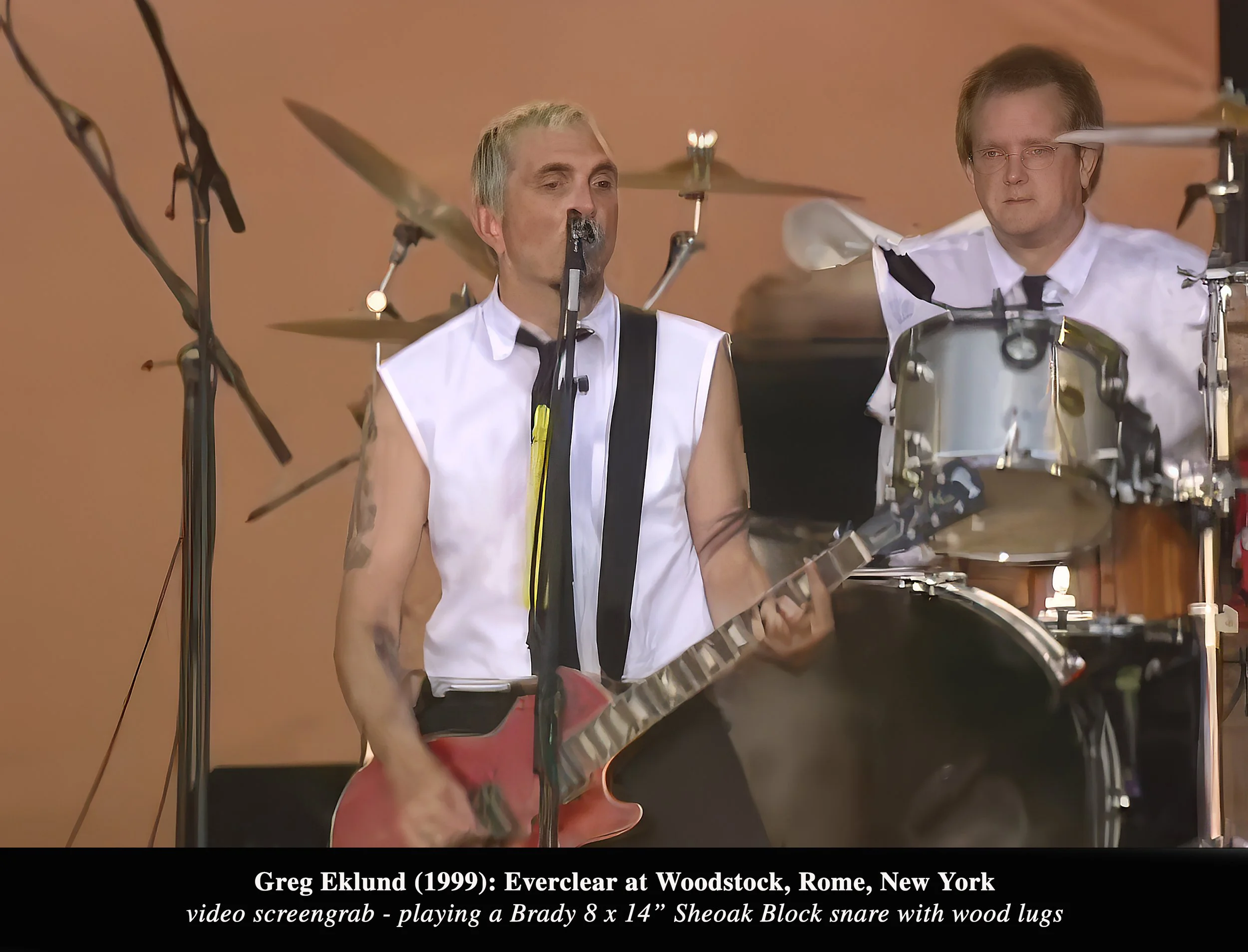
I ended up using the deep one (8”) more, and that's why that one it’s a little bit more scuffed up and has some nicks.
https://www.youtube.com/watch?v=EAXgz4Pv3M4 Everclear – Santa Monica – Woodstock 1999 (8 x 14” Brady)
Over time, I wound up using the 5 ½” Brady mostly for acoustic stuff, like when we went to radio stations or private little shows. I used that when I had hi-hat, bass drum, and snare or even just the snare. I really liked that it was really open sounding, so that when I was doing ghost notes and stuff, it made it sound like more than just a snare. That way, I didn't have to walk in carrying a hi-hat and this and that. I could just kind of walk with the one drum. We did a lot of that kind of radio stuff. Back then, every city had three alternative radio stations, and you had to play them all. You couldn’t play just one, because the other two would be up in arms. At some point, we did the Donnie and Marie show when they sort of reunited and MTV in the afternoon; I used the 5 ½” Brady on those shows.
Since then, I used them on a couple of records. The funny thing is, by the time we got back to the U.S. and started to record “So Much for the Afterglow”, our second record, we rented the drums from the Drum Doctor, so we were using those drums. I didn't use the Brady's until another two or three or the next record after that. I don’t recall exactly which; it was a long time ago! I definitely used the 8-inch almost entirely on our last record, Slow Motion Daydream (2003).
Years later, I contacted Kelly about the drums and sent her a picture. I was like, ‘Remember these?’ and of course she did. I thought that since these were prototypes that they actually went into production. Then she told me those were the only two Brady made like that (rectangular with rounded edges). She did show me pics of some drums with round wooden lugs, but mine were obviously different. I then realized how rare these were, so I thought that I should save these and put them into cases. It became my sort of little secret holding on to him and knowing that I had them, and I would tell drummers and non-drummers about it, and they'd be like, well, that's kind of cool.
Then COVID came along and people were tragically dying and my wife, at one point, said to me, ‘You know, I don't know what you have in the basement, in terms of what is what, and what is of value, and what's really important, Everclear drums, and so on. If you drop dead tomorrow, how will I know?’ That's when I started to kind of go down, start looking in the cases, and writing in tape what they were. Eventually, I found the Brady’s and considered selling them.
That was the thing. I liked having them, but they were basically in cases most of the time, and I very rarely took them out. So, I started asking around, and everybody basically said they should go to you, that they would have a good home.
It’s funny, because the first person I asked was Scott McPherson (note: former drummer for Beck and now the man behind Tackle Instruments), who it seems we both know. I also contacted Kelly Brady, and she was like, “If they’re going to go to anybody, they should go to Bob.” So, with everyone telling me that you were the right person, I felt good about where they were going. I’m glad they ended up with you.”
Postscript: Scott McPherson was kind enough to connect me with Greg Eklund so that we could work out a deal on these two remarkable drums. Greg later met with me by Zoom to share the fascinating history and personal stories behind these instruments, adding an entirely new dimension to what was already a very special addition to my collection.
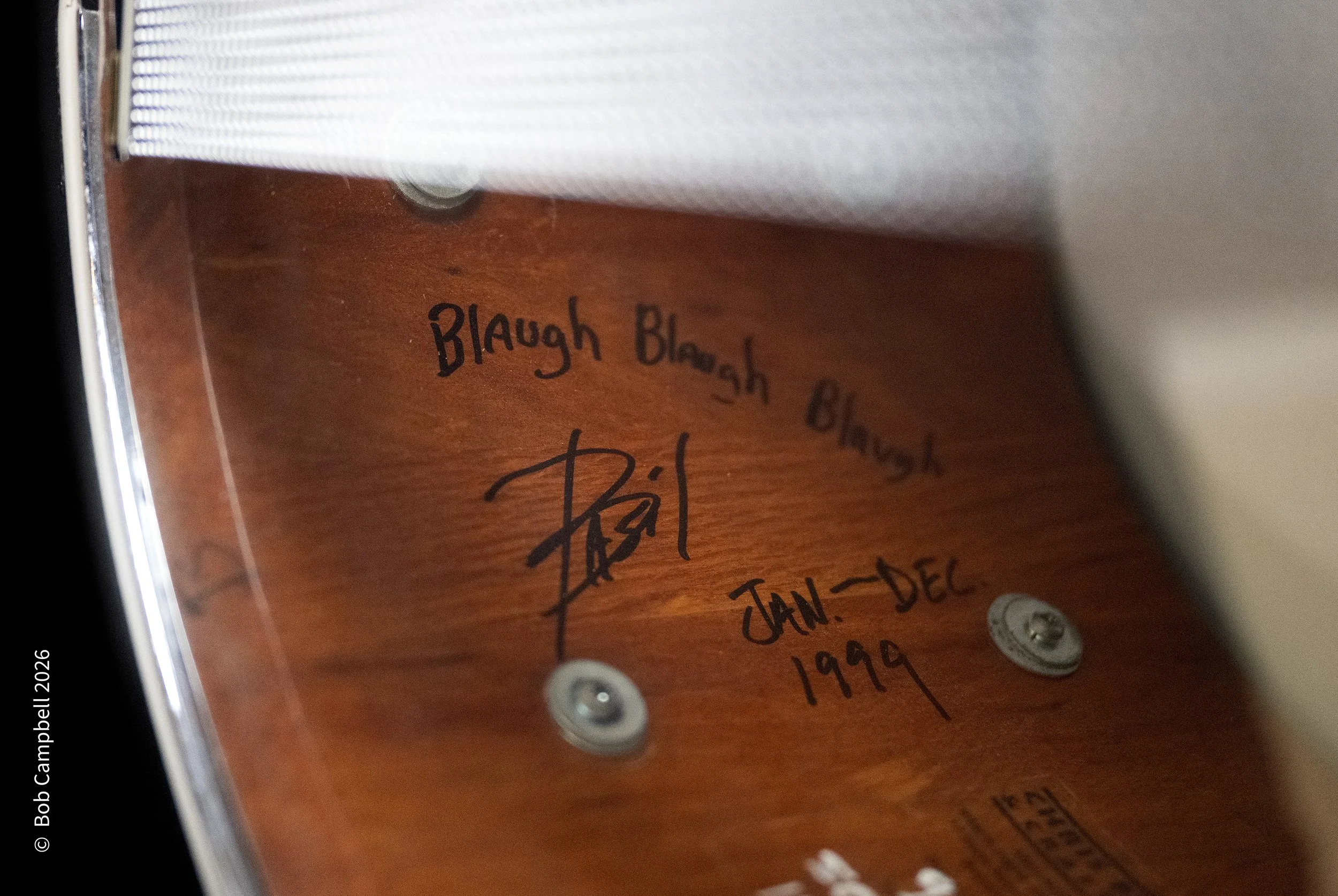
I noticed that the inside of the 8 x 14” snare, “Blaugh, Blaugh, Blaugh…Jan. Dec. 1999, and Basil” were written. Greg recently explained, “Basil was my drum tech at the time from Jan-Dec 1999. He was the one who looked after and prepped that snare for me each night. ‘Blaugh Blaugh, Blaugh’ was some sort of inside joke between us. It must've originated with me though because that's what the senior elites of my high school drumline used to say under our breaths to poke fun at our high school band instructor. Lol!”
These drums are certainly not mint-condition showpieces. They are “battle-worn,” with a few nicks and scars earned over years of performances, recordings, and tours. But to me, that makes them all the more special. They aren't drums that spent their existence tucked away in cases. They helped create amazing records and entertained thousands of fans around the world in the talented hands of Greg Eklund. Every nick and scratch is part of their history, and I wouldn't have it any other way.
True to my belief that “Every drum tells a story,” these two Brady Sheoak drums have a particularly wonderful one. It began with the imagination and craftsmanship of Chris Brady followed by a meeting between Greg and Kelly Brady (Amoroso) at an Everclear show in Australia. That encounter ultimately brought together the perfect combination of drummer and drums, beginning a musical partnership that would take these instruments around the world.
And now, more than 30 years later, their journey has brought them to an admittedly obsessed Brady drum collector and longtime Everclear fan—me! I couldn't be more thrilled to be their next caretaker and to help preserve their remarkable history.
The legend of Brady drums lives on, and so does the story of these two extraordinary Sheoak drums. Who knows what the next chapter might bring?
If you are wanting to keep up with Greg Eklund and his latest musical activities, he has have a very interesting and engaging Patreon page worth checking out:
https://patreon.com/u77049360utm_medium=unknown&utm_source=join_link&utm_campaign=creatorshare_creator&utm_content=copyLink