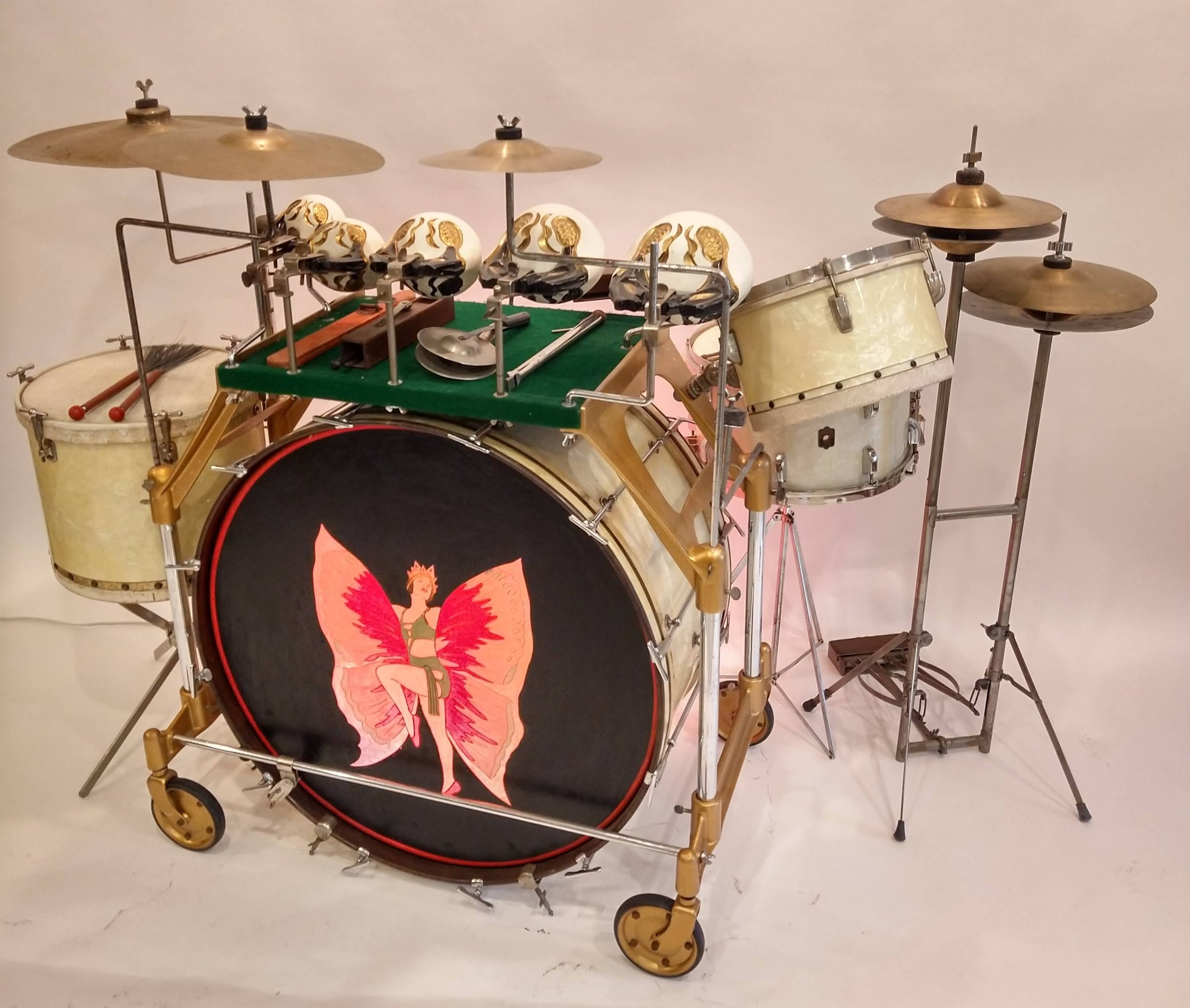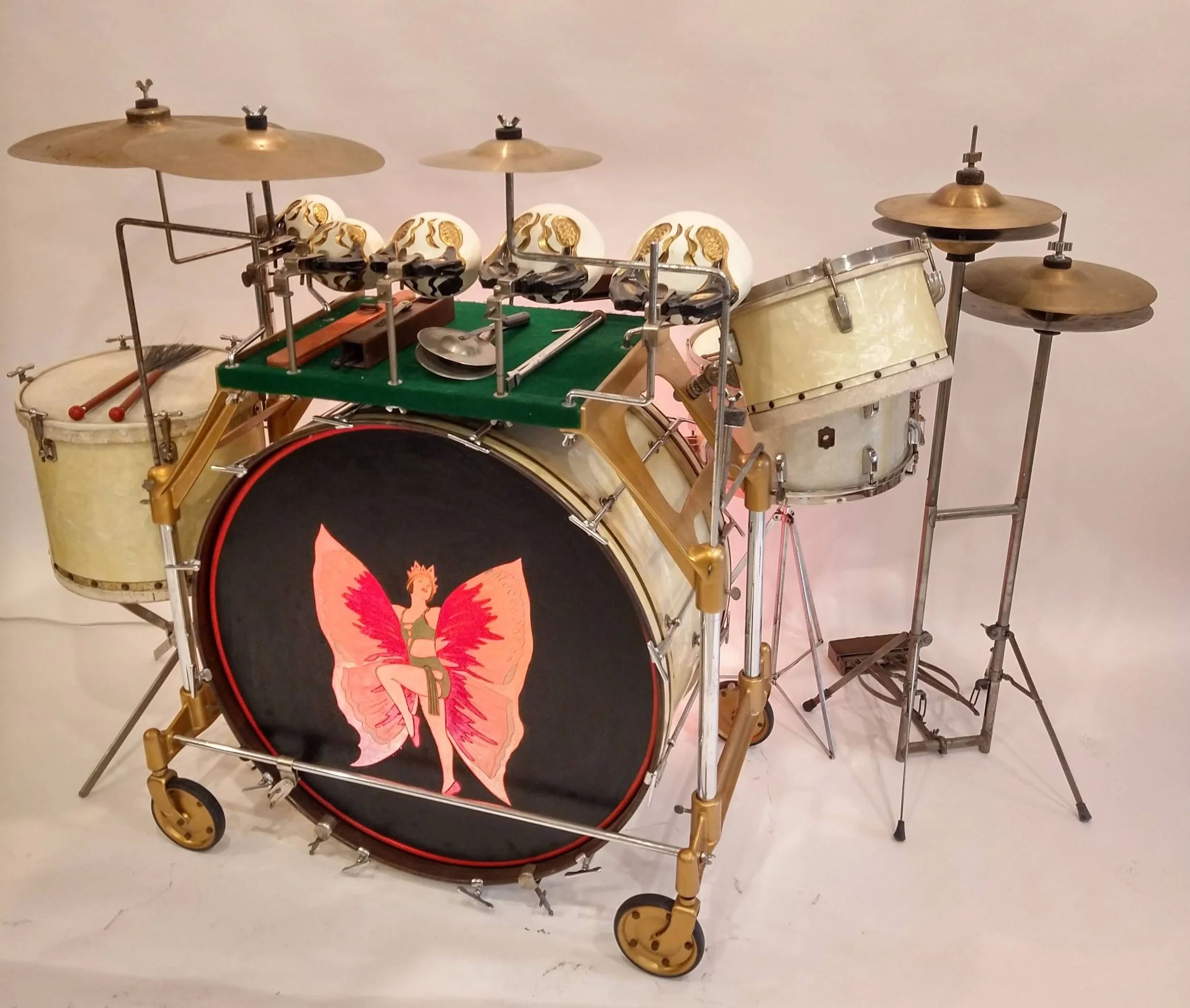
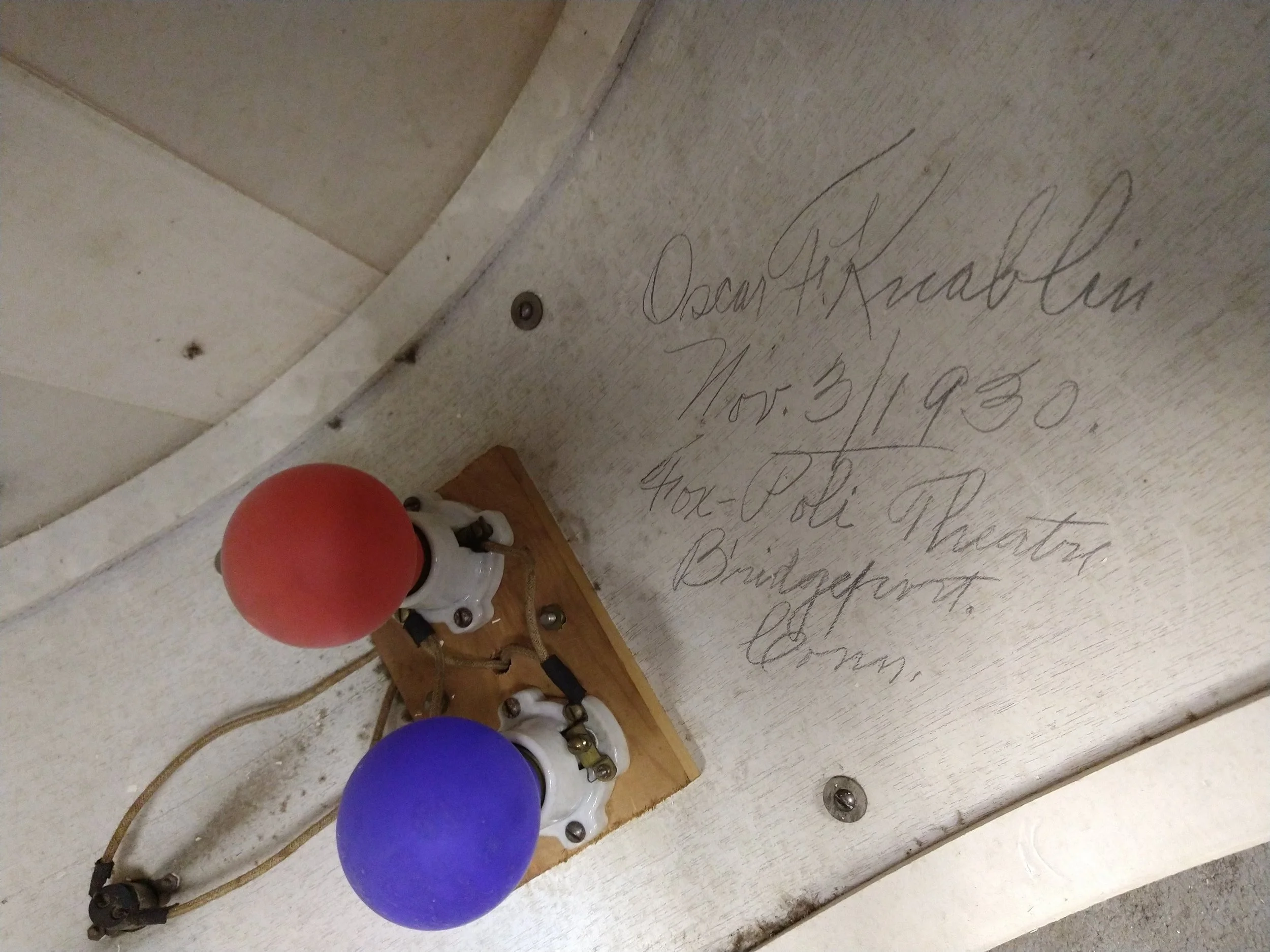
The year is 1930, the place is Bridgeport, Conn. Composer and drummer Oscar F. Knablin plays this set of drums at the Fox-Poli Theater. How do we know this? Oscar was kind enough to write this information on the inside of his prized new Leedy bass drum. In 1910, Oscar F. Knablin (1880-1962) published a march entitled “Our Teddy” to honor Theodore Roosevelt and the Rough Riders. In 1919, Knablin wrote a march called “Our Heroes Return” to honor the returning soldiers of Bridgeport Musician’s Club after WWI. Knablin was also a big band drummer who played at various theatres throughout Connecticut. One can imagine a grand theater featuring popular big bands and Vaudeville shows and this trap set being rolled on and off the stage for the performances. Can you imagine the excitement of seeing this drum kit on stage in the 1930s?
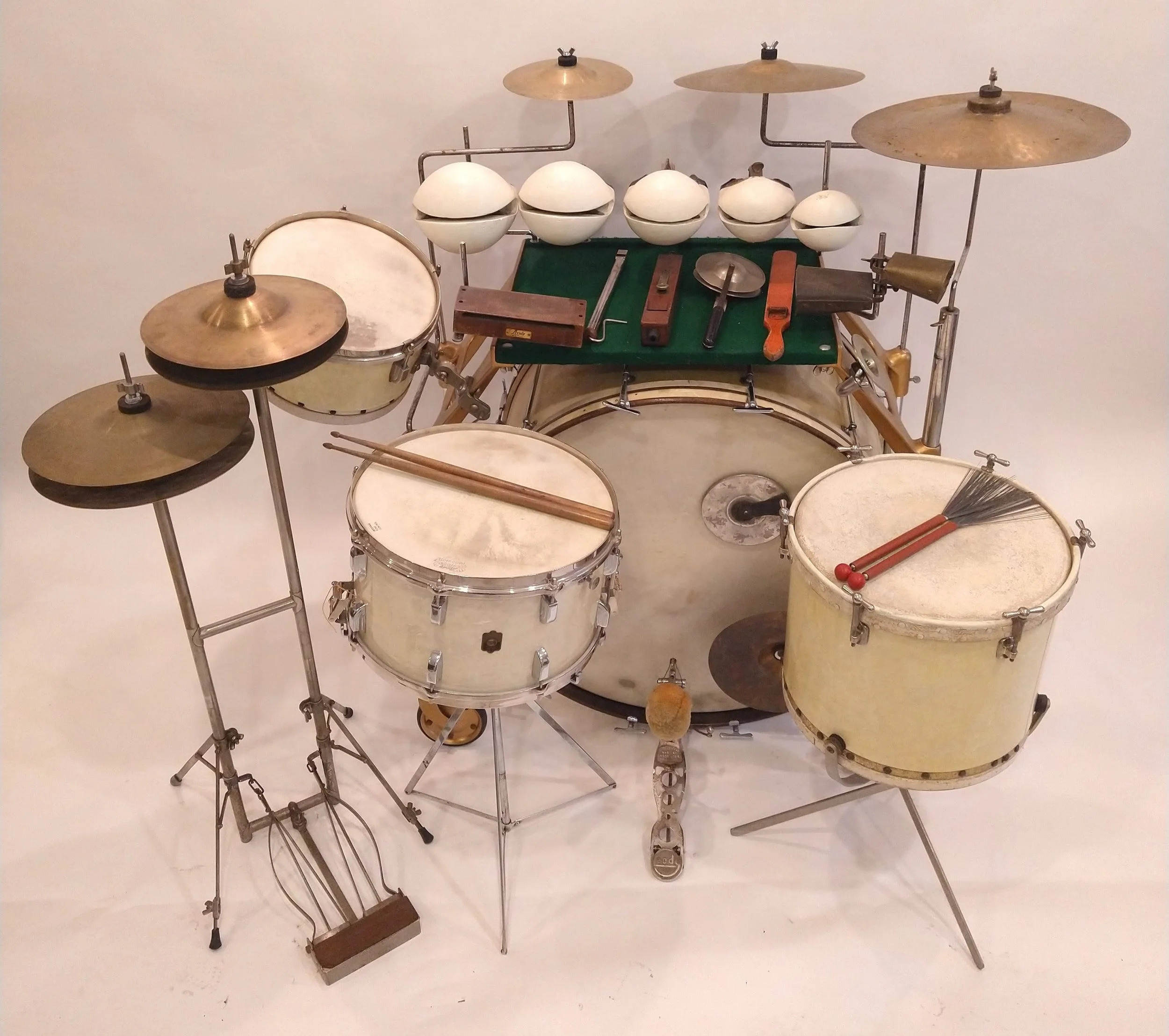
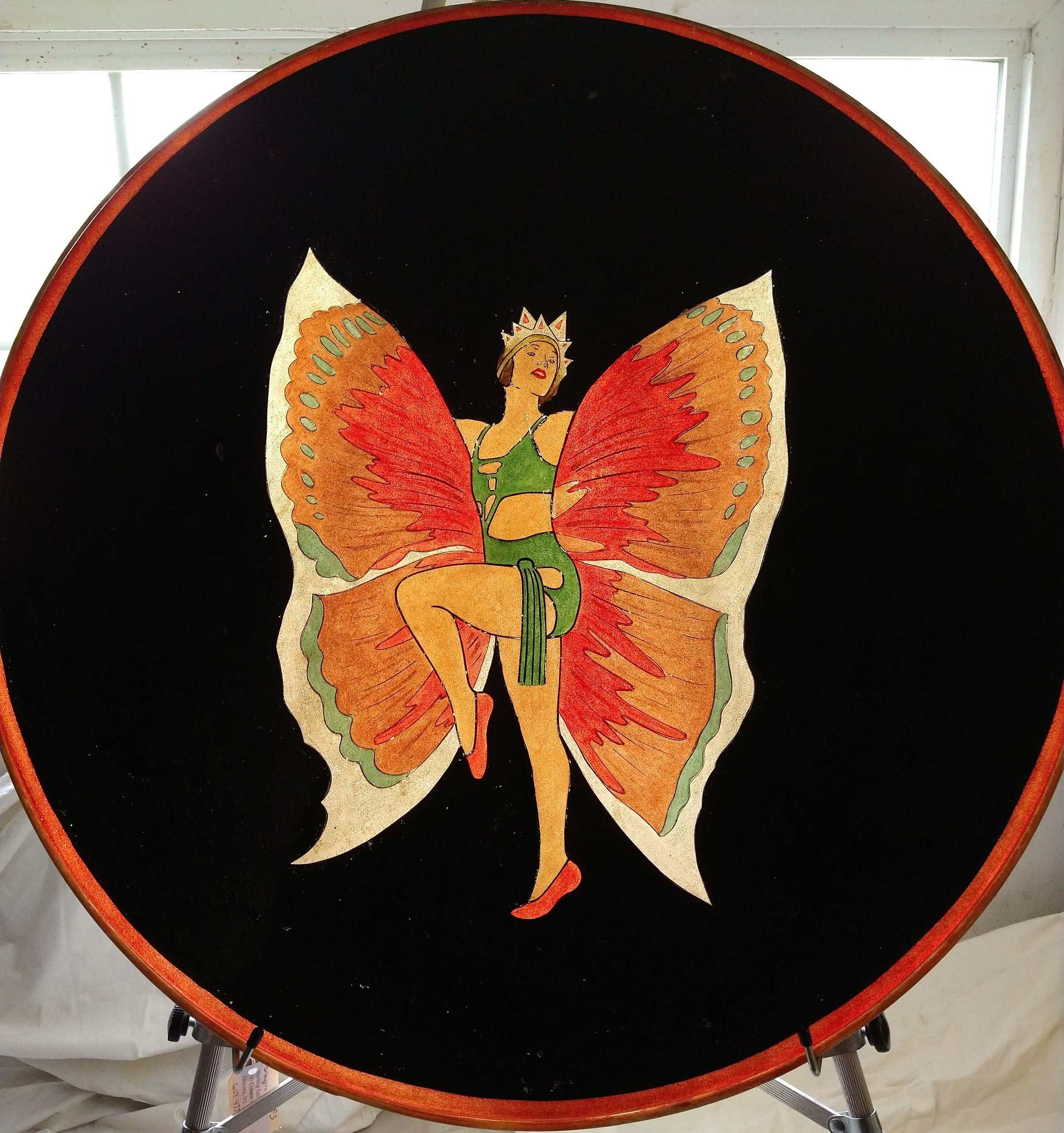
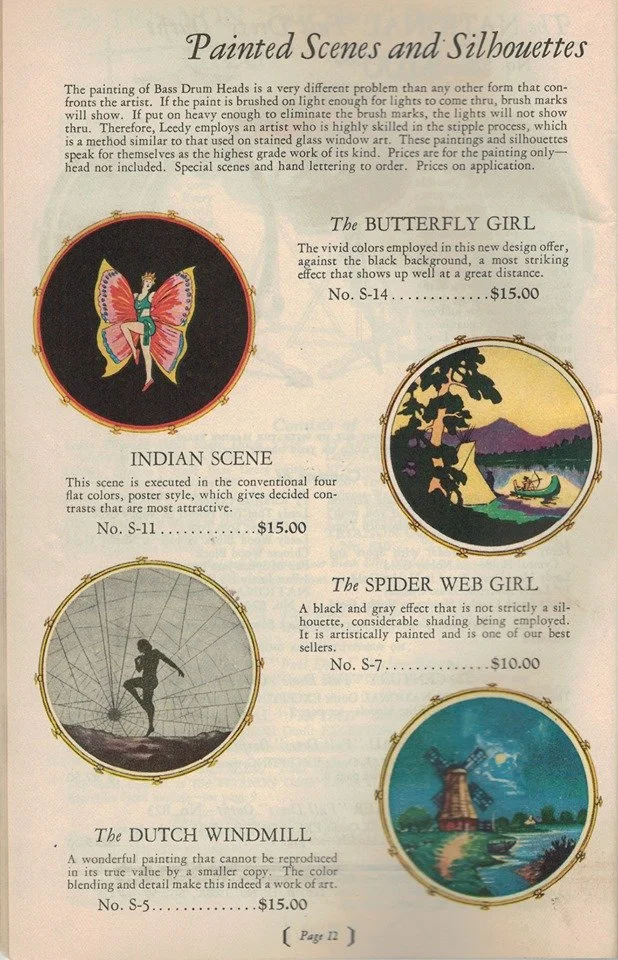
The Northup Drums Museum specializes in rare trap kits from the 1920-40’s with impeccable provenance. This set fits the criteria on many levels. Let’s take a closer look and talk about the history of this time capsule drum kit. This set is an impeccable example of a 1930-39 trap kit that shows the changes and innovations that were quickly occurring to the drum set. Things were evolving quickly. Throughout the 1930s, Oscar upgraded or added different percussion instruments to his kit. But it all started with his prized 1930 Leedy, 14”x28”, White Marine Pearl, separate tension bass drum. This drum was originally ordered with a hand painted head called “Butterfly Girl” for an added cost of 15.00. The blue and red blinking lights inside of this drum gives the appearance and illusion of the butterfly girl’s wings fluttering. The blinking light kit was an additional 7.50. Oscar’s kit is equipped with the original Leedy professional pedal with cymbal striker, and it all sits below a very rare 1927-36 “Rollaway Trap Console.” Mounted on the console you will find a complete set of Chinese temple blocks, Chinese cymbal, and period correct splash cymbals. Also mounted on the console is a 11” Leedy White Marine Pearl tom-tom with a tunable top head and tacked bottom head. The 14” floor tom has the same head configuration with T-handle tunable top head and tacked bottom head. The 8×14 snare drum is a 1939 Broadway Standard “Swingster” model in White Marine Pearl, and all the heads are original Leedy calfskin. You’ll also find a Leedy wood block, two cowbells, various sound effects, and whistles lying on the trap table. Probably the rarest item in this set up is the 1939 Walberg and Auge “Twinsok” double hi-hat stand. These are very rare and only a few are known to exist. The Zildjian company once owned one of these and used it at the factory to demo and compare hi-hat cymbals. This set is full of life and sounds absolutely incredible. It is a lot of fun to play with all the bells and whistles and added percussion instruments. To learn more about this set, experience it in person, or see a video of the blinking bass drum head, visit www.northupdrums.com