
In my travels, I still love finding drums the old fashioned way, hitting small brick and mortar, Ma and Pa music stores. It’s the motivating thrill of the hunt. With all of the impersonal online buying opportunities at your fingertips, there is nothing like visiting a music store and stumbling upon a cool vintage drum or drum set find. And, that’s precisely what happened to me on this day.
As I entered the music store and small drum department, there was your typical rack of new and used snare drums. However, way in the back behind a closed area was an interesting looking snare drum. I could only make out a round badge. My first thoughts were, “oh it maybe a Gretsch?” But, the lugs were not of their particular design, although I had my suspicions.
My other thought was, “maybe this drum is in for repair and not for sale?” So, after trying to get a sales person to help me, I finally was waited on and asked to possibly see the drum in the closed area.
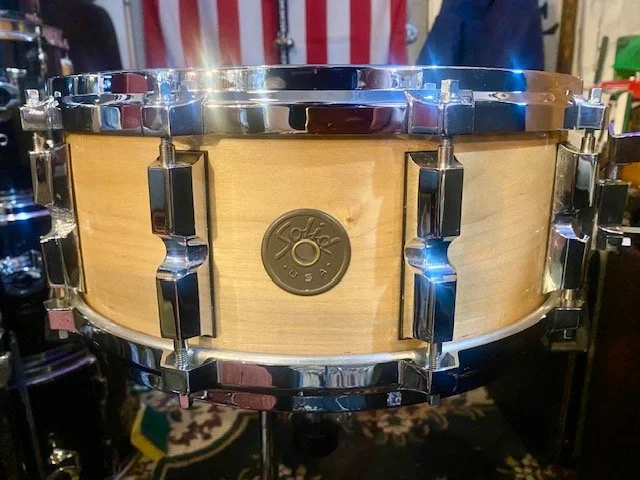
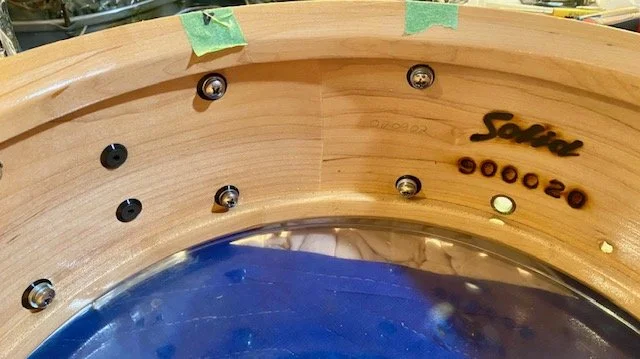
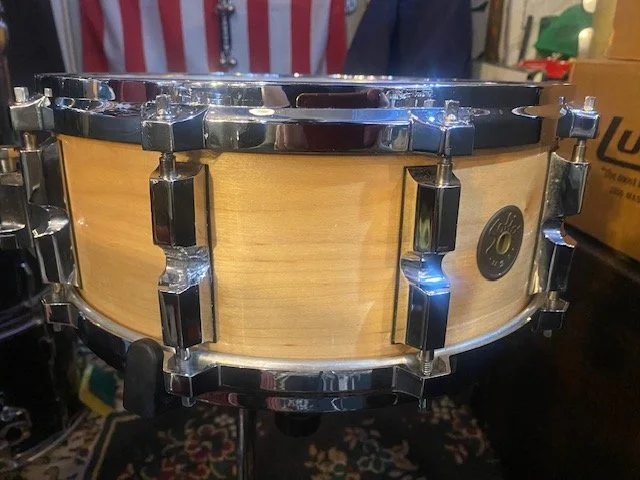
The sales person pulled the drum out of the back room and I could finally see the badge and maker. It was a snare drum by the “SOLID” drum company. Solids were produced starting in the late eighties by Huey Lewis and the News drummer, Billy Gibson and drum maker, Johnny Craviotto. They were made with a steam bent 1-ply maple shell and maple reinforcing rings, much like vintage Slingerland Radio Kings.
The best part was, I remember opening up a Modern Drummer Magazine back in the day and seeing the “SOLID” drum company’s advertisements. I was enthralled because this drum was illustrated in a beautiful photograph that showed the wonderful craftsmanship. I stared at this drum thinking, this was definitely next level precision of solid, 1-ply maple snare drums. The best of both old and new world drum making. Back then, this snare drum was elite and fairly expensive. After seeing the craftsmanship and only a few of these drums surface, I put this snare on my wanted list to purchase some day.
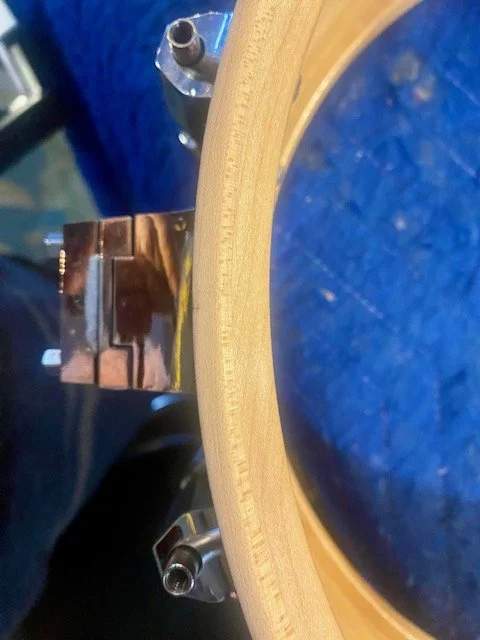
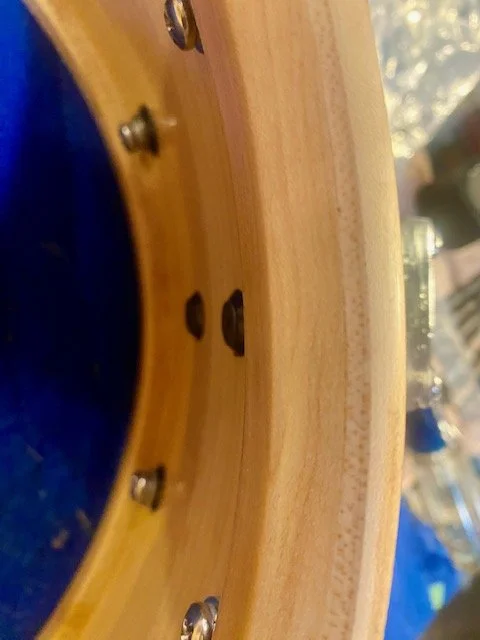
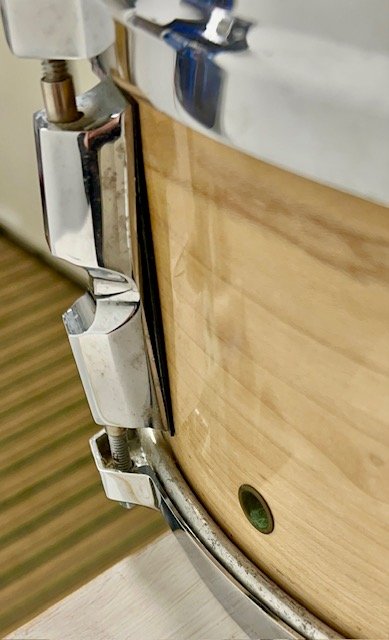
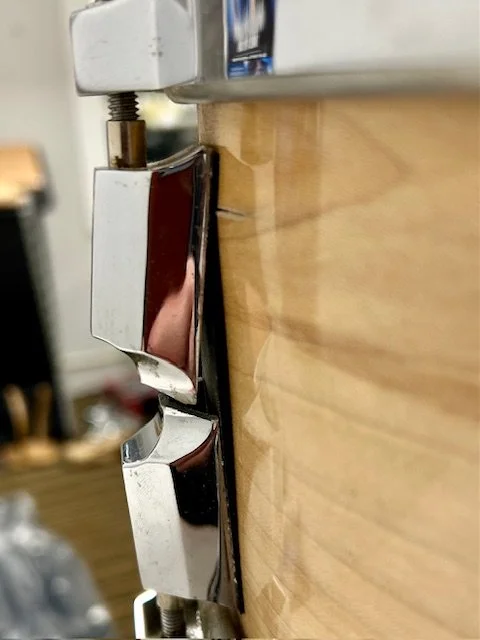
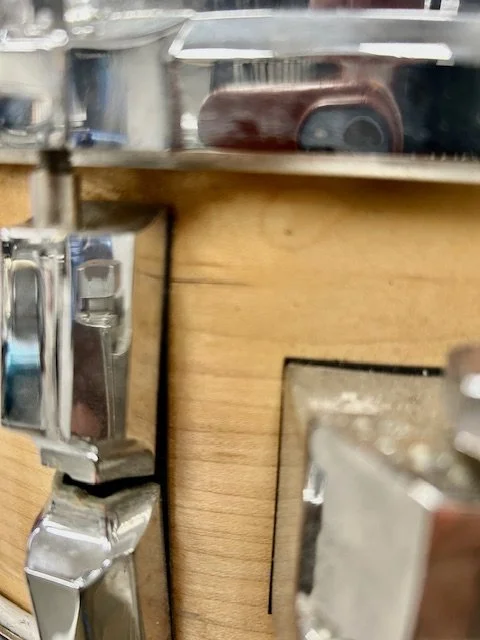
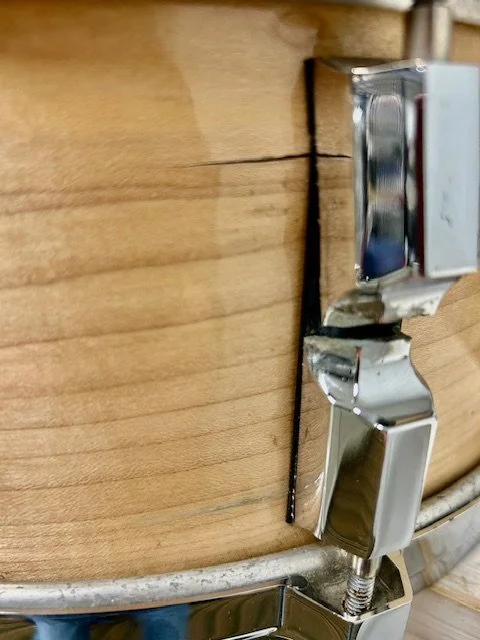
After my discovery and inspection I could see that this snare unfortunately had a few issues that were apparent. Three of the ten lug casings were pulling away from the shell, cracked and broken. Two of the pulled out lugs made a few hairline cracks that only went part way into the solid shell. And, as a result of cranking the heads the three lugs had pulled upwards on the shell causing the screw holes to elongate. What hidden issues could there be that I don’t see? But, I was not really too worried and disappointed. I thought if I can buy this snare drum for a fair price, I’ll do the necessary repairs. However, I knew the parts were almost impossible to find, especially the lugs. I still was not deterred.
After my inquiries with the store employee, I actually could not make a deal that day. The owner who was in charge of the decision making was not available. So, I had to wait until the following Monday to make a possible deal.
The owner finally did contact me with the information that this snare was on consignment. So, after receiving the information I made an offer to the owner who conveyed this to the seller and we made the deal.
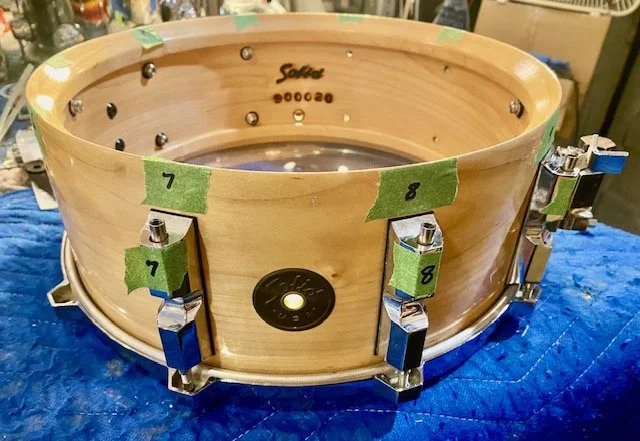
After a couple days I received the drum and was excited to get my hands on fixing this snare. After checking the snare over and disassembling it, three out of ten lugs needed to be repaired or replaced. x
As I did my investigation and inquiries online there were no lugs to be found. The trouble was that this company was only in business for roughly four years. Any contact of sourcing parts was virtually nonexistent. So, I thought I’m just going to repair these original lugs the best I can. I have already soldered vintage lugs previously, but I didn’t want to take the tedious time involved. By the way, the metal used on these lugs was pot metal which is not very durable for this modern snare drum. Ironically, early Slingerland Radio King lugs were also made of pot metal resulting in breakage and replacement.
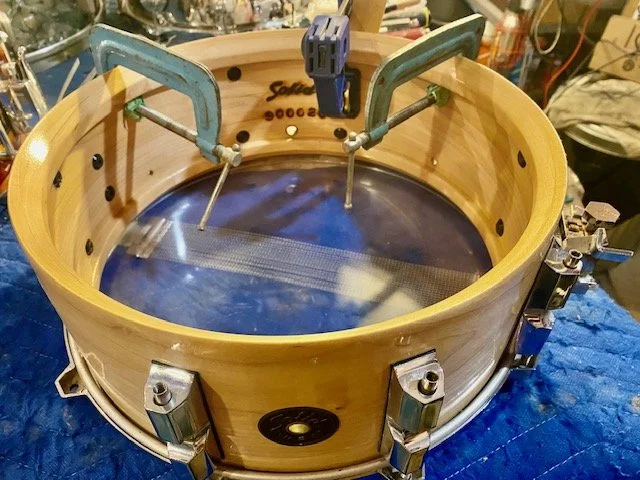
I came up with the idea of using J B weld on the lugs. There are several options with this company. I opted for the clear epoxy, it’s a two part mixture that you have to mix together manually. I pieced together three of the damaged lugs and applied the epoxy to mend the broken parts.
Now, I knew that with the torquing pressure and tuning the head it may be in vain to repair these, but I forged ahead. The time involved to do this would be well spent hoping to produce good results.
After the epoxy was applied, you must give this repair 24 hours to cure. In the meantime I spent a few hours cleaning the remaining hardware, tension rods, die cast hoops and shell. I had to take the throw off and the butt plate apart to get them working freely. One of the screws in the butt plate was frozen in the threads with corrosion resulting in me having to remove it out with much force and WD 40. It was so frozen that I had to very carefully remove it with vise-grips. If I wasn’t successful the screw would have had to be drilled out, something that is very difficult and time consuming. Fortunately, I had prevailed.
After repairing, cleaning and reassembly, I had the opportunity to finally see how my repaired lugs would hold up. Well, they held for around a day, but I was able to reapply more epoxy. It was a temporary fix for a little while, but not permanent. I managed to bring this “SOLID” snare drum back to life. It has that warm, vintage 1-ply maple shell tonality that is desired by many.
This drum is the predecessor to the “Craviotto” and “DW Craviotto” Solid Shell snare drums. I believe that this drum definitely deserved to be resurrected and brought back to life.
The history of the SOLID drum company was short lived, but certainly one of the first companies to bring back a legendary remake of the classic Radio King 1-ply, solid maple shell design.
The “SOLID” drum company made this model in three sizes, 5.5”x 14”, 6.5x14” and 7”x14”.
Here are the specifications and details:
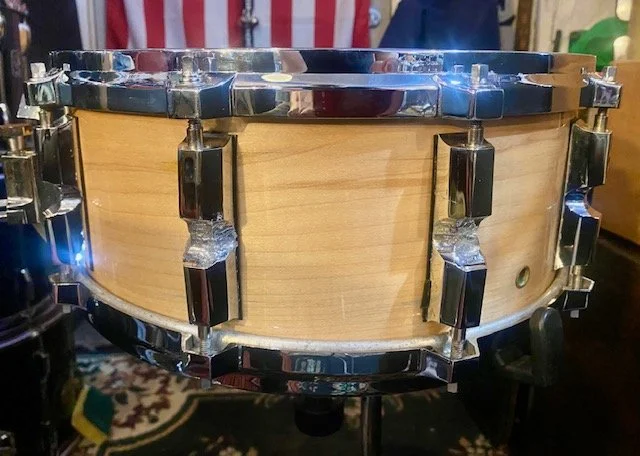
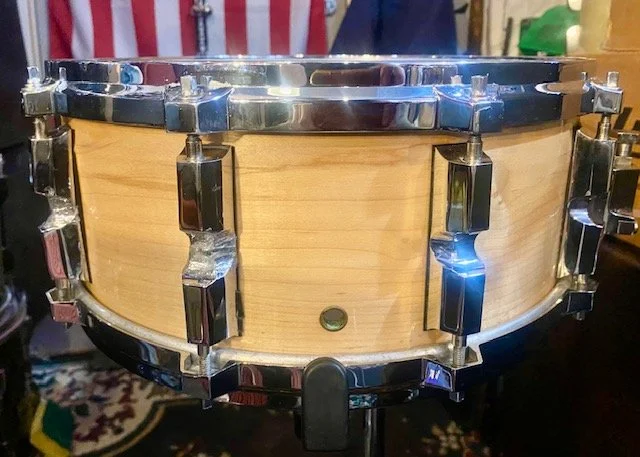
Shell construction: A 5.5”x14” steam bent 1-ply maple shell with solid maple reinforcement rings. The shell is natural maple with a very nice clear lacquered finish applied inside and outside of shell.
The bearing edges are precise and beautifully crafted. There is a subtle but effective snare bed cut into the bottom bearing edge to allow for great snare response and sensitivity.
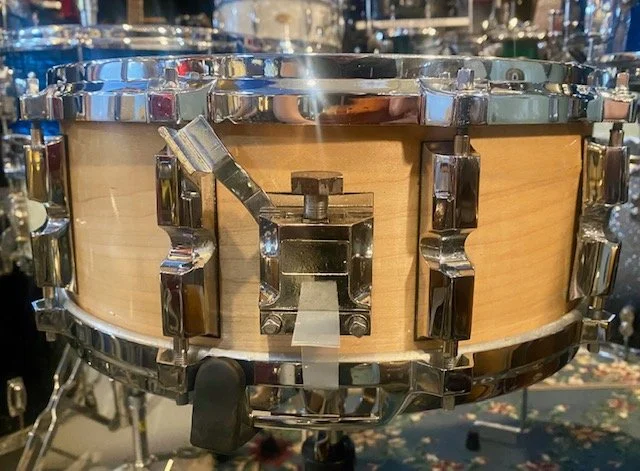
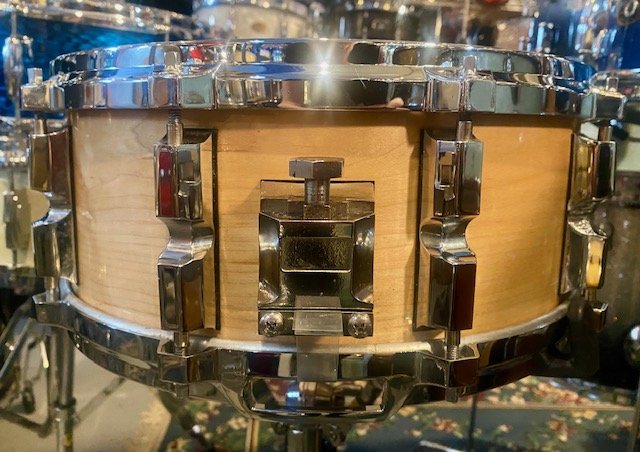
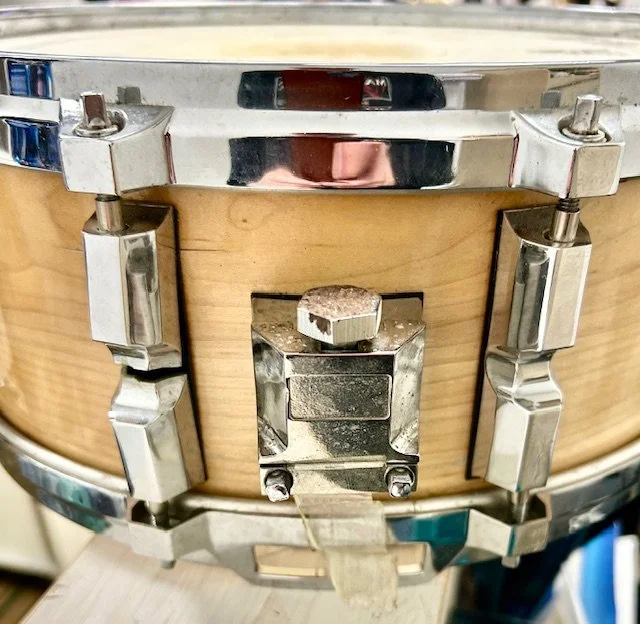
Lugs: Rectangular, octagonal and ridged design made of pot metal and held in place with two screws.
Hoops: Top and bottom die cast hoops with the same ridged design as the lugs, but with an octagonal theme.
Throw off & Butt plate: The throw-off and butt plate have the same square block design. Both are adjustable with a octagonal, stop sign adjustment knob, the throw having a handle for switching on and off snare wires. These are actually very precise and smooth for adjustment.
Brass Grommet: Installed off-set on lower drum panel.
Badge: Round design with “SOLID” made in USA. Also a brass grommet was utilized.
Tension Rods: Two inch tension rods 12/24” with a half inch shoulder. Original washers are nylon for smooth tuning with the die cast hoops.
All hardware is triple chrome plated.