
by Anthony Amodeo
I recently had a few phone conversations with a patent attorney. Basically, just to get an idea for what it entails to apply for a patent. What the criteria might be for being granted a patent… etc.
This attorney brought up a three-element criteria that he considers when talking about granting a patent.
He said that your idea or invention must be “New, Useful, and Non-obvious”. This got me thinking about how his criteria may apply to my Dyna-Sonic study and how there's two sides to every story where the truth usually lies somewhere in the middle.
Well, there are two sides to this Dyna- Sonic story as well. My goal in this article is to get as close to that middle as possible.
The two sides we will discuss here are the only two credible and available first-hand accounts of this Dyna-Sonic development. The Ben Strauss side and the Ellis Tollin side.
In a lengthy recorded video interview from 1995 with Rogers head of marketing and artist relations, Ben Strauss he states, “Buddy (RIch) asked me… is it possible to make a drum that will respond easily when you're playing triple pianissimo or triple forte”? I said I really don't know but I'll go back and we'll talk to the engineer, and we'll see what we can come up with. I said what's the problem? Buddy says, “well most drums respond fairly well when you play soft or mezzo forte, but when you lay into it, he says they seem to fall apart. I think you know what I'm talking about”. I said yes, let's see what we can do. So, I sat down with Joe Thompson, and I explained to him what buddy had asked me, and he said “Well let's look into something”. Joe did most of it, but I was in the little corner of the picture.
What makes a drum sound?
How does a drum respond to the player?
Mr. Strauss continues. “We changed the approach to the snare bed. I always remember that snare beds were always rather deep and some fellow said to me. ‘Well, they have to be otherwise the snares won't make contact with the head.’ So, what you're doing is pulling the snares into the head, obviously. So, then my question used to be, well what happens to the snare head when you do that? They’d say, ‘what do you mean?’ I’d say you realize that when you're putting pressure on the snare head… before I tell you what happens, what happens to your batter head when you put an internal tone control into it? You deaden it don't you? Then when you pull the snares into the snare head, you're deadening that too. Is that what you want to do?
So, they'd say ‘well what am I going to do that's the way drums are made today’
I said, Well we're going to see if we can change that, and we did. That's really the story behind the Dyna-Sonic. “
What I find interesting about not only this short clip but the nearly 4-Hour interview that it comes from is that there's no mention of his dear friend of 40 years, Ellis Tollin. Just an observation.
Let's see what Ellis had to say about the Dyna-Sonic development in an interview with jazz columnist and historian Suzanne Cloud in 1999.
“Everybody sold Slingerland because Gene Krupa played Slingerland and that’s what the kids went for. We were selling Ludwig drums. We had got an exclusive on it. We used to fix the drums up they were so bad. I used to have to mechanically correct them. One of my students came in and asked me to fix a snare drum and I started to fix it and I look at him I said, ‘you didn't buy this drum from me where did you get it?”’ He said 8th Street Music.
Eddie Hirschman and his brother used to run the place… anyhow when I found out that they were buying it from 8th Street Music and they were very close friends of mine also I called them up and I said, ‘where did you get the Ludwig drums?’ and they said from William F Ludwig of course. So, I called up Bill Ludwig… I said Bill, I’m supposed to have an exclusive in Philadelphia and you're selling drums six blocks away from me. What are you doing? He says, we need more exposure.
I said Well, there’s only one thing I can suggest. He says what's that? I said take your drum company and shove it!
Later on, a guy named Henry Grossman walked in and at that time I was still burning from the Ludwig thing and Henry Grossman said Ellis we heard all about you. He showed me some Swiv-O-Matic drum holders. How are they? What do you think they would do on the market? I said they’re great they got to sell. He said I also bought a drum company. I said what's the name of the drum company? He said Rogers. Rogers to me was a toy drum company. I said I can't handle Roger's drums. He said, well the reason we came to see you. We want to know how we can take this drum company and make it the way you would like it. I said to myself… here's my chance to fix Bill Ludwig! I didn't think like a businessman. I thought like a drummer. I said… I'll tell you what I'll do. I'll show you how to build the drums to make the best drums in the world. I'll get you Buddy Rich to play them I get you Louie Bellson. I'll show you how to do drum clinics … because we had been doing drum clinics in the studio since 1947. I said I'll even show you how to build the best snare drum in the world, so I designed the Dyna-Sonic snare drum. I never asked for royalties. My head wasn't in that particular place. All I wanted was for Rogers to now have the best drums on the market and for them to give me an exclusive. Which they did and Henry Grossman was a man of his word. He stuck by it all his life until he sold the drum company. “
I notice here as well, no mention of Ben Strauss or even Joe Thompson for that matter. Again, just an observation.
I'm sure many of you have seen the movie Jurassic Park where billionaire John Hammond recreates dinosaurs and they wreak havoc on an island. Well, there's a scene in that movie where Mr. Hammond takes the paleontologists and botanists into a small theater and shows them a clip of how they went about recreating these dinosaurs. In this clip it explains how they had discovered prehistoric mosquitoes preserved in sap and how they would drill into this sap and with a syringe extract the dinosaur DNA. Any strands missing from this dinosaur DNA they would fill in with frog DNA. This feels a bit like what I'm doing here. My years of research is the drilling into the sap. The words of Ben Strauss and Ellis Tollin along with all of the Covington Rogers employees and their family members who I've spoken to would be the dinosaur DNA. Any small strands missing from that DNA I will respectfully and logically fill in with frog DNA.
We all know the men who were involved and the snowstorm story is well documented. When Ben Strauss and Joe Thompson traveled to Philadelphia in the late 1950s to Ellis Tollin’s home, got snowed in for a couple days and spent time in the basement developing what would become the Dyna-Sonic frame system. This brings us back to the patent attorney and “New, Useful and Non-obvious.”
Let's put New to the side just for a second. Useful… is the Dyna-Sonic frame system usefulOf course it is. Most of us have used it with great success.
Non-obvious… the example that was used to explain this to me by the patent attorney was the common mouse trap. Something that had been patented since the late 1870s. If I wanted to patent my version which had a steel base instead of the common wood base that would be too obvious and not patentable. Which brings us to New… your idea or invention has not been in the public eye for more than one year before the filing of your patent application. Not only had this frame system not been in the public eye for a year, it hadn't been in the public eye for decades.
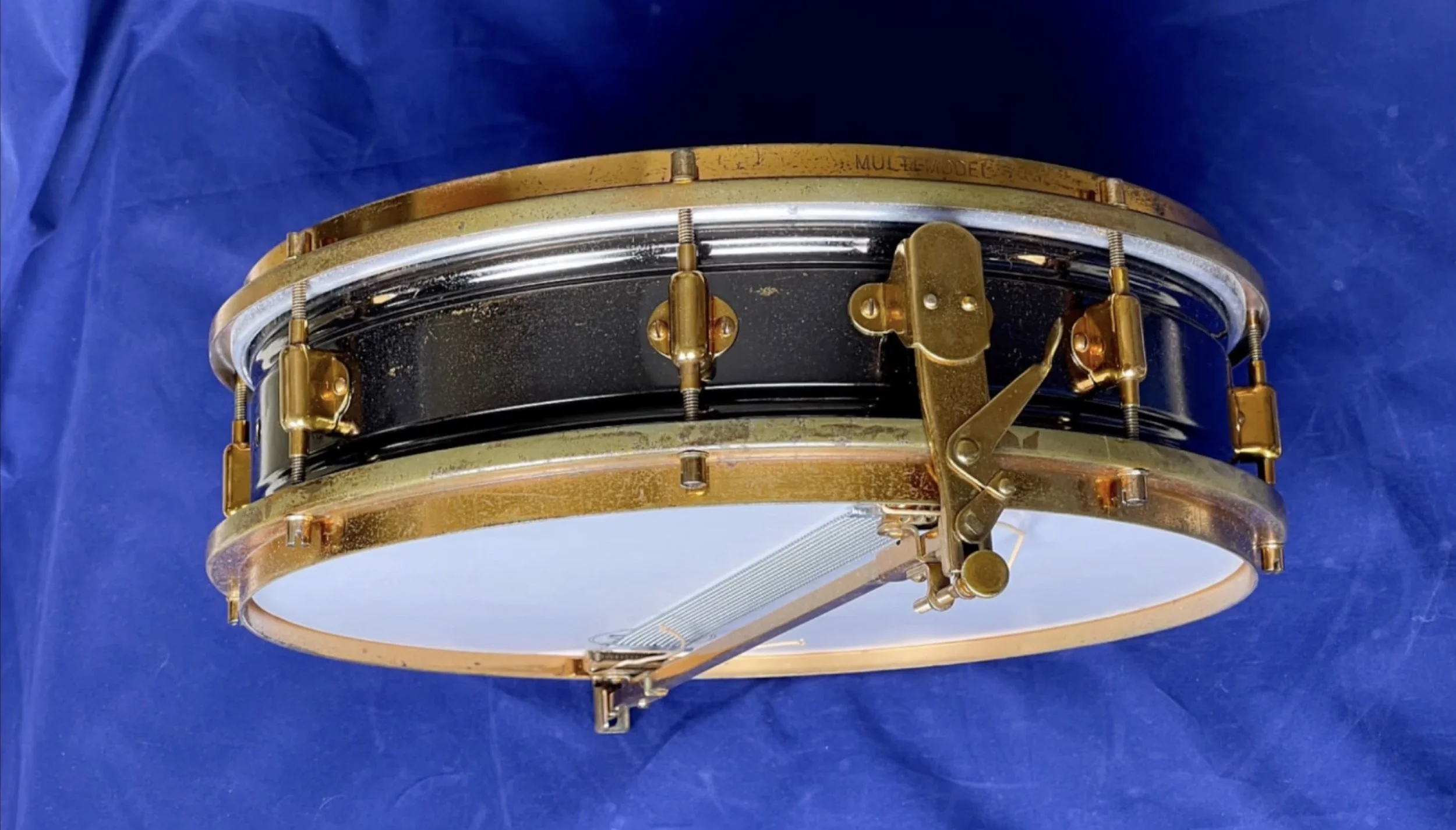
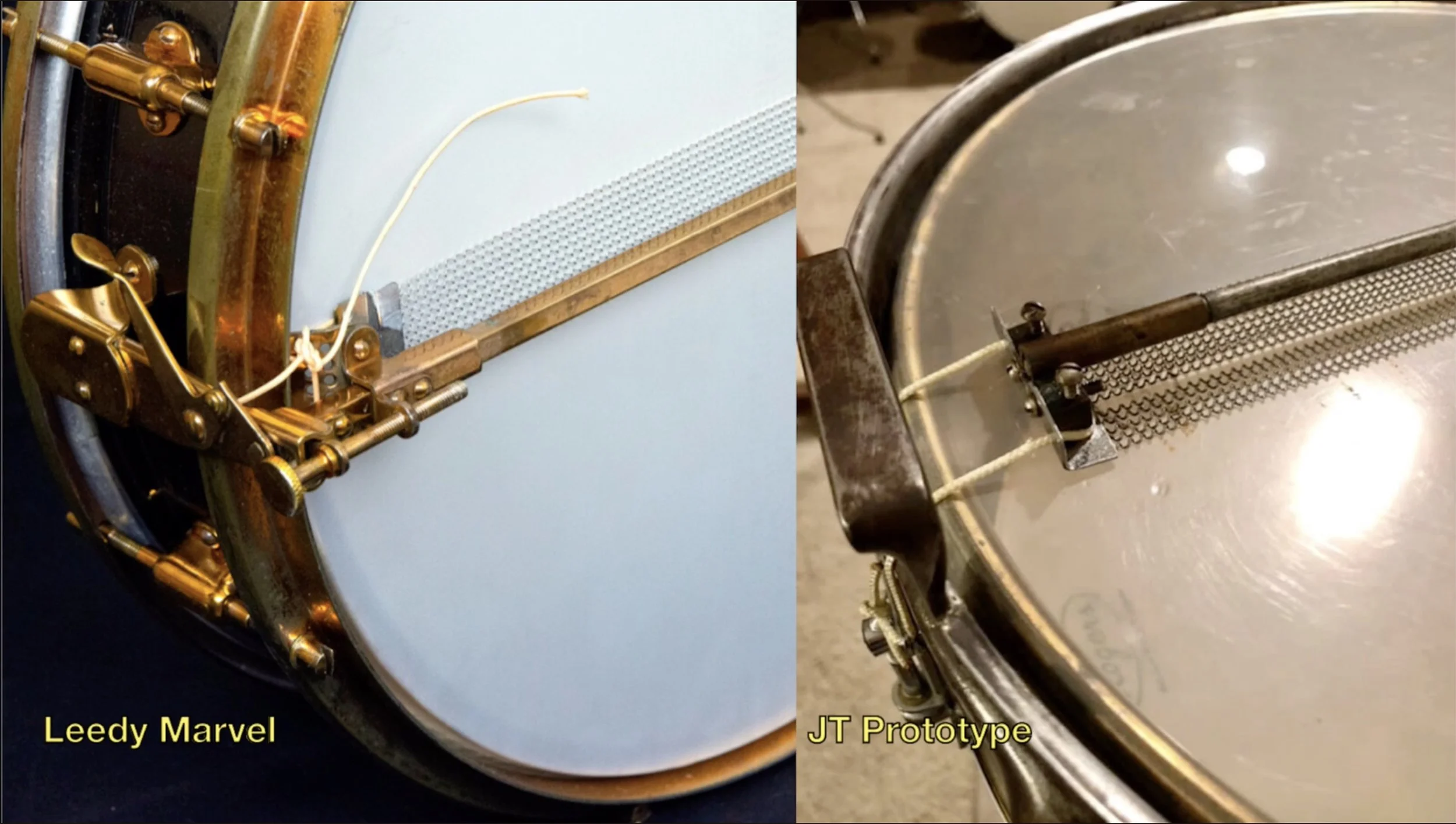
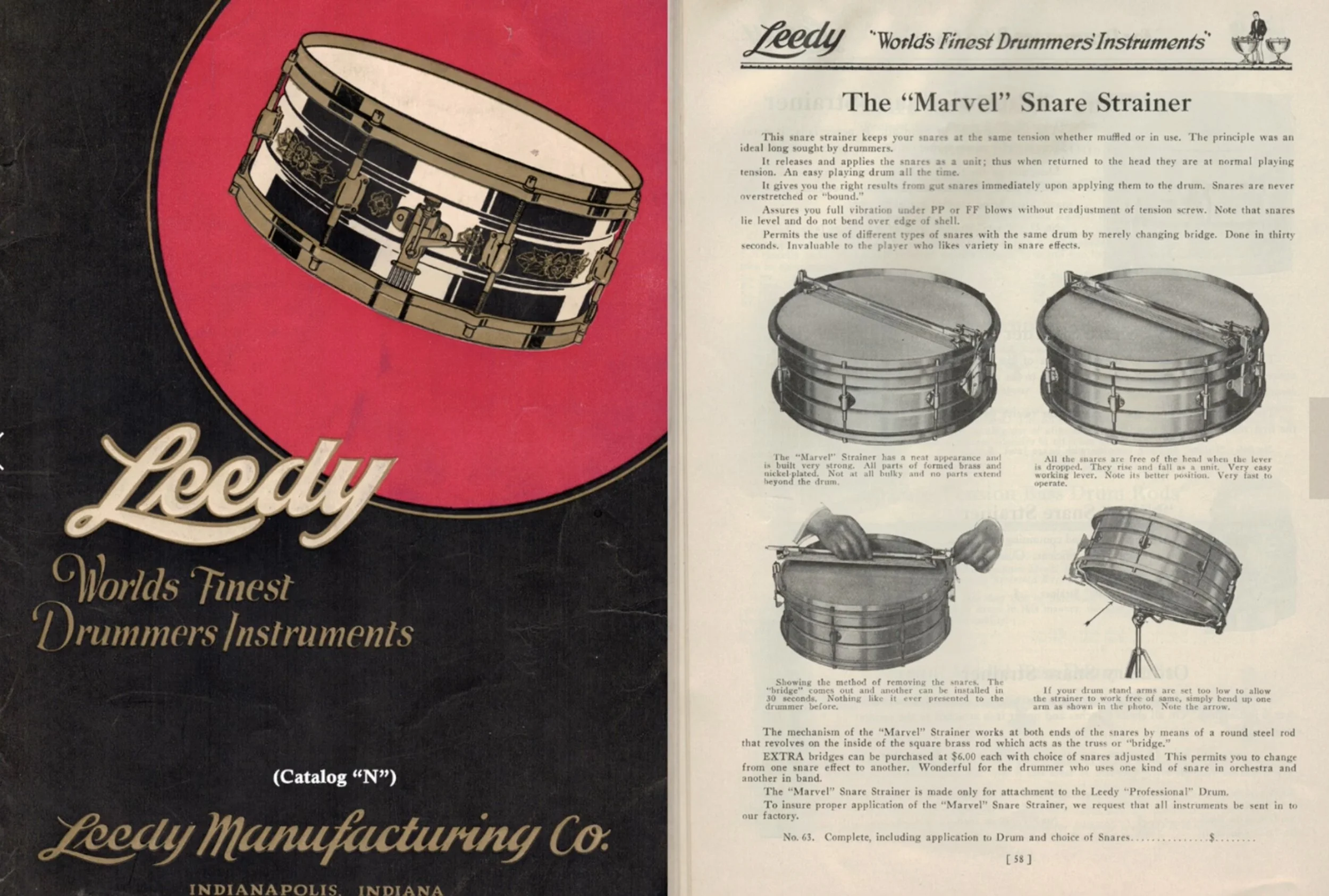
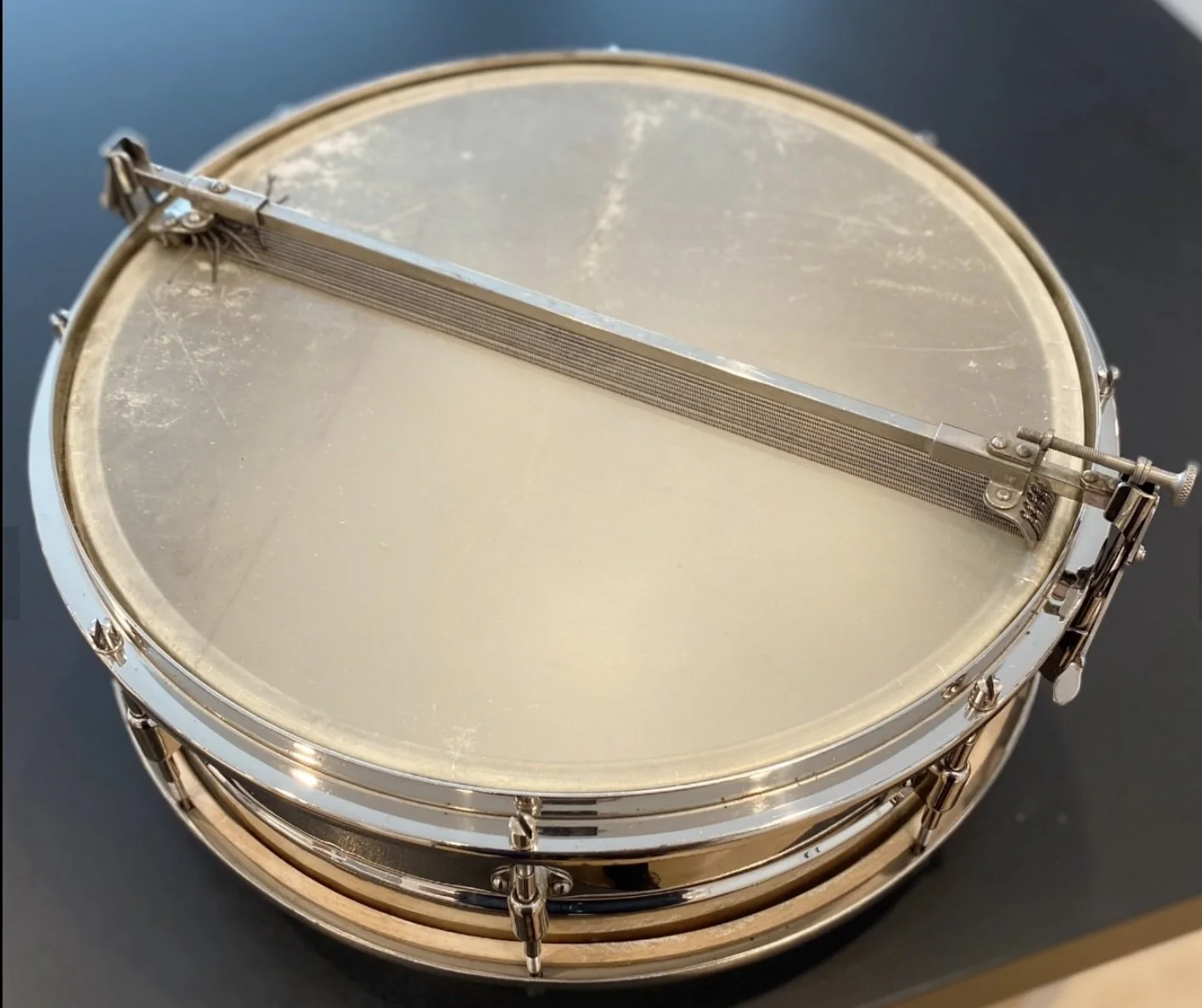
What am I getting at? It's obvious to me that the Dyna-Sonic frame system concept is based on something that Leedy had developed in the 1920s called the Marvel Snare Strainer System (pic A1). This was marketed as a system that would keep the wires under tension even when released and also as a system that would make changing wires a simple process. (pic A2) The marketing also mentions it “assures you full vibration under pianissimo or fortissimo blows without readjustment of the tension screw”. It notes that, “the snares lie level and do not bend over the edge of the shell.” Sounds familiar, doesn't it?
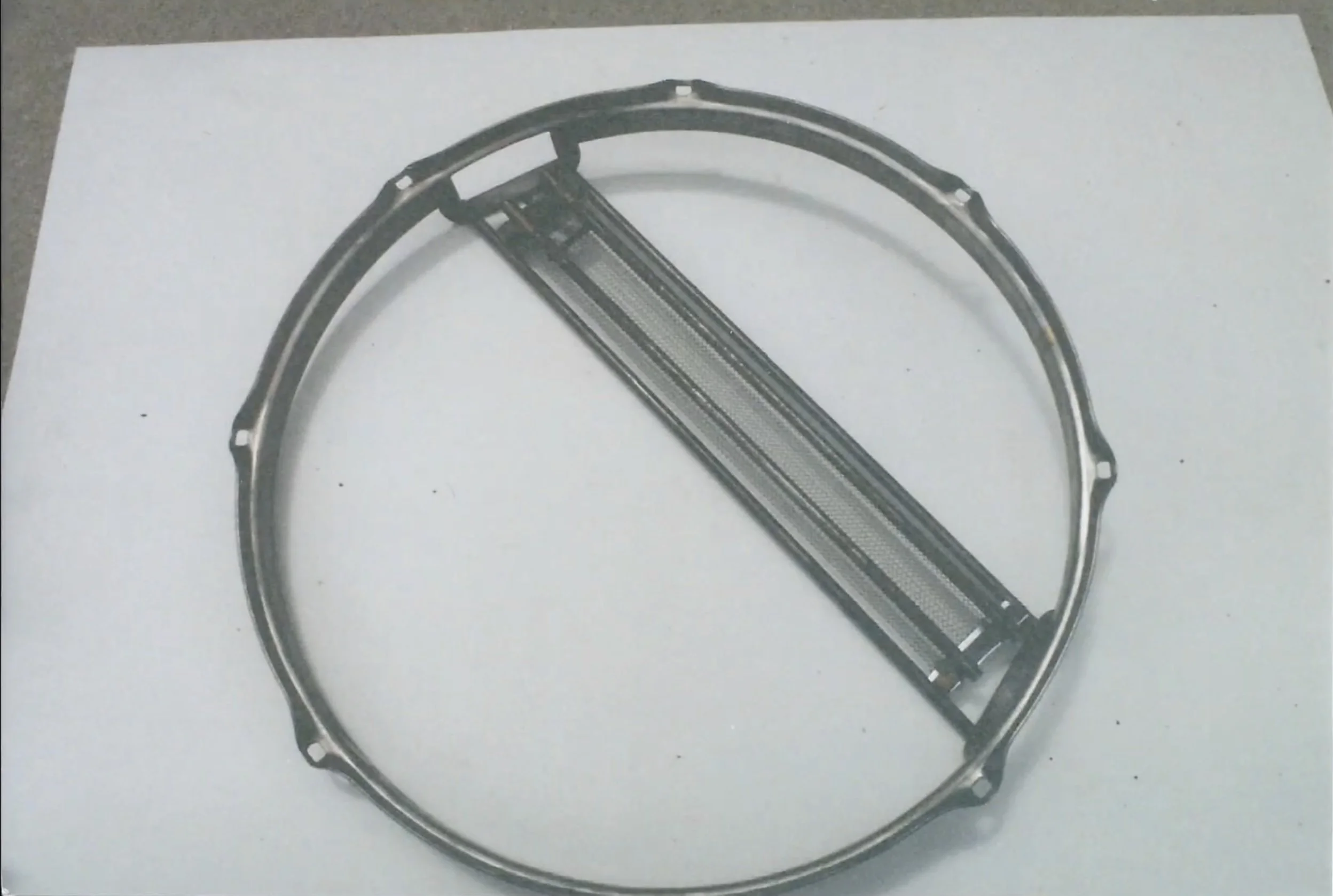
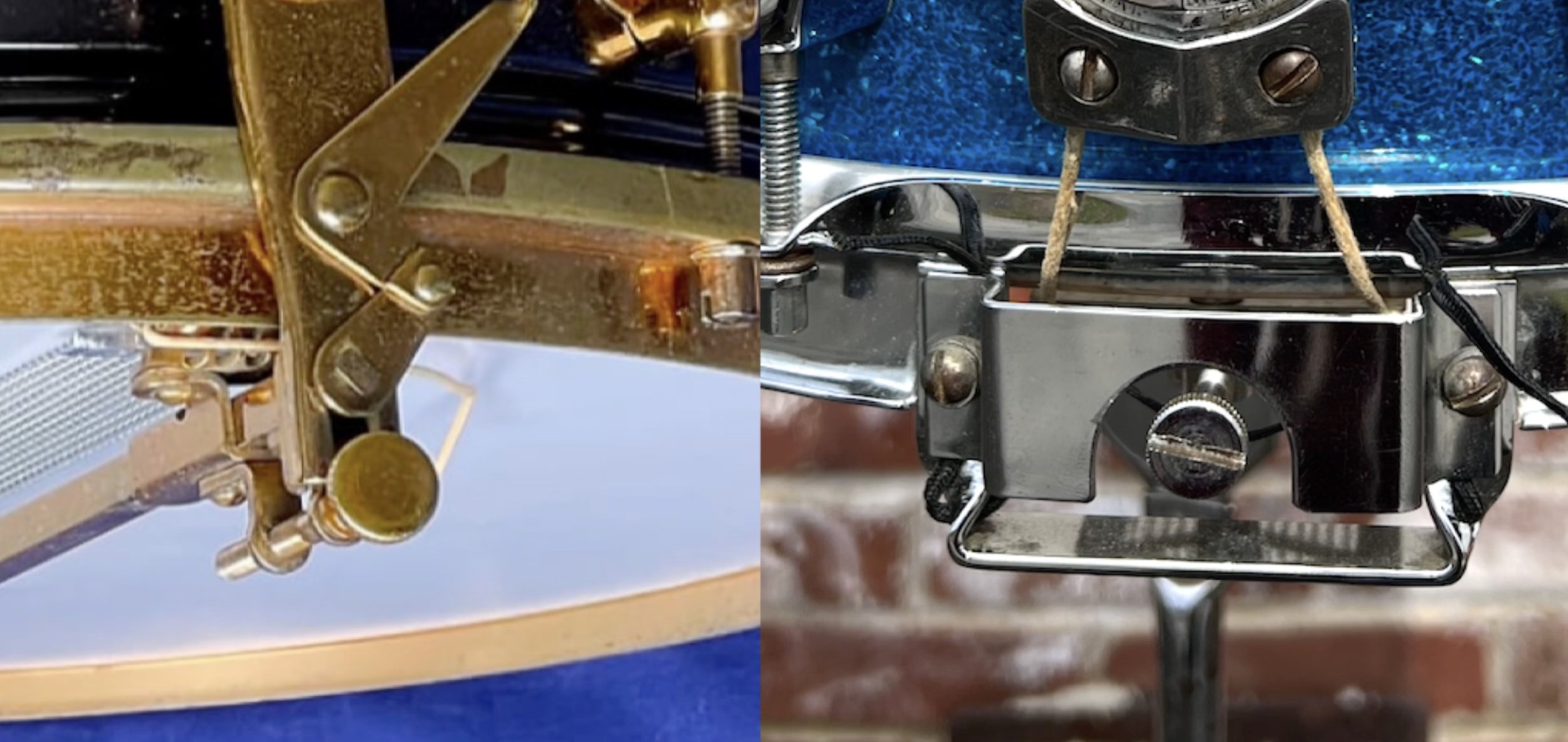
This Leedy Marvel system was a frame or bar system that would raise and lower the wires under tension and when shown in a side-by-side comparison here with a Joe Thompson prototype I can't help but notice that they look eerily similar. (pic A3) This Leedy idea is said to have been cataloged for only one year in 1925 and failed because of a faulty strainer that wouldn't engage or would disengage when playing, but the idea was there. (pic A4) The idea was there so much so that you can plainly see the tension adjustment screw. (pic A5) The idea was there but it failed because of a faulty strainer and what did Rogers have?
Rogers had one of the best if not the best strainers on the market at the time and they had Joe Thompson who would greatly improve on this Leedy concept.
Let's talk about the men involved for a minute. Henry Grossman… brilliant businessman, entrepreneur. Not a drummer. Ben Strauss… marketing wizard and arguably the best artist relations man in the business. Also, an accomplished trumpet player. Not a drummer. Joe Thompson… mechanical engineer, inventor. The word genius is thrown around when speaking of him, quite frankly because he was. What was he not? He was not a drummer.
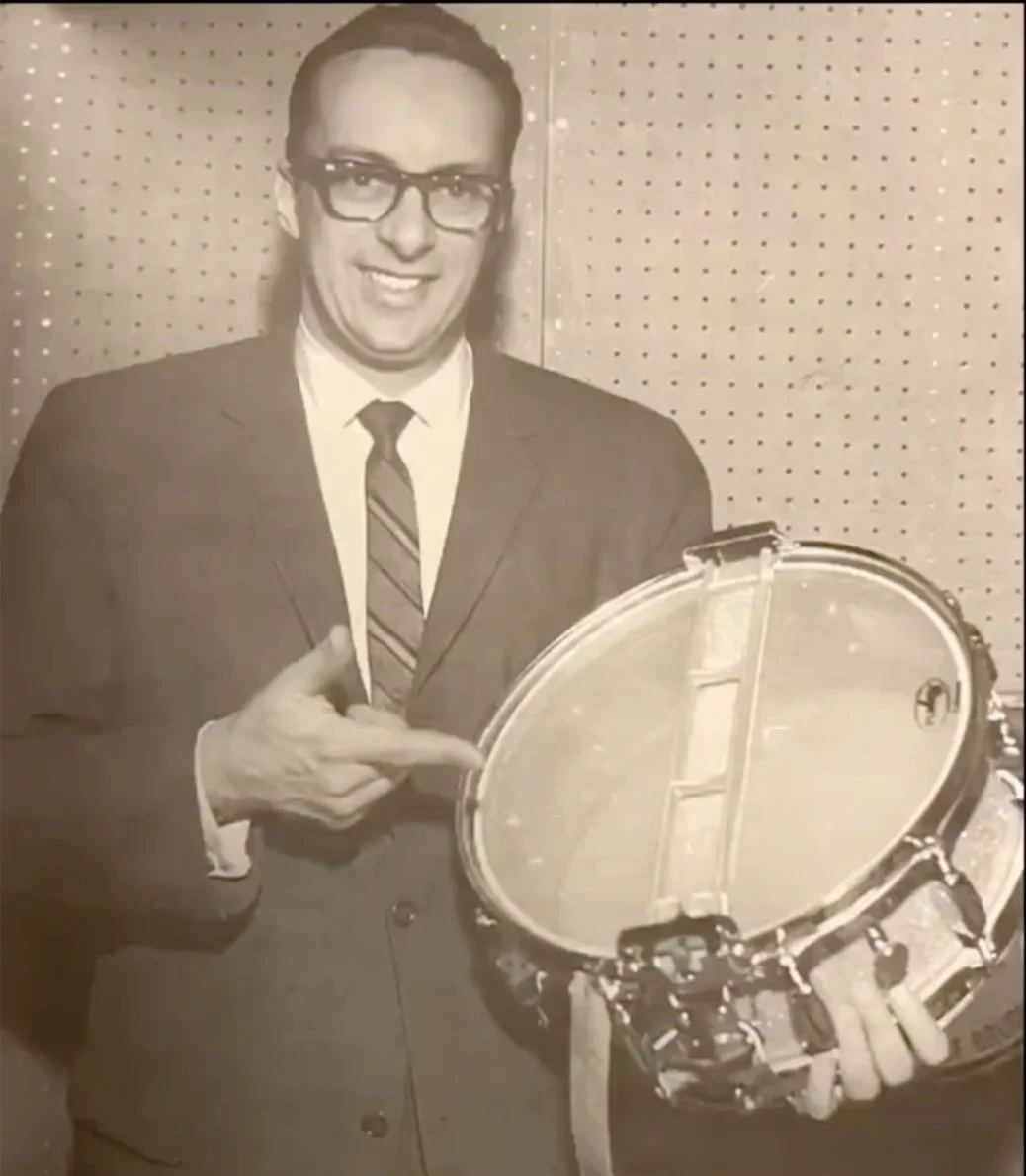
I personally find it slightly difficult to believe that any of these fine men, brilliant in their own right but not drummers would be aware of an obscure Leedy snare drum mechanism from 1925 that was basically out of production in one year. You know who I do believe would have been aware of this system? Ellis Tollin. (pic A6) Mr. Tollin was a drummer whose professional career started in the 1930s. He was also a man with his finger on the pulse of drum innovation and what drummers desired and needed.
Mr. Strauss mentioned snare beds in that quote from earlier. It is well documented that Ellis despised the snare bed and saw them as inconsequential ineffective and even futile and impractical. As a matter of fact, many of the things that Mr. Strauss says in that long video interview (that you can see in its entirety on my YouTube channel @Rogersdrumvideos) I'm told are direct quotes of things that Ellis Tollin would say regularly. For example, when talking about bearing edges Mr. Strauss mentions how the head should sit on the edge the way the strings of a violin sit on the bridge. Ellis' family tells me that this is something Mr. Tollin preached regularly using that very example.
Allow me to read from an interview that Ellis did with his friend Dick Cully in the late 1990s.
Ellis - “I asked Ben, Ben did you ever play drums he said no I play trumpet, but I've sold drums in the stores that I've worked in. So, I asked him if he knew what makes a good or a bad drum. He said the way you tune it? I replied, there’s a lot more than that. So, he asked me to tell him. I began to tell him that the shell has to be smaller than the flesh hoops so that the head can float. I told him that the shell construction has to be sturdy, so when you strike the top head, the shell doesn't move in towards the center. The snare wires have to be suspended against the bottom head without choking it so that regardless of the volume level that you're playing you will still get a complete response. He said how do we go about doing that? I told him step by step. Then I started talking about bearing edges. I told Ben that the bearing surface is where the head vibrates from just like the strings of a violin vibrate between the neck and the bridge”
Dick Cully - “I read somewhere that it was Ben Strauss who used that violin analogy.” Ellis continues - “He was referring to things that I told him many years ago. Remember, Ben Strauss was not a drummer. He was a wonderful human being who was very adept at listening, learning and paying attention to details. He was dedicated to his job, creative and interested in setting up dealerships around the country.” When Ellis talked, they listened.
As for Buddy's involvement… who Ellis brought to Rogers by the way being friends since they were very young. In that same interview with dick Cully, Ellis says - “a short time later I spoke to Buddy about Henry and Rogers. The timing was perfect because Buddy was available and looking for a drum company to endorse. I explained the situation to him, and he said he was interested. I told Henry and he said he would be available to meet with Buddy at his convenience. Henry flew to Philadelphia where we met and we went to Buddy's apartment in New York. I introduced them to each other and Buddy asked me in Henry's presence. Ellis what kind of drums are these? I told Buddy, right now they are not professional instruments, but Henry guarantees that Rogers is going to produce them the way we want and that they will be up to our standards that we always spoke about and will be better than anything else on the market. Henry agreed so Buddy confirmed, ‘if Ellis says these drums are going to be good then that's okay with me.’ Then I stood up and said gentlemen excuse me while I get a glass of water you guys talk. I walked out of the room. I knew beforehand what Buddy was going to ask for and didn't want to get involved. So, Buddy and Henry spoke alone and came to an agreement and Buddy agreed to endorse Rogers drums.”
Ellis also mentions that when Rogers supplied Buddy with his first drum set it was delivered to his store Music City in Philadelphia with a 22 inch bass drum which Ben Strauss does talk about in the interview on my channel, and a Holiday snare drum that Ellis specifically ordered with 10 lugs as opposed to the standard 8 that would be on a Holiday. Ellis says, “I dismantled the drums and worked on the bearing edges.” In Ben’s version of the story Buddy was the driving force behind the Dyna-Sonic. I'm sure as a recent powerful member of the Rogers roster when Buddy mentioned he wanted a responsive drum I'm sure they listened. Buddy Rich was for sure a catalyst to get it done and a sounding board during the process, but I don't believe he was involved any more than that. Buddy was not in the business of developing snare drums; Buddy was in the business of playing snare drums.
So, in wrapping up allow me to present to you a hypothesis that I've prepared on the way that I believe the development of the Dyna-Sonic happened. Armed with the dinosaur DNA from years of research and gathering information from trusted sources and logic filling in the minor strands of frog DNA my hypothesis.
Hypothesis
In the early 1950s when Henry Grossman had first acquired Rogers and realized that he would have to relocate the company from NJ to Ohio they came to a conclusion that they would need a real drum expert to guide them. Grossman reached out to a man named Dave Hyman who was with the music wholesale company Gretsch & Brenner. Mr. Hyman went to visit Grossman in Cleveland and upon gathering an understanding of the task at hand he recommended George Way.
More than interested, the people at Grossman Music reached out to George Way who respectfully declined the offer. Way felt that Grossman had a long tough road ahead of him to become competitive in the drum market because in Way's opinion what Grossman had just acquired from Cleveland Rogers as far as drums was, and I quote “a bunch of junk which had garnered no drummer acceptance in the marketplace whatsoever”. Mr. Way with respect for Henry Grossman felt that though it could be done, this would be an expensive and time-consuming discouraging endeavor.
So, Henry Grossman, Ben Strauss and Joe Thompson moved on without their drum expert. They continued building drums and slowly growing the company. In the mid 1950s a competitor at a NAMM show insulted the Rogers equipment on display which lit a bit of a fire under the Rogers brass to lean on their strength and make their mark on the industry. Their strength at the time was Joe Thompson.
Rogers went on to revolutionize the drum hardware industry with Joe Whitenack and Mr. Thompson's invention of the Swiv-O-Matic ball & socket holder, collet plates and knobby plates. Now it was time to follow up with the drums as well. Just as they had gone to George Way some years earlier, this time armed with Swiv-O-Matic and its innovation in their corner they approached another man who was well respected in the drum world-Ellis Tollin. Though Ellis absolutely loved the hardware he was not as pleased with the actual drums themselves, but being a savvy businessman himself driven by being recently betrayed by Bill Ludwig, Ellis saw an opportunity that would benefit everyone involved while also quenching his thirst for reprisal in the form of a highly competitive product. The involvement of Mr. Tollin would benefit the Rogers company, the drummers buying the new product and his own business if he is offered exclusive rights to sell this revamped new product in his greater sales region, which he is granted.
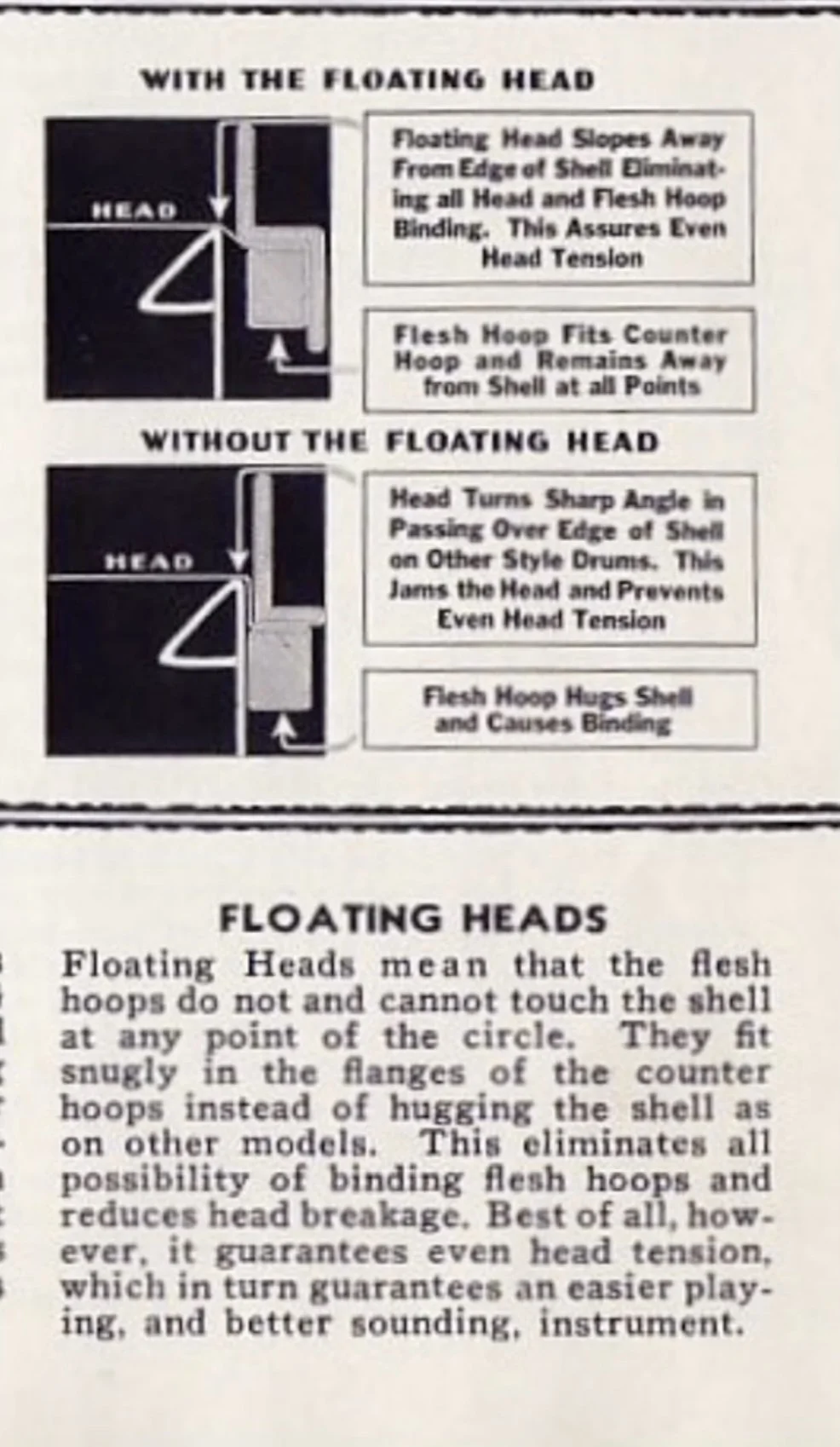
Ellis shares with the Rogers brass his decades of experience in what makes a drum desirable to a player and a consumer. Recommending multiple aspects such as sharper bearing edges and a slightly undersized shell to employ Rogers own version of the Leedy floating head principle.
For anyone unfamiliar with the Leedy floating head principle. Leedy would make their calf heads about an eighth of an inch larger than their shells to assure that the head rested on the bearing edge without the flesh hoop pressing against the shell. (pic A7)
Rogers would make their shells about an eighth of an inch smaller than the advertised size to accommodate the ever-growing popularity of plastic heads which did not have the flexibility of a calf head and again allowing the head to rest on the bearing edge without the flesh hoop pressing against the shell and choking the drum.
Ellis also recommends an idea for a snare drum that will do away with snare beds and snare wires choking the drum and again revolutionize the drum world based on the Leedy Marvel concept. I believe this is the discussion that took place during the snowstorm visit at the Tollin residence.
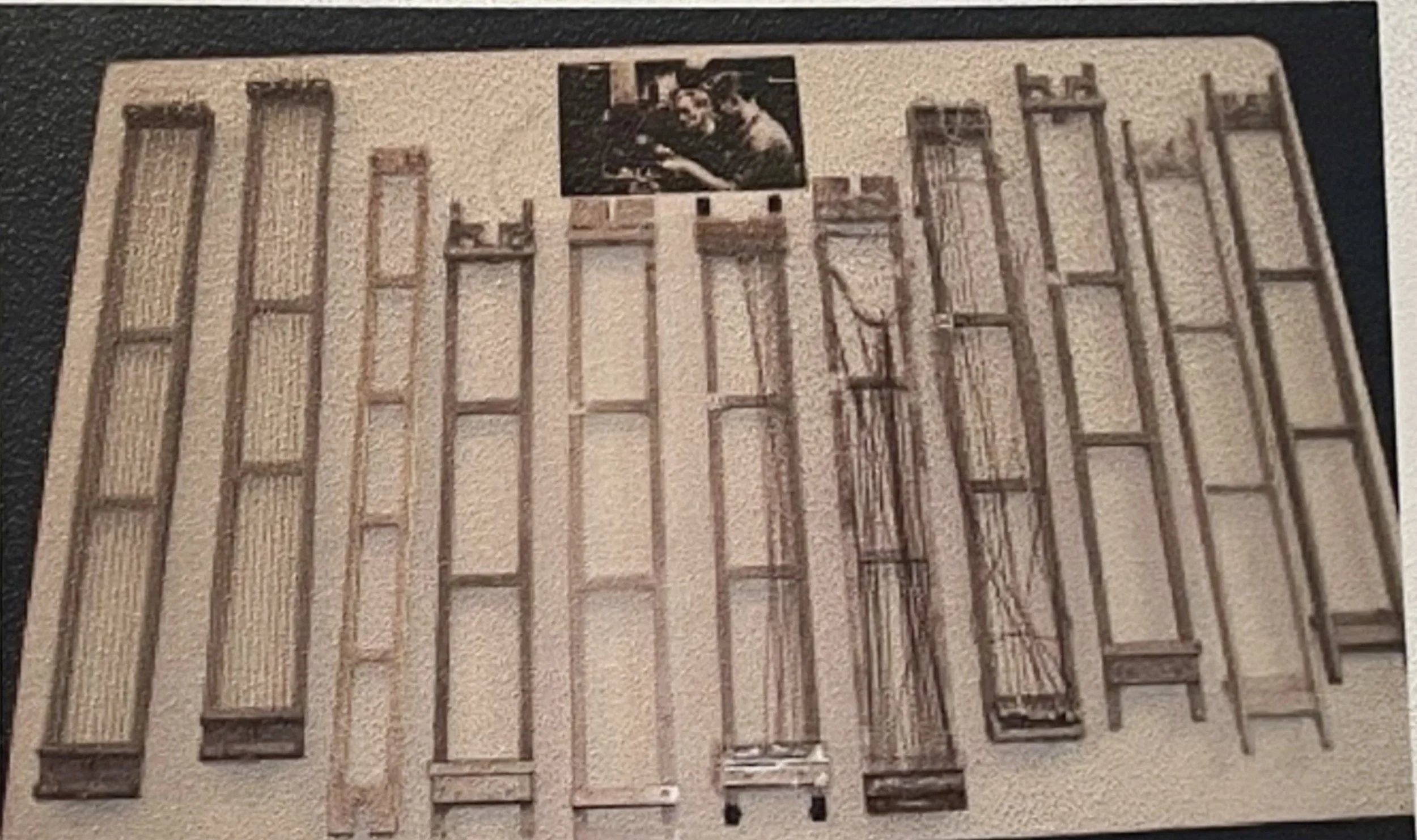
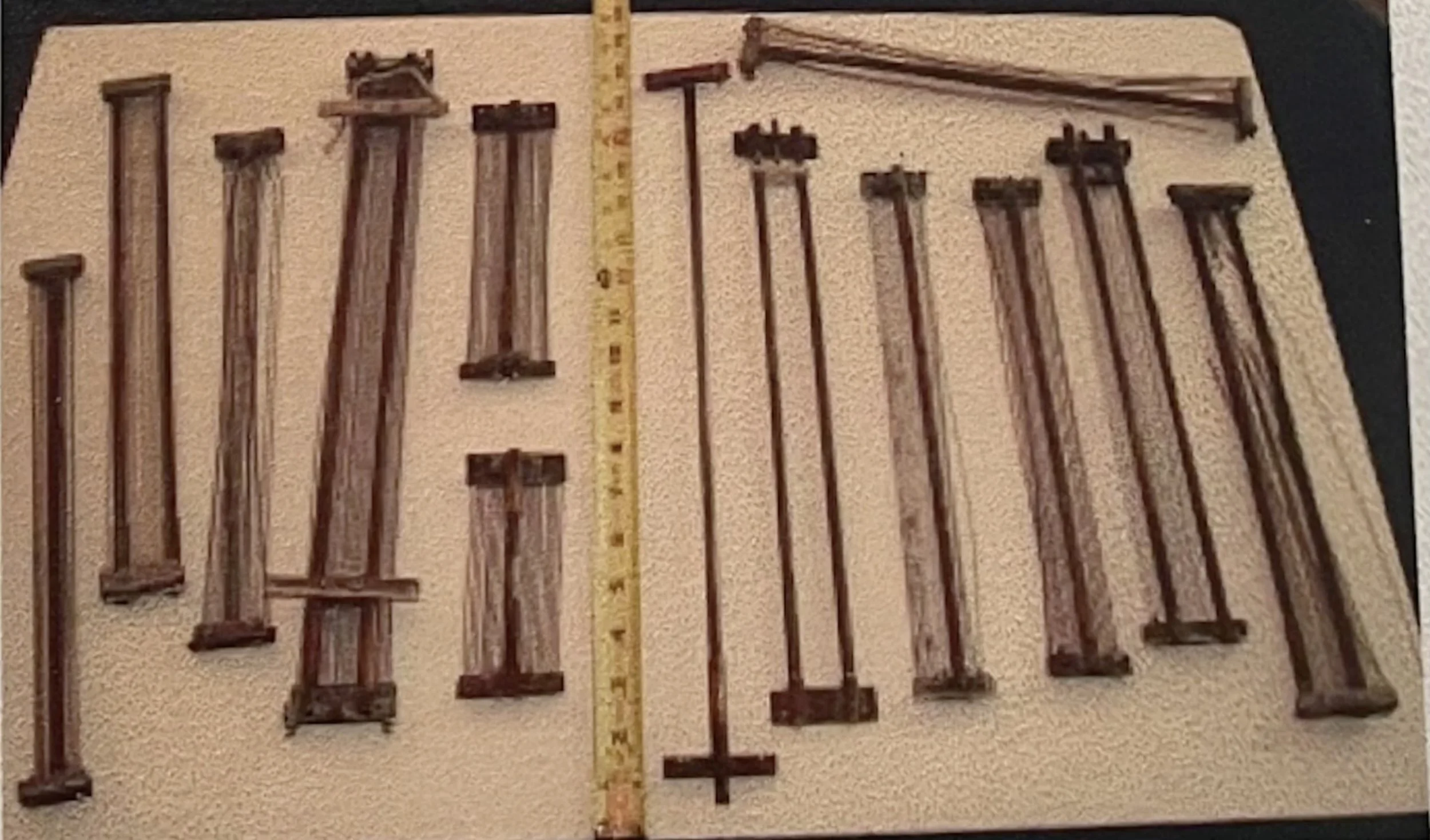
From here on out the brilliance of Joe Thompson takes over where he slowly re-engineers the Leedy Marvel concept through a series of prototypes, trial and error, and sound boarding the likes of Buddy Rich, Louie Bellson and Ellis himself. (pics A8 & A9) Ellis recalls receiving a prototype where the frame was off center to which he responded that the frame would have to be in the center of the drum. (pic A10)
Ellis has stated that he long fought for the complete elimination of snare beds for this drum that they were designing but was met with some resistance by the folks at Rogers and in the end there was a compromise when the mind trust agreed upon an ever so slight, wide and shallow snare bed be installed on the Dyna-Sonic. This new style “invisible” snare bed is eventually what sparked the idea for Powertone… but that is for another article.
By late 1960 or early 61 this re-engineered aluminum frame holding the snare wires with multiple adjustment options was named Dyna-Sonic by Ben Strauss and released to the world with great success bringing well-deserved adoration. This drum in conjunction with other slight changes mentioned previously propelled the Innovative Rogers drum company to one of the greatest drum manufacturers in the world.
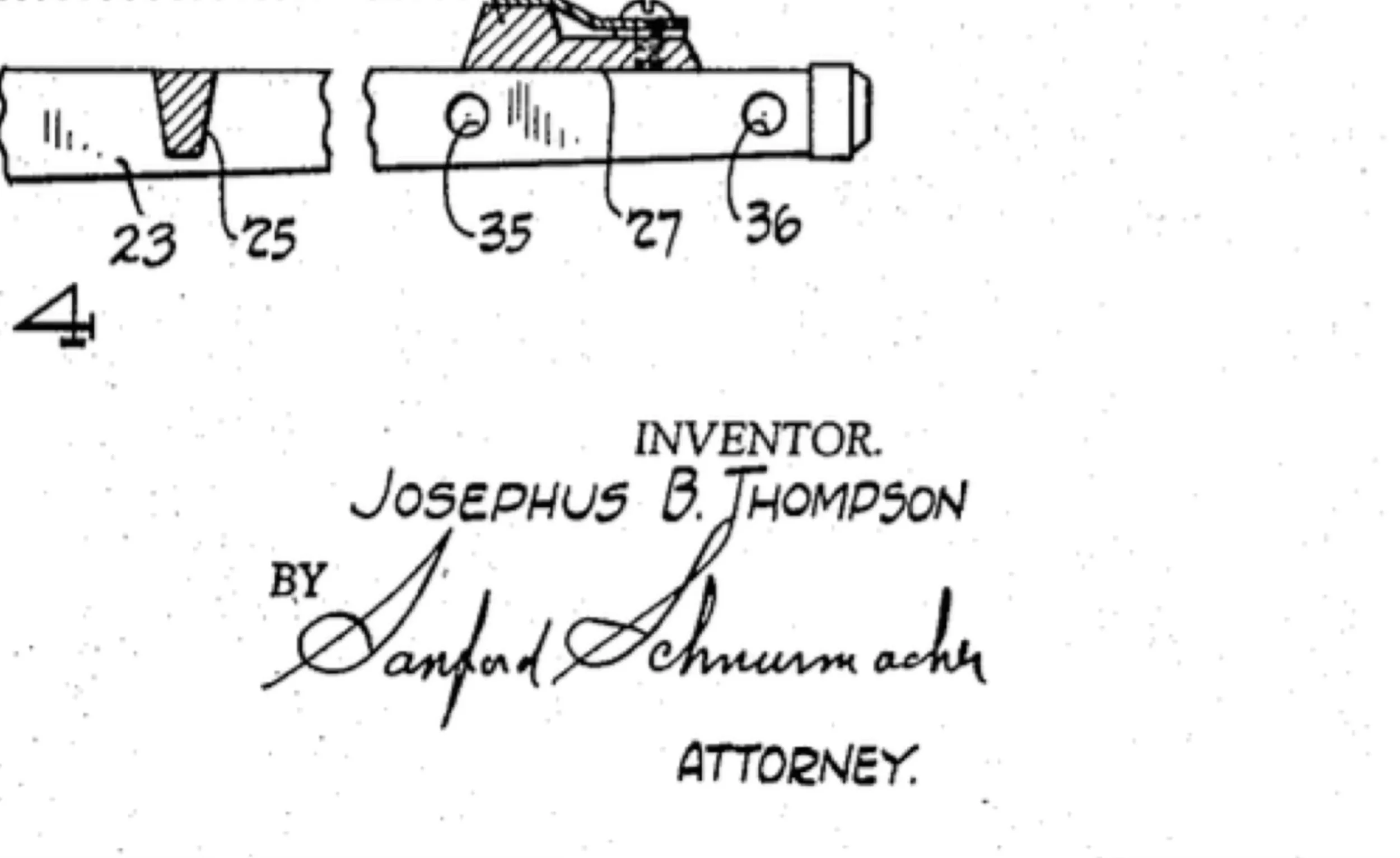
In January of 1962 a patent for this “New, Useful and Non-obvious” design was filed and in December of 1963 was granted. Of all of the things discussed here today one thing is not arguable. Whether rightfully so or not, there is one name on the patent-Josephus B. Thompson. (pic A11)
See Bob Campbell’s article in NSMD for source of photos and background on the Leedy Marvel: https://www.notsomoderndrummer.com/not-so-modern-drummer/2021/4/27/1925-leedy-4-x-14-black-nob-multi-model-marvel-snare-drum