
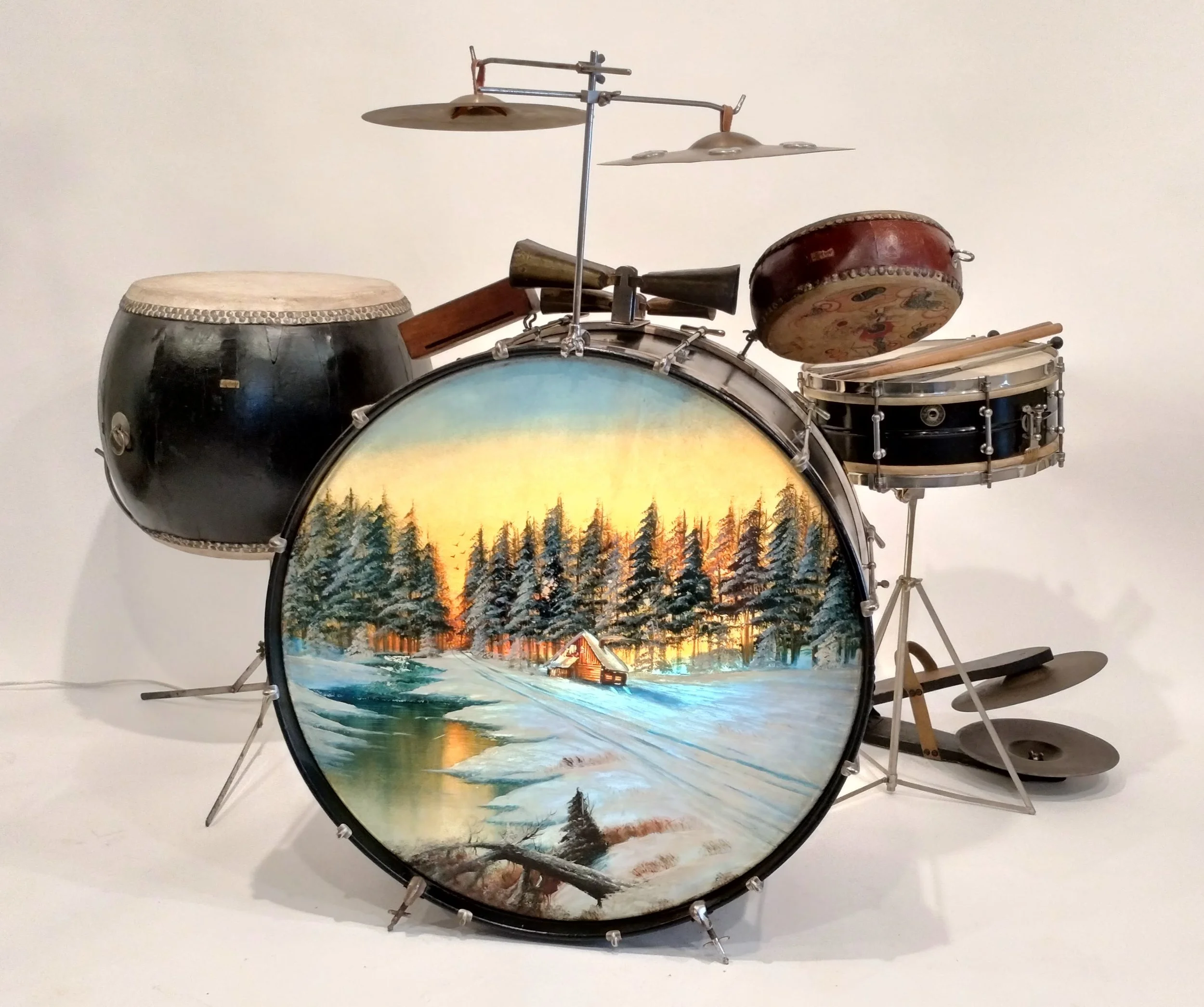
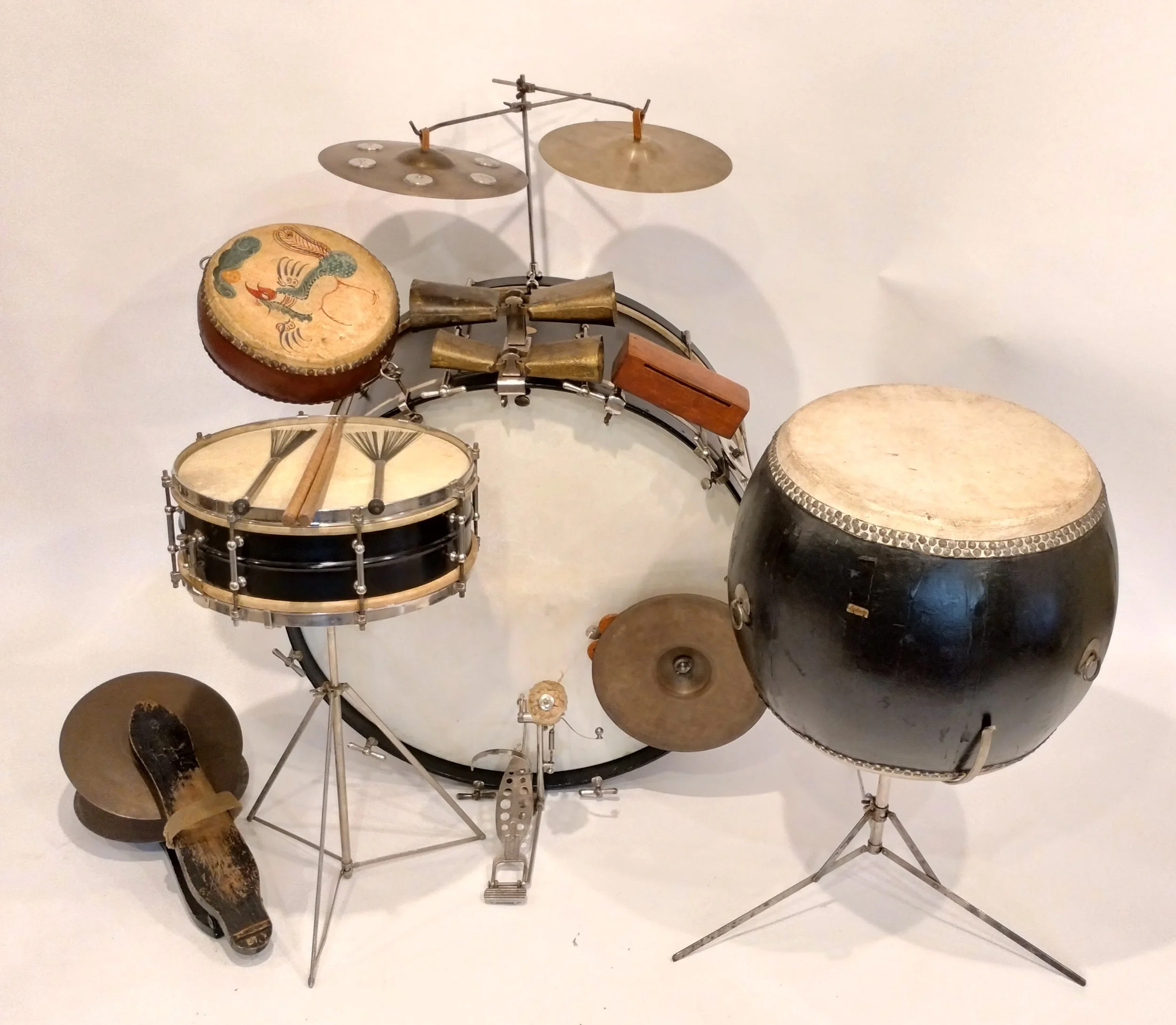
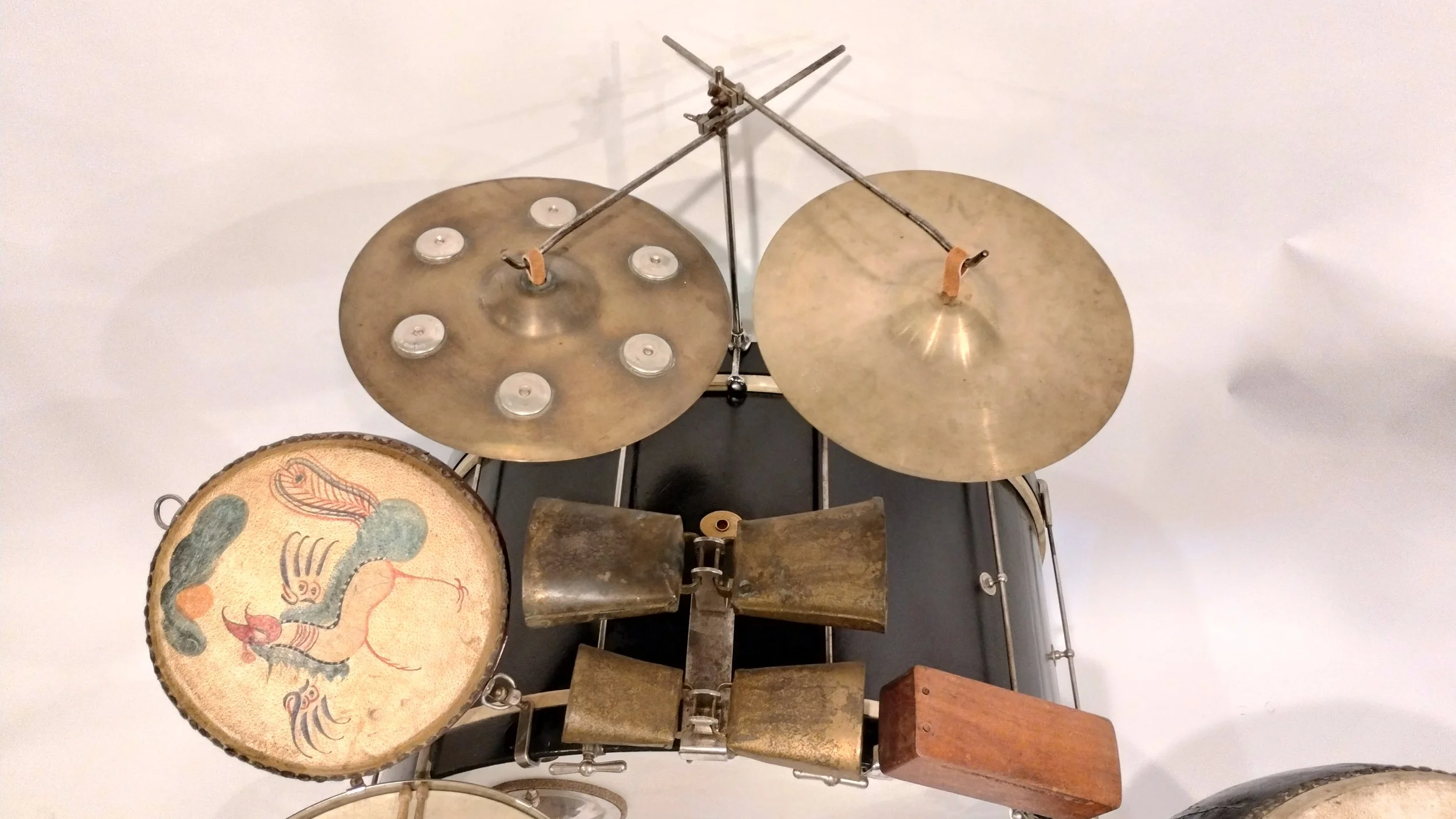
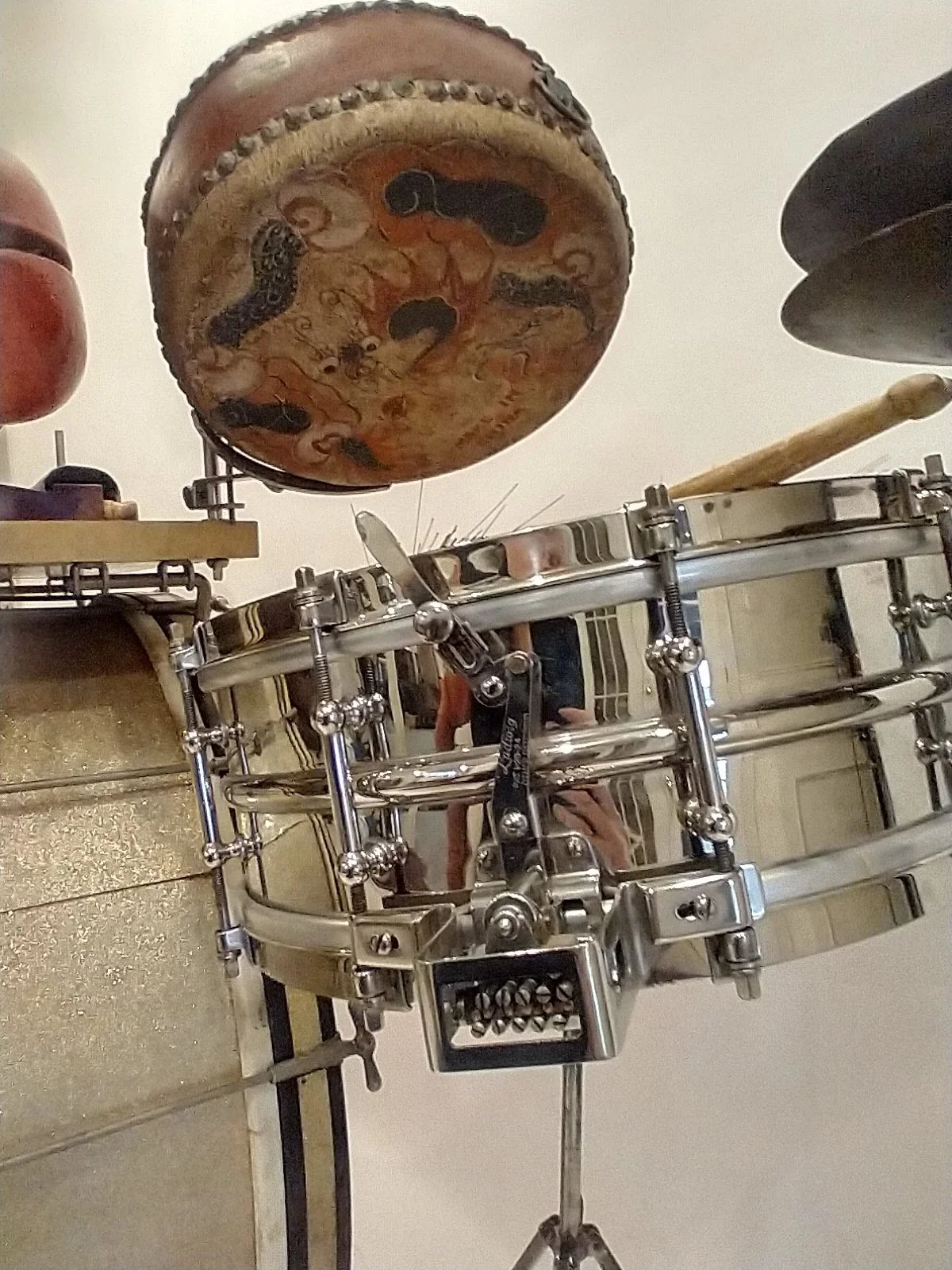
This month we are featuring two 1929 Ludwig Trap Sets, both with original factory painted scenes on the bass drum heads. These are two wonderful examples of a working professional drummer’s set from that era. These two sets also show different choices of accessories that would be available on 1929 drum sets. Let’s look at these two different looking drum sets in detail. The 1929 Ludwig Winter Scene Trap set has a 14x28 black lacquer bass drum with a bass drum pedal, cymbal clanger, and rare cymbal muffler. The muffler was activated by pulling your foot up to engage a muffler pad behind the cymbal. These were very popular in the vaudeville era and theatre industry. The bass drum has a double cymbal hanger attachment with a Ludwig sizzle cymbal, a Zenjian crash cymbal, a woodblock, a set of four tuned cowbells, and a 10” Chinese tom also attached to the bass drum. There is also a giant Chinese tom on a floor stand. The tom is 16x16 and even has the original Ludwig decal on it. Ludwig imported these Chinese toms from China and sold them through their catalogs with their name on them. The near mint condition 5x14 Ludwig snare drum is a Pioneer eight lug, black enamel, with original calf skin heads. The set also includes the very interesting Charleston “snowshoe” cymbal pedal, offered by Ludwig from 1926-1936.
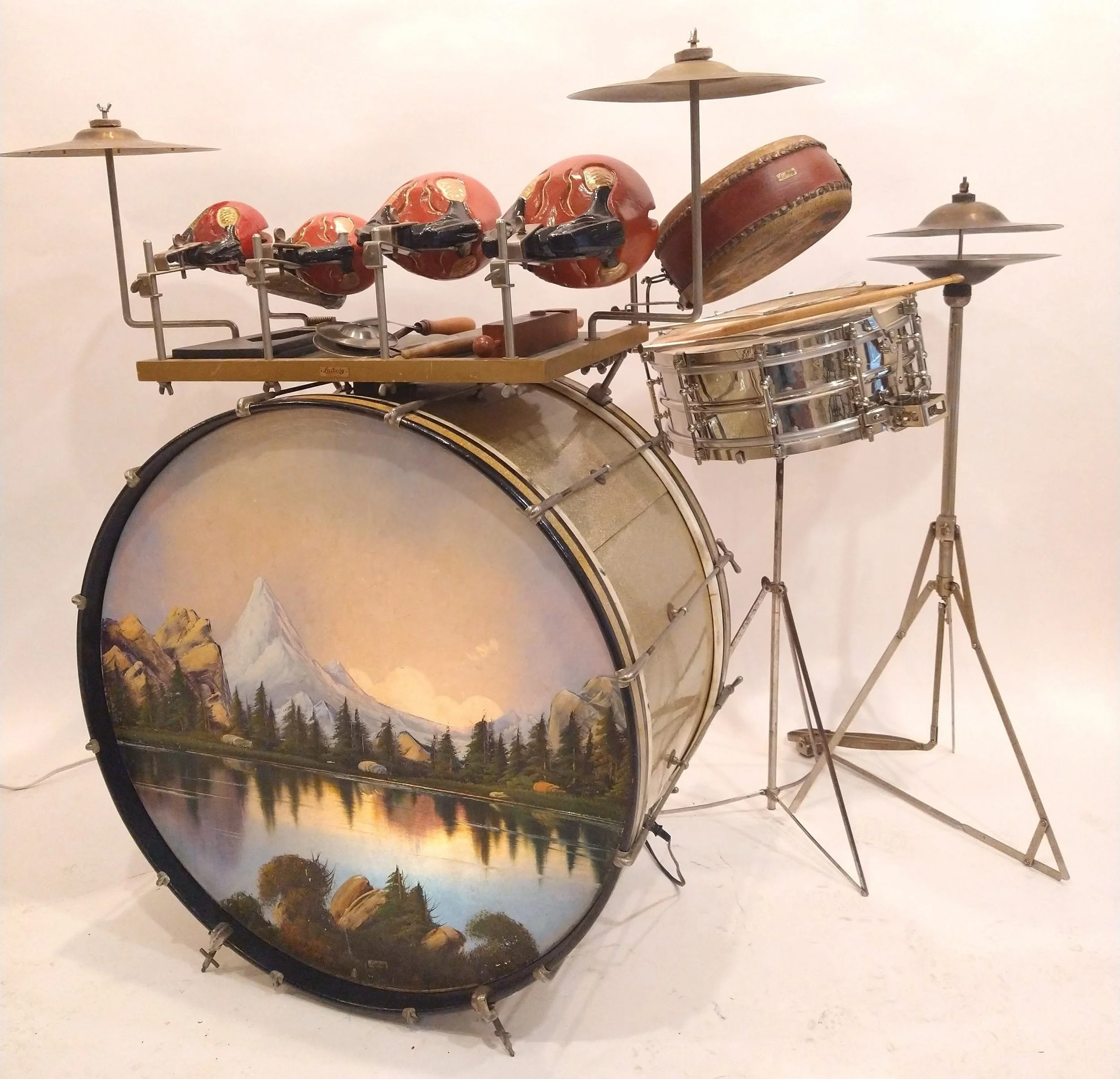
The 1929 Mountain and Lake Trap set features a 5x14 Ludwig Super Sensitive nickel over brass snare drum and a 14x28 bass drum in gold sparkle finish, with a Ludwig bass drum pedal and clanger cymbal. Attached to the bass drum is a full trap table with four temple blocks, two crash cymbals, and a 10” Chinese tom. On the trap table there are some percussion sound effects of the day: a slide whistle, a cuckoo whistle, a slap stick, a Bock a-da- bock hand cymbal, as well as a cowbell. To round out the set, there is an early version of the hi-hat with 10” cup cymbals. This would have been a standard professional early jazz set used in theatre, vaudeville, radio, silent film, speakeasies, and big band performances of the day.
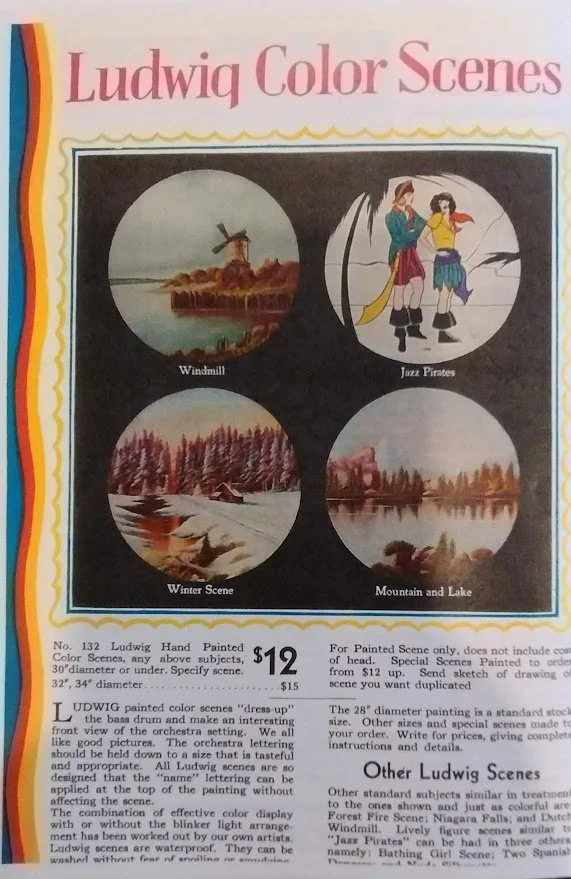
The painted scenes of mountains, forests, and lakes on bass drum heads were common themes in the mid 1920’s and 30’s. For about $12 to 15.00 added to the cost of the set, drummers could add a painted scene of their choice from the catalog. Custom designs were also available. For about $10.00, they could also add an internal blinking light kit to illuminate their beautiful painted bass drum head. This light also helped to keep the calf skin head in tune on moist days. It was a challenge for drum companies to learn to paint these scenes on calf skin and cow hide heads. Unlike painting on canvas, calf skin is ever changing with the humid or dry weather, and the skin is in constant motion. The factory artists quickly learned to “stipple” paint, this is the art of dabbing paint, verses using long thick brushstrokes of paint, which tended to flake off with movement.
Painted heads were in fashion and shown in the catalogs until about 1940. That was when everything was changed by a very influential drummer named Gene Krupa. Krupa helped Slingerland create the very first modern style drum kit that we know today, stripping away all the “traps” and inventing a fully tunable tom-tom. Krupa also preferred a painted shield with his “GK” initials on the bass drum head instead of a painted scene head. That was the end of the era of painted scenes. Not only did the sets of the 20s and 30s look very different from today’s sets, but the sets were played much differently than the modern kits of the later 1940’s (and beyond). In the 20s and 30s time was kept mostly on the snare drum, with buzz rolls and rim shots accenting what the performers were doing on stage. Small cymbals were meant for crashing accents, there was no ride cymbal, and the Chinese temple blocks and toms were played as sound effects. The drum set has come a long way, it has had many innovations in sound and look, these innovations have evolved into the modern-day drum set.
Let’s consider this month’s trap set examples as important steppingstones to the modern-day drum set. If you would like to experience playing one of these kits to see and hear how different they look and sound, plan your visit to the Northup Drum Museum in Oneonta, NY where you can learn about drum history and play these sets! Book your visit by calling 607-434-4769 and visit us at www.northupdrums.com