
From Patina to Pulse — Precision at the Height of the Jazz Age
1. Leedy in the 1920s: From Innovator to Industry Force
By the early 1920s, the Leedy Manufacturing Company had fully evolved from its experimental beginnings into one of the defining forces in American percussion. What started under Ulysses Grant Leedy as a problem-solving workshop had matured into a disciplined manufacturing operation with national reach.
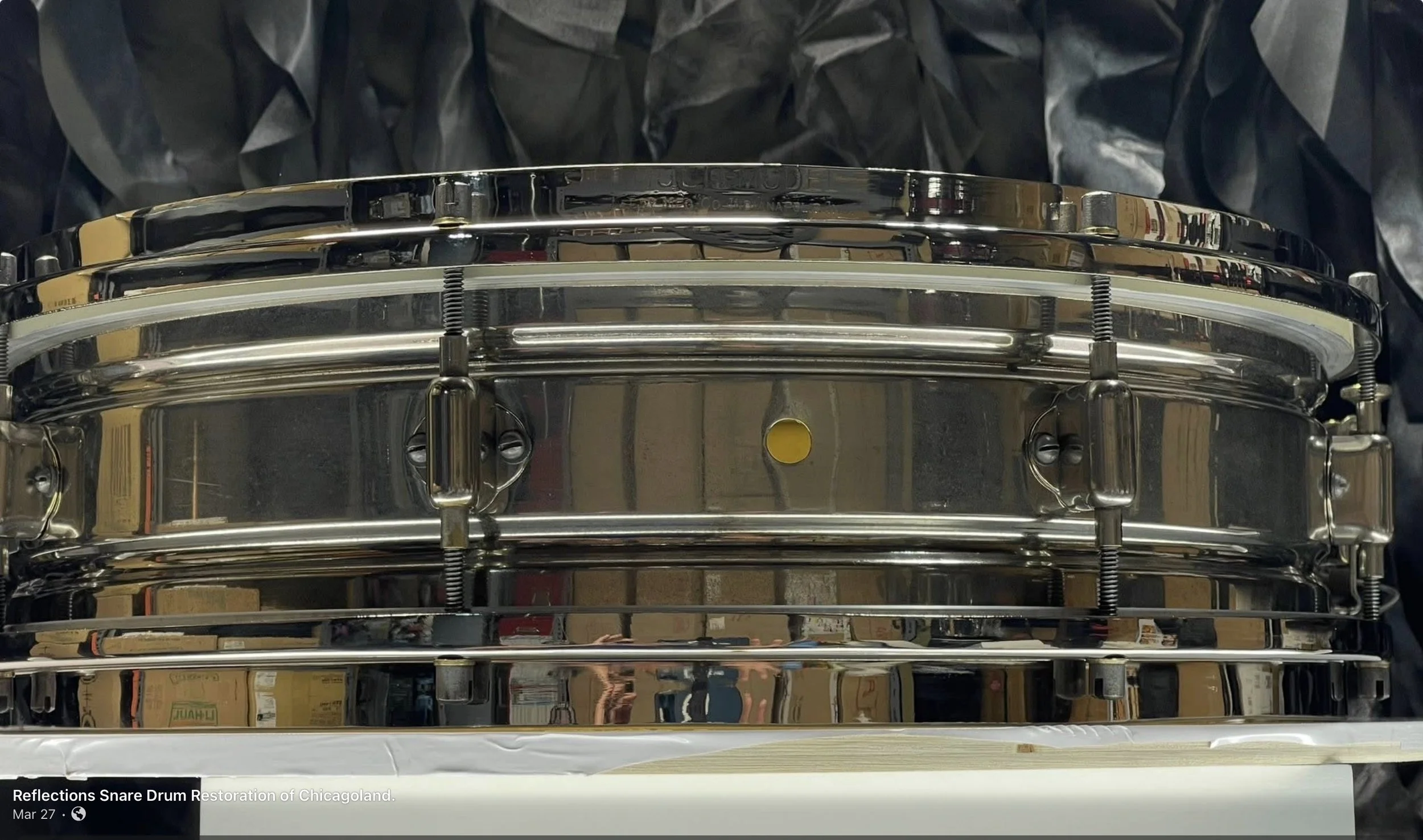
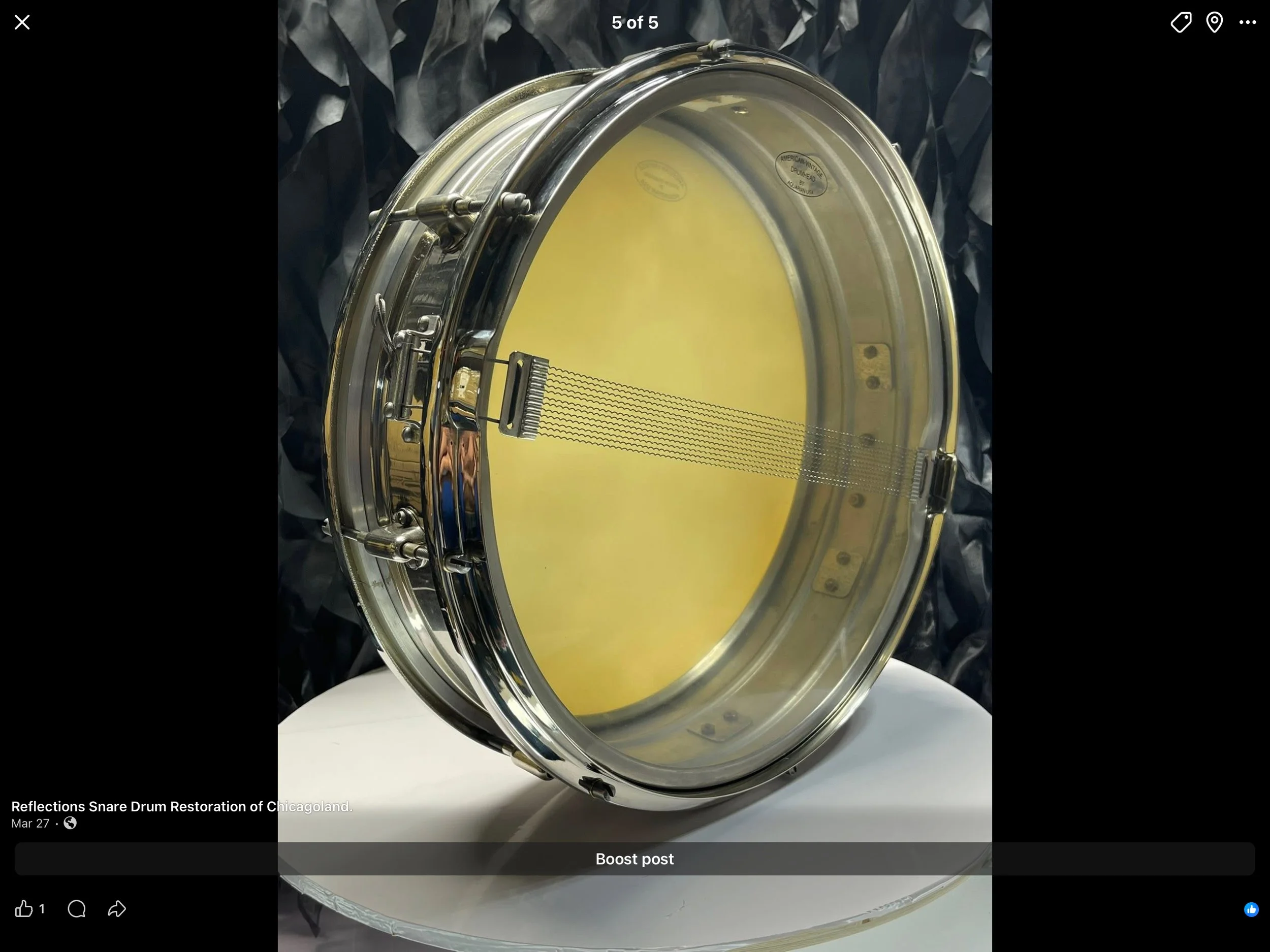
This was no longer a company trying to prove itself. By 1923–1924, Leedy had already secured its place alongside the most important names in drum production. Its designs were no longer theoretical—they were tested, refined, and trusted by working musicians across the country. The “MULTI” designation, once tied closely to innovation, had become part of a recognized product identity. A drum stamped “Leedy Mfg. Co., Indianapolis, Ind.” from this period represents a company operating at full stride, balancing invention with consistency.
2. The American Music Scene: The Rise of Jazz and Rhythm Sections
This drum belongs to a moment when American music was undergoing a fundamental shift. The early 1920s marked the rise of jazz as a national force, moving beyond regional roots into ballrooms, recording studios, and popular culture. The influence of bandleaders like King Oliver and emerging talents such as Louis Armstrong helped redefine how ensembles functioned, placing rhythm at the center of the performance.
Drummers were no longer confined to rigid military patterns. They were shaping feel, supporting dancers, and interacting dynamically with the band. The snare drum became more than a tool—it became a voice. Instruments from this period reflect that demand, designed to respond quickly, articulate clearly, and adapt to the evolving language of syncopation and groove.
3. Hardware Evolution: Practicality Over Experimentation
By the time this drum was produced, the industry had moved past the experimental phase that defined the 1910s. Hardware design had settled into a more practical and performance-oriented direction. The earlier fascination with complex mechanisms gave way to systems that prioritized reliability and ease of use.
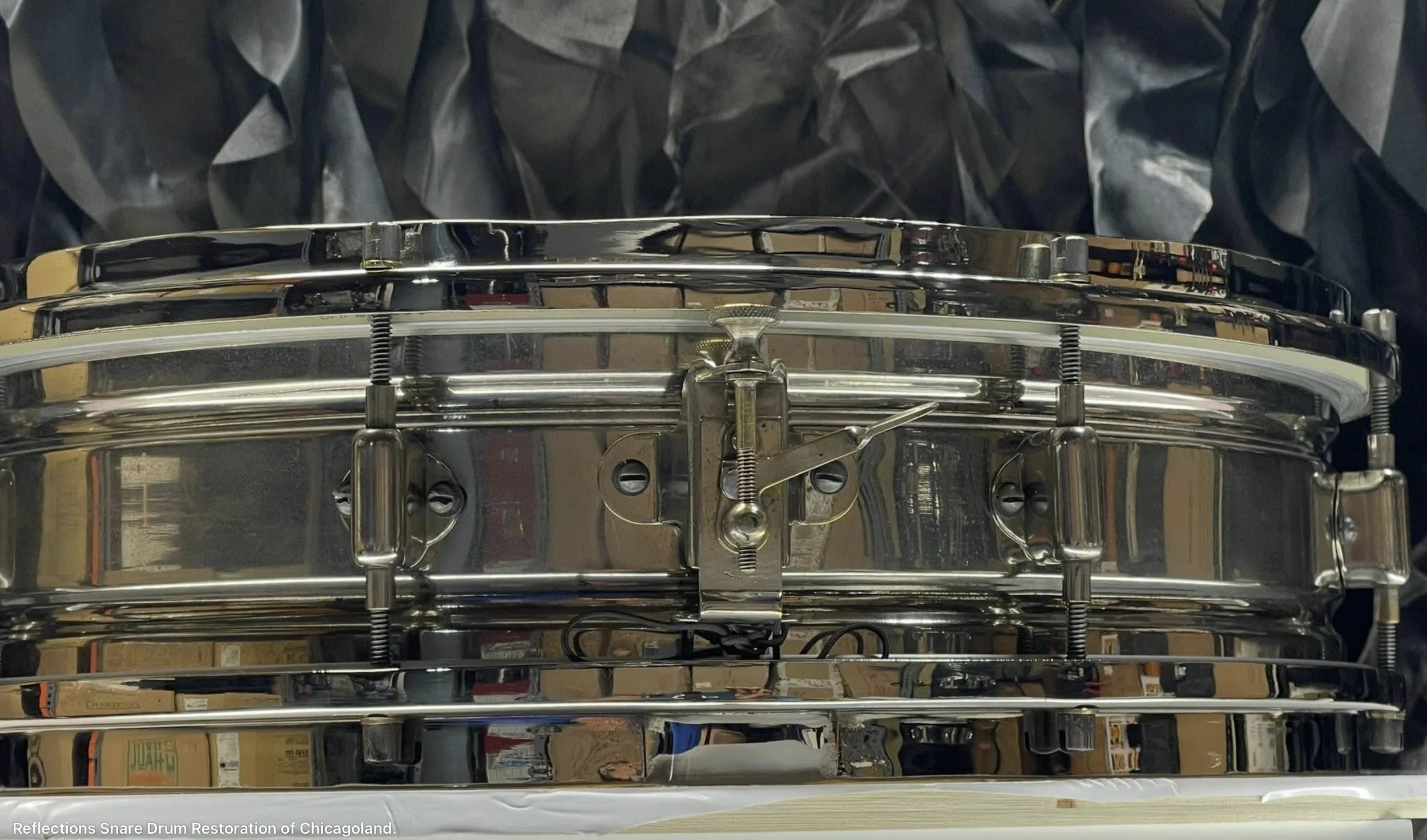
The “Multi” concept still carried weight as part of Leedy’s identity, but in practice, the hardware seen on many drums from this period reflects a shift toward simpler, more dependable strainers. Musicians needed equipment that would function consistently under real-world conditions, not just in theory. This explains why a Multi-marked drum from the early 1920s can legitimately exist without the earlier vertical slide mechanism. The focus had shifted from novelty to execution.
4. Shell Construction: Refinement of the Metal Era
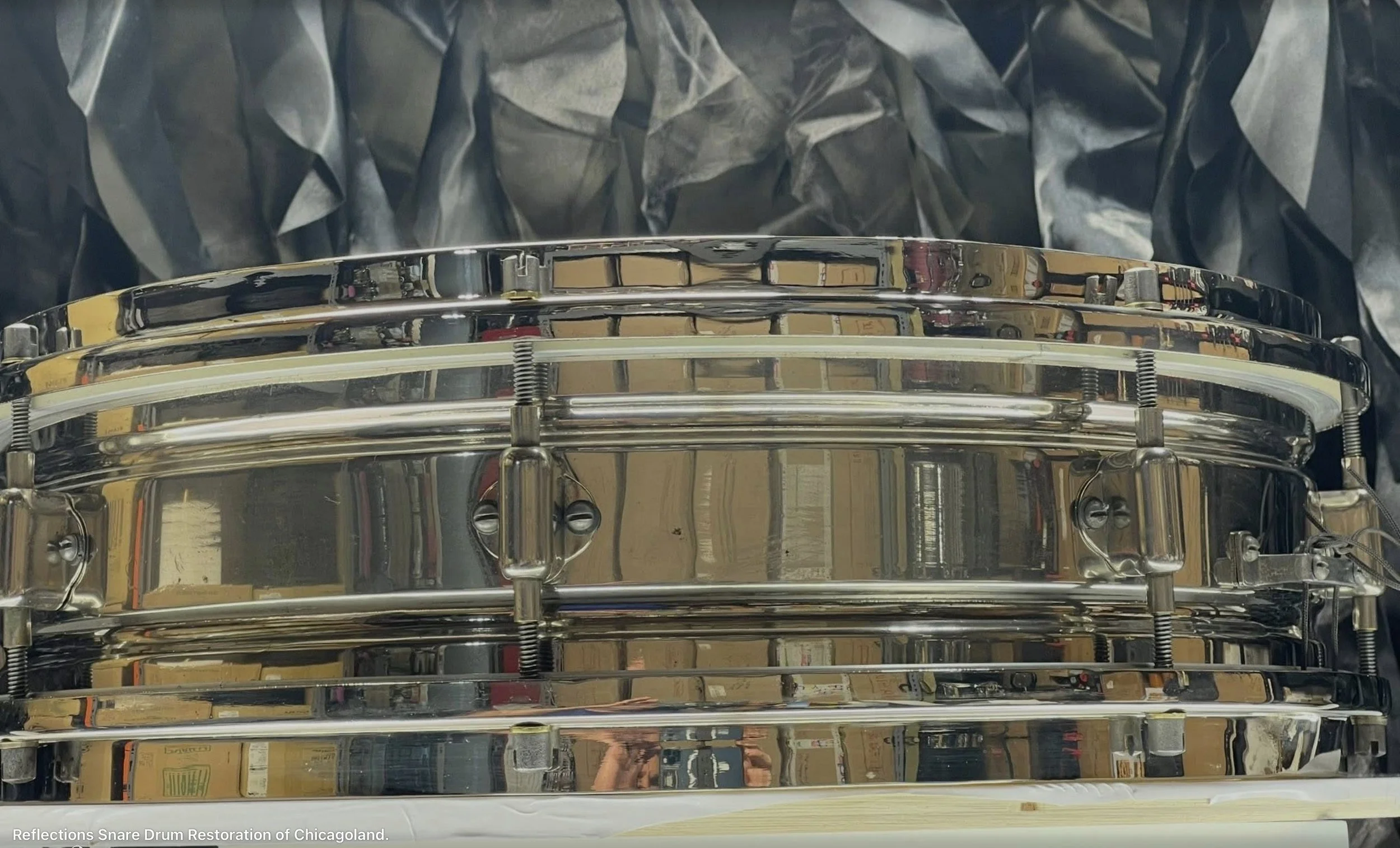
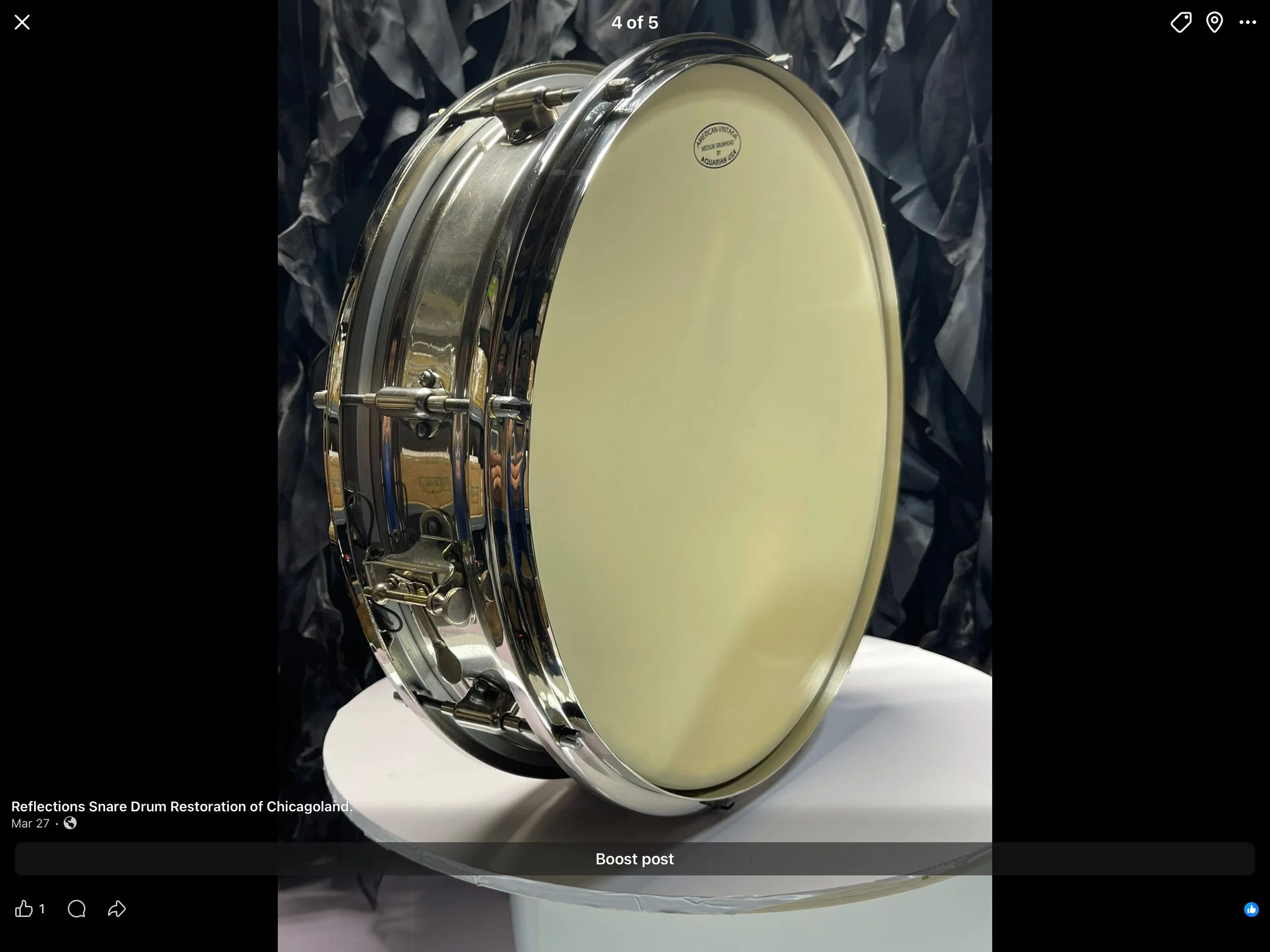
The shell construction of a Leedy drum from 1923–1924 reflects a company that had refined its manufacturing process. Nickel-over-brass shells from this period exhibit a level of consistency and finish quality that marks a clear progression from earlier examples. The bead lines are more precise, the plating more uniform, and the integration of hardware more deliberate.
These drums were built with purpose. They needed to project in large, unamplified spaces while maintaining enough sensitivity for detailed playing. There is a balance here between strength and responsiveness, and it is achieved through materials and craftsmanship that still feel substantial today. Unlike later mass-produced instruments, these shells retain a sense of physical presence that connects directly to their era.
5. Market Rarity Today: Surviving the Working Years
Although drums from the 1920s are more commonly encountered than those from the previous decade, truly intact examples remain difficult to find. These were not decorative objects—they were tools used night after night in demanding environments. Over time, many were modified, repaired, or stripped of their original components in order to remain functional.
What separates a more significant example today is not simply age, but coherence. A drum that retains its original hole pattern, carries correct stamping, and presents a logical hardware configuration stands apart from the majority of survivors. The presence of the “MULTI” stamp, combined with clean structural integrity, places this drum in a category that collectors recognize as both authentic and increasingly scarce.
6. Conservation Philosophy: Respecting a Working Instrument
Working on a drum from this period requires restraint. The goal is not to make it look new, but to preserve what remains of its original character. At Reflections of Chicagoland Drum Co., the approach is grounded in conservation rather than aggressive restoration.
This means carefully cleaning and stabilizing surfaces without stripping away history, ensuring that hardware functions as intended without introducing irreversible changes, and preserving the original geometry of the shell. Every decision is made with the understanding that this instrument has already lived a full working life. The responsibility is not to rewrite that history, but to carry it forward.
7. Collector Value: Where Function Meets History
The market for early Leedy drums reflects a balance between historical importance and practical condition. Instruments from the 1923–1924 period occupy a strong position, particularly when they retain key identifying features such as correct stamping and undisturbed structure.
Value is not determined by age alone. It is shaped by originality, presentation, and credibility. A drum that tells a consistent story—one that aligns its construction, hardware, and condition—will always command more attention than one that has been heavily altered. In today’s market, an example like this sits comfortably in the mid-to-upper tier, with additional upside tied to how it is presented and understood.
⸻
Closing Statement
This drum represents a moment when American percussion found its footing. It is not the beginning of the story, but it is the point where experimentation gave way to refinement, and where the snare drum became central to modern music.
At Reflections of Chicagoland Drum Co.,
We don’t just restore instruments—
we preserve the moment they became essential.
Get Outlook for iOS