
iuiuy
By Tim Northup
Here’s a little history of how Slingerland got into the drum business. In the 1920’s the banjo was very popular in music of day. Up until 1927 Slingerland was a banjo company. Ludwig had been a drum company since 1909. Ludwig and Slingerland were both in Chicago and both used calf skin heads on their drums and banjos. They were always in competition for the best hides from the Chicago stock yards, this is where the rivalry begins! In the mid-1920s Ludwig decided to get into the banjo business. This was a big mistake. The popularity of the banjo was beginning to wane and the losses from the banjo production added to the financial problems and forced Ludwig to sell the company to Conn in 1929. Slingerland saw the decreased sales of banjos and decided to get into the drum business and purchased the Liberty Drum Company’s manufacturing equipment which proved to be a very good move. They released their first catalog in 1928 featuring a full line of drumkits, snare drums, marching drums, traps, and accessories. They only grew from there. The end of the 1920’s saw the Slingerland Banjo and Drum Company emerge as the largest family-owned drum manufacturer at that time.
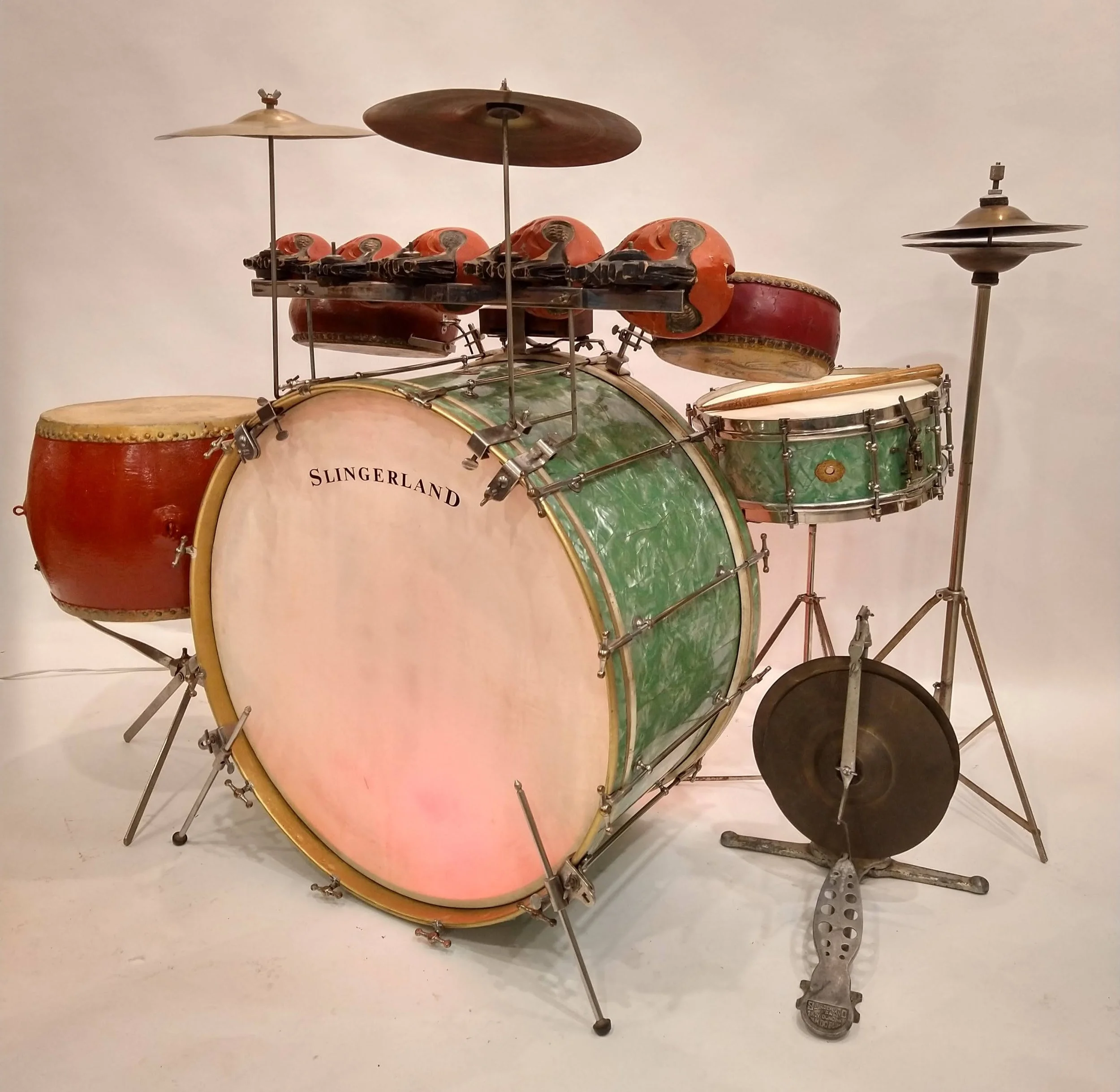
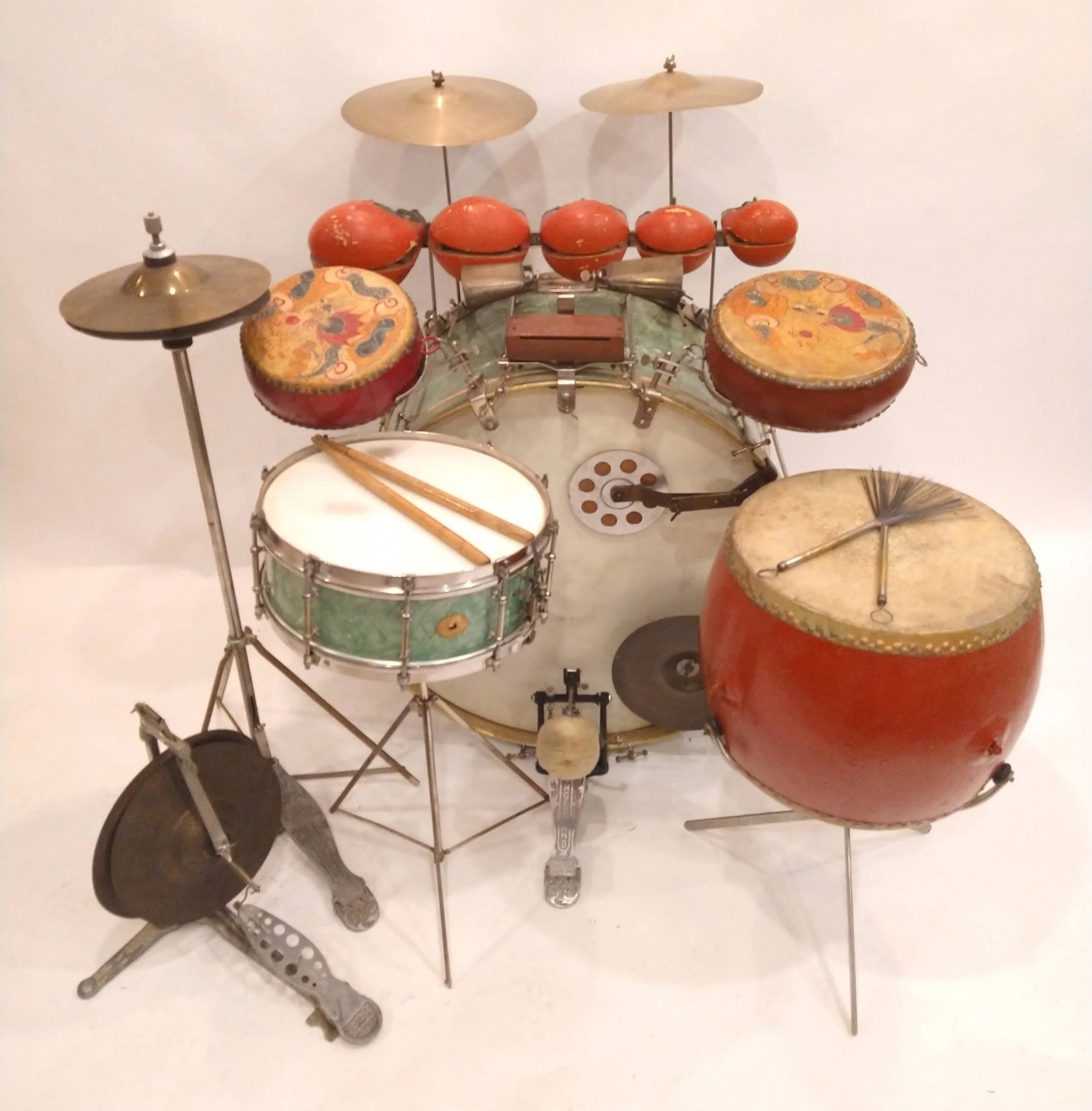
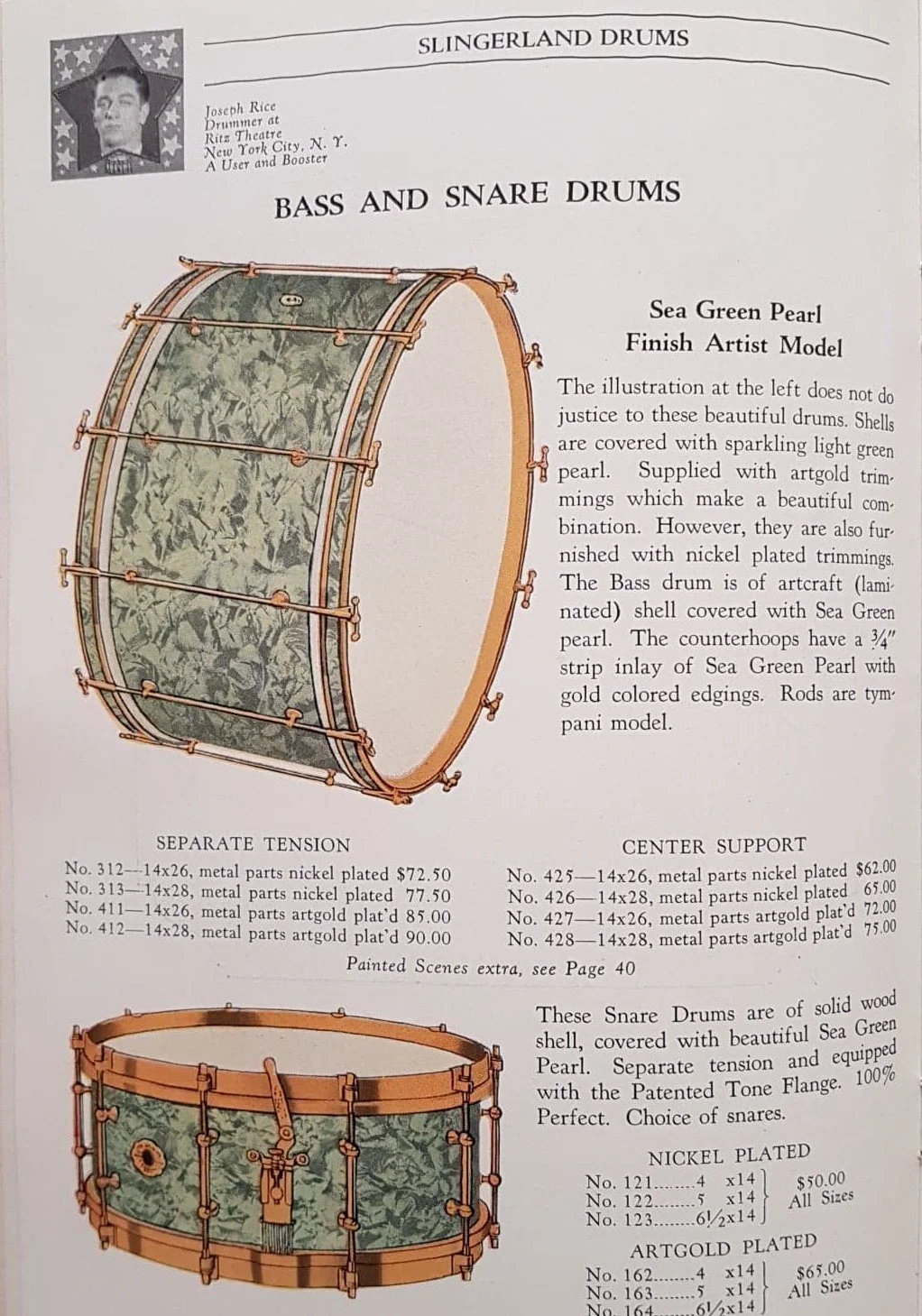
Let’s take a closer look at these two early and RARE Slingerland drum kits. First, what makes a drum from this era rare or desirable? I base that determination on a few things, finish, condition, the type of set, and if the snare and bass started life together, or was it a pieced together set? These two sets fit the criteria, both are rare finishes and came together complete as kits. In 1925 George Way of the Leedy Drum Company is credited with being the first to wrap drums in a pyralin. The first wraps were referred to as “American Pyroxylin” and by 1927 as “Dupont Pyralin”. Before this, drums were only offered in natural stain or painted lacquer finishes in black and white. Sea Green Pearl is a rare pyralin wrap that is highly sought after by collectors today. Ludwig had its version called Emerald Pearl, and Leedy’s version was called Green Pearl. These wraps were introduced in 1928. This 1928-30 Sea Green Pearl set consists of a 5x14 Artist Model solid maple shell snare drum, equipped with 10 lugs, nickel plated hardware, and a tone flange. A tone flange is a flat metal ring that sits under the batter head on the shell to eliminate ring and overtones. This was “banjo technology” applied to the snare drum. The bass drum is a 14x28 Artist Model with separate tension nickel plated hardware. Included is a Slingerland Epic bass drum pedal, cymbal clanger and external bass drum tone control (muffler.) A very rare Slingerland Duncan Sock Cymbal Pedal and Epic hi-hat with 10” cup cymbals are also pictured. Other accessories include three Chinese toms with holders, a set of temple blocks, two Zildjian cymbals, a wood block and cowbells.
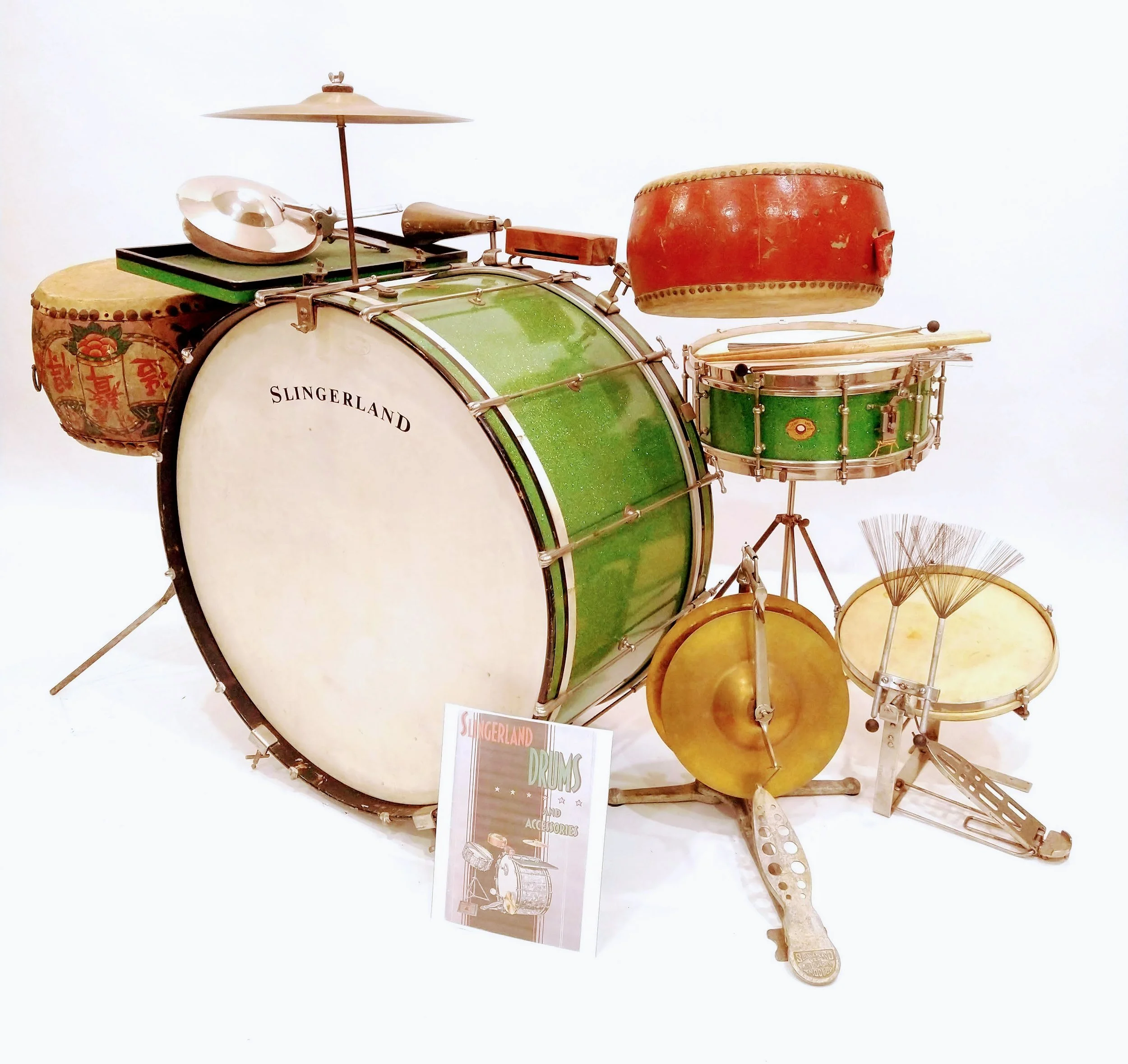
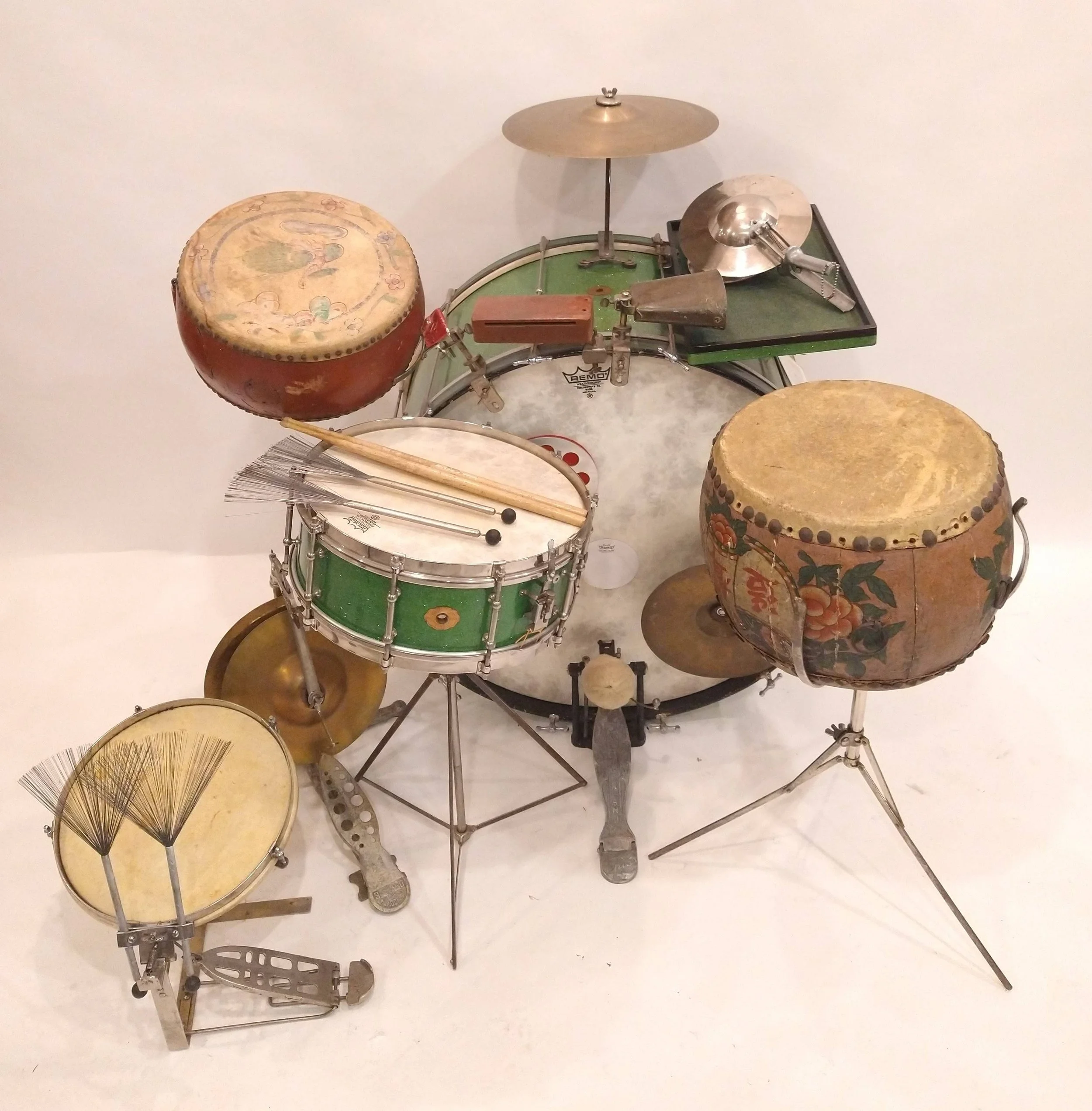
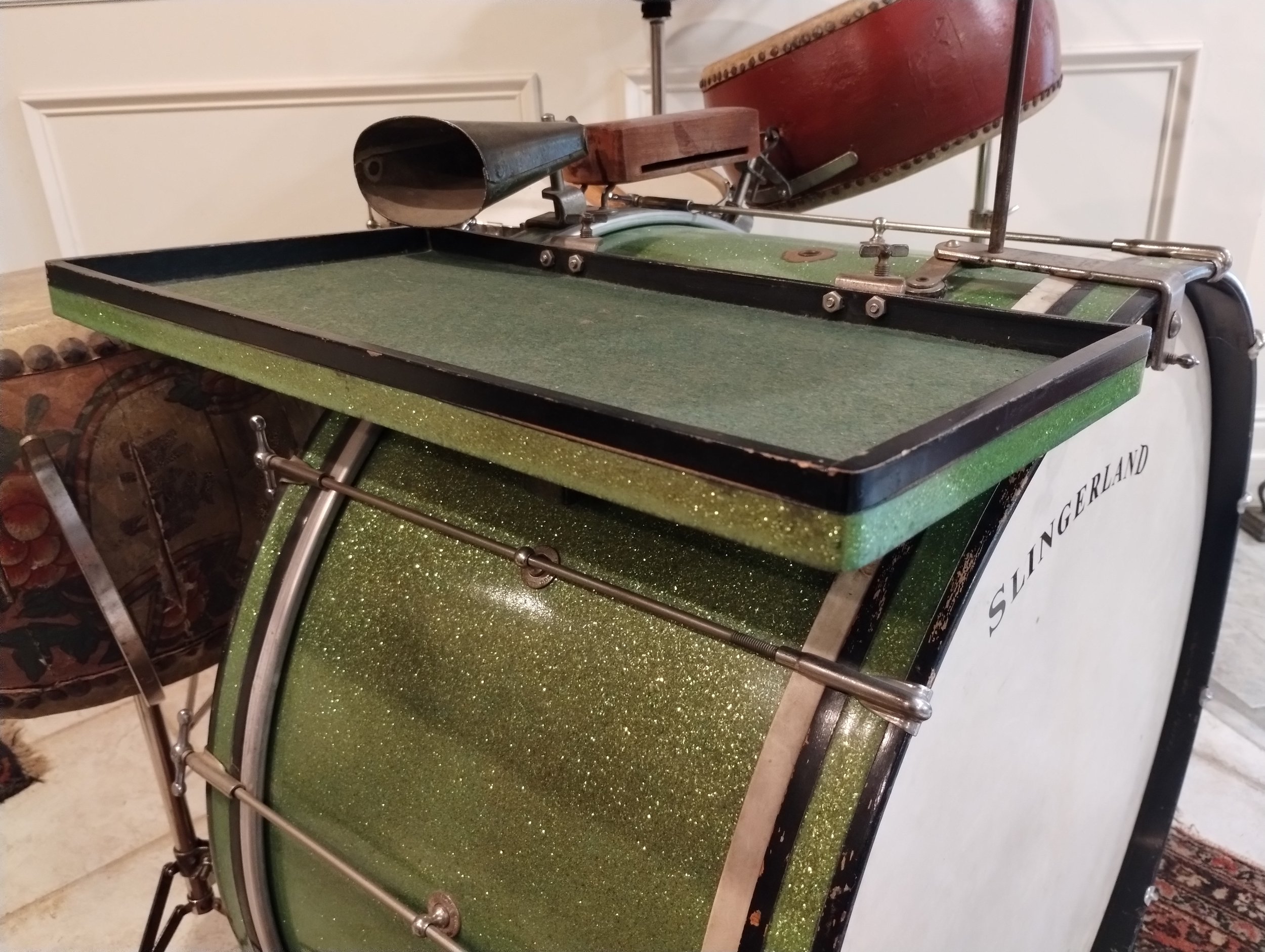
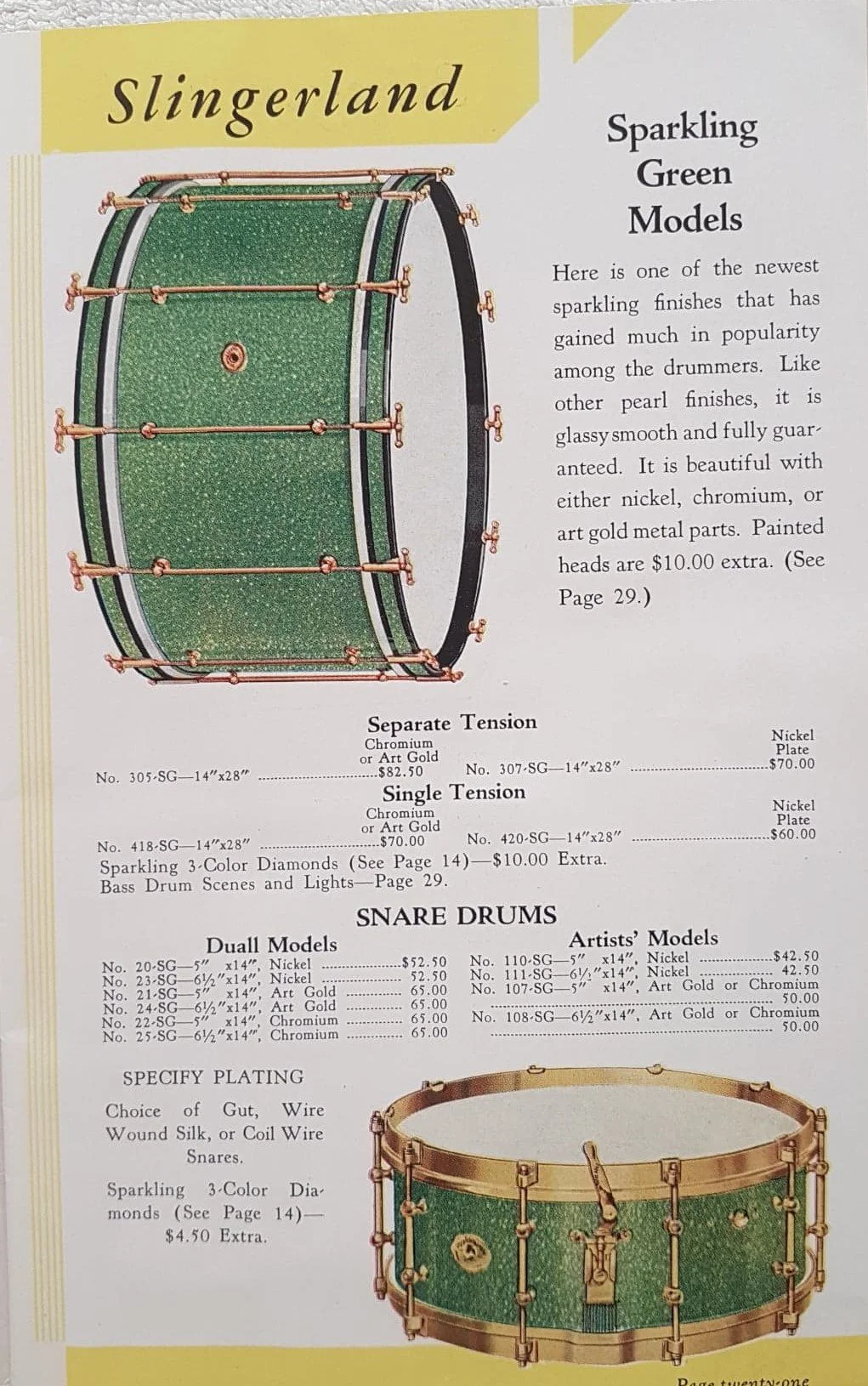
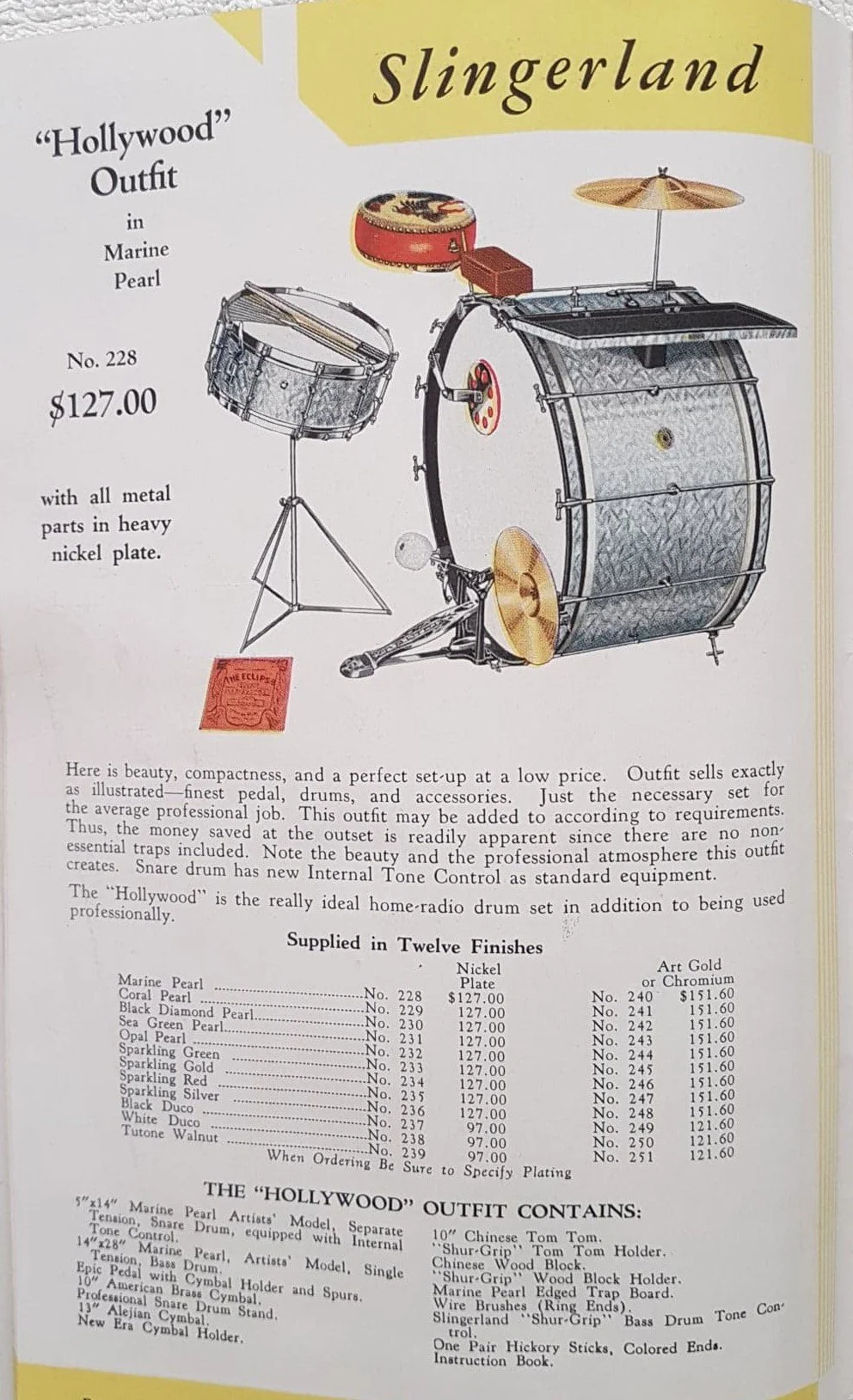
The other set is a 1934 Slingerland “Hollywood Outfit” in original Sparkling Green wrap complete with all the original factory accessories. A version of this set is shown on the cover of the 1934 catalog. It features a 5x14 Artist model solid snare drum, 10 lugs, nickel plated hardware, and an internal tone control (this was the first year for this.) The bass drum is a 14x28 Artist Model with single tension nickel plated hardware. Like the first set, a Slingerland Epic bass drum pedal, cymbal clanger, and external bass drum tone control (muffler) are included. One of the rarest items on this set is the side trap table, also in sparkling green. As of this writing, this the only Slingerland side table of this kind known to exist. The set also has the original “new era” cymbal holder with a Alejian 13” cymbal. Included are a Chinese tom, and Chinese large tom with holder, wood block, and cowbell. On the trap table is a rare pair of Gladstone hand cymbals made by Frank Wolf, NYC. These were popular in the 1930’s as sound effects used by the greats like Chick Webb and Zutty Singleton. There are two very rare items shown with this kit, a Roy Duncan Sock cymbal pedal and the Duplex After Beat Drum. These were inventions made to accent the “after beat” that was popular in 1930’s dance music. The Duplex After Beat Drum is one of the rarest “contraptions” that was made by the Duplex drum company and sold by Slingerland in their first catalog in 1928. It is a 14” frame drum with a calf skin head played by a pedal holding a pair of brushes to strike the head. Talking to collectors, outside of this one there may only be a couple of these known to exist. The #1468 Duncan Cymbal Sock was sold by Slingerland from 1932 36. It was replaced by a #1114 pressed steel model, sold from 1934-38. Both of these items were “fads” that did not last long and were quickly replaced by the standard hi-hat like the ones we know today. If you would like to see and play these kits, make an appointment today to visit the Northup Drums Museum in Oneonta, NY and visit us at www. northupdrums.com