
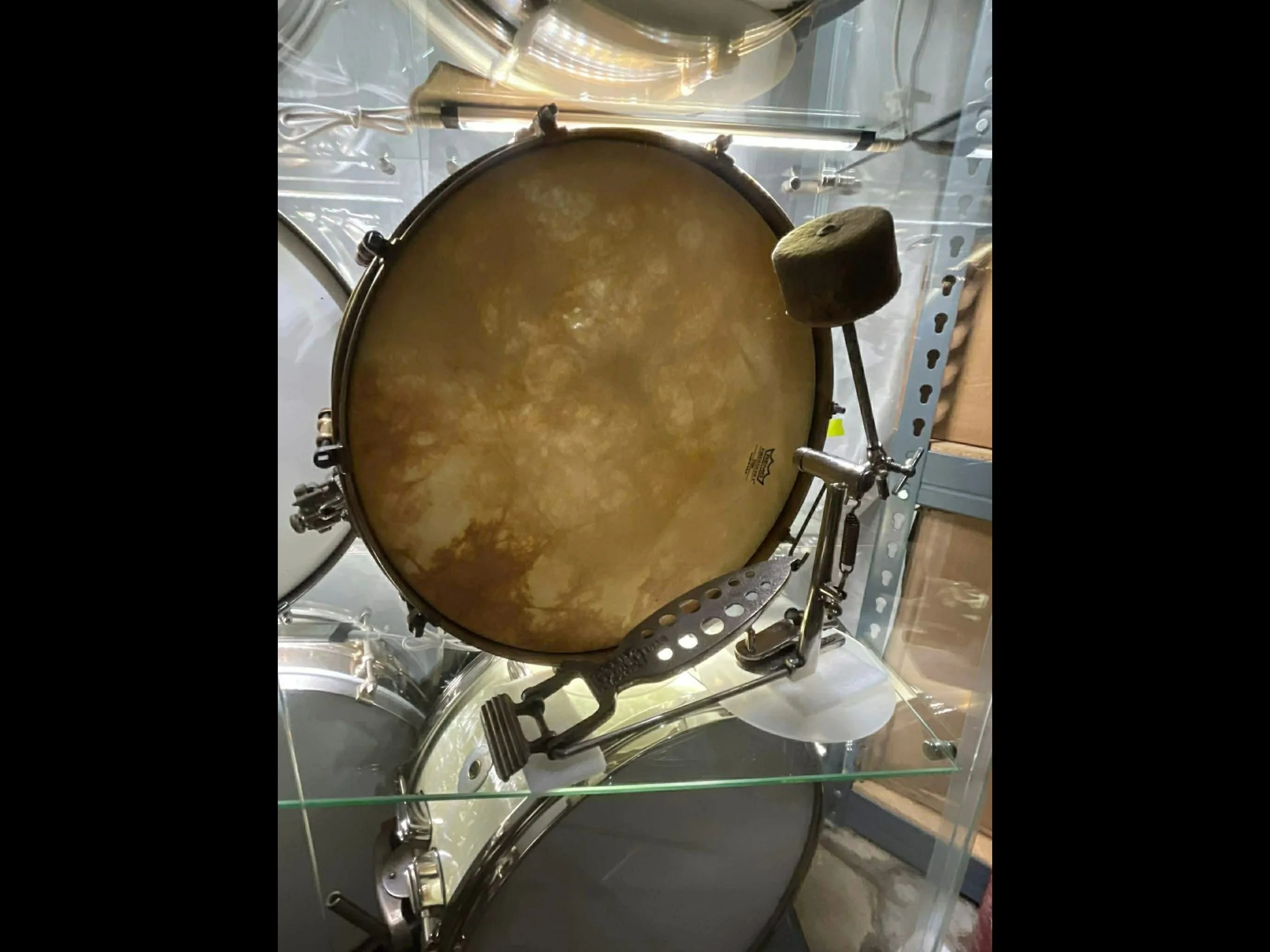
When you spend enough time around these early Ludwig drums, you start to realize they weren’t just building instruments — they were building identity.
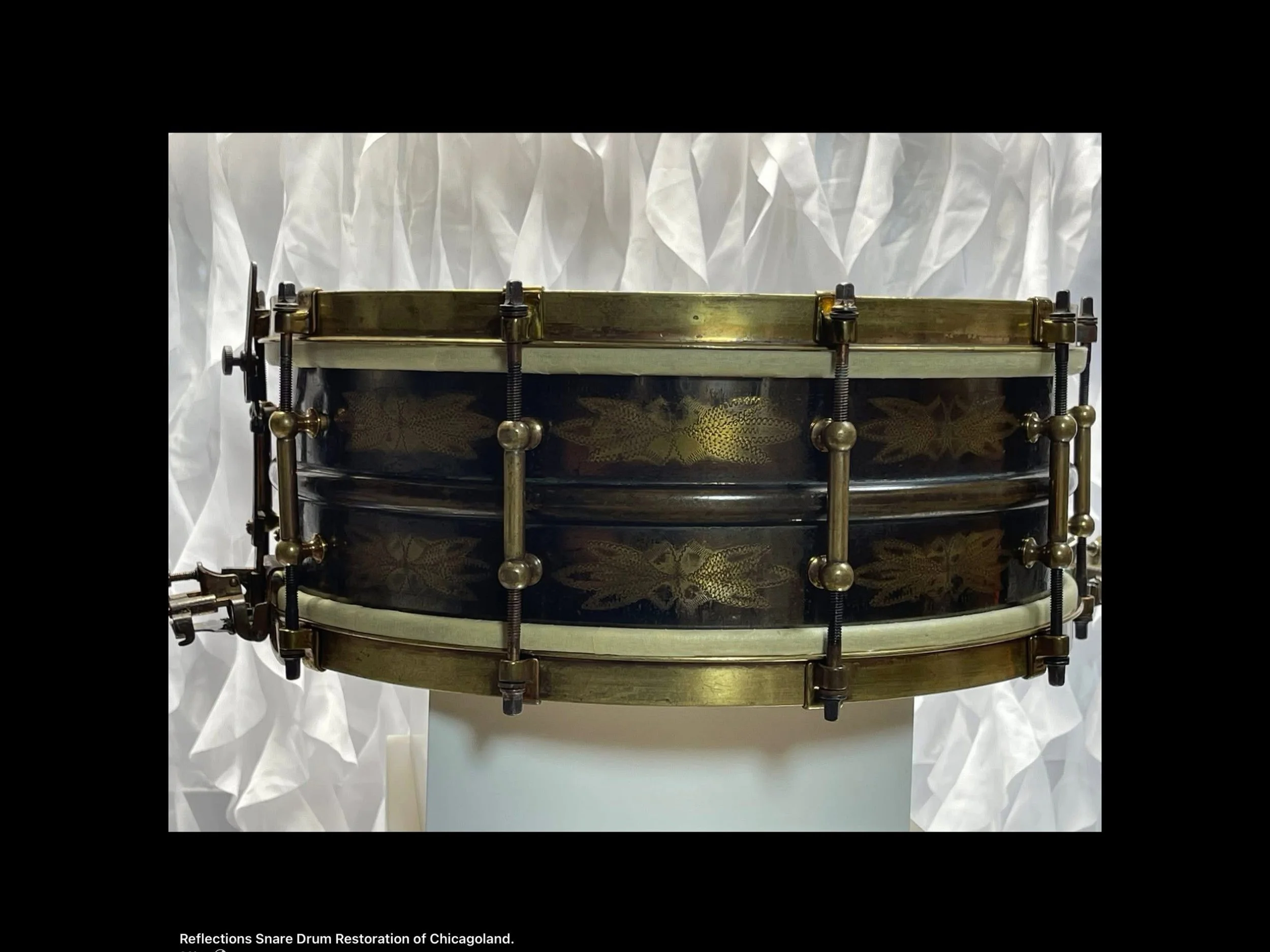
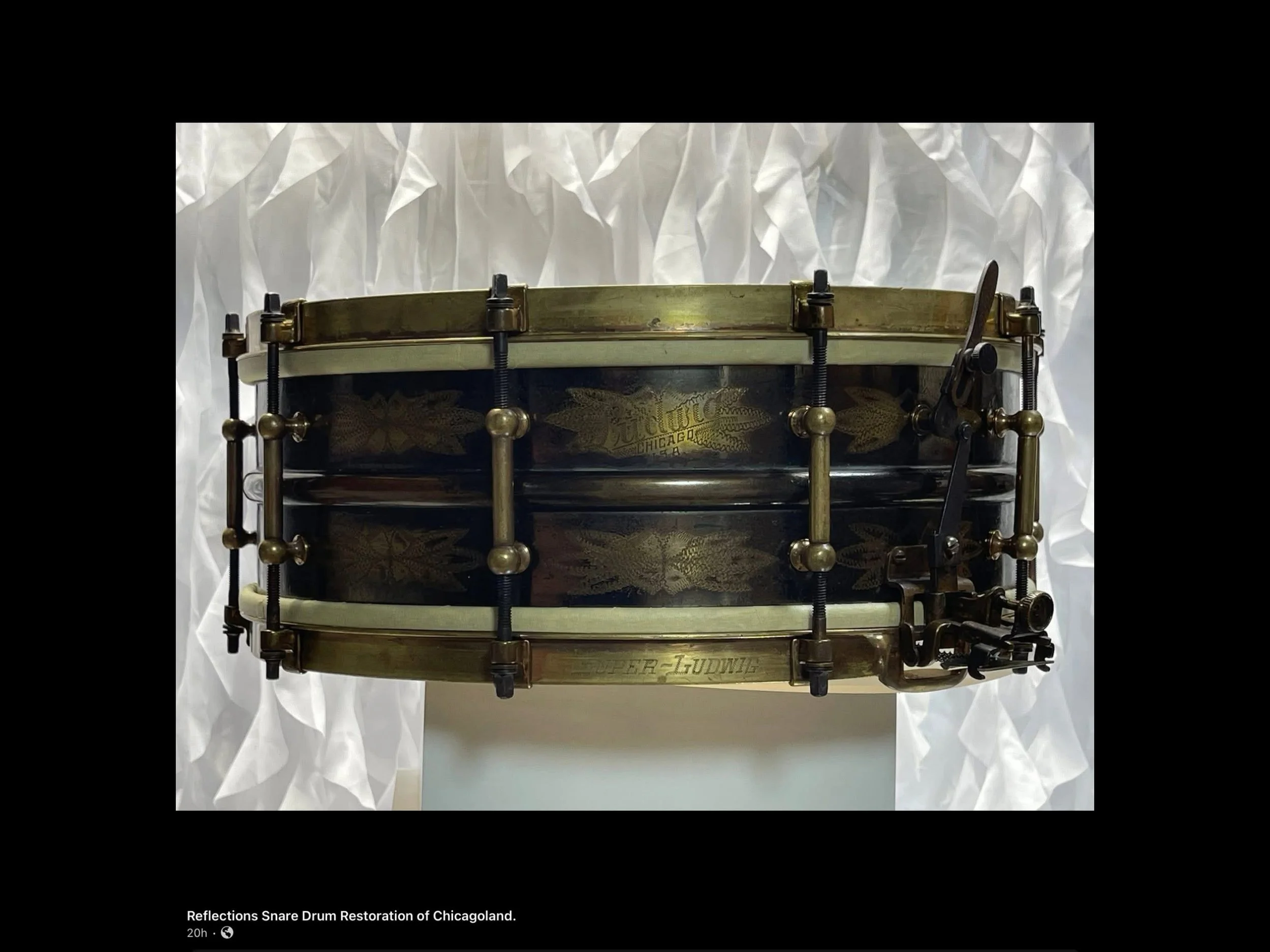
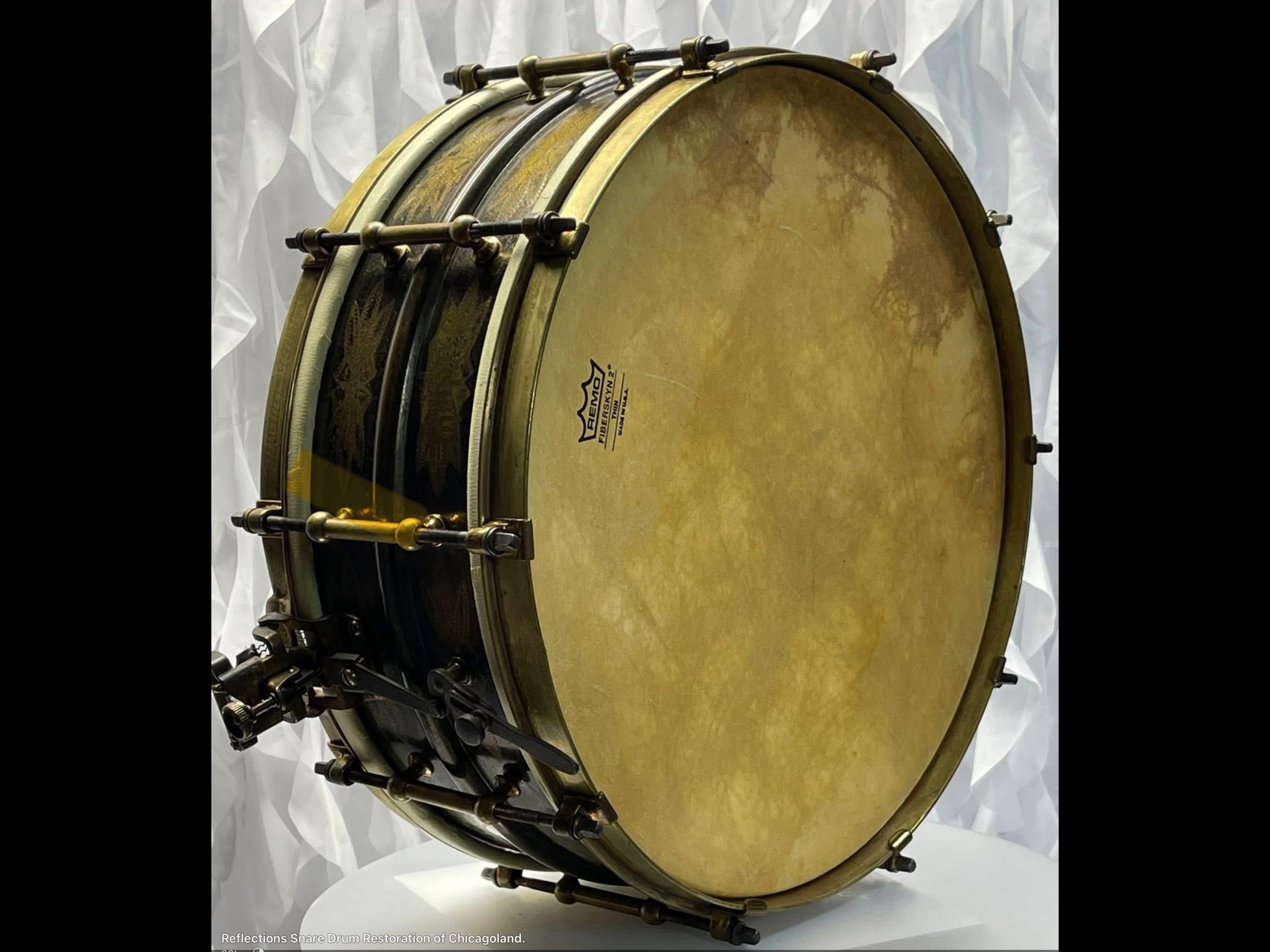
This one, a 1927 Ludwig 5x14 Super Ludwig DeLuxe No.231, sits right in that moment where everything was expanding at once. Music, manufacturing, nightlife — it was all moving fast, and companies like Ludwig & Ludwig were right in the middle of it. You can feel it in this drum before you even play it.
There’s nothing conservative about it. The blackened brass shell alone tells you that. This wasn’t the cheapest way to make a drum, and it wasn’t the fastest. It was a choice. Then you layer engraving on top of that — not because it changes the sound, but because it changes how the drum is perceived. That decision only happens in a strong economy.
And in the late 1920s, that’s exactly where the country was. This is pre-Depression America, right before everything tightens up. Money is moving, dance halls are full, and drummers are becoming more than just timekeepers. They’re part of the show now. The instrument had to reflect that. So Ludwig didn’t just build something functional here. They built something that looked like it belonged on stage.
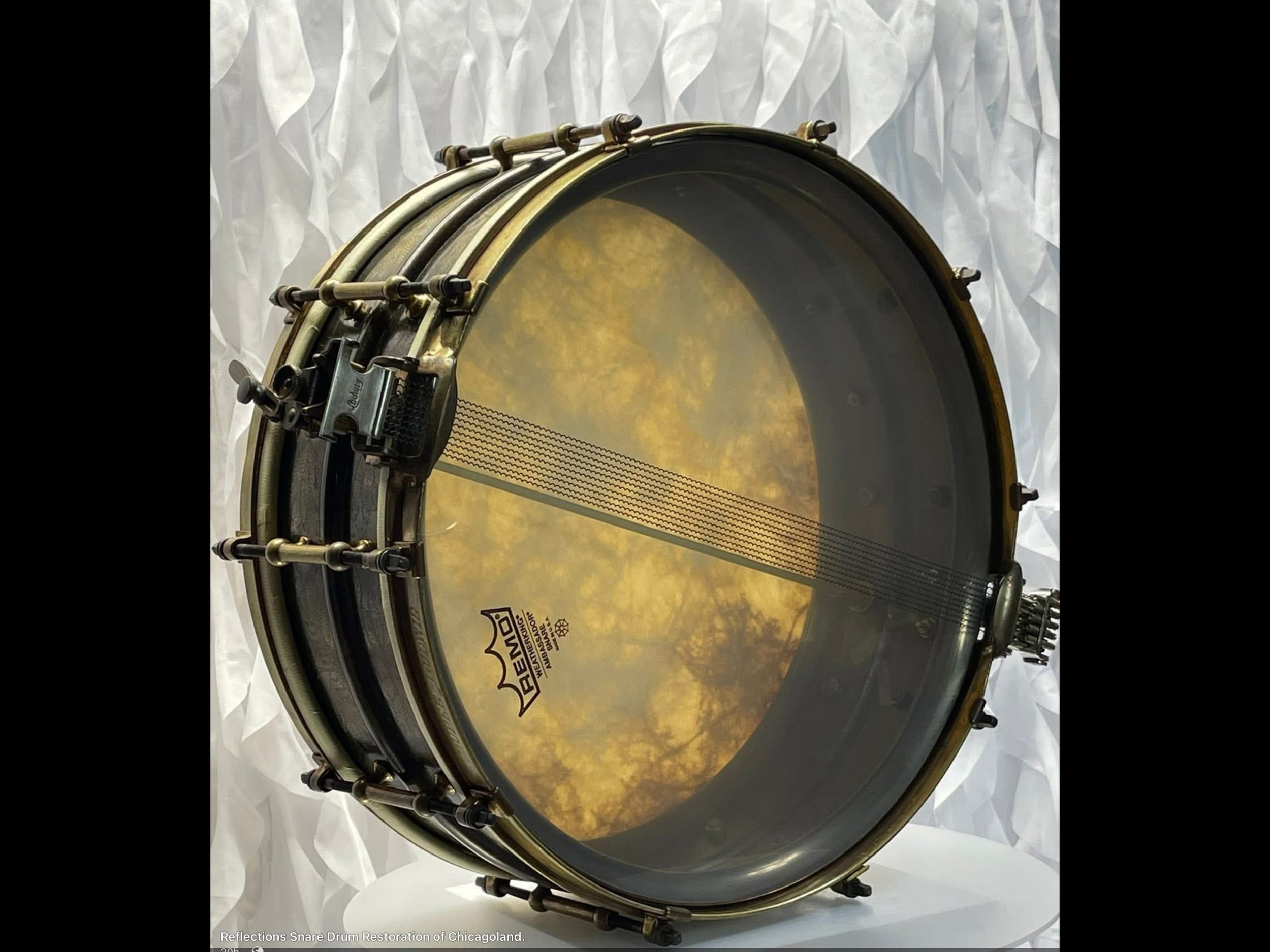
But where this drum really starts to separate itself is in the hardware. When you look at the parallel snare system — what most people refer to as the Super-Sensitive mechanism — you’re seeing Ludwig trying to solve a very specific problem. Not volume. Not durability. Control.
At this point, drumming is shifting. It’s not just marching influence anymore. Jazz is developing, dynamics are becoming part of the language, and suddenly sensitivity matters in a way it didn’t before. You need the snares to respond evenly. You need articulation at low volume. You need consistency across the head.
That’s what this system is chasing. And it’s important to understand — that kind of engineering only shows up when players are demanding more. This wasn’t invented in a vacuum. It was a response to how music was changing in real time.
Then you zoom out a little further and look at where this drum came from — Chicago. At that time, Chicago wasn’t just another city producing instruments. It was the center of it. Ludwig was right there competing with Slingerland Drum Company and Leedy Manufacturing Company, and that competition pushed everything forward. Faster innovation. Better design. More presence. Nobody could afford to fall behind.
And what makes this drum even more interesting is knowing what’s about to happen just a couple years later. The Great Depression hits, and everything changes. Manufacturing tightens up. Designs simplify. Costs get controlled. You don’t see this level of excess and detail in the same way after that.
So when you’re holding a drum like this, you’re not just looking at Ludwig at its best — you’re looking at Ludwig right before the shift. Right before the industry has to rethink how it builds.
From a conservation standpoint, that’s what matters most. The goal isn’t to make this drum look new. It’s to preserve exactly what Ludwig decided it should be in that moment. The patina in the brass, the wear in the engraving, the feel of the mechanism — that’s all part of the story. Because once you understand where this drum sits historically, you realize something pretty quickly. This wasn’t built during a time of limitation. It was built during a time when they believed there weren’t any.