
Here’s the latest snare drum to enter the collection. I got this drum from Emmanuel Giraudon who owns Oldrums in France (www.oldrums.fr).
Read moreBuilding a Stanbridge/Sucherman Empyrean Snare Drum: The Director’s Cut
By Bob Campbell, with Pete Stanbridge and Todd Sucherman
As a collector and player of custom and vintage snare drums, I’m always on the lookout for a drum that speaks to me in a unique way. I believe each great snare drum can evoke a different wavelength of creativity. That’s why drummers should have multiple snare drums in their arsenal (at least that’s what I tell my wife). I like to think that I’m not alone in this respect. In addition, I’ve become enamored of the whole process of drum construction and drum restoration; there is a level of artistry and perfection in the work of the master craftsman that gets my heart racing. A drum that possesses the attributes of fine construction, distinct sound and visual appeal is the best of all worlds (practicality, personality and fine art). The absolute pinnacle would be to document the entire process from conception, to build out, to my hands. This would be heavenly, or perhaps described as “empyrean” (def. “the highest heaven”).
That “ahhhhhh” (imagine angels singing) moment came to me a few years ago when I had the pleasure of chatting with Todd Sucherman after a fabulous STYX show in Indy. When we first arrived, Todd had this strange twinkle is his eye; something clearly had him excited. He waved me over and said, “Look at this!” On his cell phone was a picture of a segment shell snare made of various exotic woods, dark wood hoops and beautiful gold-plated hardware. I had never seen anything like it but it did remind me of Pete Stanbridge’s work (I have the ProMark/Stanbridge 50th Anniversary and Stanbridge Ancient Kauri snares). Indeed it was from Pete. This was a prototype for the planned Todd Sucherman signature snare drum, later to be known as the Empyrean. I felt quite privileged to get an early look, but on the condition that I keep it hush-hush until the public release. Todd described how it was intended to be the most personalized and unique drum ever made, with pictures of the construction along the way, hand-signing and testing of each drum by Todd (including a video to that effect), hand-made walnut case, several signed CD’s and DVDs (Methods & Mechanics I & II!) from Todd, and assorted “toys” made from the exotic wood offcuts. Subsequently, this started an email string between Todd, Pete and me which tells the story of how my Stanbridge/Sucherman Empyrean (#1) came to be. While I have been completely thrilled with this drum in all of its perfection, much enjoyment came from the periodic emails describing each step of the Empyrean’s construction from Pete. It was like a great story where you read each chapter, waiting for a climactic ending, but in the end, disappointed when it’s finally over. Not so much because you didn’t like the ending, but because you enjoyed the story and wanted another. So I’d like to share this “Empyrean biography” with you in hopes that there are also drum geeks in the crowd who will enjoy reading the tale as much as I did.

Introduction:
[My note to Todd] “Todd, it was great to see you in Indy last night. My wife (Helen) and I thoroughly enjoyed the show. I don't know how you play with such intensity in that heat! Musicians like yourself who despite busy tours give exceptional performances night after night always impress me… I enjoy your playing a great deal. While I will never be a drummer like you, I am inspired by your playing and always seek to improve my skills (hopefully with the help of your videos :).
Thanks for showing me the pics of your new signature snare. I will contact Pete Stanbridge today about obtaining one. Knowing your taste in drums, this design looks to be superb.
Wishing you the best.”
---------
After submitting a ton of questions to Pete Stanbridge essentially asking him to justify the cost of an Empyrean (including asking for a second top hoop, i.e., one for playing and the other for display), I received this email:
[Pete S.] “Hi Bob! Thanks very much for your thoughtful and detailed reply - we really appreciate the feedback, and your comments.
I believe that the whole nature of this offering makes it a very difficult comparison with anything that has come before. The 100+ hours I budget for each completed piece is a real number, and that doesn't include Todd's time commitment, or any of the significant material costs of creating this instrument and package.
It remains to be seen what kind of audience there is out there for this instrument. I am sure, however, that neither Todd nor I want to compromise on the package we have created, because we both feel that it really does represent excellent value, and sets a new benchmark in terms of creativity and quality in a percussion offering.
BC-0615_03
I realize that we are going to take some shots on the forums for a few days, and I have no doubt that there will be people who will become very passionate in voicing their opinions. But, I am exceedingly happy with the work, and if I ever start feeling beaten up by the forum crowd, I know that watching and hearing Todd play this drum will make me feel better.”
[Todd S.] “It's my belief that a drum of such personal detail and care has never been offered in a package so unique. The fact that it comes with a book detailing the manufacturing alone has never been offered to my knowledge. That coupled with it being sent directly to me for playing, tuning, approval, signing, and pics/video detailing that process as well is beyond what has ever been offered. Then getting tickets and backstage passes to a show…I think that takes the package over the top.
I know Pete spends 100+ hours on the drum with materials so expensive and rare that they've never donned a drum before. All these things combined... I can't see any drum out performing it, or out pricing it. Hence, the price reflects the work, materials and package.
A Bugati is a Bugati, and a Fazioli piano is a Fazioli. A Patek Phillipe is a Patek Phillipe, and this is what we set out to do, and I believe we have accomplished just that. Something unparalleled.
Thanks again for sharing your valuable thoughts with us both. It means a lot, and it's fun to have had the opportunity to share with you and only you-- our vision before it becomes reality.
Hope to see you soon, Bob!”
---------
I then decided to be the first to order an Empyrean snare drum…
[Todd S.] “Hey Bob, First off, thanks for the well wishes. My deepest thanks in trusting me along with Pete. I'm happy and proud to have you be our #1! I have no doubt you will be beyond thrilled. I just went and spent about 30 minutes playing in the studio, and on the Empy, and she sings, and has a soul. Everyone of my drummer pals that have played it just melt.
If you haven't seen clips from the new Methods & Mechanics II DVD, here are 2---I use it on the "Melodic" clip and it's of course peppered through the big trailer.
Melodic Song Form: http://www.youtube.com/watch?v=REqodfjCY8Y
14 minute performance trailer: http://www.youtube.com/watch?v=uV_hO2kZixU
Thanks, Bob…”
And so the story begins (each email will be referred to as a chapter).
Chapter 1: The Tease
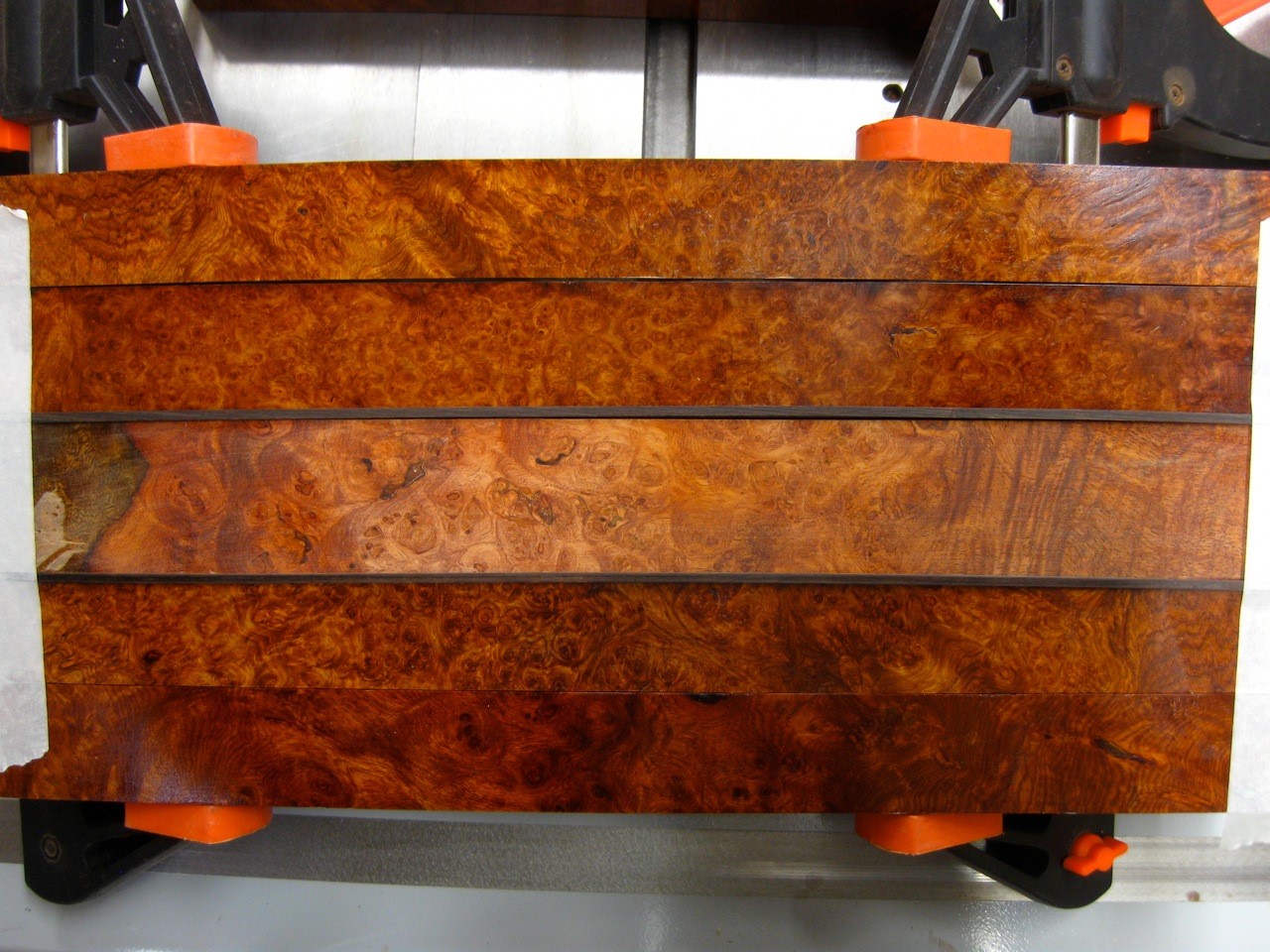
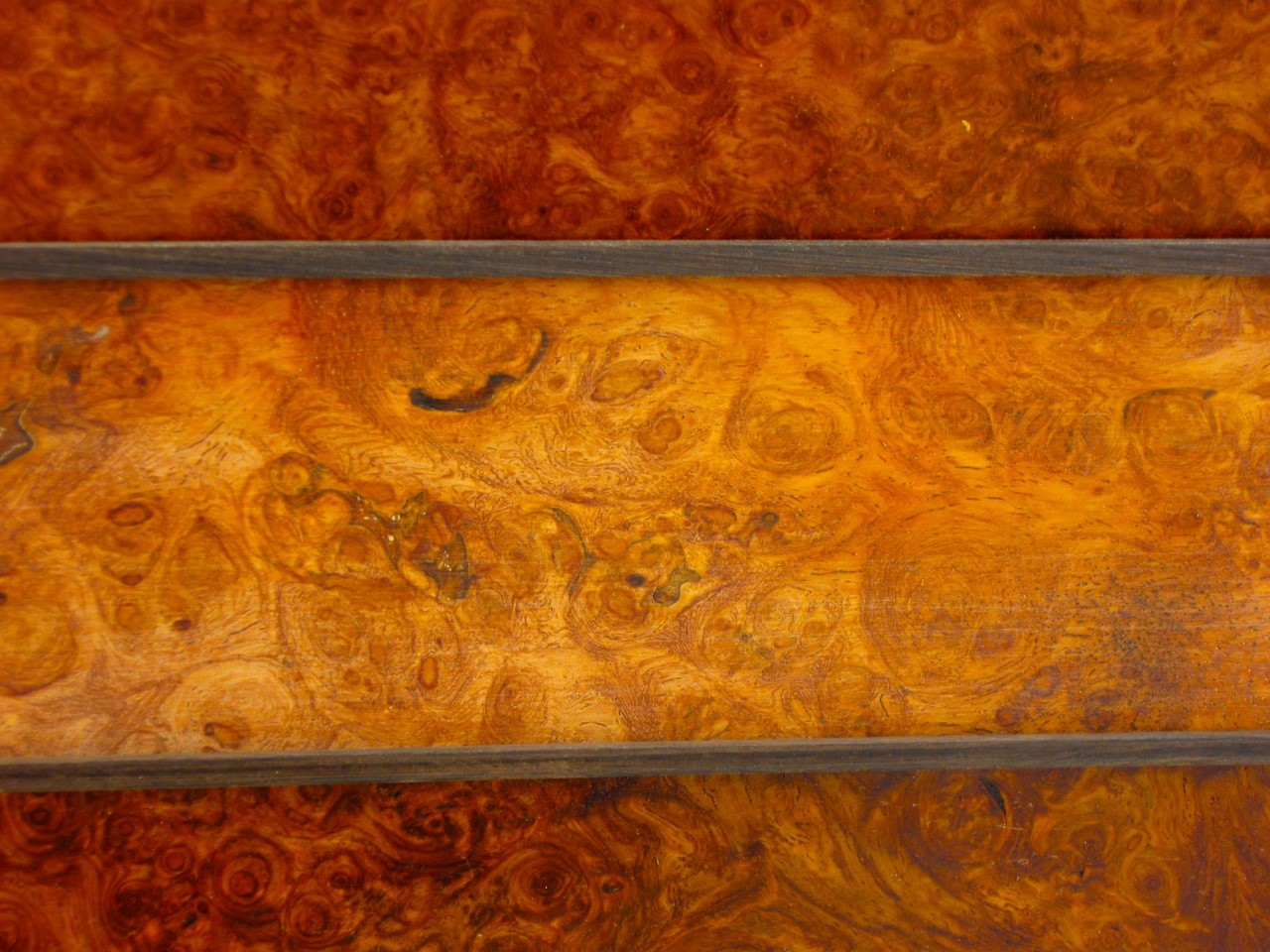
[Pete S.] “I took a few pictures of the stock for your Empyrean this afternoon, although there has not been a lot of progress beyond sourcing materials thus far. I have a few projects closing by the end of this month, and will be able to dedicate some more time to roughing out your shell blocks in order to get them down to moisture equilibrium soon. I'll shoot some more pictures of all of the wood for your instrument and send them along then. After the Christmas holidays, I will start doing some very gentle microwave drying to stabilize the burl segments, and then I would anticipate beginning construction in earnest in the Spring. I am budgeting one full month of shop time for your drum and accoutrements, although if I need more time then I will take it to make this one perfect.
For now, I thought you might enjoy a mock-up of the basic shell design patterned on Todd's drum, as well as a detail which illustrates the difference between the Amboyna and Afzelia burl eyes (and color). I don't know about you, but this stock gives me chills up and down my spine.”
BC-0615_05
Chapter 2: As the Drum Turns
[Pete S.] “Hi Bob - Hope you have been having a great summer, and that all is well with you and your family.
As we approach the one-year anniversary of the Empy project, I thought it was high time for an update of your drum. The pictures below illustrate some of the progress to date.
As I may have mentioned earlier, one of the most ticklish aspects of working with this wood is its varying density, which makes drying it without cracking and checking difficult and time consuming. I have had your wood wrapped in brown paper for many months (the paper mitigates the speed at which moisture can leave the wood cells), but in order to make sure that we have reached moisture equilibrium, I prefer to use a microwave drying technique. I stack up the rough cut blocks with small oak stickers between them, and then run each package through the microwave on a very low power cycle a few times each day for about a month. As the water leaves the wood cells, the weight of the package decreases, and when it beings to rebound quickly (within a day or two) I know that we have achieved equilibrium with the surrounding air. If there are no checks present at this stage it is very unlikely the piece will ever develop them.

I also measured an overall weight for just the drum shell wood just so that we can track the amount which ends up as waste through offcuts and shavings.


In image 5485 you can see just how little wood remains as offcuts after the mitering process, although to be fair this does not include the initial rough cutting of the material as it came in from the supplier. With wood this dear, I keep every singles scrap though, and much of it will reappear in some other form later in the project.

I have included a couple of beauty shots to give you an idea of the massive amount of figure in these blocks - every single one has burl eyes and grain swirl in it, and the interlocking effects take on a much more dazzling 3D sort of effect once the shells is turned on the lathe.
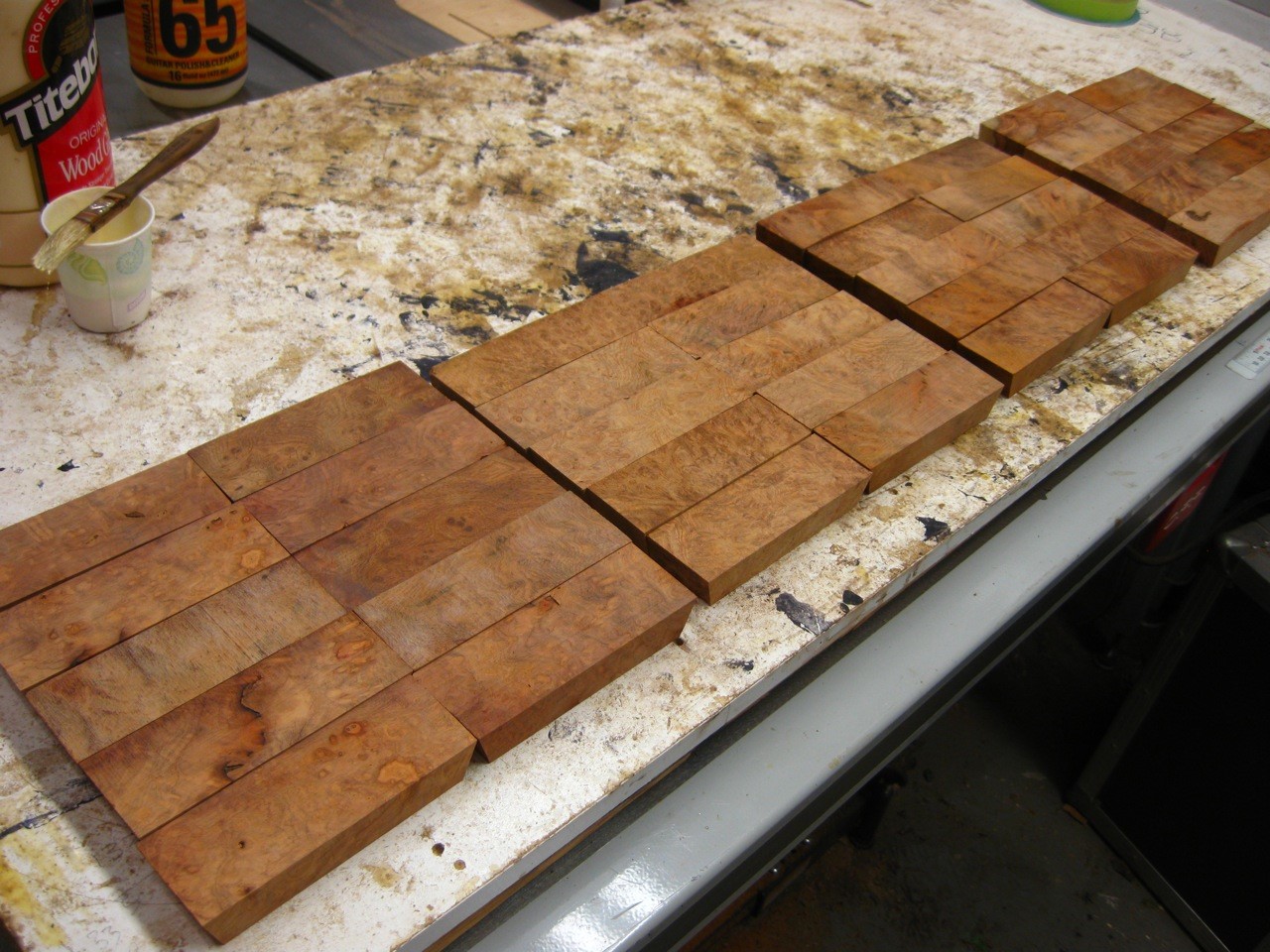
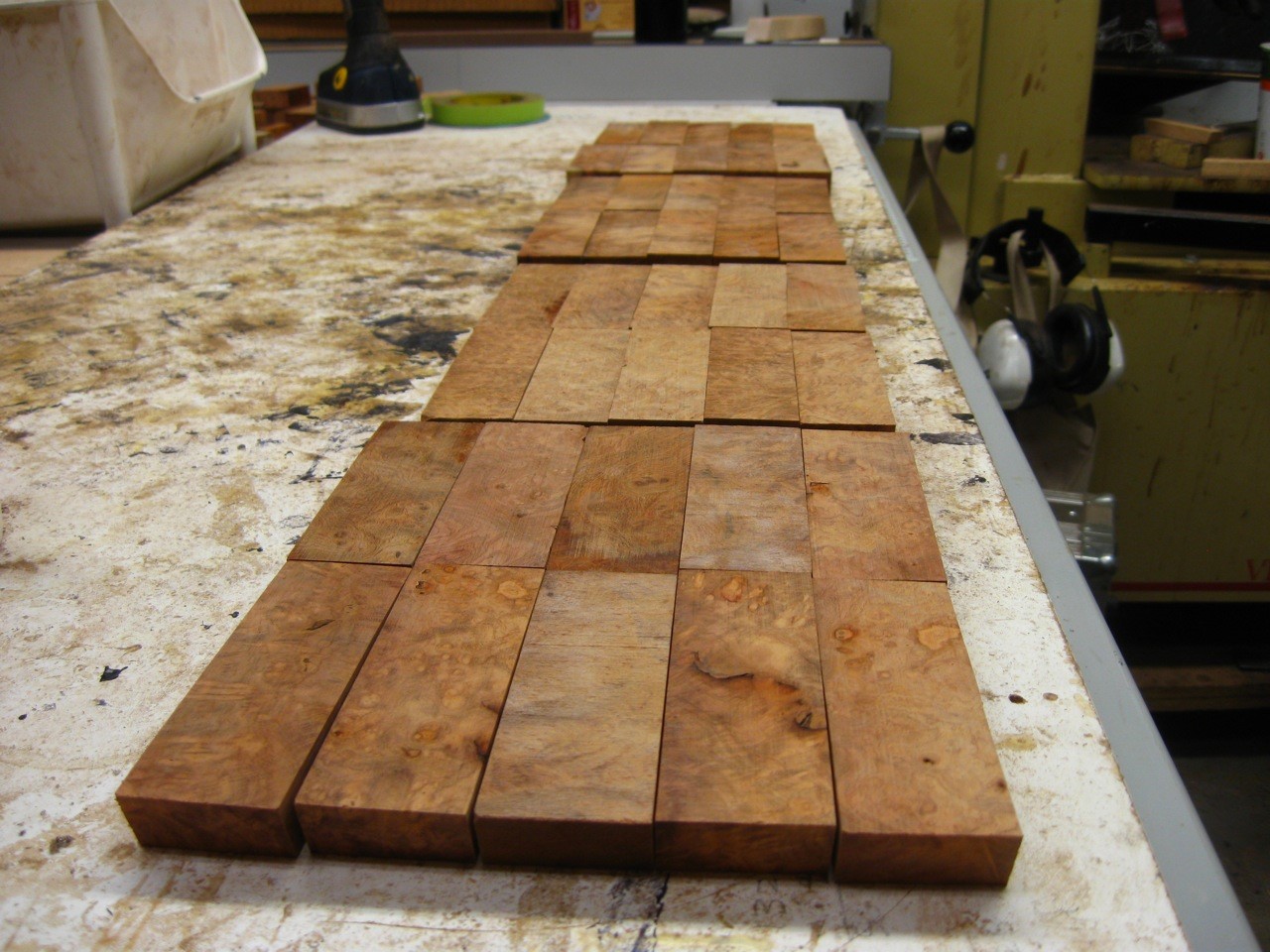
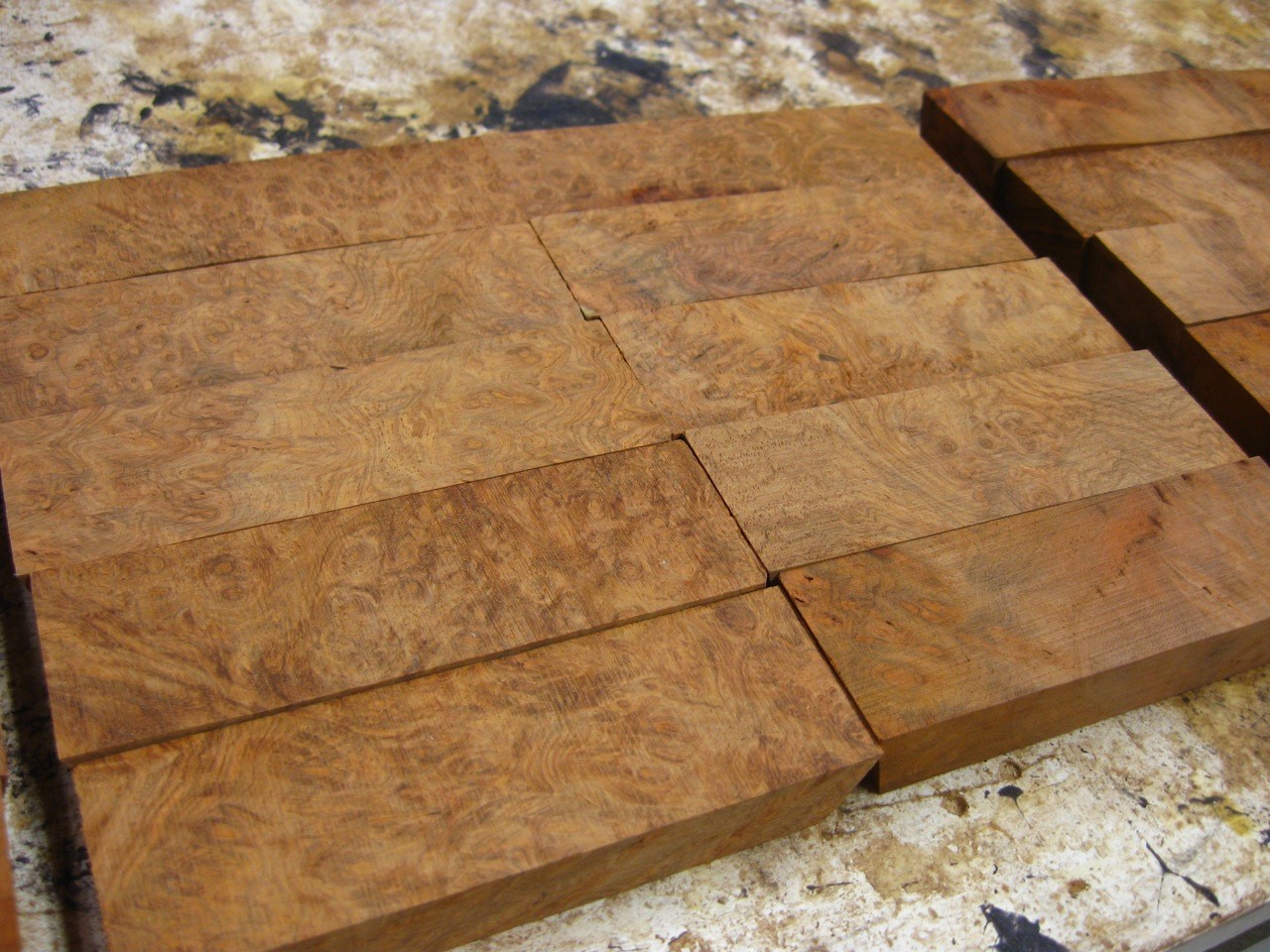
Finally, we have a shot with the rings glued up and under clamp pressure, and then after the clamps are removed. Although there doesn't appear to be a lot of colour contrast between the Amboyna Burl rings (1, 2, 4 & 5 from bottom) and the Afzelia Burl, once the finish starts to take hold, it should become much more apparent. I spent a lot of time making sure that the joinery for these rings was first class, and the seams are as fine as I can make them.
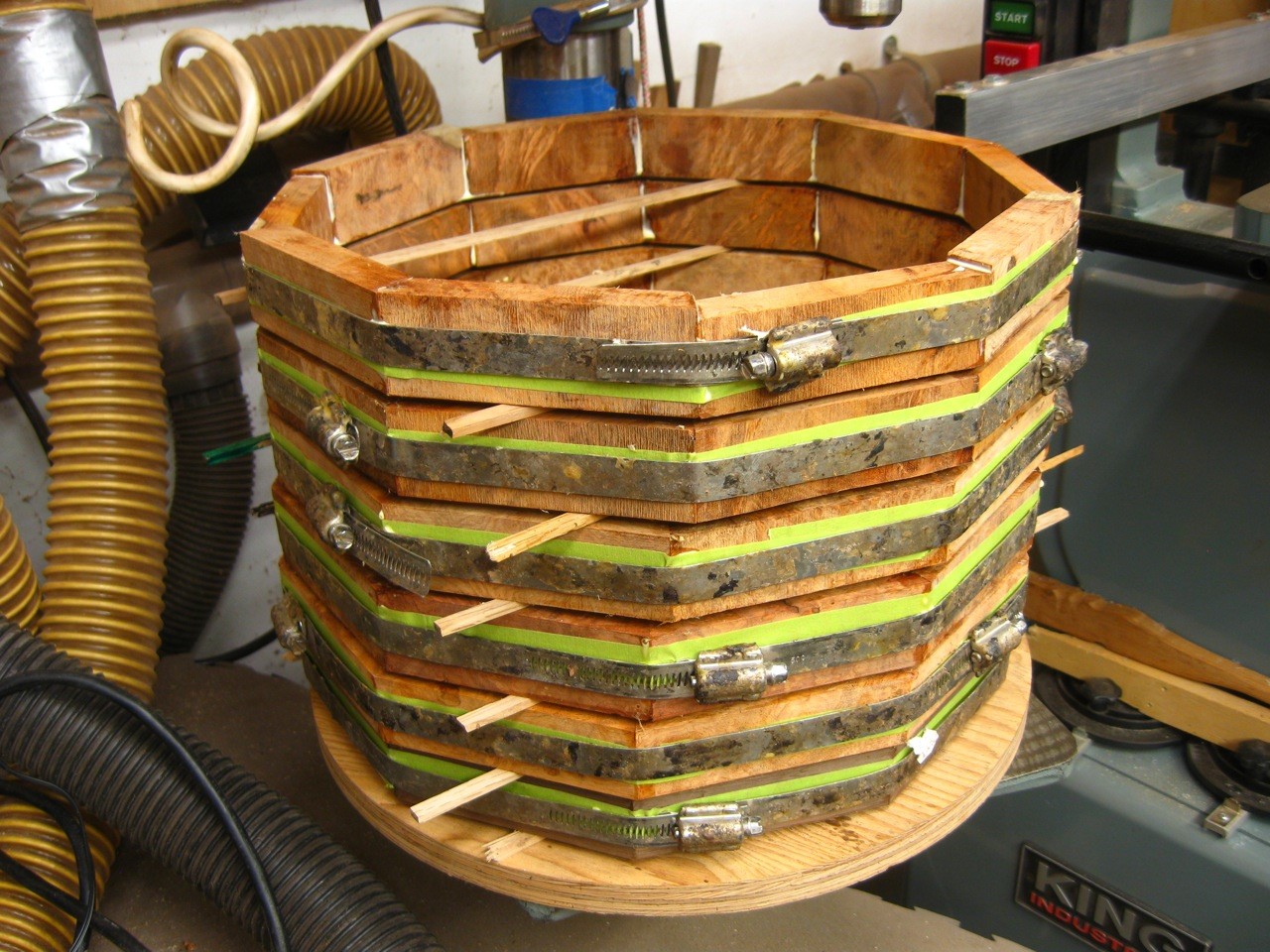

The next step is to leave the rings for a few more days, and then flatten them and glue them into the shell blank form, with a faceplate and sacrificial maple ring on one end. I will take lots of photos as we proceed, and now that things are rolling you can expect far more frequent updates.
More soon, Bob - all the best…”
Chapter 3: So Far, So Good
[Pete S.] “Things are good on my end, and I will have another Empy photo update for you in a week or so, but there have been no drying or checking issues with your shell or hoops, and the figure and colours in this drum are going to be really spectacular. I have been using some of the shell offcuts for handles and other elements of your accessories kit, and there are a couple of items that will definitely be one-offs due to the time and complexity of their design. I will shoot a few pictures of that stuff too, although I don't want to give away all of the juice in advance.
All best Bob - photos and commentary will be in your inbox by next Friday.”
Chapter 4: Wood Blocks are not Just for Kids
[Pete S.] “Hi Bob; Congratulations on the Ludwig Triumphal score (note: I had recently purchased a 4 X 14 Ludwig Wild Rose Triumphal from Bun E Carlos) - I know you play your pieces, but you must be spending lots of time just staring at this one too I bet. I would love to come and ogle your collection at some point - probably not in the cards for this year, but I do want to make a junket some time soon.
For the past while I have been working on your hoops, case and throw-off. I am really enjoying spending the time to make every part of this instrument special, and to make sure that I do justice to you, Todd, and the supremely exotic materials. Sorry if that sounds precious.
As I got to thinking about it, I realized that with this drum it only makes sense to include a 'Players Hoop' right from the outset. I did think about having it follow along in a separate carton, but then that didn't seem very Empyrean, so I have redrawn the case so that I can squeeze it in there (I hope). As you will see from the photos following, I am building three hoops for each drum, with each hoop consisting of 25 individual pieces of wood (12 finger-jointed Bubinga blocks, 12 finger-jointed African Blackwood blocks, and one solid inlay stripe of hot iron bent Blackwood). By contrast, most of the hoops I build would use just 10 blocks.
Anyway, here are some photos of your hoops in progress with a little descriptive text below...
6055 - One dandy plank of perfectly seasoned quarter-sawn African Bubinga with a nice Beeswing pattern.

6057 - I cut the plank down into 1.5” strips and then split each of these down the middle to provide a book-matched set of hoop segments. Not a whole lot of this material will show in the finished hoop, but I want to make what is visible as interesting as possible.

6060 - Hoop segments cut to size and resting prior to finger-jointing. Hope you don't mind that I called you Rob - I actually started writing Robert but remembered that you used to only hear that when you were in trouble with your Mom. Notice how vertical the grain is running in this wood - this is called quarter-sawn stock, which contributes greatly to the stiffness and durability of the hoops.

6065 - Badass joinery being dry fitted with the balance of your Bubinga hoop blocks looking on.
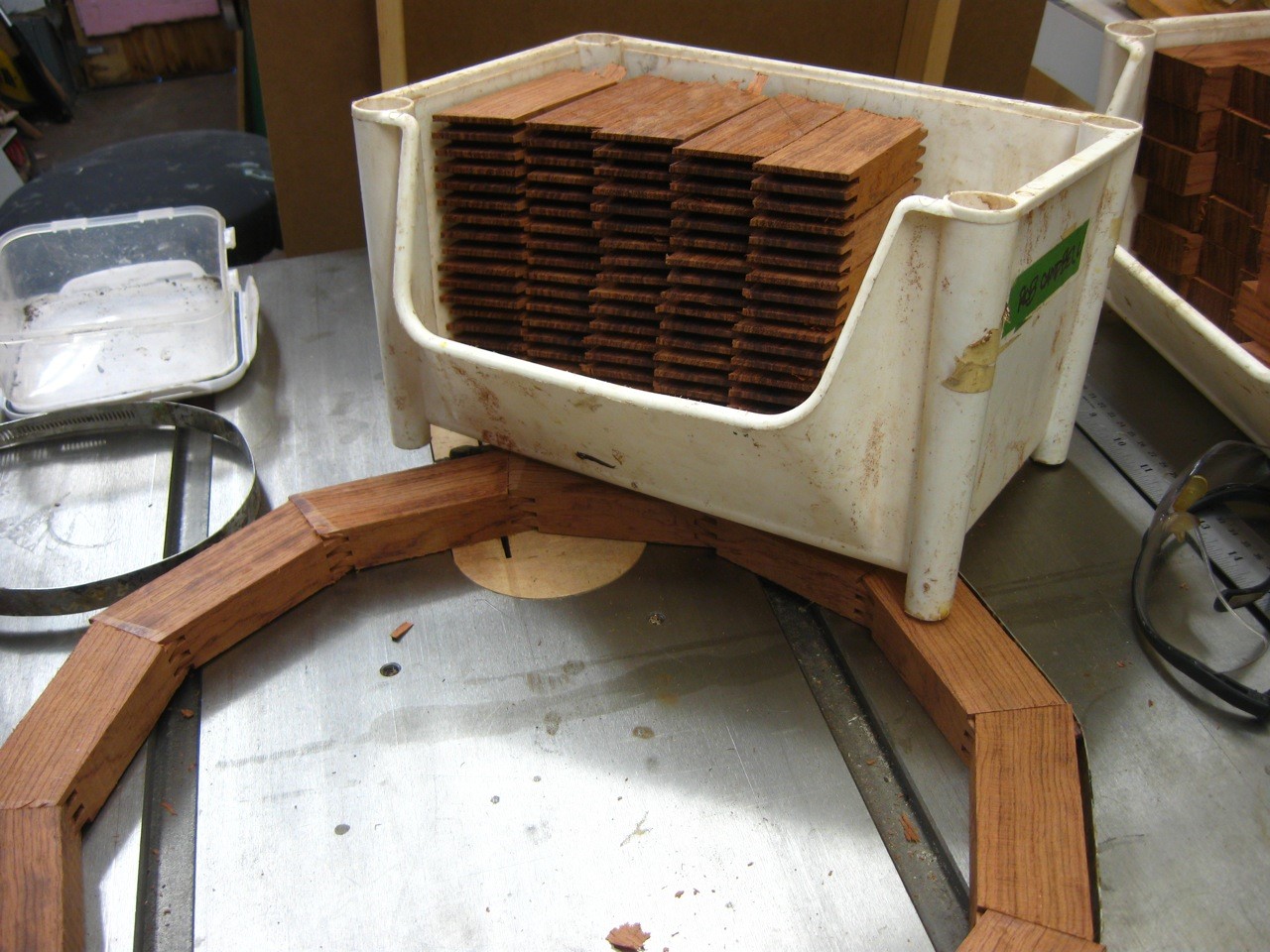
6070 - I generally use a number 2 grade African Blackwood for my projects and cut around flaws and checks. With the Empys I sought out a beautiful premium grade Blackwood which has almost zero defects and a much more consistent color and grain pattern than the stock I am used to. Here I am re-sawing a block for your hoop blanks using a couple of gnarly old push sticks on the band saw. You can see from the scars their necessity.

6083 – Finger-jointed and ready for the big glue-up. I love working with this material - African Blackwood fills my shop with the most amazing sweet Rose-like scent.
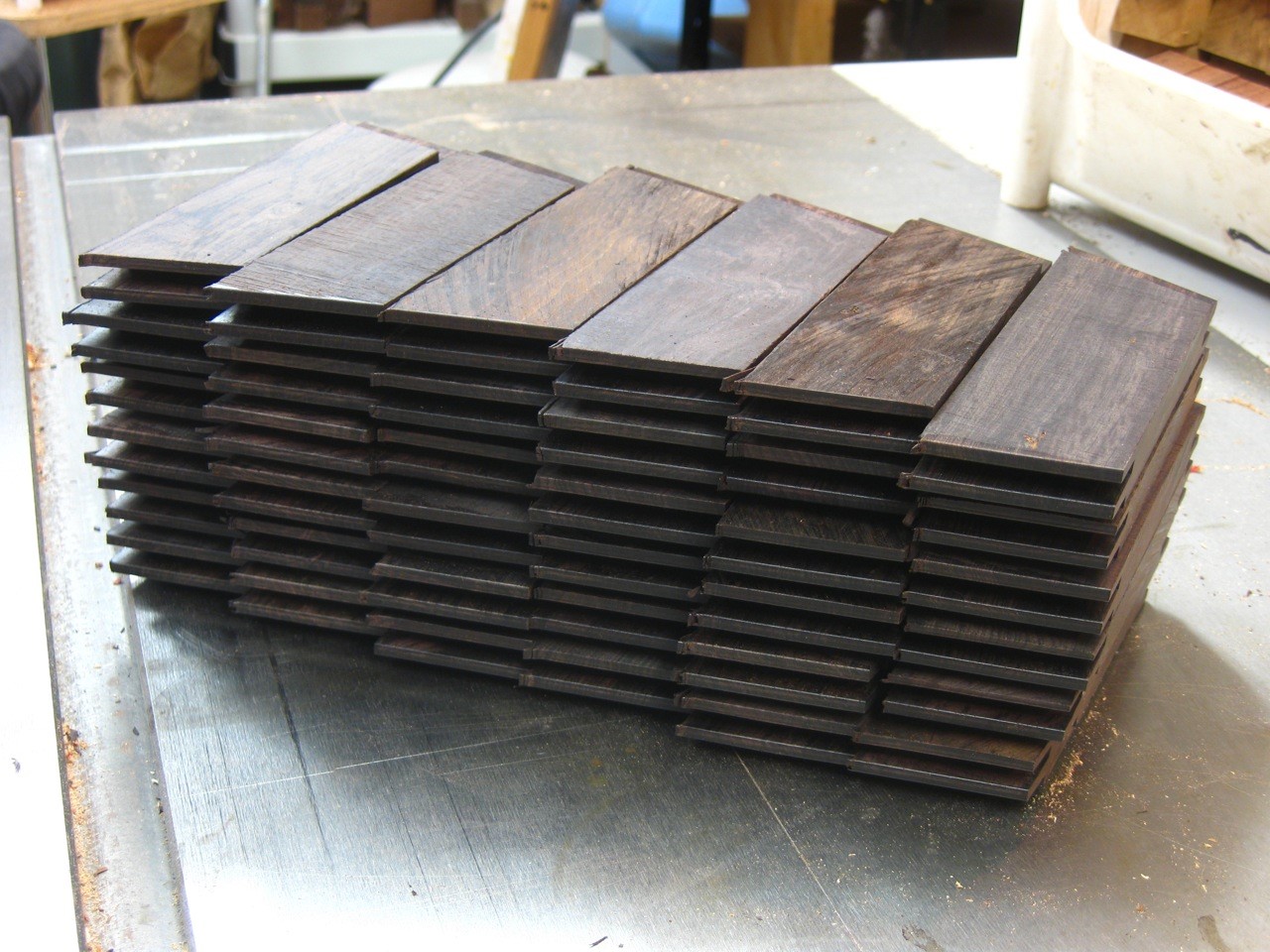
6102 - Blackwood and Bubinga hoop rings glued up and ready to be flattened, sanded and then glued together in pairs. As an added precaution against potential woes in the distant future, I am using an epoxy to bond these layers together, so I need to get them lined up properly the first time or it is all over.
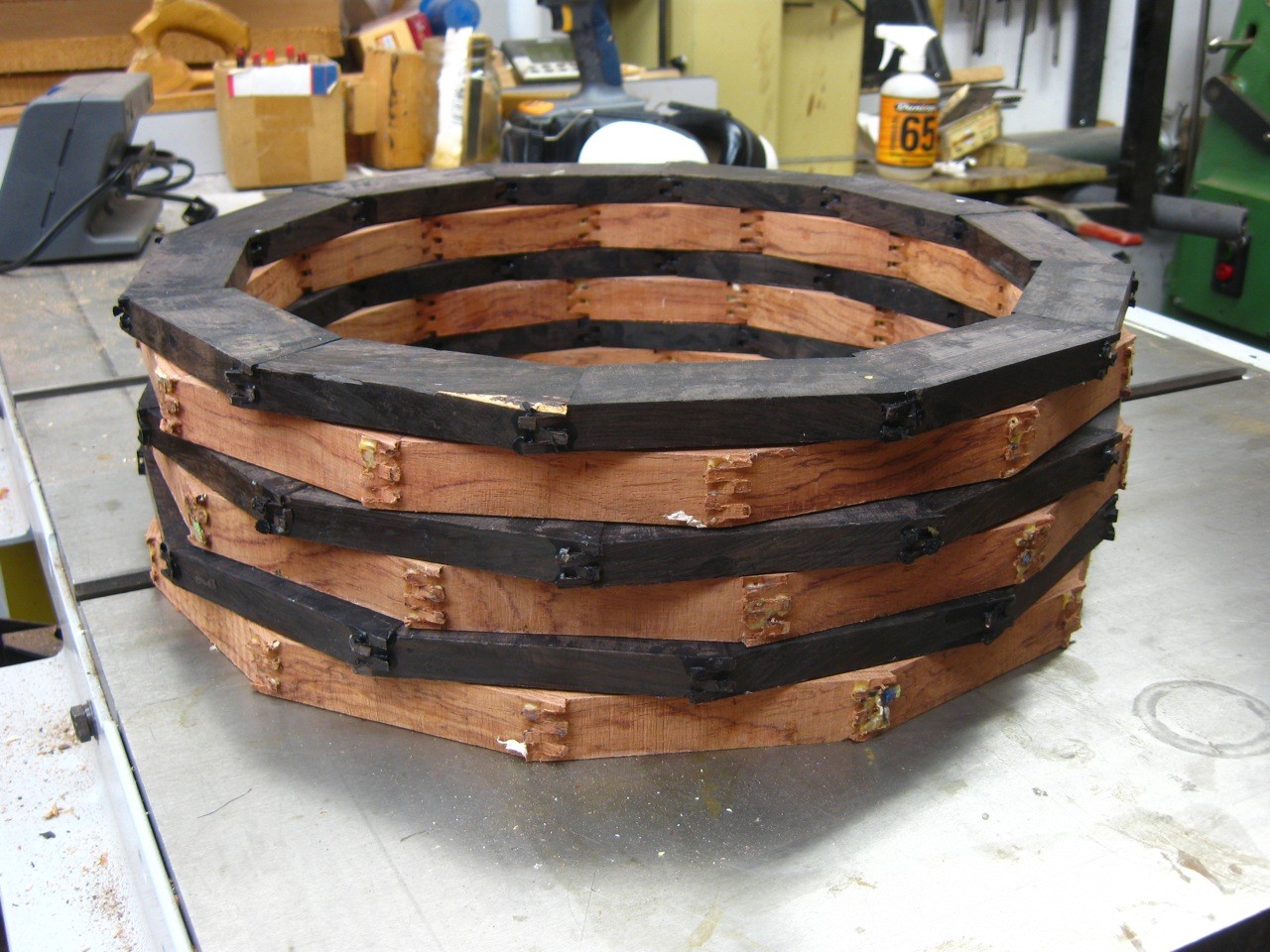
More to follow very soon Bob!”
Chapter 5: One Piece at a Time
[Pete S.] “Hope you are doing well. Here are some more photos of your drum in progress.
5594 - For most of my drums, I will use a thin strip of wood inlaid into the outer shell surface if I want a contrast stripe. With the Empy’s, that seemed like cheating, so the stripes are made of solid African Blackwood which go completely through the shell. This is a lot more work though. Here are the Blackwood shorts being sanded to precise thickness.

5598 - the center section of Afzelia Burl has been flattened and sanded top and bottom, and the Blackwood segments are glued and clamped in place individually.
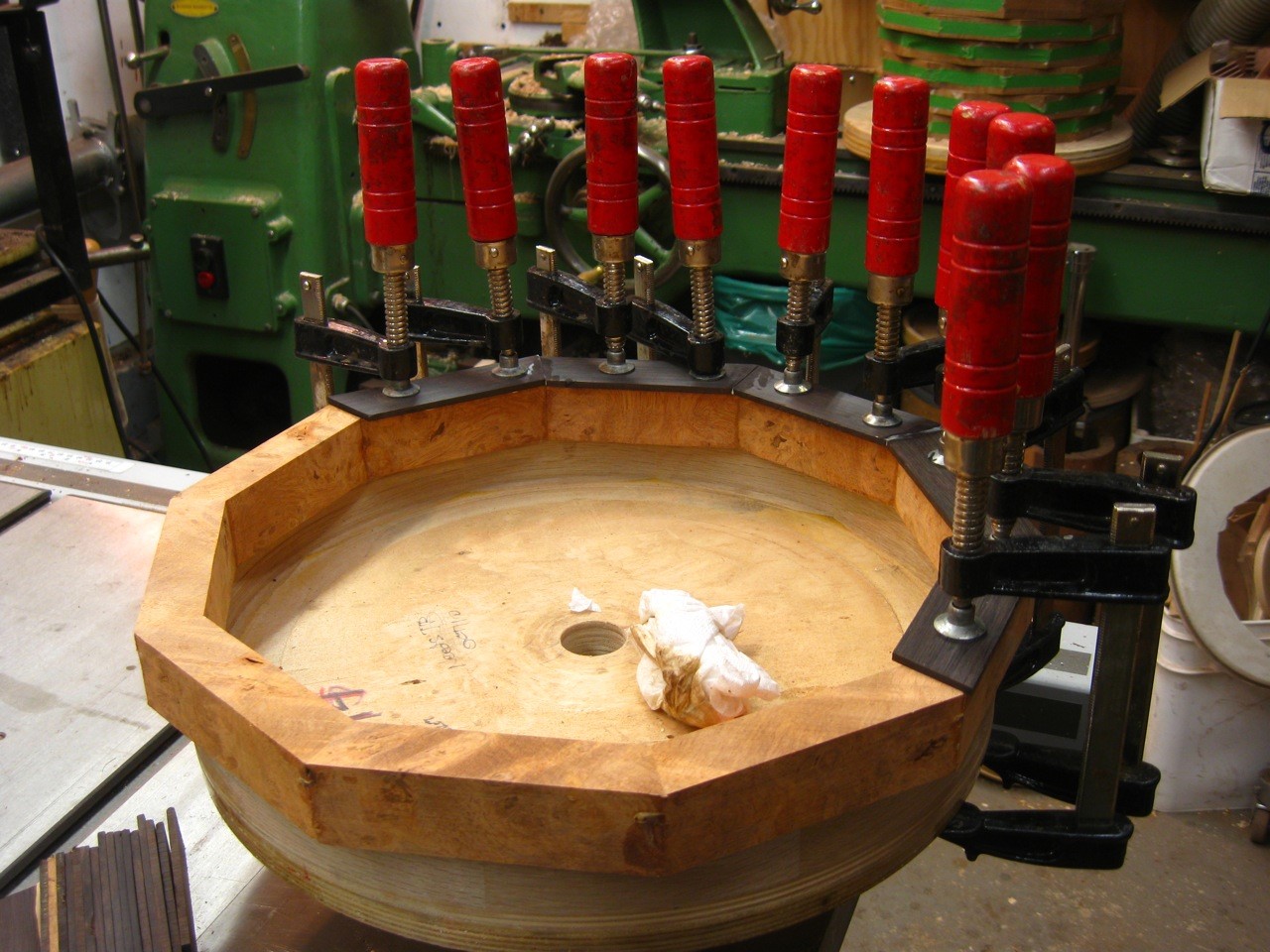
5603 - More Blackwood segments glued in place. The nice thing about doing these one-half at a time is that I can 'tune' the final block to fit perfectly with no gaps at all. The downside is - it takes a whole lot of time!

BC-0615_24
5612 - Rings 1&2 and 6&7 get glued up in pairs. Again, in one of my traditional snare drums, I would glue the rings together all at once in a custom built vacuum press. With the amount of money and time sunk into these blocks though, I feel way more comfortable using the much slower but more controllable clamp approach.

5613 - The center section (centerpiece?) of Afzelia and Blackwood glued up and sanded to silky perfection. All that remains is to flatten the Amboyna ring pairs and glue the whole shell blank up into...
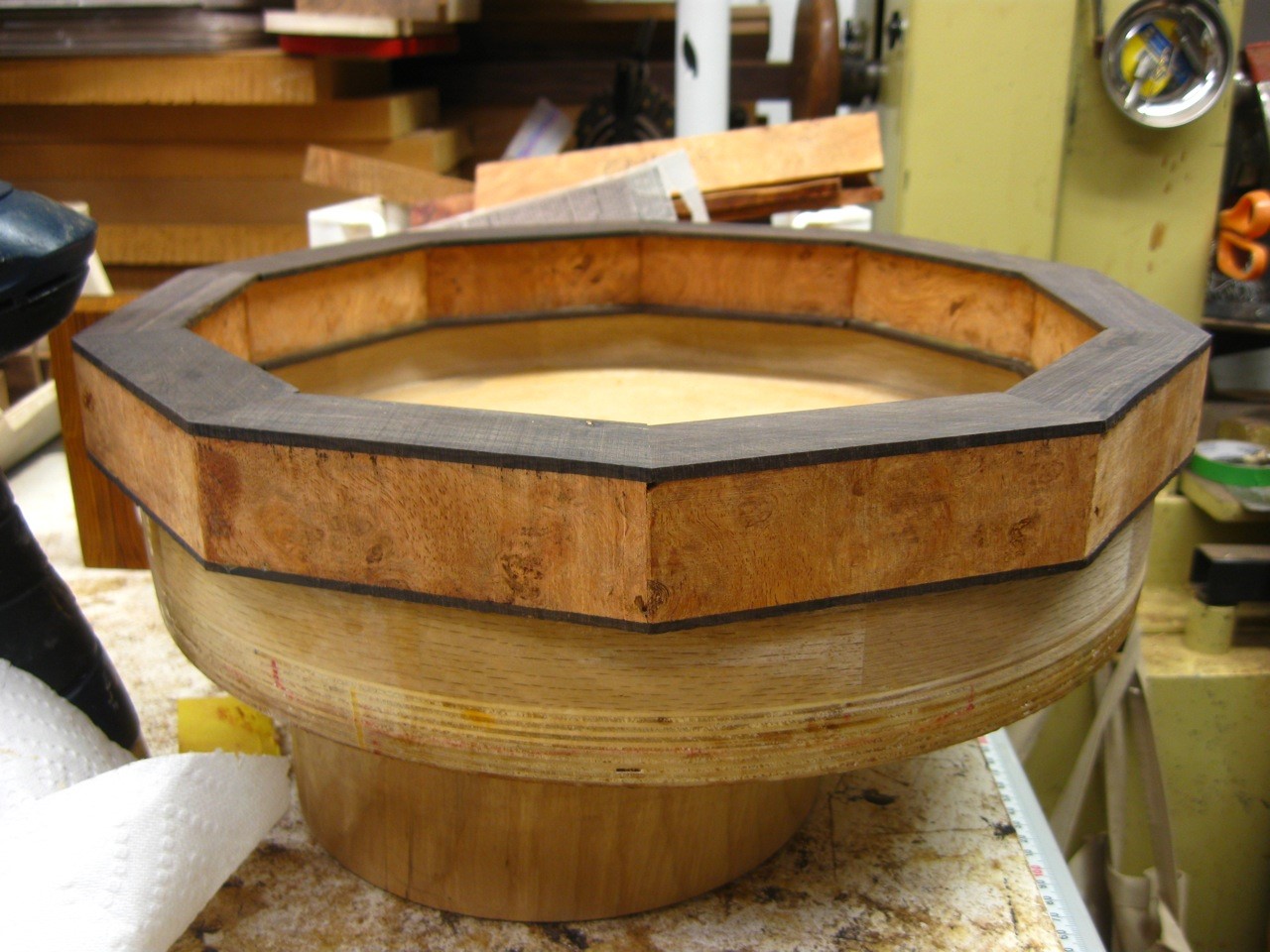
5625 - ... a very lovely pineapple. I'll start coring the inside in the morning, and very soon this shell will be ready for the beginning of the finishing process.
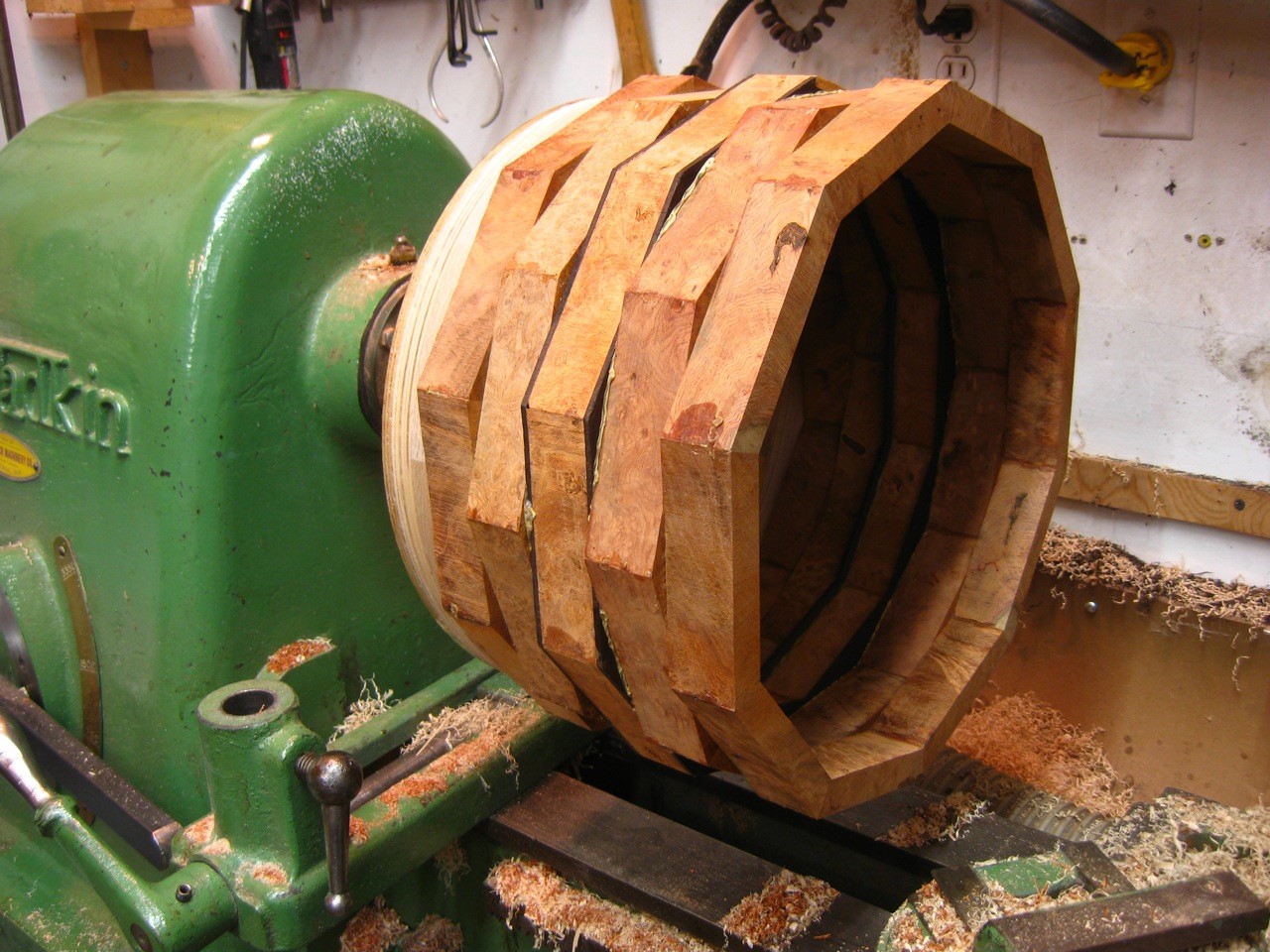
More soon Bob - I have also been working on a bunch of your goodies in the background, and have a couple of pretty cool items that I think you are going to love.”
Chapter 6: Exploring the Woods
[Pete S.] “Please find attached some progress photos of your Empyrean. Working with Amboyna burl is a bit of a double-edged sword - the material is beautiful and utterly unique, while also being extremely finicky due to the many voids and bark inclusions that produce its amazing figure.
I can honestly say though, that this is one of the finest drum shells I have ever built. The joinery is exactly what I was shooting for, and the wild grain and colour in both the Amboyna and Afzelia burl are off the chart. I want the shell to be perfectly flat across its depth so that the gloss reflections are dead straight, and this takes a great deal of care due to the different densities of the African Blackwood and Burl woods, but I feel great about the way this one has turned out. It is also really important that the sanding prep before the pore filling and high gloss stages is done right and that all of the sanding scratches are removed before I change to a higher grit sandpaper. This takes a lot of sandpaper, good lighting and an eye loupe, but most of all patience.
Here are some progress photos with narrative from the last couple of months...
5633 - The outside of the shell is rough turned oversize to reduce the weight and provide a round exterior surface for the next step.
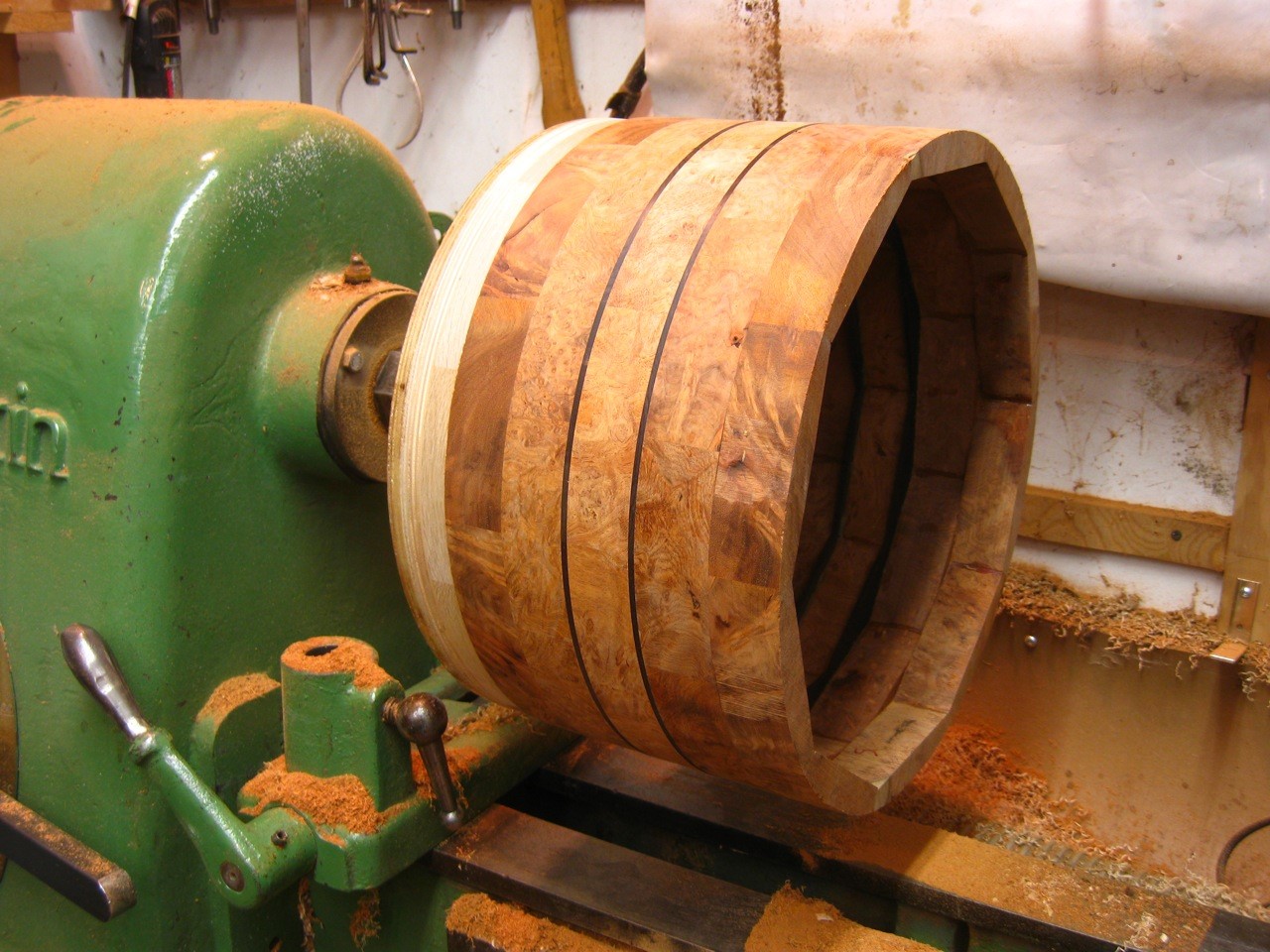
5638 - In order to minimize harmonic vibration and chatter while the shell is spinning, I dampen the free end of the shell with a shop made steady-rest built from a pair of inline skate wheels (retracted in foreground). This reduces chatter and makes for a much better interior surface finish directly off the tool.

5877 - Gorgeous grain swirl and burl eyes a plenty. Although the white balance was wrong in these two pictures, I think you can see why this is the most expensive and prized wood in the world. The shell is still about 1/64th of an inch proud here, but will come down to exact OD with a few long sanding sessions. To get this piece ready for pore filling, I hand sanded with 120, 150, 180, 220 and 320 grit sandpaper before moving to a Random Orbit sander to get rid of any radial scratch pattern. Total time sanding was about 8 hours over three days.

5880 - This is the interior surface directly off the tool - it looks pretty good, but there are still some small radial grooves visible. In order to make the inside smooth and ready for sealing, I spent 3 hours with a sanding block to bring it into perfect focus. The inside is sealed with a few very thin coats of shellac.

5884 - Into the finishing shop. Here a sealer coat has been applied, and the first application of pore filler has been squeegeed onto the surface and baked in my UV oven. This material dries rock hard and must be sanded flat so that it only remains in the pores and voids of the shell. Normally I would use two coats to completely fill the grain - with this wood I am using four. Each cycle takes about half a day to apply, cure and sand back.
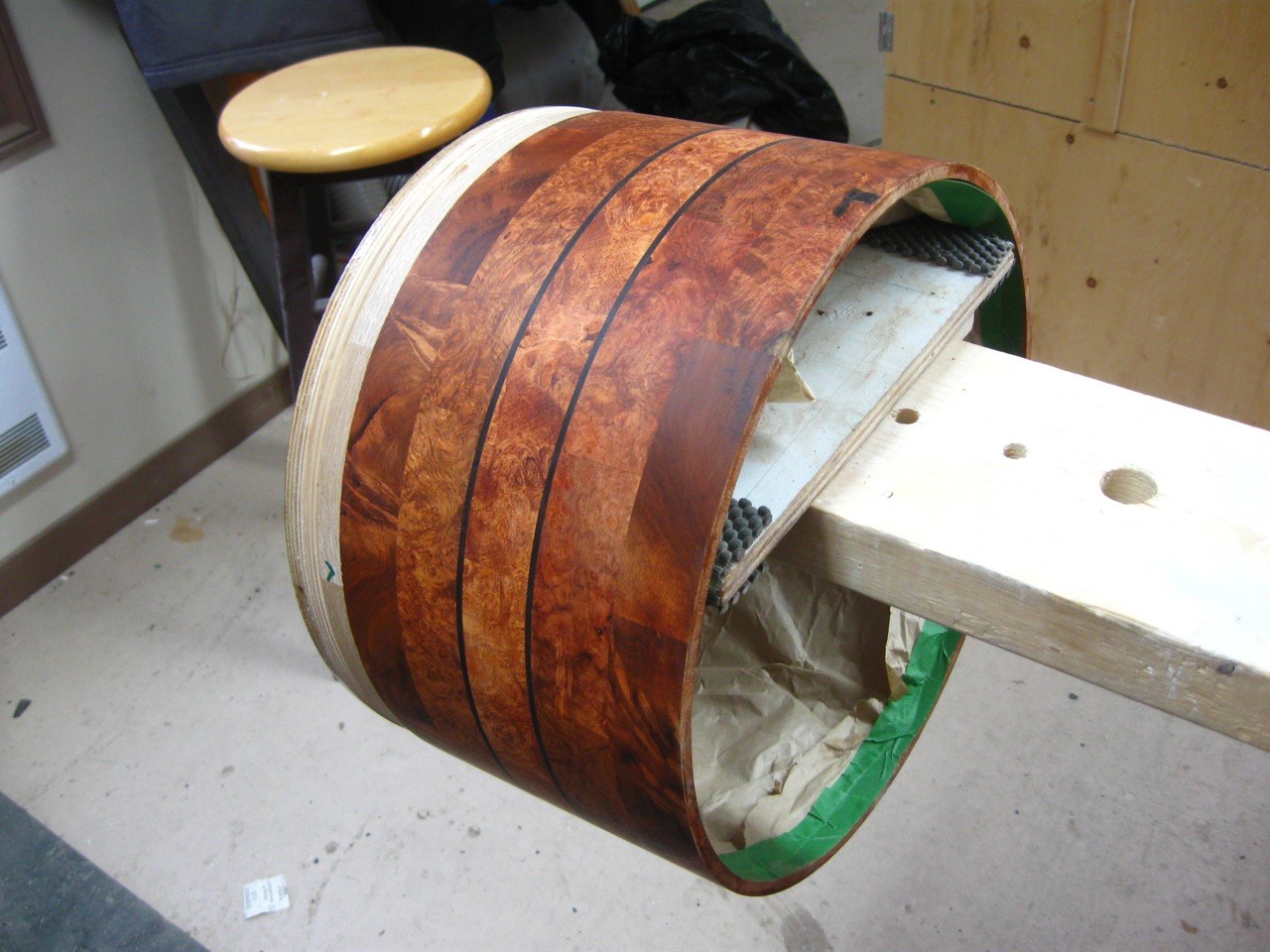
5898 - The pore filler is clear so it doesn't alter the appearance of the wood. I use an eye loupe to check for sink-outs in the finish - it is hard to tell from the picture, but this shell is completely filled and just about ready for high gloss. Just a little more... sanding.

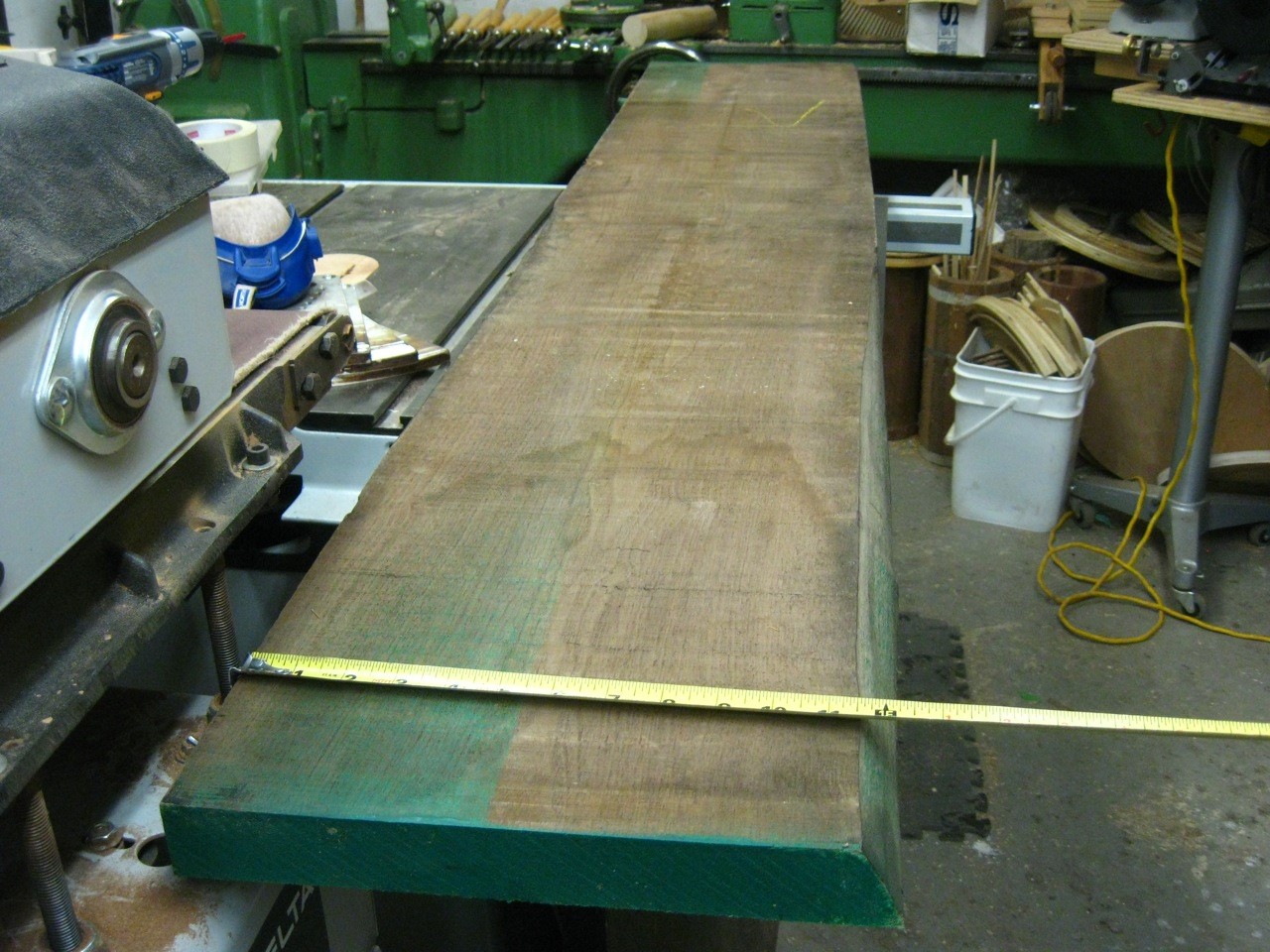
5931 - This is the Black Walnut for your drum case. I will re-saw this one plank (12 inches wide by 1.5 inches thick by 72 inches long) to produce a four corner matched case. Still haven't decided on all of the interior fittings, but I will be working on this over the next few weeks, and I will send you some pictures as we proceed.
More soon…”
Chapter 7: Getting on my Case
[Pete S.] “Hope your summer has been going well and that you had a good time with Todd the other night. Please find following some more pictures and commentary regarding your project. I am still on schedule to ship your drum to Todd during this break from Styx dates, so I am hopeful that you will be seeing her in early October as I mentioned in my last message. More to follow as we get closer to a ship date.
Hope you are well Bob - thanks again for your patience and support.
All the best…
6234 - Here are the Black Walnut planks I have chosen for your drum case after being re-sawn. By splitting the boards and book matching them, I can create a 4 corner grain match that flows around the drum case.

6260 - I don't want to give away all of the bells and whistles, but here is the plywood mock-up for your case. It has a bunch of cool features and the inside is going to look dynamite as I am working with a very talented local textile artist on the plush interior.
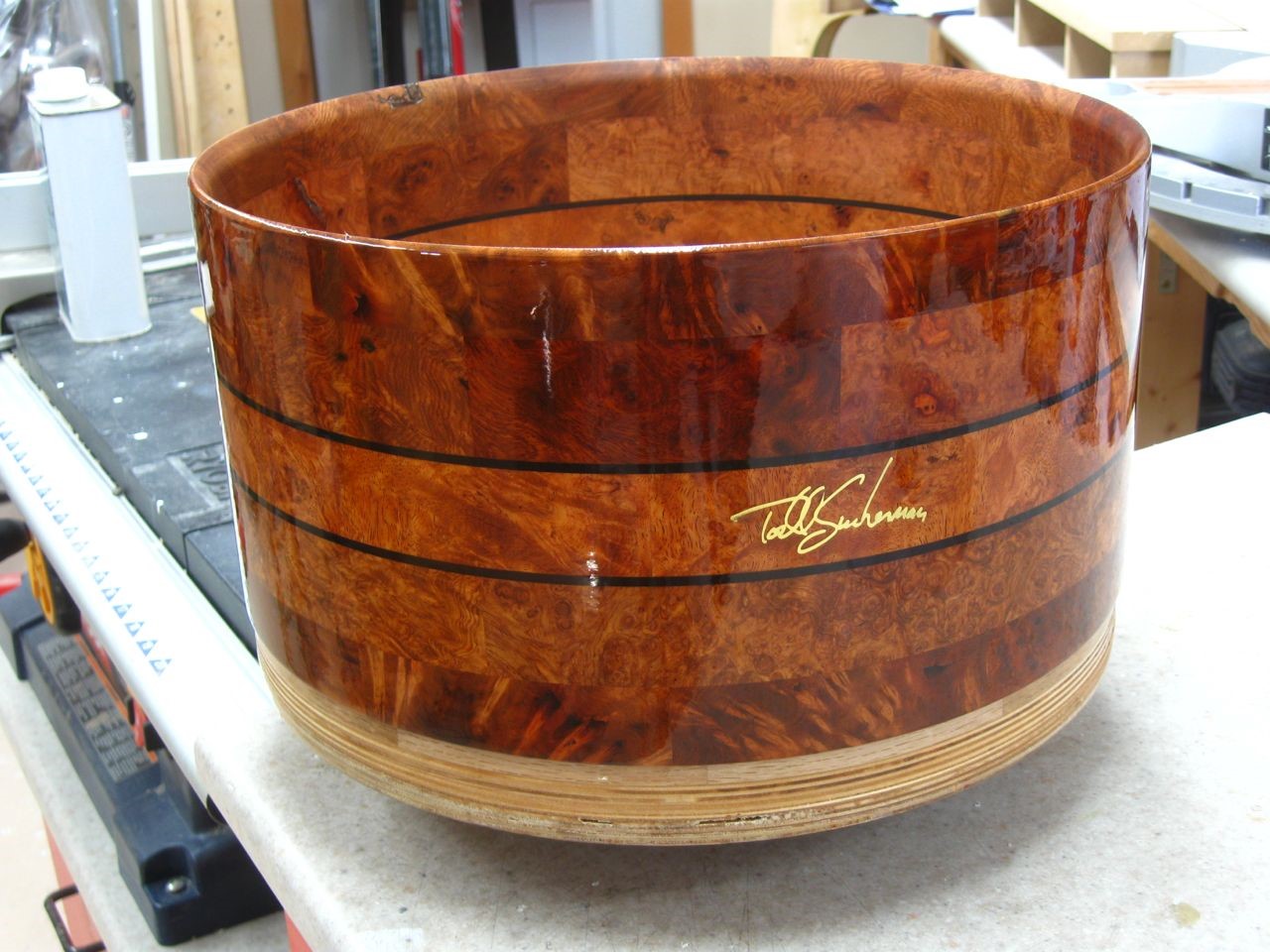
6336 - One again, here is your sealed and pore filled drum shell prepped for the spray booth and my tried and true UV cure high gloss.

6350 - A final scuff sand prior to applying the Todd signature, and shooting the first three coats of high gloss. The quality of this burl is astounding - every segment is like a little painting.

6365 - Three coats down, another 5 to go. This picture is from a couple of weeks back and the shell is now complete and ready to be finish sanded and buffed.
6394 - In the meantime, I have been working on your hoops. Here I am truing up the hoop blanks in preparation for drilling the tension rod holes. I built a super cool measuring jig (using a laser pointer) to indicate some of the major diameters, but all of this work is done by hand.
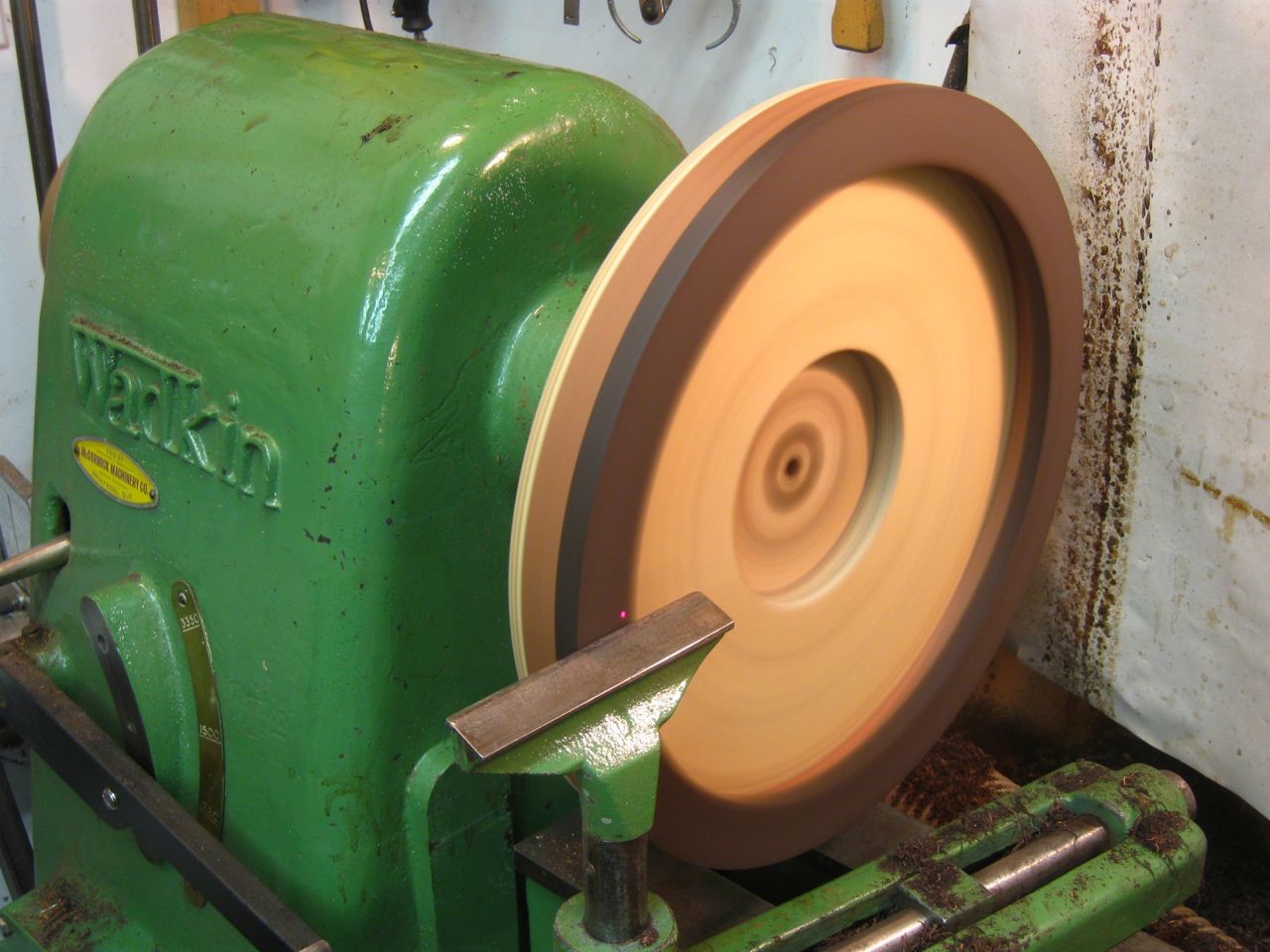
6396 - Next, the hoops are locked into a rotary indexing fixture I designed, which allows me to drill any number of equally spaced, accurate holes in hoops from 6 to 26 inches.

6403 - Turning African Blackwood is both a challenge and a joy. It is necessary to re-sharpen my chisels and gouges after only a few moments of contact with this incredibly hard and resinous wood. But - the finished surface really is incomparable.

Chapter 8: Can You Box That To Go, Please?
[Pete S.] “Hope you are doing well and getting into that Fall kind of groove. We have been having some beautiful days recently, including a number of high temp records and a bearable amount of rain, so no complaints about the weather (for the moment). I did just make my appointment to get the tires swapped over to our winter studs however.
Here are some photos of the progress of your Empy over the last few weeks. I have spent a great deal of time on the case and interior, as well as all of the little amenities that will be nestled on board. At present, the cases are with the artist who is doing the interior fabric and foam. We have done a bunch of different hand dyed textile samples and I think the finished effect is going to be great.
6427 - I'm making an African Blackwood pen here - at over 2,000 pounds, this is perhaps the largest lathe ever used to turn a 2 oz. pen.

6430 - I tried a few different designs for drum key handles before I settled on one I really liked. This is an 'also ran' in Afzelia Burl.
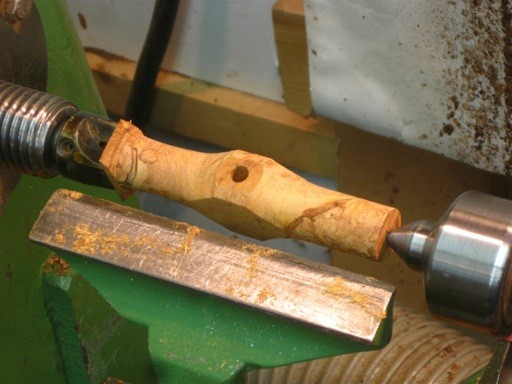
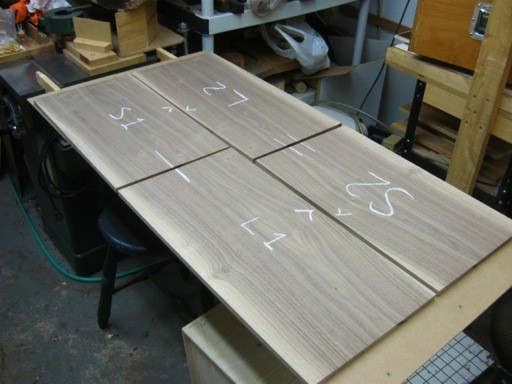
6434 - In order to achieve the best 4 corner grain match, the walnut for the drum cases needs to be book matched and laid out properly. I really didn't want to mix up any of the parts after all of this work.
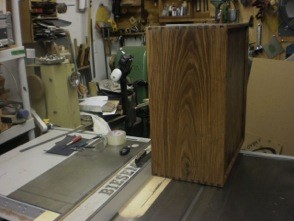
6436 - Here I am cutting the box joints for the case joinery on my table saw. It takes a good number of test fits before the jig is dialed in to run the actual parts.

6437 - Woot! - didn't mess up and the boxes fit together with a satisfying amount of persuasion.
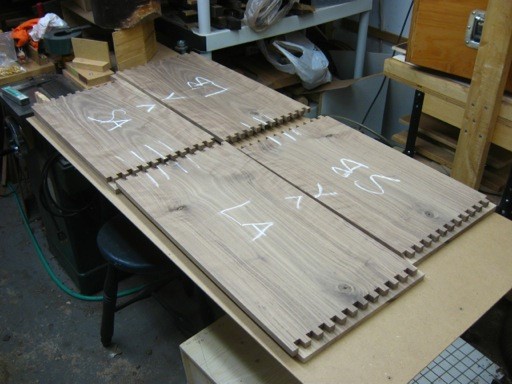
6440a - Much sanding is required to prep the boards for finishing. I used three coats of Danish Oil followed by paste wax for a baby's bum smooth surface.

6441a - Another of those operations that could go horribly wrong (but didn't). After they are glued up and the finish is applied, the lids are cut off the cases on the table saw.
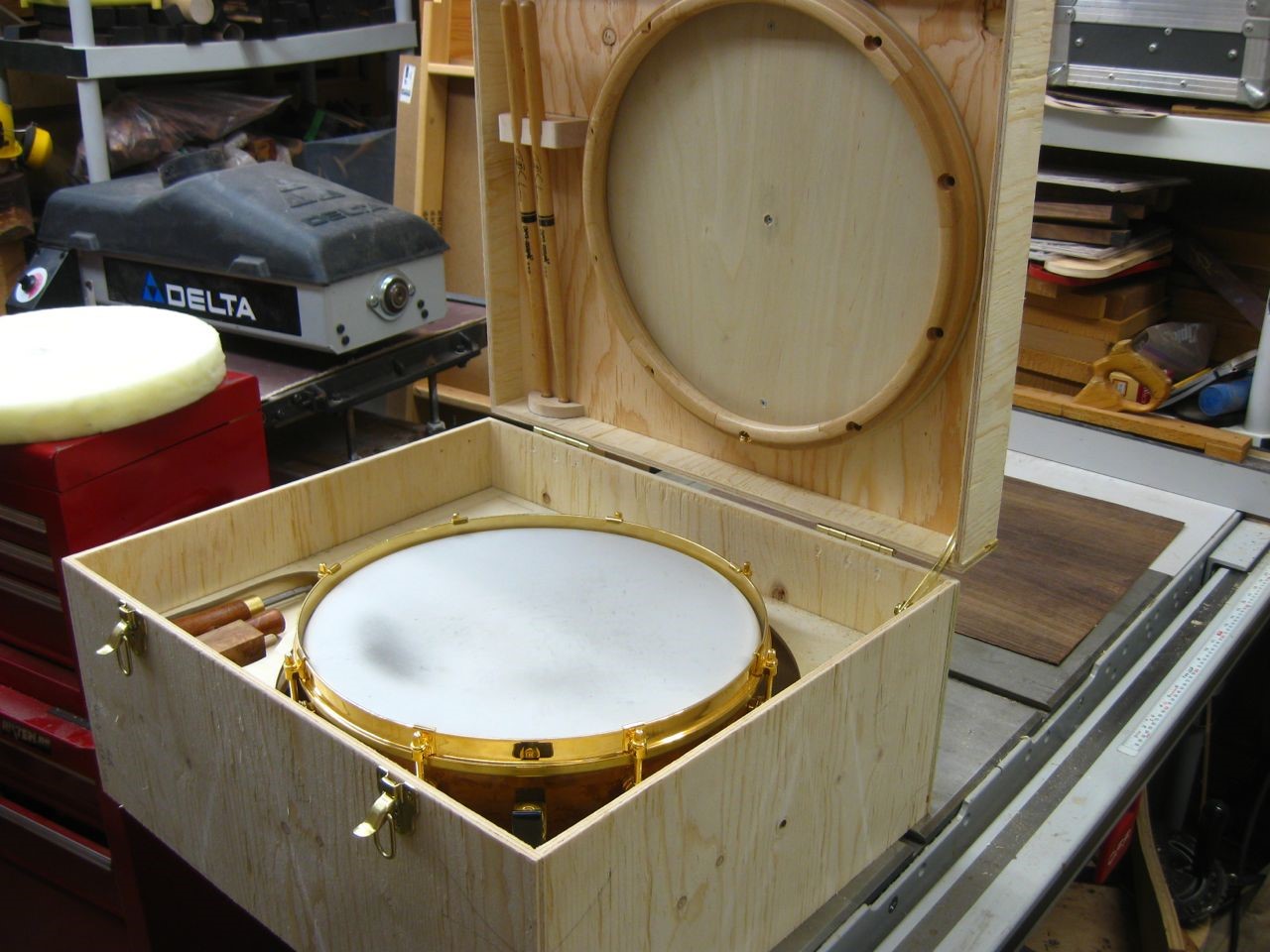
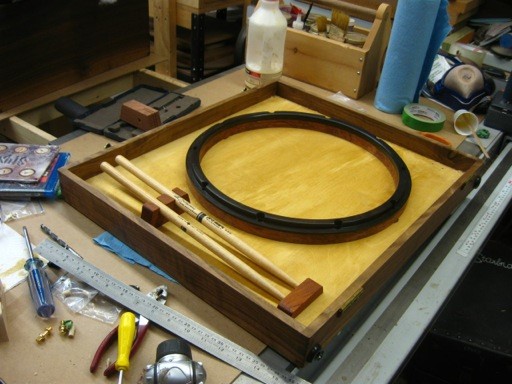
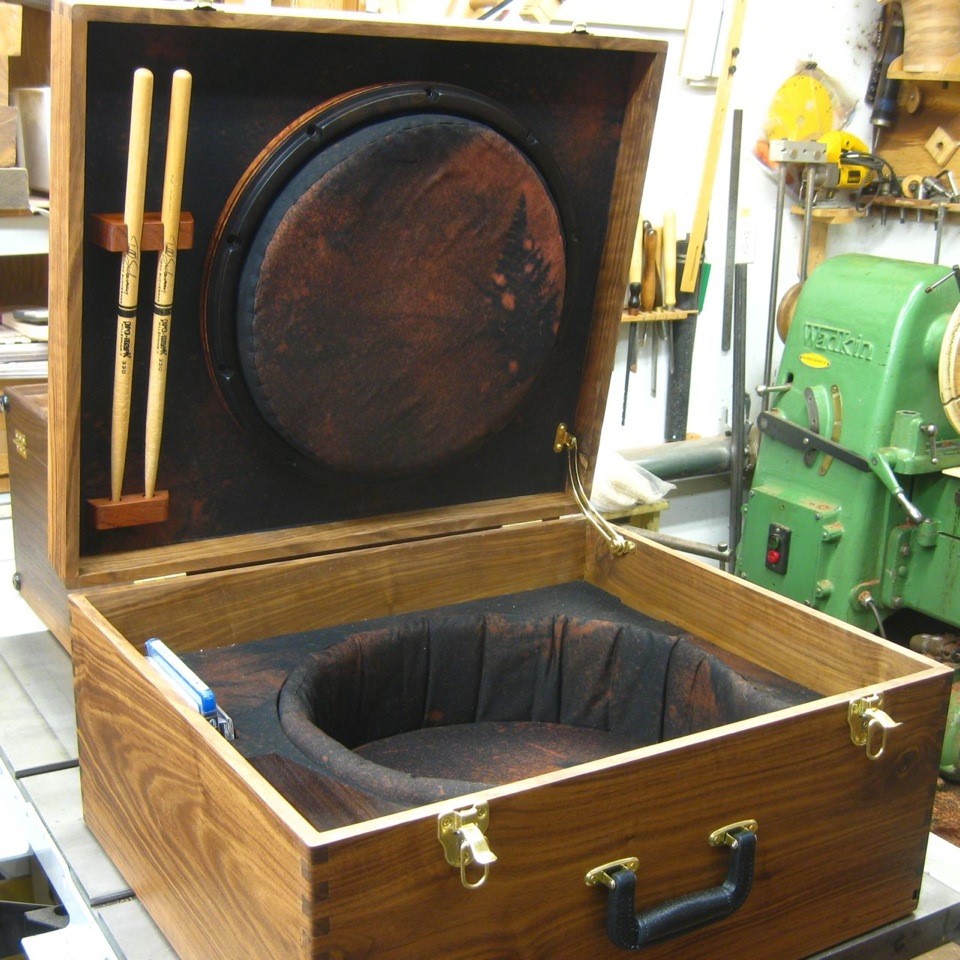
6444 - The spare 'Player's Hoop' rides along in the lid of the case, along with a pair of Todd's signature PM 330s.
6446 - I decided to build a sweet little Rosewood box to hold some of the luxury items accompanying the drum.

6447 - Still not sure how I will hinge the lid, but something will suggest itself I'm sure. They kind of have a baby grand feel to them I think. Holy Faziloi!
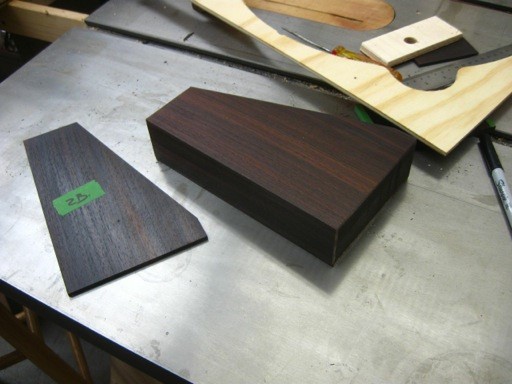
6451 - Of course the primary purpose of the case is to protect your Empyrean, so the structure of the insert and surround is very important.

6453 - These babies are ready to ship out for the interior fabric install. I don't do a lot of flat work (as the wood-turners would call this), but it is satisfying despite being excruciatingly slow.

I'm back to finishing up hoops and shells, along with all of the million other little details that these drums require. We're very close to a ship date now - I have been keeping in touch with Todd regarding his schedule so that we connect during a break from touring. Hopefully I'll be able to have these in the air in the next couple of weeks. I will keep you posted.
All the best”
Chapter 9: Exotic Toys for Drummer Boys
[Pete S.] “Here are some pictures and commentary from the past few weeks. I have been working through the last details for your project, and we will soon be ready to ship her off for Todd's shakedown, but I want to make sure I am happy with every aspect of the instrument and package before it moves on. Its almost complete and I am pretty sure that you are going to love it. As you can see, I tend to make a number of variations for each item in the extras box - let me know if there is something that you really love, but otherwise I will just make sure there is a nice variety of wood species.
Here are some photos and commentary…
6466 - A few of the pens I have completed - from L to R we have Big Leaf Maple Burl, African Blackwood and Cocobolo.

6468 - Some keychains in (clockwise from the top) Roasted Birdseye Maple, Curly Maple, Amboyna Burl, Ebony and Snakewood.
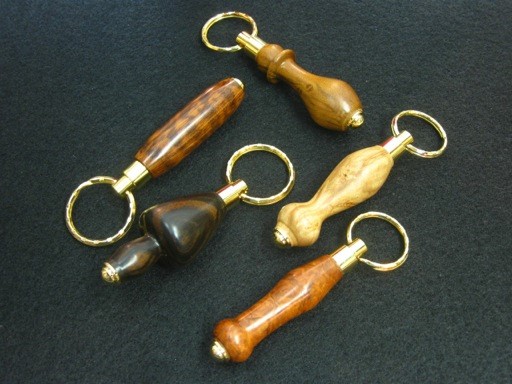
6471 - Drumkeys (clockwise from top) in Maple Burl (w/ chrome), Cocobolo, Amboyna Burl, Curly Koa, Cocobolo (w/ chrome), Figured Cocobolo.

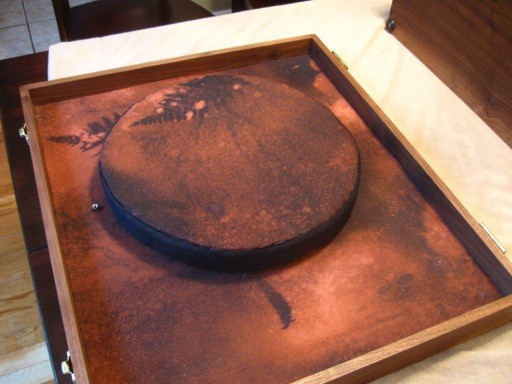
6482 - Here is the case lid. Local textile artist Kumi Stoddart dyed the fabric using fern leaves as a resist to create the patterns, and hand-stitched the lining and foam cushioning. I'm really pleased with the overall effect of the textile, and each case will be completely unique.
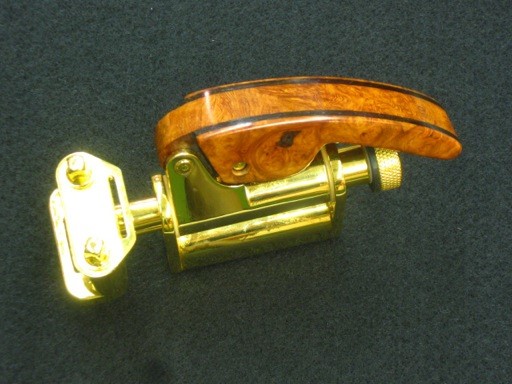
6494 - Here's a shot of your throw off handle (prior to Swarovski’s). I used 3 pieces of Amboyna Burl with 2 sections of African Blackwood for strength and stability, and epoxy to hold it all together for the long haul.
6506 - Each hoop receives an African Blackwood pinstripe made from solid stock. I carefully cut the Blackwood on the bandsaw and sand it to precisely .124 of an inch to press fit into a .126-inch groove. I pre-bend the inlays using a heat gun to avoid cracking them while installing, and scarf joint the ends so the seams are invisible.
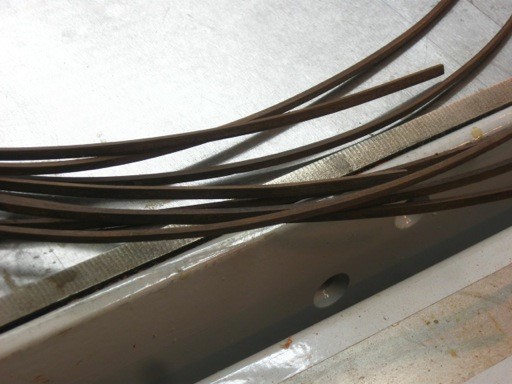
6510 - The inlay is glued into the groove and clamped up overnight, then the hoops are sanded perfectly flush and the finish is applied.

6513 - These are solid wood badges with gold foil embossed on Amboyna Burl and African Blackwood - let me know which one you would like on your instrument.

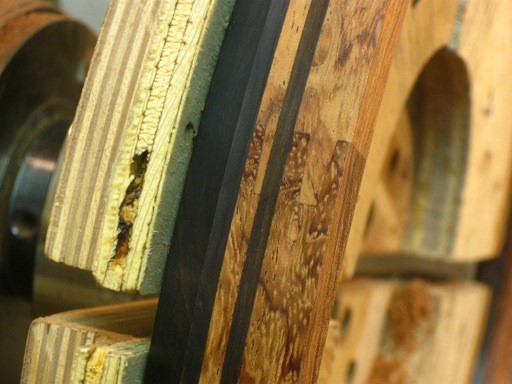
6514 - Here is the seam in the Blackwood pinstripe after sanding - it is dead centre in the photo. Not bad, eh?
6519 - And finally, the case with almost all of the bells and whistles in place. Hope you like it - I think it does the drum justice nicely
All Best - more news soon…”
Chapter 10: All Lacquered Up and Giddy
[Pete S.] “Great speaking with you just now, and I forgot to ask if winter had overtaken you yet. We got a few inches last night, but hopefully that is the end of it for a while.
Here are a few more shots of your instrument in progress. I didn't include any pictures of your hoops, but they are completed as well, so we are really getting down to the final few details now. I'll keep you updated on the shipping status to Todd over the next week or so.
6558 - The final wet sanding stage, after many hours of power and hand sanding. To bring the lacquer up to a high gloss, I start by machine sanding through 800-grit, and then wet sanding by hand to 2000.

6561 - This jig allows me to spin the shell (slowly) and hand cut, sand and polish the bearing edges to any profile. I use this jig to rotate the shell while I hand cut the bearing edges with lathe chisels. Notice my little shop-made steady rest reducing vibrations in the foreground. Sadly, my daughter can't find her inline skates these days.
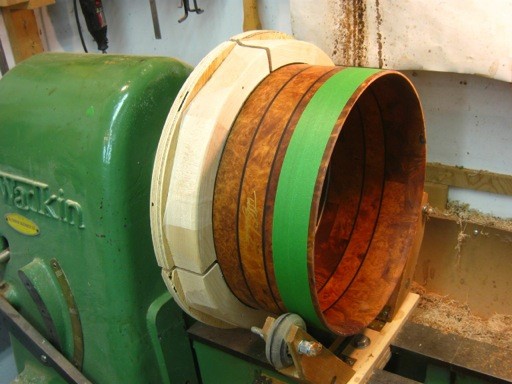
6564 - After the edges are finished I use a stationary buffing machine and a number of ultra-fine compounds to bring out the gloss in the body of the shell. The completed shell after polishing. The burl looks like it is buried under glass.
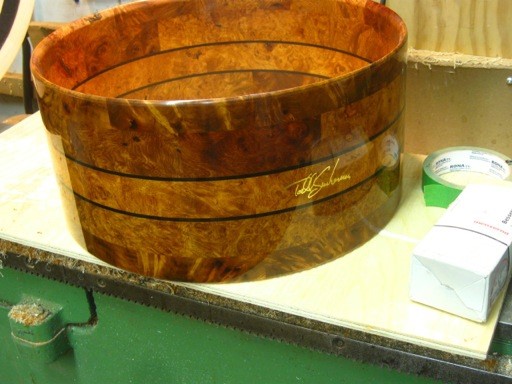
6565 - Looks pretty darn shiny I think. The wildly interlocking grain in the burl is kind of mesmerizing.

6579 - More green tape. Remember the old adage - measure 4000 times, drill once. It still freaks me out to map and drill holes for the hardware - nowhere to hide if I screw up here. She's mapped out and drilled and now I can exhale.

6580 - My heart rate returns to normal after the tape is gone and I have verified that the results are perfect – Wowza! The way light shimmers and refracts when you look at some woods from different angles is called chatoyance. Yep - this baby's got that in spades.
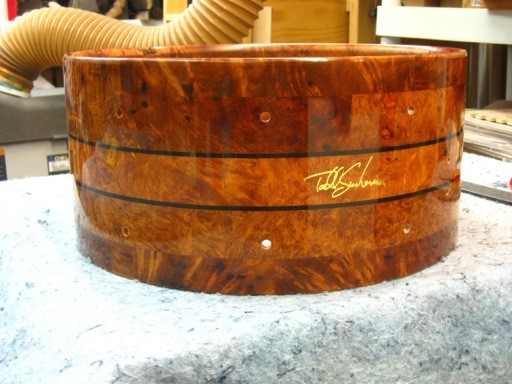
Hardware tomorrow. I'll let you know how we are doing very soon.”
Chapter 11: An Empy is Sighted in Canada – News at Eleven
[Pete S.] “Happy New Year! We left Newfoundland to travel to Ontario to see the extended family on Dec. 18th - just in time for a major ice storm that brought down about 25% of the trees in my parent's community, and knocked the power out for the better part of a day. Their place escaped major damage but the neighbours took a direct hit from a Maple tree and lost their brand new deck. After lots more snow and cold conditions in and around Toronto, we flew back home on New Year's Eve to find that St. John's had been buried under 120 cms of snow over the time we were away. On January 2nd the power utility started rolling blackouts in an effort to stave off a major outage because of the increased electrical demand from the cold temps. Unfortunately, this didn't work, and January 3rd our power went out for 30 hours during a blizzard with the temperature at minus 19 and wind speeds of 120 kph. Another 40 cms of snow and a half dozen more blackouts over the next few days kept things frosty and uncertain, so schools remained closed for three days until the grid was stabilized. We have a generator to keep our well pumping and the fridge and freezer running, along with one room heated, but once my stockpile of gas started running low we discovered that every station in town was out of fuel. Fortunately it has started to warm up a little today, and we are looking at a fairly mild stretch for the weekend at least.
So, it has been quite a start to 2014. Needless to say, I haven't spent much time in the shop up until now.
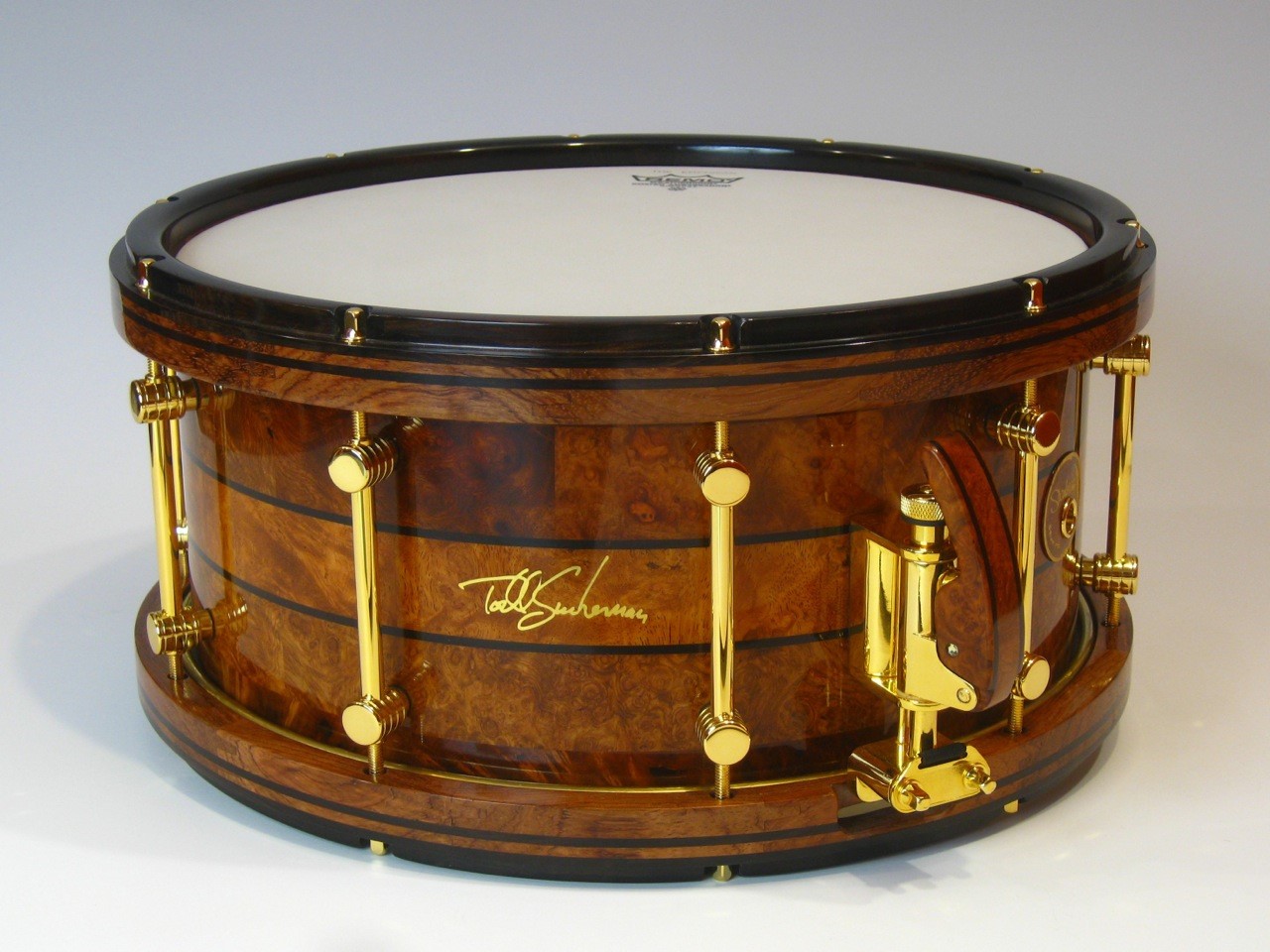
Your drum however is done, and I am just working on a few additional details with the case and accoutrements. The drum is amazing - I am very proud of this one, and can't wait for both Todd and you to have a chance to shake it down. My plan is to have it out to Todd in the next couple of weeks so that it is waiting for him after this run of shows, and then we'll bring together the final elements to the package. I'm including some progress pics and will be shooting the 'catalogue shots' in a few days - I'll forward these once they are done.
Hope you had a great Christmas holiday Bob, and all the best for 2014.
Photo details are as follows...
6582 - Case is almost complete - I have only a few little details left on the exterior (like a Todd signature).

6585 - Custom fitting the accessory box is time consuming but very fun for a wood nerd like me.
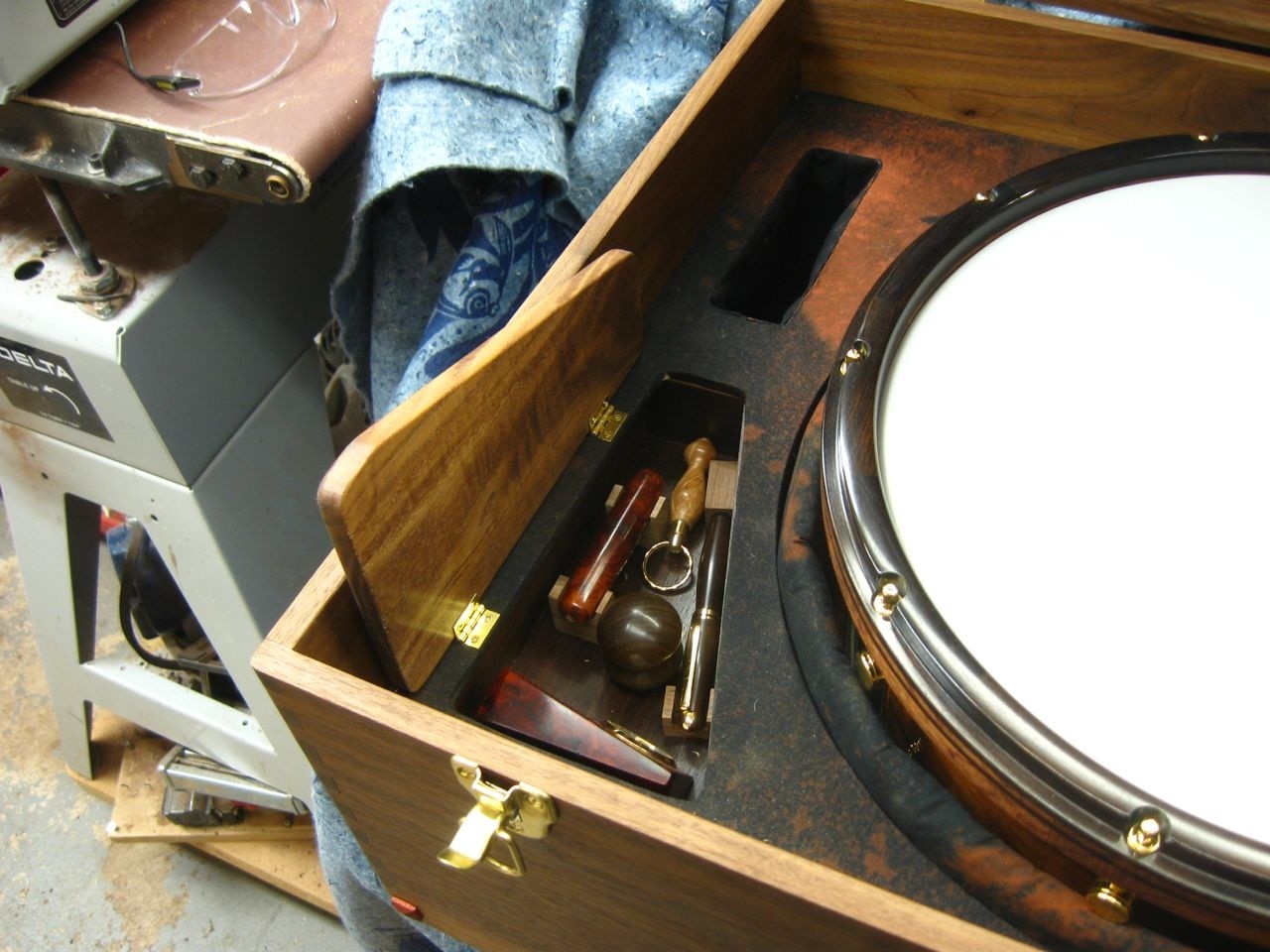
6600 - Yowza! She's a total babe, and I think you are going to be floored by this one.
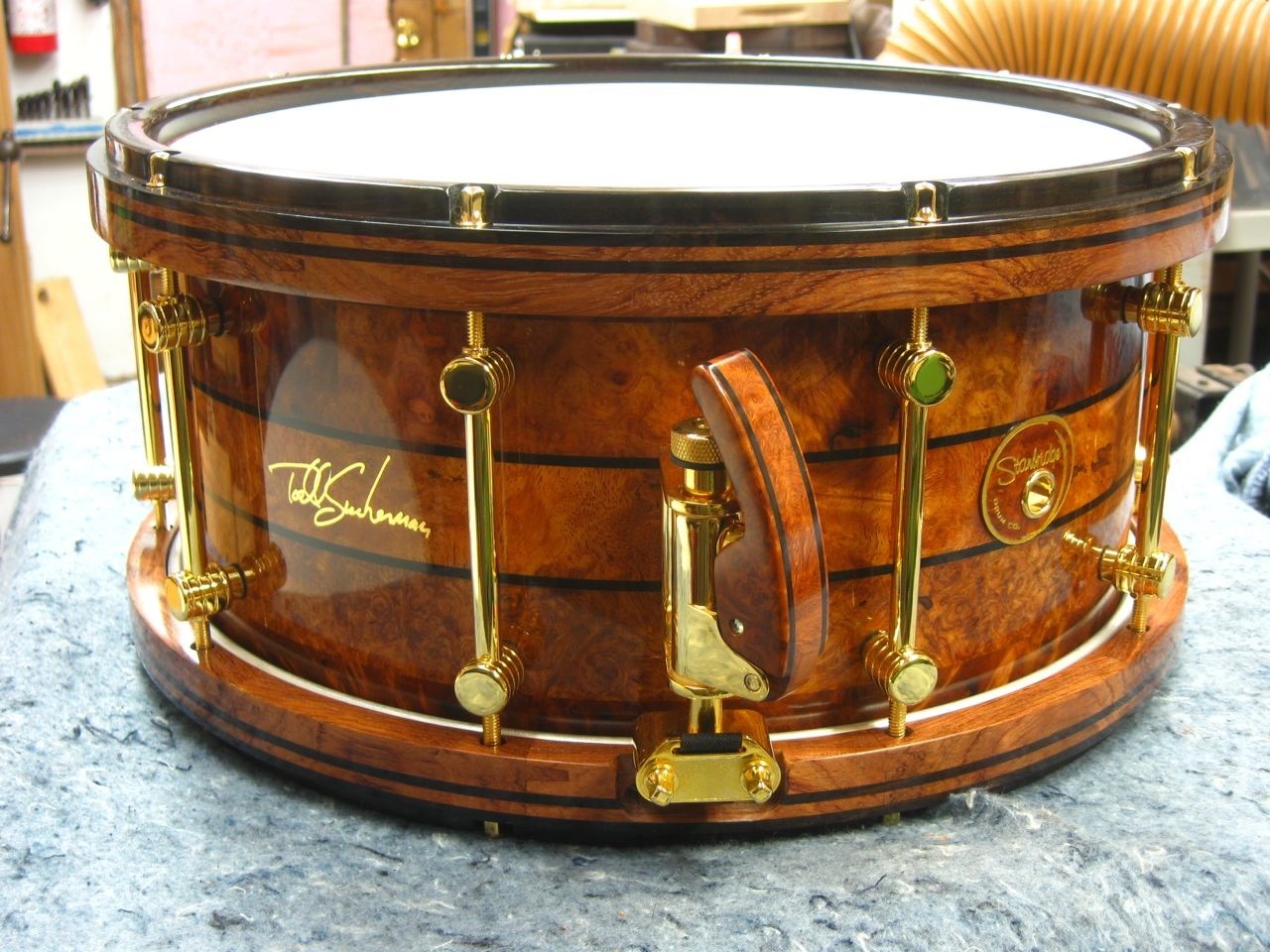
More soon”
Chapter 12: One Step Forward, One Drop-kick Back
[Pete S.] “Some troubling news from Todd today. He arrived home this morning and discovered that the Empy case had sustained some shipping damage sometime during its long journey from me to him. He suspects that it was dropped on one corner with enough force to split the 5/8th-inch solid Walnut panel in the lid section. I had sent it via Canadapost Expresspost, as I have had very good luck with them - this being only the second piece they have ever damaged. The carton I used to ship was the biggest they allow, and despite a healthy amount of bubble wrap, it didn't stand up to their abuse I guess.
The bright sides are as follows…
The drum itself is perfect - there is not a scuff or any damage whatsoever. I have another identical case that I will have complete by Friday - I just need to add a couple more embellishments and get the accoutrement insert done and she will be ready to go.
This time I will be shipping via UPS - it is considerably more money, but they will take a larger carton so I will do a double box thing and we will be fine.
As you can imagine Todd and I are both supremely bummed out by this and can appreciate how you must feel about it too. I'm including a couple of pictures to tide you over until you have the drum and case in hand. I'll let you know when the replacement box goes out and the ETA to Austin.
All the best…”


Chapter 13: In God We Trust; the Postal Service Will Take More Prayer
[Pete S.] “The new case and accessories are on the way to Texas and are guaranteed by next Thursday. I am using Purolator this time around, so hopefully they will be more gentle than the nasty Posties, although I have packaged this baby up like… well… a baby, so I am expecting a safe trip.
More soon - all the best…”
Chapter 14: And in the Beginning, There was an Empyrean
[Todd] “Hi Bob, I bring good news!
The box arrived safely today. I have spent part of the day in the studio tuning it up and taking pics and vids. Pete and I feel that we should send the luxury accouterments and other special things in a separate box than the one that contains the drum. While this takes away a bit of the "wow" factor when opening the box, it creates a "safe" factor that will stand a greater chance of everything arriving in a pristine state. So that notion wins the day. All the luxury items fit inside the case, there a space for a pair of sticks, all this will be obvious and of course as shown in the picture book that Pete is sending you directly.
I was hoping to ship this out tomorrow but Monday looks like a greater reality, as my mother is in for a visit and it's evening time late on Thursday. I know my UPS guy so I can set something up for a Monday pick up with swift ease. Sorry to add a couple extra days, but it will all be worth it.
I will send you tracking info and please let us know when the eagle lands. We await your feedback, and we hope you are as thrilled as we are. You are #1 in the most personalized signature instrument ever offered before in history. From my home to yours (originating at Pete's of course!)
Thanks, congratulations, and I will email you on Monday
Cheers, Todd
PS. Here's a teaser...”


Chapter 15: The End and The Beginning
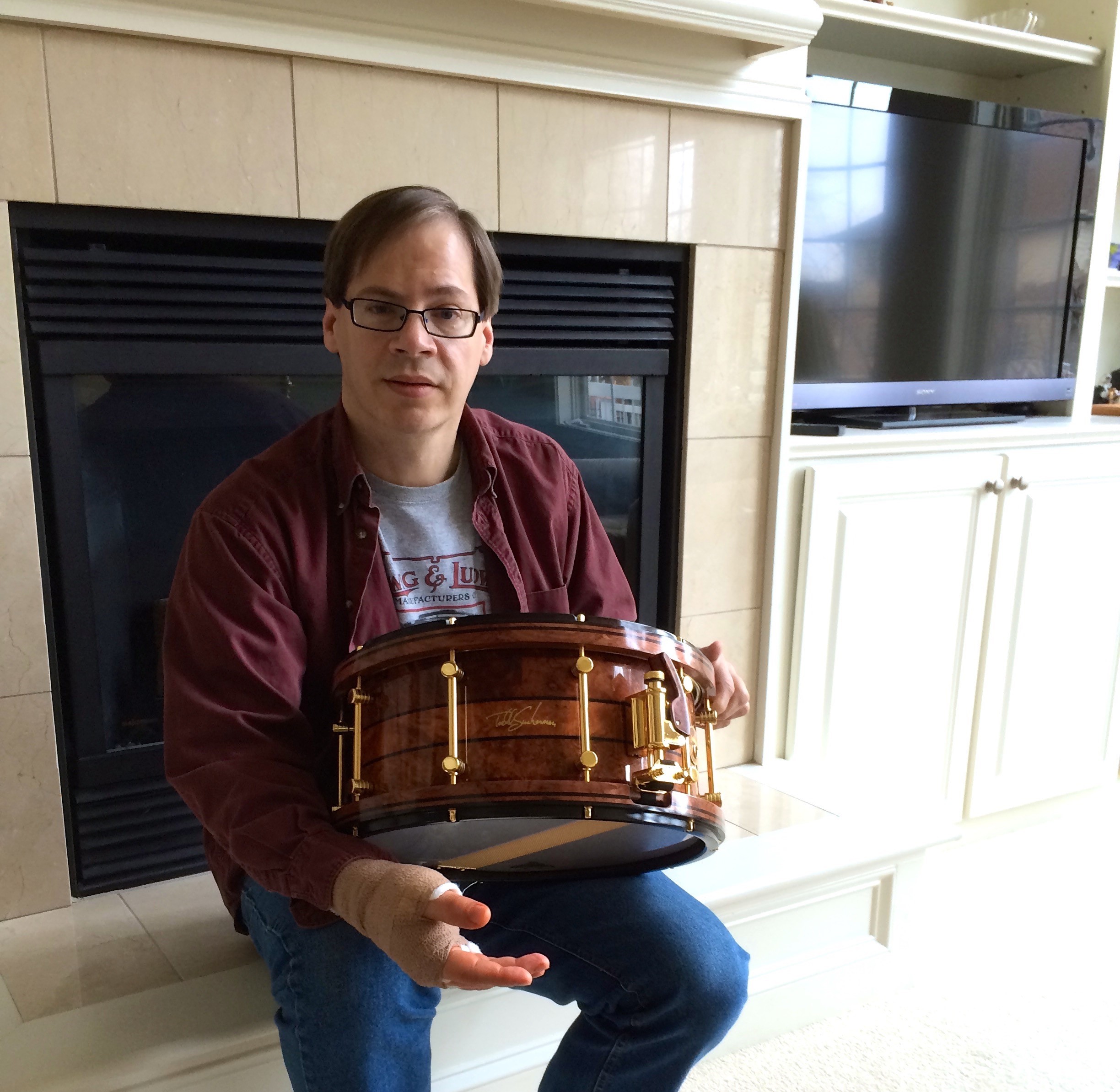
Note: I had surgery on my thumb (tendonitis, a.k.a., Trigger Finger) the day my Empyrean arrived.
[Pete S.] “Thanks for the message and I hope your hand will heal perfectly and quickly.
I'll admit that I have been holding my breath for the past few days, as the prospect of the drum or this case being damaged would have been a little bit much for me after all of this. I am including a couple of shots of the interior of the case, just so that we are on the same page about how things fit together, even though I'm not sure if you have the time or mobility to put it all together yet. You will notice the little spiral bound photo album in the photos - this was for the first case and accouterments package, so I redid it with the new gear and it is on the way to you by mail - should be there very soon. The idea is that this fits in the little padded pocket with the Styx CDs and DVDs.
Thanks for your stoic patience throughout this project. It obviously took some twists and turns that none of us were expecting, and I have to admit that I seriously underestimated the complexity of some of the elements of this whole concept. However, I am extremely happy and quite proud of your instrument and all of the accompanying bells and whistles, and I do feel like we have created something completely different and special here. I look forward to chatting with you soon, and hope for a speedy recovery for your paw.”
[Bob email to Pete & Todd] “Well, my dream snare drum has arrived. My wife helped me unpack the drum today - truly stunning! The case is really wonderful (and heavy). Well worth the wait. Thanks so much. I only wish I could play it. It will have to wait. Todd - thanks for the vids! Very nice collection of exotic wood toys and cool stuff to add to my shrine of Todd/Taylor/STYX. The pics of the drum in progress are particularly special to me.
That’s the limit of typing for today…hurting a bit now the anesthetic’s worn off…
Thank you Pete for your meticulous attention to detail. It really pisses me off though that I can’t play it! When my hand deals, it will definitely be the first drum I play!”
Chapter 16: Epilogue
[Bob to Todd] “Doing much better - thanks! Can play only a limited time and nothing with any great dexterity. Just happy that it only hurts a little... Loving my Empy!!!”
[Bob to Todd] “Had a good time playing the drum today. My hand is much better since the surgery. Glad to have my thumb functional again! BTW, this drum sounds as good as it looks – phenomenal!”
So was it worth it? Did the drum speak to me (without alcohol or drugs)? Indeed, it is one of the most breath-taking wood shell snare drums I’ve ever seen or heard. I continue to enjoy the way it sings when I play (and exponentially more so when Todd plays!). The wood hoops warm the tone, add some punch and produce wonderful, articulate cross-sticking and rim-shots. The sensitivity is to die for. I’ve had friends come over and play, and they’ve been equally impressed.
Richie Jarvis (freelance drummer, Australia) was the recipient of Empyrean #2 and was equally blown away by the sound, look, and build quality.
"Just after NAMM 2015 I took delivery of of my Stanbridge/Sucherman Empyrean (Build No 2 ) and from the first opening of the case I was in love with this fine piece of art but I wasn’t able to really to give the drum a proper shake down until my return.
Once home I soaked up what I would call the ultimate collectors snare drum down to the finest details like the Swarovski crystal in the snare drum lever, then came the fun part. The tonal range of this hand made drum was phenomenal with an overtone was dark and very chocolaty tuning from the low “baseball bat to a pie” all the way to “crank city” it was simply breathtaking but no matter where the drum was tuned it never lost its personality.
One major test I have with any drum is the rim click and I was not disappointed with a rather potent but very pleasing woody crack, The Empyrean from the rim click, ghost notes to a full blown shotgun like crack has a refinement of pure class at any volume and volume this drum defiantly has.
Recently my Empyrean was on loan to Todd himself on the Melbourne leg of the Drumscene live tour and he made the drum sing, from a medium tuning point this got the entire backline staff's attention and started to draw in a small crowd to not only see Todd’s playing but to see the beauty of The Sucherman Empyrean. I think what really amazed me about the drum after that weekend having seen it being played by the man himself at full force, no holes bared hard hitting playing was the wood hoops…….not a single mark was left, simply one of the most amazing pieces of drum art ever to be created."
This drum is one for the history books. I hope that someday 100 years from now, this drum will have been passed down to another, and that owner will value not only its beauty and character, but also the pedigreed history that it embodies. In each Empyrean, there is the spirit of both Todd and Pete, an essence that lives as long as we remember this drum’s story. An Empyrean is born; long live the Empyrean.
---
Empyrean Specs: 6.5X14” segment shell drum (5/16” thickness) with high gloss finish, consisting of rare exotic woods: figured Amboyna Burl, Afzelia Burl and African Blackwood; African Blackwood and Bubinga wood hoops. Fitted with a modified Dunnett throw-off with Amboyna Burl handle and Swarovski crystals. All hardware is 24K gold-plated: 10 Stanbridge brass tube lugs, tension rods, throw-off, butt plate and air vent. Each drum has Todd Sucherman’s signature in gold on the outside and a paper tag on the inside with the serial number, date and hand-written signatures of Todd Sucherman and Pete Stanbridge. Each drum comes with a unique Black walnut presentation case lined with foam and velvet.
Trick Steampunk Kit

Let's step back a few years to the 2011 NAMM show with Trick's Steampunk Kit!
Read moreHow To Date 1960s Ludwig Drums By Serial Numbers

Prompted by the insurance industry, the new regulation mandated serial numbers on certain goods, including drums. "Up until then," said Mr. Ludwig, "some of our drums were date stamped and some weren’t - but none had serial numbers. Our dealers begged us to put them on, so we had our badge manufacturer imprint sequential numbers on the badges for all of our drums."
Read moreMike Clark: Words of Wisdom, Part 6

Chapter six in an ongoing series of commentary from legendary drummer Mike Clark. His storied observations continue to inspire, and provide keen insight into ‘all things music’.
I was lucky my Mom loved jazz. At age five I would bring my Gretsch Broadcasters into the kitchen while she was cooking, play for her and she loved it. The neighbors would say, “how can you stand that noise”? She would say, “what noise”? He sounds like Gene Krupa.
My other heroes were Zutty Singleton, Cozy Cole, Lionel Hampton, Big Sid Catlett, Louie Bellson, and Buddy Rich. At eight I discovered Art Blakey.
My experience with Herbie Hancock happened when he became emotionally involved, and it was on the real. It was the most inspired and highly spirited music...Definitely not for the faint of heart. He would bring this to any genre...It was like John Coltrane as far as power, energy, emotion, and dialogue...Herbie is from that school in my humble opinion...Deepness Reigns!!
Don’t you just love it when you lose something and someone says -where did you lose it? If I knew that, I would know where it is and it wouldn’t be lost!
BB King… It is going to be weird without him. I am just so used to that sound. I know we can hear the music, but he has always been there. I’m glad I got to meet him.
BB King once asked the Headhunters to play a tune with him. Everybody plays some deep stuff trying to show BB they can play the blues. Hancock plays some totally avant-garde solos like something you would have heard on an Eric Dolphy record in 1963. After his solos BB takes the microphone with a confused look on his face and says…”Well, everybody has their own way of playing the blues”.
I once realized there was something missing deep in my life.... so I bought a cowbell!!
DW Workshop Series
The Chicago Drum show in May was all I expected it to be. My only problem was I didn't have enough time to really dig in and see everything. My wife and I drove to our son and daughter-in-law's home in Charlotte on Friday. It was hard to sleep Friday night. I was extremely excited about going to the show on Saturday. My son and I started out early Saturday morning with a flight to Chicago. We rented a car and drove out to St. Charles to the fairgrounds where the show is held. I thought I would have plenty of time to see everything and visit with friends. There was so much to see and it was time to catch a plane back to Charlotte before I knew it. If I get to go back next year I will definitely plan to have more time. There were so many people there I wanted to talk to, and if I didn't get to speak to you, I'm sorry. I highly recommend that you go to a vintage drum show if you possibly can. Watch for announcements in the magazine for shows around the country.
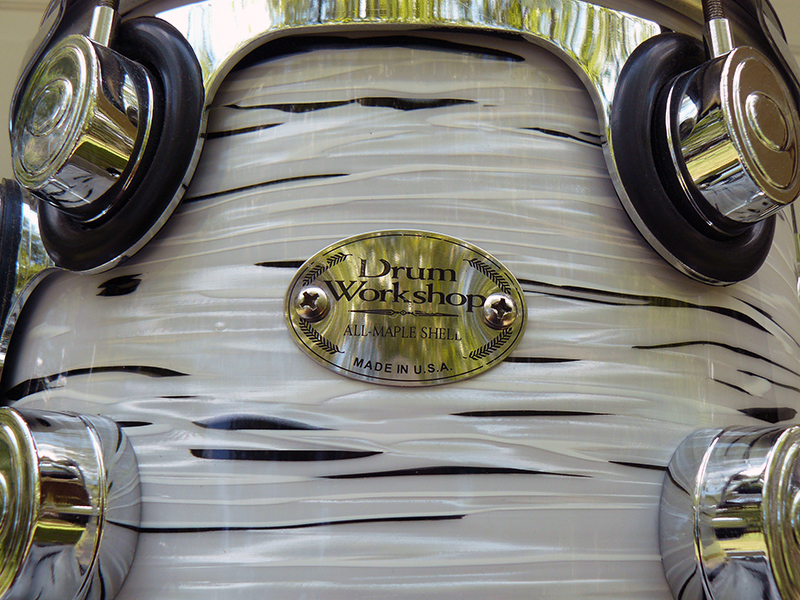
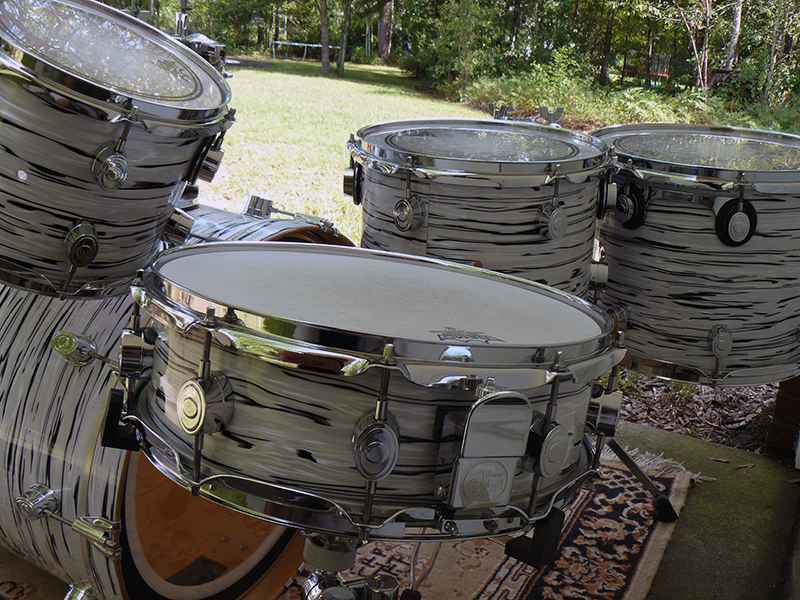
The drum kit I want to feature this month is a beautiful set built by Drum Workshop. I know you are all familiar with the awesome drums this great drum company is making. The Collector Series is the flagship drums of Drum Workshop. They have the Aristocrat lugs like the ones made popular by George Way and Camco drums. Drum Workshop is built on the foundation of Way and Camco. The Workshop Series line of drums was the company's first attempt at a second line of drums. It was a set that was offered to the working and hobby drummer at a slightly better price, but still very high quality in every way. The most noticeable difference was the oval lugs instead of the round lugs. Another difference not so noticeable was the thin Keller shells without reinforcement rings. These drums sound fantastic. The first Workshop Series drums were limited in colors and sizes. That soon was scrapped because there were special orders for Workshop Series drums in special sizes and wraps. Drum Workshop officially only made the Workshops a couple of years, but continued to make them for special orders for quite some time.
The following information was gleaned from a drummer's forum. There was no name given, so I can't give proper credit. The facts are good and answers a lot of questions about these great drums.

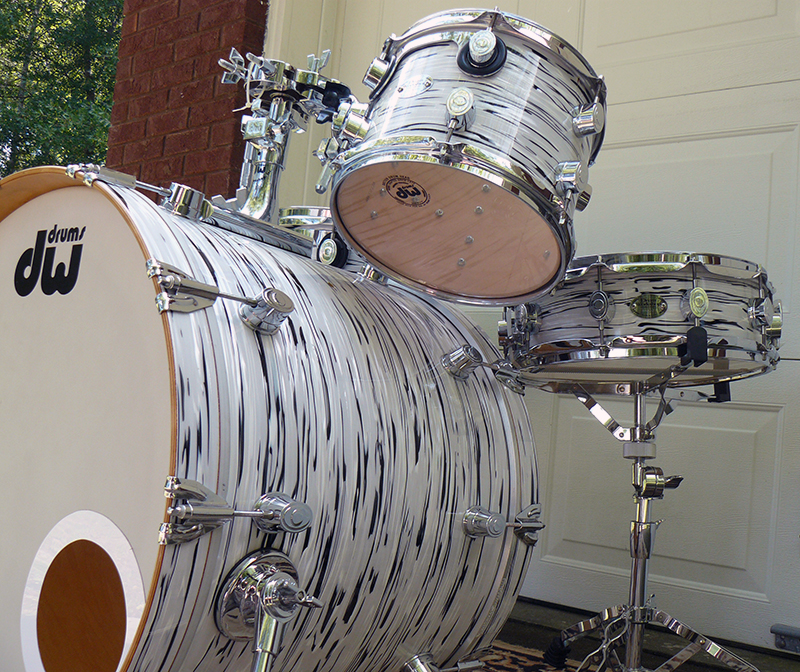
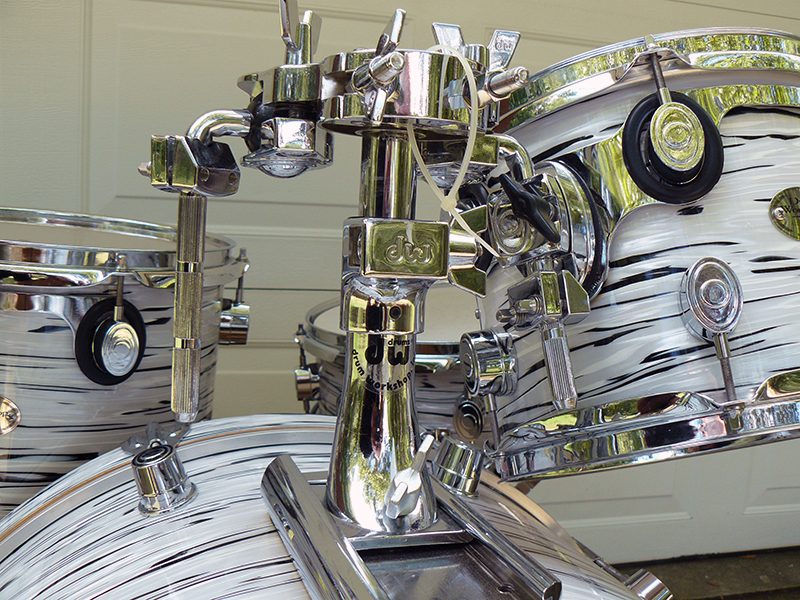
BACKGROUND INFO ON THE DW WORKSHOP SERIES LINE:
"My drums are DW Workshop Series, made in the U.S. in 2000. There is much confusion surrounding this somewhat-rare line offered by DW.
I have read a lot of messages of people inquiring about DW Workshop series drums with most replies having bits and pieces of truth with some personal opinions thrown in. Lots of readers want to know about their quality and their price range. The Workshop series for the record were indeed 100% DW drums. They were manufactured in the USA (Oxnard), contrary to what some people have been stating. They were never made in Ensenada, Mexico. They were manufactured with what resembles the PDP lug to distinguish them from the Collector series.
They were built for only two years. They were made without reinforcement hoops, and were meant to be DW's good, mid-range product. Since they were just as expensive to manufacture as DW's Collector's Series, they were discontinued. Apart from that, they were favored by many DW endorsers in spite of the Collector's series.
They were DW's first go at manufacturing an American made "mass produced" set. They didn't offer the custom features like timbre matching and had limited finishes. The finishes were a high-gloss lacquered all-maple shell, or a Satin-Oil all-maple shell. The drums, aside from the different lugs, garnished authentic DW hardware as in the snare strainer. bass drum spurs and tom mounts. Again, 100% DW. DW dropped this line after about 2 years in production because they became too costly to produce, rivaling the production costs of their collector series, but they didn't carry the same retail price tag.
So with that, the line was scrapped in favor of the Pacific line. With the technology they gained making the Workshop series, they started to produce the PDP's in Taiwan. Pacific’s were not originally manufactured in Ensenada. DW chose to move the PDP line to Ensenada in the mid 90's to keep the costs down on the shipping tariffs from overseas and to be closer to the factory for quality control. But to state it one more time, the Workshop series was an American manufactured all-maple set. The sound is impeccable and they do not have the reinforcement ring for a broader sound, something DW is now offering (priced) on their Collector series sets. All the Workshop series drums have a DW badge with a serial number stamped on each shell stating "Made in the USA."
The Bottom Line Facts: These drums were "Made in the USA", with the same quality maple and parts that go into the Collector's Series drums. The only difference- apart from the differently-shaped lug housings, is that these have no reinforcement hoops. This difference is said to give them more sustain and a more open tone. I completely agree. I didn't buy these because they were less than the Collector Series: they just sounded better, more open, to me."
The toms on this kit I am featuring has a 10", 12" and 15" configuration. The bass drum is a thunderous 22"X18". The matching 14"X5" snare is also a very nice touch for this set. This set was obviously a special order and not a standard Workshop Series Kit. The tom sizes and the Ultra White Oyster wrap clearly had to be ordered. If you have a set of Workshop Series drums please comment. I live for your comments.
Hope you have a great Summer.
Gretsch 12x16 Bass Drum
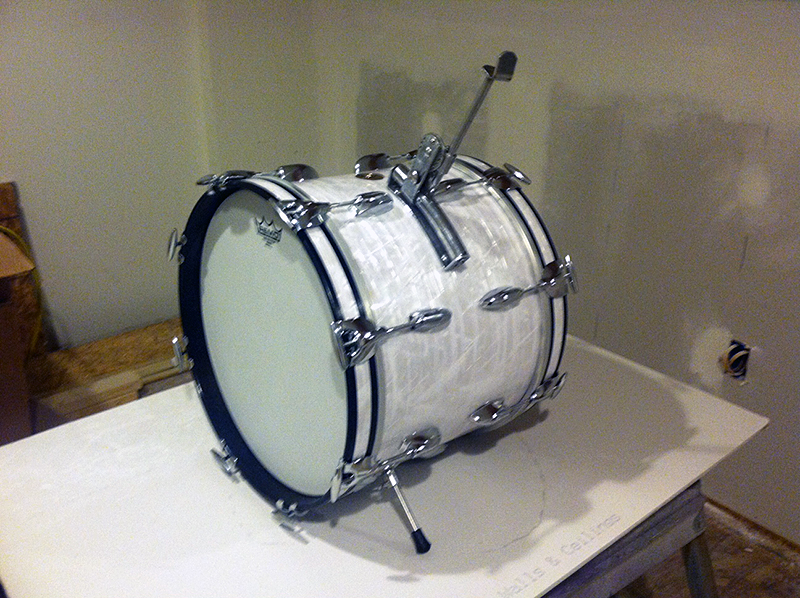
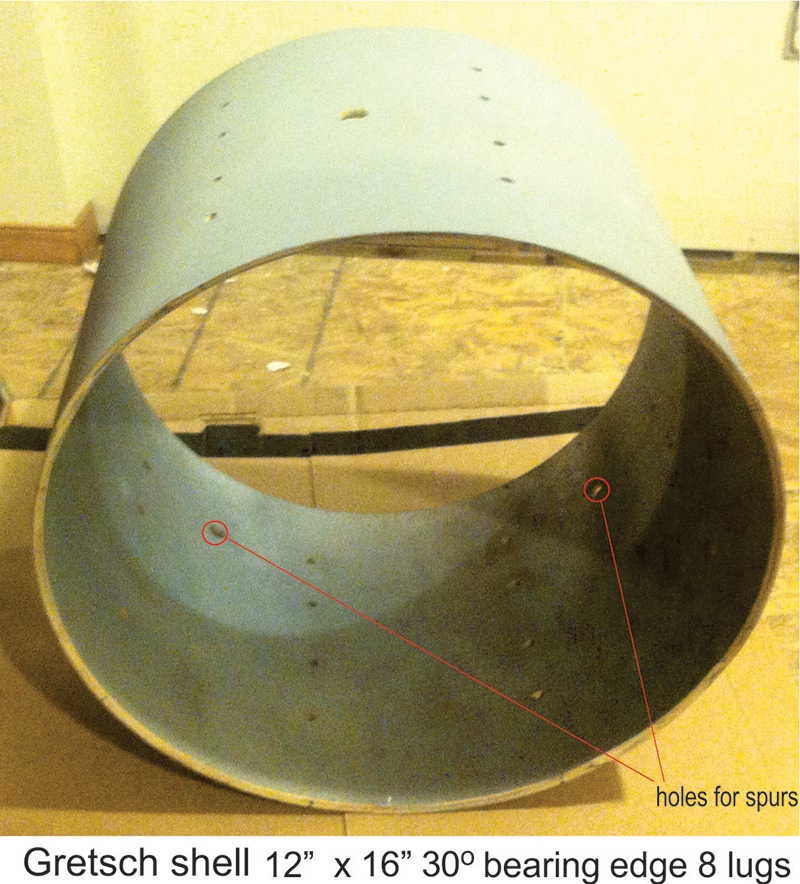
Here's something you don't see very often, Gretsch 16" x 12 " bass drum, restored with mostly original parts, all parts are period correct..
Yes it's the real deal.
Ronnie Owens Drums
1935-36 Ludwig & Ludwig Silver Anniversary Black Beauty
By Mike Curotto
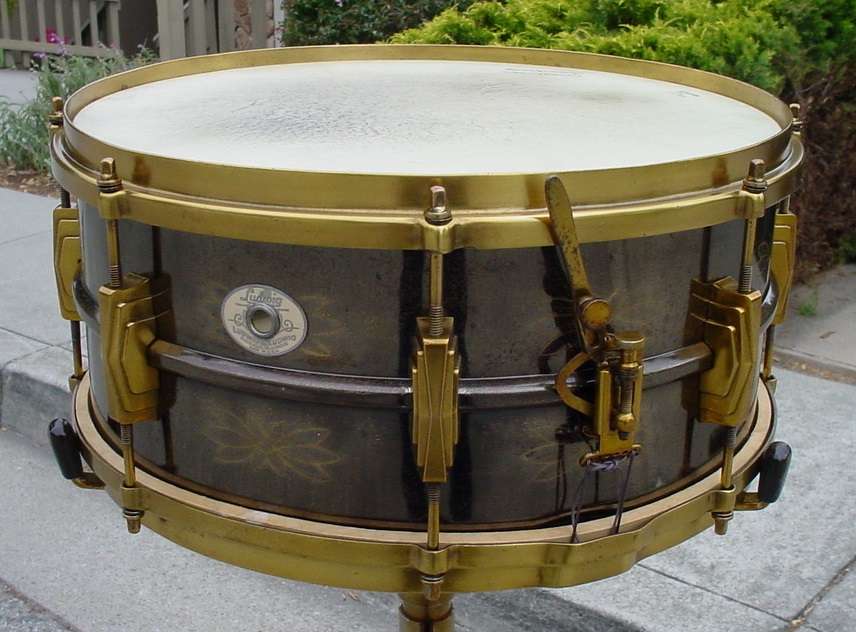




1935-36 LUDWIG & LUDWIG 6.5 x 14 SILVER ANNIVERSARY BLACK BEAUTY
Hi all,
Here’s another snare that I was able to add to the collection...fresh from the 2015 Chicago Vintage Drum Show. I got this drum from Joe Luoma, he had one to spare so we sealed the deal over the phone 3 weeks prior to the Show and culminated the deal at the Show. Thanks goes to Joe for helping me to add another cool and very rare drum to my collection. Joe’s drums are always pristine so this was an easy cleaning.
The SHELL:
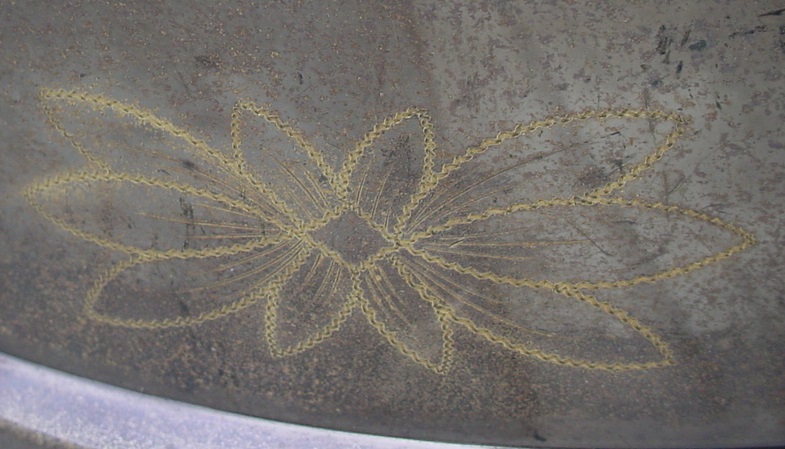
The “sparse” later 1930s 10 pt. floral engraving pattern is clean and in good shape. The black nickel is also in good condition with some normal “freckling” that is to be expected on an 80 year old drum. I just gave the shell a minor cleaning with some lemon oil and all is good.
The HARDWARE:
Around 1932 Ludwig changed their Artgold (bright copper plating /gold lacquer) DeLuxe hardware option to Classic Gold (brass plating/ yellow gold lacquer). The Classic Gold on this snare drum was in very good condition and only needed a basic cleaning. The threads on the tension rods needed the most cleaning. One side of one of the tapped Imperial lugs was stripped but my good friend Al Schneider, The Drum Doctor, did his magic with a 12-24 Heli-Coil and as I’ve mentioned before, do not let stripped “Anniversary” lugs be a deal killer, there is a fix, a 12-24 Heli-Coil is the correct fix.
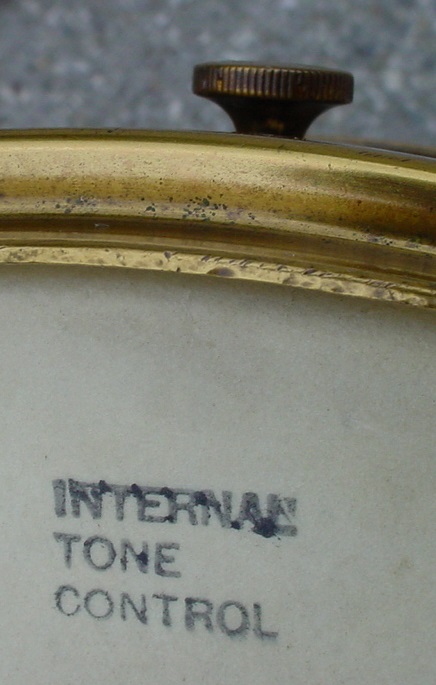
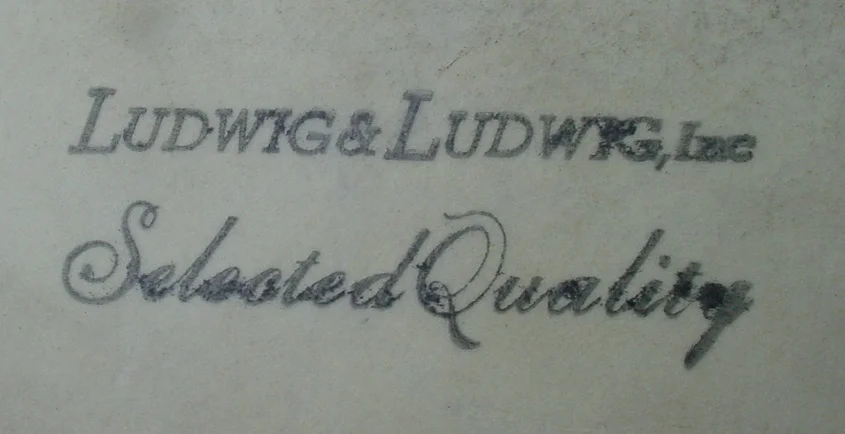
Of-the-era calf heads (note the tone control stamp on the top head) and James Snappi wires rounded out this simple cleaning.
Silver Anniversary Black Beauties are extremely rare, there are only 5 known at this writing and every one is different but I do realize that there is always the possibility that there are others out there. Be sure to weigh-in if you see or hear of another Silver Anniversary Black Beauty out there in vintage drum land.
Here’s a list of the 5 known Silver Anniversary Models:
- 5 x 14 gold plated Standard Model (Joe Luoma Collection)
- 5 x 14 gold plated Super-Ludwig Model (Joe Luoma Collection)
- 6.5 x 14 chrome plated Standard Model (Bun E. Carlos Collection)
- 4. 5 x 14 chrome plated Super-Sensitive Model (Mike Curotto Collection)
- 6.5 x 14 Classic Gold Standard Model (Mike Curotto Collection)
Enjoy!
Luka Solid Bock Sugar Maple Snare Drum

Here's something you don't see very often, Gretsch 16" x 12 " bass drum, restored with mostly original parts, all parts are period correct.
Read moreThe Life and Times of Master Craftsman, Johnny Craviotto
So with the help of the master boat builder and much trial-and-error, Johnny began making his own one-ply drum shells. By 1984-85, Johnny had started to perfect his technique. Word of his drums spread until it caught the attention of Billy Gibson (Huey Lewis & The News). Billy asked Johnny to join forces with him to form a drum company, the Select (later changed to “Solid”) Drum Company.
Read moreGoodman Quilted Maple Stave Snare
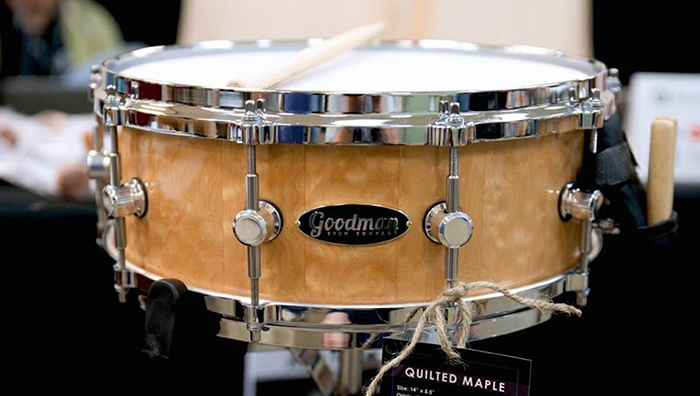
The Goodman Drum Company sent in a very high-end snare drum for review that sounded great on my gig last night (and I’m pretty picky). The instrument’s body is a 14 by 5.5 Quilted Maple stave shell that is 5/8” thick and has a double 45 degree bearing edge. It has wide and deep snare beds similar to the old Slingerland Radio King bed which I personally like because of the responsiveness. The flawless, grade A quilted maple wood has a beautiful hand rubbed clear coat that takes two weeks to apply and has a UV inhibiting agent. The hardware on the drum includes ten polished solid aluminum center lugs with receiving tubes that give it the look of a tube lug drum, die-cast hoops, a Trick throw off, and Pure Sound snare wires. The 3 small unique snare vents in the shell are aligned vertically in one panel of the drum and sit flush with the shell. No cheap hardware on this drum. It appears they using only top shelf parts. The badge is die-cast with a script logo on a glossy oval background trimmed with a silver/chrome-ish border. Very understated tasteful badge.

Sound? This is a full-bodied snare drum sound. At high, medium and low tunings the fundamental note of the shell is very present. It was very easy to tune and the feel of the tension rods turning in the lug threads was very smooth. The resonance and sustain in the head was very pleasing and musical from the edge to about 2/3 the way in to the center at which point the head became progressively drier until it was very controlled at the very nodal point in the center. I like a snare that allows me to hit in the center for a dry, short, snappy sound but with the option of moving away from center to use the natural ring in the head for longer tones. The snare wires respond very well from edge to center and I was able to dial out sympathetic buzz from other drums with the Trick throw off . The snares sounded great at tight, medium and loose settings. I think this can be attributed to the superb bearing edges snare beds as well as the superior Trick throw off and Puresound snare wires. I’ve noticed that some snare drums with die-cast hoops can be very one-dimensional; too much fundamental and not enough overtones or splash, all crack and no tone. Not with this drum. The die-cast hoop did not “choke” the drum. I usually prefer a triple flanged hoop because I find that die-cast hoops don’t give me enough tone and splash. Not so with this drum. It had a lot of what I call nice “gonk” tone in the sound (think Bill Bruford), which I find is usually missing in many drums with die-cast hoops. I also noticed that the difference between a regular loud hit and a rim shot was not that different in volume, but it was different in tone, which was nice. I play a lot of rim shots on backbeats but did not feel the need to with this drum. Most drums have a much seemingly louder report with a rim shot but the wide range of dynamics of the head hits on this drum with regular hits speaks to the superior response of this drum’s design.
Performance; I took this drum on a three-hour gig with an Allman Brothers tribute band. It was a very loud gig in a small club with another drummer right next to me. I had no problem hearing this drum even though there was no monitor and I had a hard time hearing the little 18” bass drum I was using. I didn’t feel the need to hit rim shots to hear the drum. The tuning held up well. No de-tuning of the tension rods.
Cons? Nothing. A+
The Goodman Drum Company is a three-year-old boutique company run by Chris Goodman Jr. and Sr., who also make other wood products. They make their drums out of rare, re-claimed, exotic and high-end tonal woods. The moisture content of the shell is very controlled at 6 to 8 percent until the final clear coating step. The drums are trued on granite and it is obvious that they are very concerned with producing a flawless instrument with much attention to detail. The Goodman's have plans for expansion in the near future. Their first 13” snare will be introduced in a few months. Lugs, hoops and tension rods will be made in-house in 2016 and their first drum kit will debut in 2016. Their goal is to go national with distribution in 2017. While their website is under construction you can reach them on Facebook.
CUSH Pads for Cymbals

This is one of those reviews that is easy to write because the product is so simple that it either works or it doesn't. It either does what the manufacturer says it does or it doesn't. This one works! CUSH pads are an alternative to the felts you use on your cymbal stand. They are made of a proprietary elastomer material, and are designed to allow the cymbals to ring longer and truer without muffling the sound or overtones. They don't collapse or take shape and always return to the original shape.
Read moreMike Clark: Words of Wisdom, Part 5
Chapter number five in an ongoing series of commentary from legendary drummer Mike Clark. His storied observations continue to inspire, and provide keen insight into ‘all things music’.
---
I played double drums on a gig with Lenny White once and he took a solo all poly-outness while I held my place quietly on the 2 and 4. He took it so far out I was hanging on for dear life. But Lenny was right, and here is the kicker...I was proud of myself for keeping my place. But he was the dude that played everything. It was amazing, as Lenny knows where he is at all times… But it really sounded like he modulated into about 80 different time signatures at once.
I love Art Blakey’s playing, his bands, arrangements, his groove… When it comes to swingin’ – Is there anyone that can swing harder? Not for me.
Does anybody but me get tired of seeing and hearing the same 6 or 7 guys playing all the festivals and jazz joints over and over? Who's idea is that? Or if there is a new guy… He has to make up some wild way of playing that most of us had thought of and discarded.
When I play swing no matter how far out I go, I play it on the 2 and 4. Same with funk… No matter where I put the backbeat, the "Thing" if you will is on the 2 and 4. That’s what I do.
I remember when you had to play several different styles of jazz… Usually a few you really liked best. It was hard to make a living specializing in one area unless you had really good luck. Now it’s hard to make a living playing any of those styles. Now I see that several guys stay in one bag for a lifetime and do OK. For me, that would be like eating eggs every morning forever.
Elvin Jones said he wanted to be part of the scene, but didn’t want to play in a conventional way. Elvin really didn’t hear that, and he was severely criticized for it. Being with Coltrane solidified his concept, and his words. How would things be if he didn’t have the good fortune to get that gig? How would things sound today?
I went to a mix when Tony Williams played, I was listening to the playback and the time sounded a bit soupy, Tony walked by the board and pushed the fader up to the top and the track swung incredibly, and it sounded like Tony. The engineer cried and whined about the fact that it red lined. Tony said, “the red line - that’s how jazz is supposed to sound”.
I admit it - when I played with musicians having great careers, I would be kind of nervous since I wanted what they had. While playing with Herbie Hancock, there was none of that. He was so famous I guess my brain processed it differently. In the last five years I’m finally over it. I really enjoy playing with anyone, no matter how much they’ve got. As long as the music is cool… That’s the end of it…I am actually in the moment. It took a lifetime… But better late than never!
When mixing drums for jazz, I would suggest listening to some old Blue Note records as many times as possible. Now the drums are compressed like a pop record and the tuning seems to be in between what used to be jazz tuning and pop or fusion. Also, the groove is in the ride cymbal… So don't turn it down and have it sound like mush.
Joyful Noise appoints Todd Trent as Chief Operating Officer
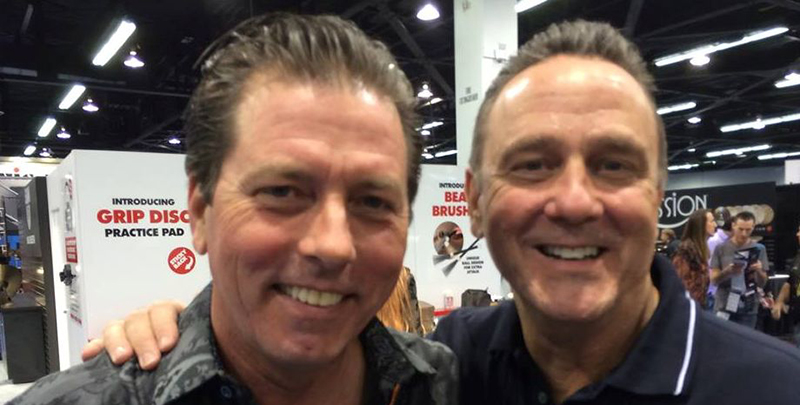
Joyful Noise Drum Company is proud to announce the appointment of Todd Trent as their Chief Operating Officer. Todd is excited to bring over 3 decades of percussion industry experience to Joyful Noise. Having been in music retail, artist relations with Ludwig Drums, wholesale / OEM sales and marketing with Taye Drums as well as pro touring management, Todd is well suited to propel Joyful Noise. He has been a fan of the product, their mission and leadership team since the beginning of the company and now feels the time is right to add his abilities to such an outstanding company.
1934-35 Slingerland Broadcaster
By Mike Curotto



Hi all,
Here's another one cleaned up and entered into the collection. I got this snare drum at the 2011 Chicago Show from our good friend and fellow collector, Mark Cooper of Cooper's Vintage Drums.
1934-35 SLINGERLAND 6.5 x 14 SPARKLING GREEN/ARTGOLD *BROADCASTER MODEL
*The Broadcaster Model was very short-lived so for those of you that may not be familiar with this model here is a short history and background data regarding the Slingerland Broadcaster Model. The following is from Rob Cook's Slingerland Book (first edition): "The Broadcaster was evidently a forerunner of the Radio King, the strainer is a very early Radio King style strainer and the lugs do not have inserts. (The tension rods thread directly into the lugs.) The muffler was the single-pad style Harold R. Dodd muffler." Thanks again to Rob Cook. I have also read that Slingerland was legally forced to discontinue using the word "Broadcaster" (with a "c") as the Fred Gretsch Co. had been using the name "Broadkaster" (with a "k") on their drums way before Slingerland and therefore the court ruled in favor of Gretsch that Slingerland's Broadcaster was too close sounding/looking to Gretsch's Broadkaster.
The Shell: The Sparkling Green wrap was in pretty good shape with very few of those black "cancer" spots that usually show up on these older Green Sparkle drums. I was able to get a few layers of age off of the wrap with my Maguire's cleaning/polishing regime and the Sparkling Green finish came back to life. The solid maple shell interior was also in good shape and only needed a very light cleaning. The cloud badge was tight and weathered the last 75+ years pretty well.
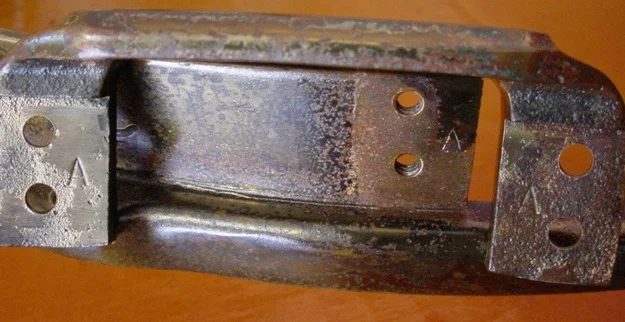
The Hardware: I'll call it Slingerland Artgold but the hardware finish on this snare drum really resembles the Ludwig & Ludwig Classic Gold (brass plating with gold lacquer) finish that L&L used on their early-mid 1930s Black Beauties. There was a lot of Artgold present but an equal amount of age and tarnish. I haven't figured out how to duplicate the Classic Gold finish yet so the decision was to leave the hardware as is and just do a simple cleaning with a light coat of gold lacquer to seal everything to prevent any further tarnishing. The 16 tension rods were not correct so I went to my stash and found the correct tension rods but these had to be brass plated, antiqued and lacquered. Thanks again to Les and Brian Hadnagy of Avenue Plating for the brass plating and antiquing. The threaded snare gates have the letter "A" stamped on the inside (not seen) part of the rim and gates. This is called a "manufacturer's cartouche", thanks to Slingerland expert Dr. Carl Wenk for that information. I'd love to know if those type of markings are under the riveted snare gates, feel free to send photos. The Slingerland Broadcaster engraving on the top rim is pretty faint but it is there. All in all, the "carpet matches the curtains" pretty well on this drum.
Of-the-era calf heads and extension wires rounded out this cleaning/restoration.
Enjoy!
1960s Gretsch Name Band
Greetings,
I have some great friends who love, collect, and play vintage drums. It is indeed a pleasure to share this common interest.
My editor has put harsh and undue pressure on us to get an article out in time for the Chicago Show. I'm kidding about the harsh and undue part. The editor is really a nice guy, and we all love him and appreciate what he does to get us out a magazine about our passion every month. If you don't think he is doing a great job, you should try to do it. I am hoping I can be at the Chicago Show this year so I can see all my collector friends, and share some time together looking at and hopefully buying some new "toys." Getting to know and keeping in contact with friends who love these old drums is one way to know about good deals for buying, and also it opens up contacts for selling your items when you want to or need to move something. I would much rather sell to a collector friend than ship a great drum off to who knows where. I am not knocking those who sell their drums out of the country, but once that Black Beauty leaves this country it's definitely gone for good. I will get some negative comments about this for sure.

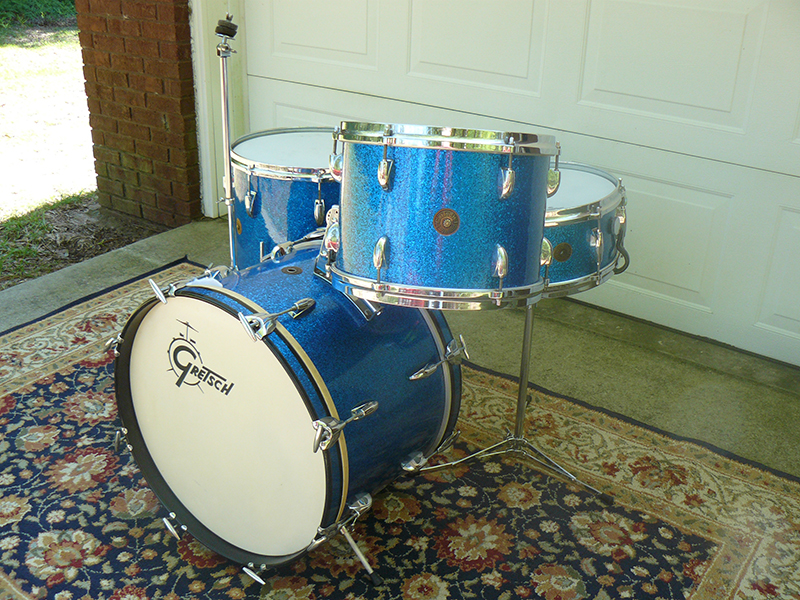
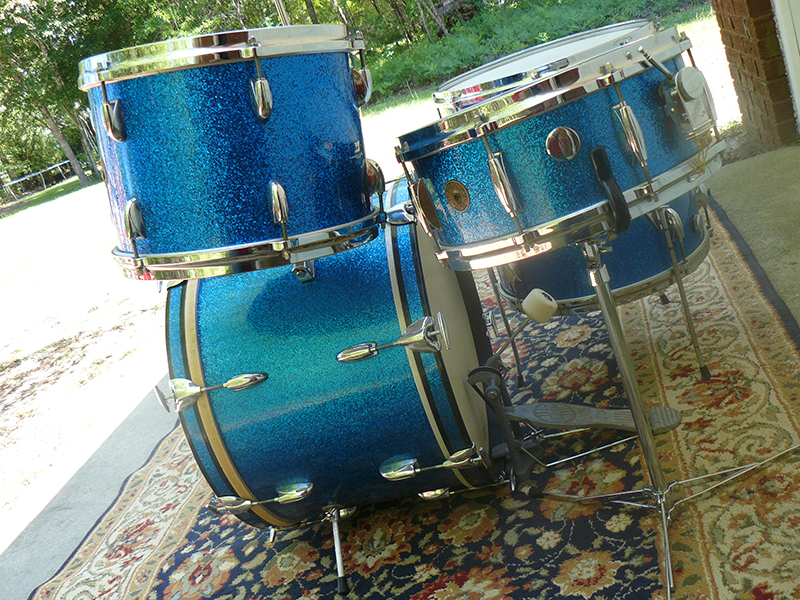
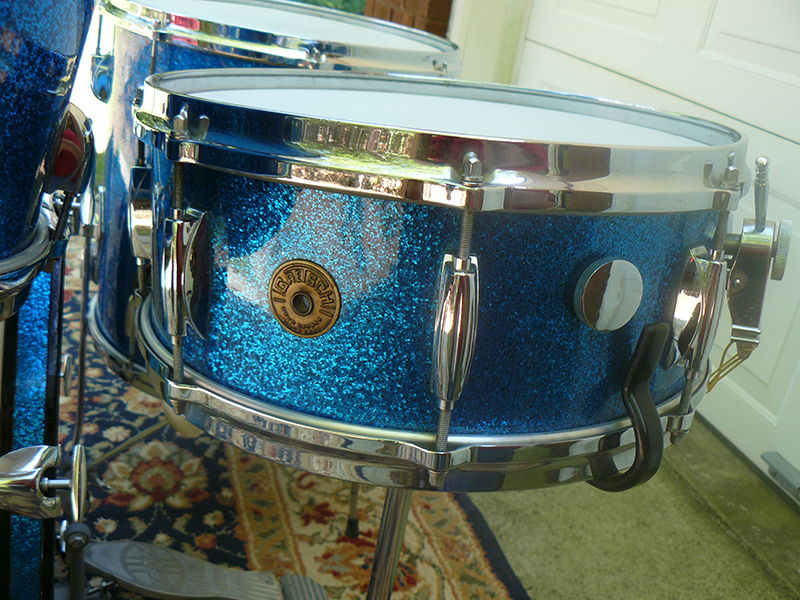
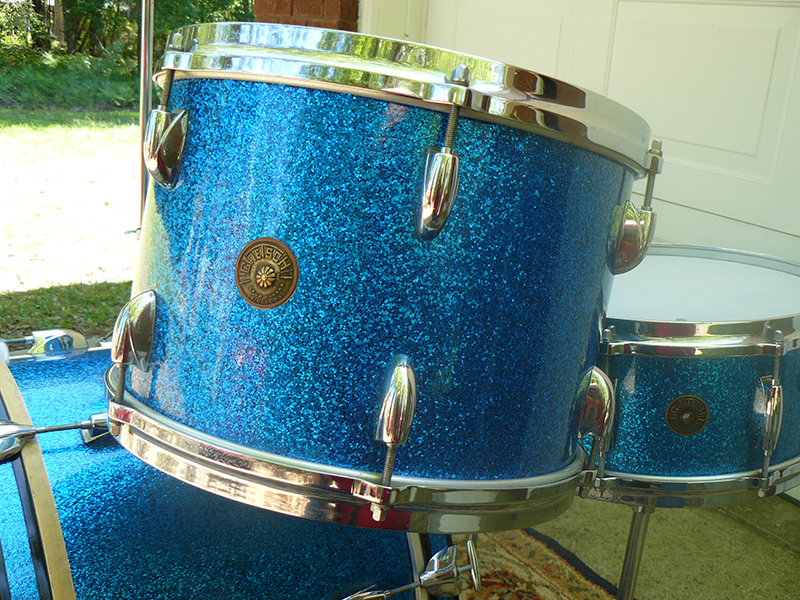
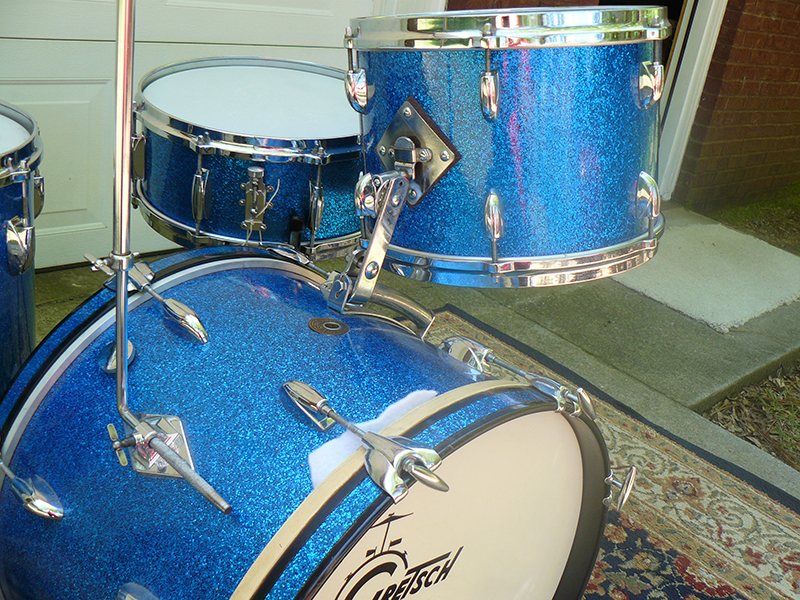
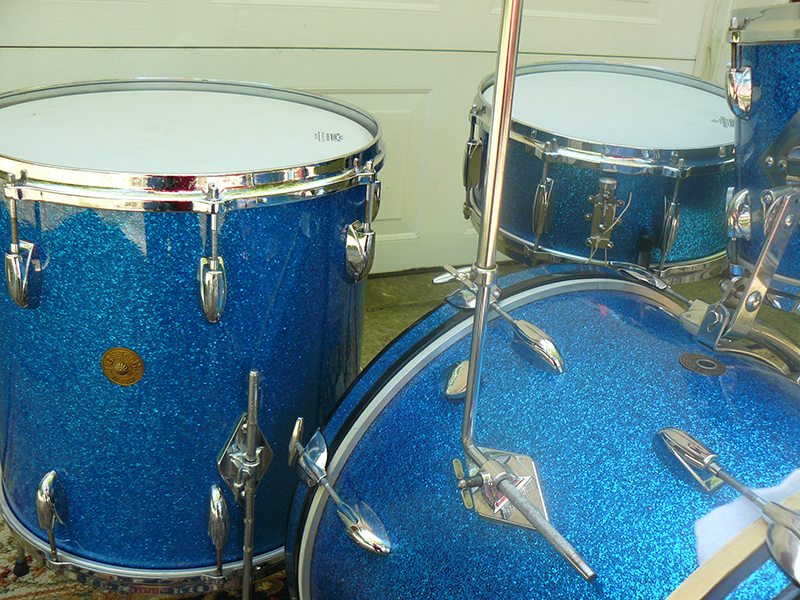
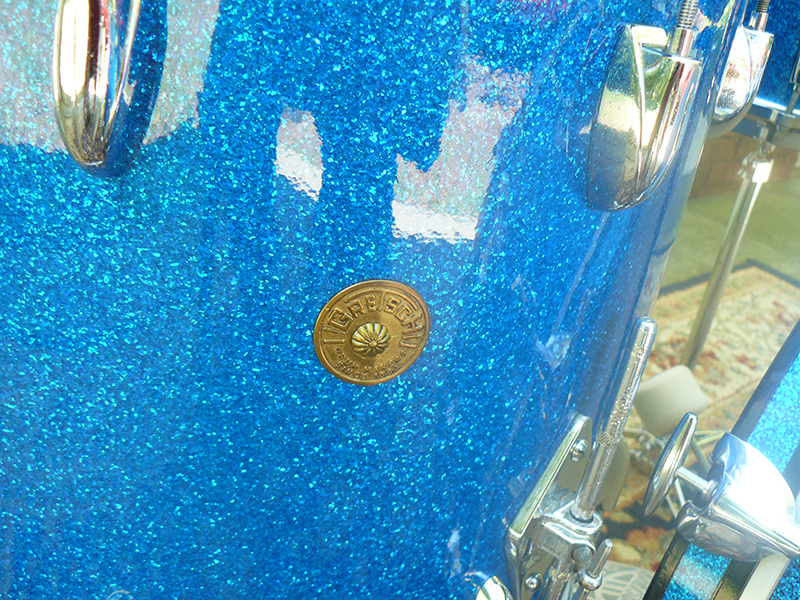

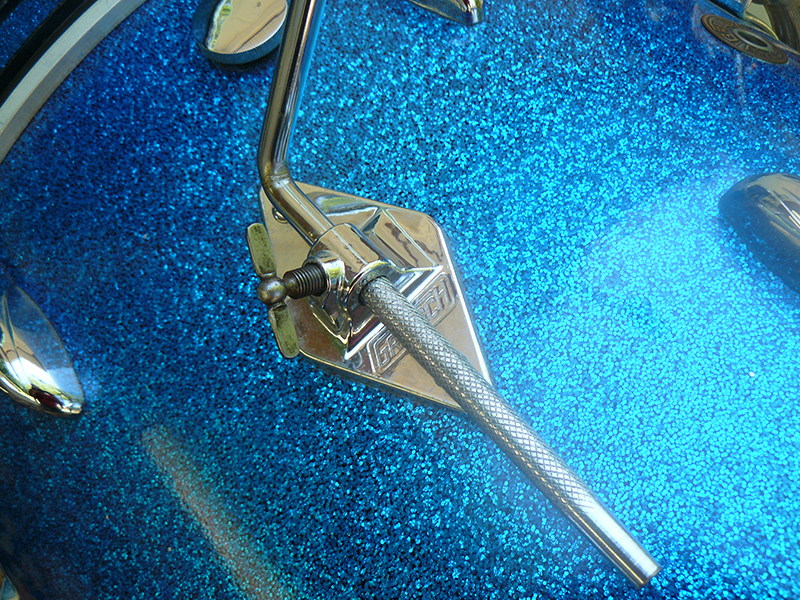
The set I am featuring this month is a 1960s Gretsch Name Band set in blue sparkle. Sometimes I have to tell you why a set is cool, but I don't think I have to tell anybody how cool this kit is. The set is made up of : 20"X14" bass drum, 16"X16" floor tom, 13"X9" ride tom and a very cool 14"X5" matching snare drum. The snare has eight lugs and the Micro-Sensitive strainer. An alternative 22"X14" bass drum was also available in the PX4015 Name Band set 1961-1976. These drums sound great. The shells are six ply with silver sealer inside. The blue glass glitter finish is still very strong and vibrant on these fifty plus years old drums. It is a joy to own and play an old "round badge" Gretsch drum set from around this era. The die cast hoops and distinctive hardware give them a distinct look. What I would call a timeless classic look. They are truly beautiful.
I was saying how great it is to have friends who also share an interest in vintage drums. I bought this drum set from Bill Pace many years ago when I was just starting out collecting. One of my oldest and best "drum friends" is Bill Pace from Forsyth, Georgia. I have been friends with Bill for a long time, and I can truly say with all our drum trading he has always been fair with me. I have tried to do the same with all my drum trading as well. We need to have some ethics and deal with people in accordance with the "golden rule." You know that one, right? "Tell all the issues with the drum to others as you would have them tell all the issues to you." I know you do that already because you don't want a negative feedback. In the old days the only negative feedback was you got a bad name if you didn't deal fairly. Bill is quite a character though. He will work hard to get a good price selling his drums, but he will work even harder to get your drums at a good price.
The funny thing about this set I am showing you is it was bought by Bill at a pawn shop. When he bought the set the floor tom I now have with the set was not with them, instead the set had a MIJ 16"X16"" blue sparkle floor tom. It was a Jet model drum. When Bill bargained with the poor owner of the pawn shop he really focussed on the Jet floor tom. He acted so disappointed that the set didn't match etc. etc. etc. The set was sold for a lower price because of Bill's whining. He sold me the set as a "One Nighter Plus" which was listed in the catalog without the floor tom. I later added the floor tom I now have to make the set a "Name Band" outfit.
Vintage Bass Drum Head Artwork
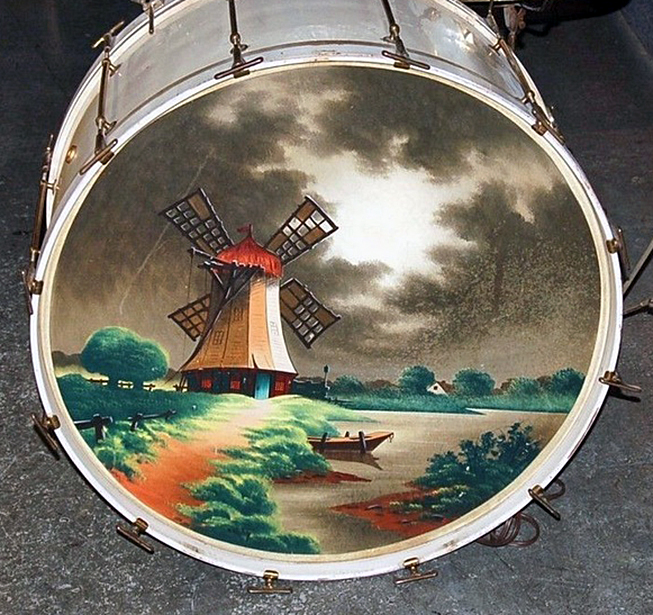
This is one of those reviews that is easy to write because the product is so simple that it either works or it doesn't. It either does what the manufacturer says it does or it doesn't. This one works! CUSH pads are an alternative to the felts you use on your cymbal stand. They are made of a proprietary elastomer material, and are designed to allow the cymbals to ring longer and truer without muffling the sound or overtones. They don't collapse or take shape and always return to the original shape.
Read moreCustom Drums: Really, Why So Pricey?
At one point in my life, I worked for an advertising agency – you know, the Mad Men thing. (Yes, there really were three-martini lunches.) A lot of prospective clients would ask us, in the course of getting acquainted, “How much is a brochure?” And the head of the agency would always answer, “How much is a car?” or whatever the client sold.
The answer depends completely on what kind of brochure, or car – or drum – you’re talking about. It’s all relative, and all about your needs, your goals, and your priorities.
My last article, about why custom work takes time, led me to another basic question: why custom drums cost what they do. You might find, or have found, yourself experiencing sticker shock over the price of a custom kit or snare. But usually that’s about expectations; you may be comparing the price to mass production drums, or you may be comparing the price to doing it yourself. But, in either case, why the difference? Let’s take the case of custom vs. mass-produced. Really, when you stop and think about it, why can’t the small, independent companies get the job done for less than the big guys? They’re not carrying the payroll, advertising expense, or sales teams. They’re not paying for big facilities or a huge stockpile of parts.
So why can’t they make a drum for less? It’s largely a question of scale and capital investment. A big company can commit lots of money to major orders from a supplier, and they may even have a financial interest in the supplier’s operation. Being that important to a supplier means they’re in a position to negotiate very favorably on terms and pricing. There are also advantages in limiting the choices – a major manufacturer is rarely going to offer more than a couple of lug styles, and usually only a few shell types, allowing them lots of inventory without the risk that it’ll sit on the shelf unused. So ordering ten lugs (small inventory, wide selection) produces a very different per-unit cost than ordering ten thousand lugs (big inventory, narrow selection) does; the pricing advantage goes to the big guys.
And, yes, the large manufacturer’s investment in tools and equipment is enormously higher. But paying for those investments has to come out of sales, so the smaller shop’s equipment cost might be divided over a few hundred kits sold over a period of time, while the big brand’s investment is covered by thousands of kits over a similar period, lowering the cost each sale needs to cover.
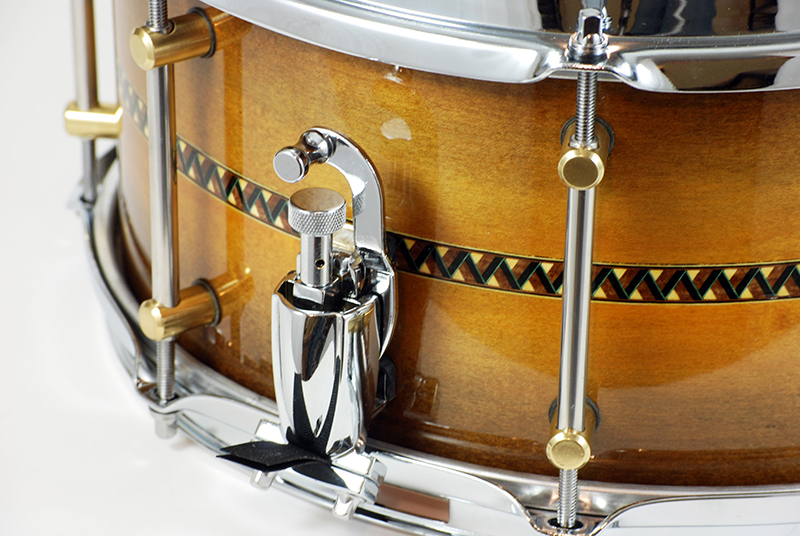

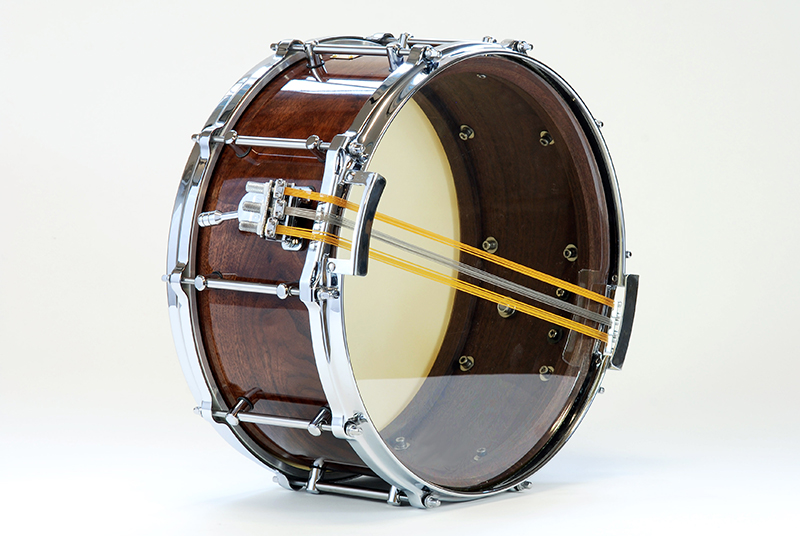
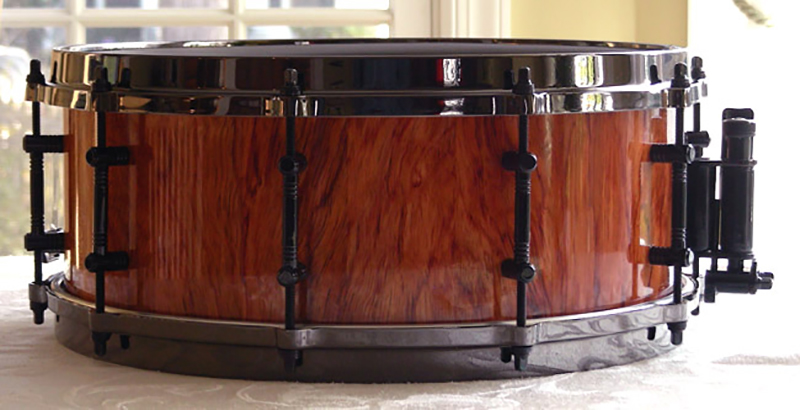
And then, of course there’s the question of labor cost. A big manufacturer needs to maximize efficiencies and minimize hours in order to meet a specific competitive selling price. A small builder, on the other hand, may want to put in more time because it allows the most effective end result for him, or because he’s addressing details that are not cost-effective for mass production, or even because he loves the actual hands-on process more than the business-operation side. I remember a conversation with a builder who told me he could wrap an entire kit in under an hour – and my reaction was, “What’s the fun in that?”
That brings me to custom vs. do-it-yourself. In this case, the comparison just isn’t fair. Yes, you can say that DIY is a way of saving all that labor cost, but it’s not exactly an apples-to-apples thing. You may have tools to build with, but the odds are good that the builder has tools that are more precise, more controlled, and better set up than yours. And in many cases, the builder may have access to parts, materials, or services that you simply can’t get.
Admittedly, doing it yourself saves on the overhead even a small builder has to cover – dedicated work space, maintaining shop materials, financing cash flow, managing bookkeeping and correspondence, website, etc.
But in terms of labor, the number of hours is only part of the story. A good custom builder brings a lot of background to your order. He’s seen different grades of parts and knows the ins and outs of working with them. He knows dozens of nuances about fitting and finishing, and the behavior of materials and shapes over time. He knows how to make design decisions to help get you the sounds and performance you want. It’s part of what he charges for – expertise that gets you much more than just a drum. Yes, you can put it together yourself, and you can even farm out some services like edging, drilling, and wrapping, but a good custom builder brings much more to the equation and the end result is not the same, even though the parts might be. So when you judge the price of a custom drum or kit, don’t evaluate it in the context of the price of a mass-production item or the cost of doing it yourself. Judge it in terms of its value to you – if it costs more, are you getting more? Is it better quality, better designed, or more exactly what you want? Does it perform better, feel better, or sound better? If the answer is yes, you may actually be getting more for your dollar from custom drums.
April 2015 - Spring is Here!

My friend Rob Kampa has been a busy boy. Rob, of MagStar Drums fame, is one of the first and best of this generation’s custom drum builders. He moved to Nashville a while back and has been doing all the drum building and custom work for Andy Foote’s Drum Supply House for quite a few years. Rob and his wife Maggie have recently become the proud new owners of WorldMax USA, leading parts supplier to the DIY and custom drum building industry and makers of the infamous Black Dawg line of brass snare drums. I was wondering for a couple of years who previous owner Walt Johnson was going to hand the baton off to when he retired, and I can’t think of more suitable owners than the Kampas. If that weren’t enough to keep his day full, he is now also building drums for the resurrected Walberg and Auge Drum company. Jeremy Esposito is the other name in the W&A venture and has set it up as a non profit company. Much luck , Rob. You are now a cornerstone of the drum smith community. We need to do an article on you and the three drum companies you work with.
Not So Modern Drummer will have a booth at the Chicago Drum Show in May. I won’t personally be there because I have some performances I can’t get out, of but our Production Manager Chris Speich will be there along with Aaron Mlasko of Mlasko Drums here in Nashville. Please come by out booth to say hello to Chris, maybe talk about some advertising in NSMD, and to check out Aaron’s cool drums.
Matt Crouse interviewed me recently for his very cool podcast "Working Drummer". It's a conversation about what it is like to be a lifelong working drummer, my history and experiences, and Matt's take on things too. He is very good at this and I'm so glad he included me. Matt is an old friend. We met twenty years ago when we were both working at Fork's Drum Closet. http://www.workingdrummer.net/2015/04/15/georgelawrence/
I have resurrected the Famous Drums brand with a new work horse Black Beauty brass model featuring a Dunnett throw off. It has a low price of $385 and you can check it out at our Reverb.com storehttp://rvrb.io/2015-black-beauty-70g
The Snare Drum Olympics will be held this year. The judging will be in November and results will be published in the December Issue. If you want to enter a drum or two or three in this year’s contest and publicity event please sign up on our mailing list at www.snaredrumolympics.com and review the application and procedures. Since the Nashville Drum Show is not being held this year, we will have a separate public event for the public judging and debut.
There are many great articles in this issue including a healthy number of reader submissions and appraisal requests, so get our your iPad or your telephone or your Dick Tracy watch and read away. –George Lawrence
PS - Don't forget to check out all the new products in our new store: https://reverb.com/shop/georges-drum-shop
Drums & Gliders

Something different!
Read more