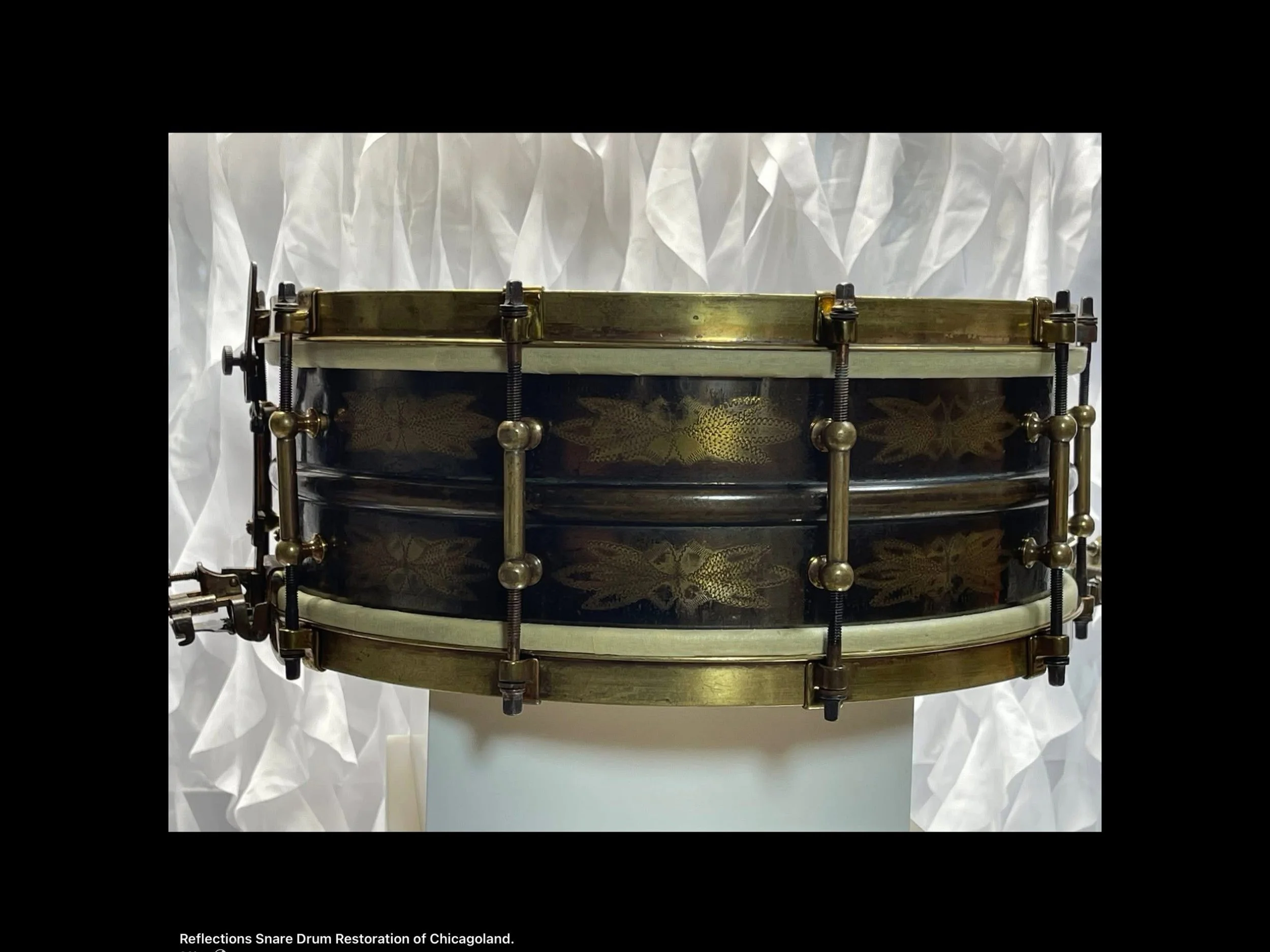
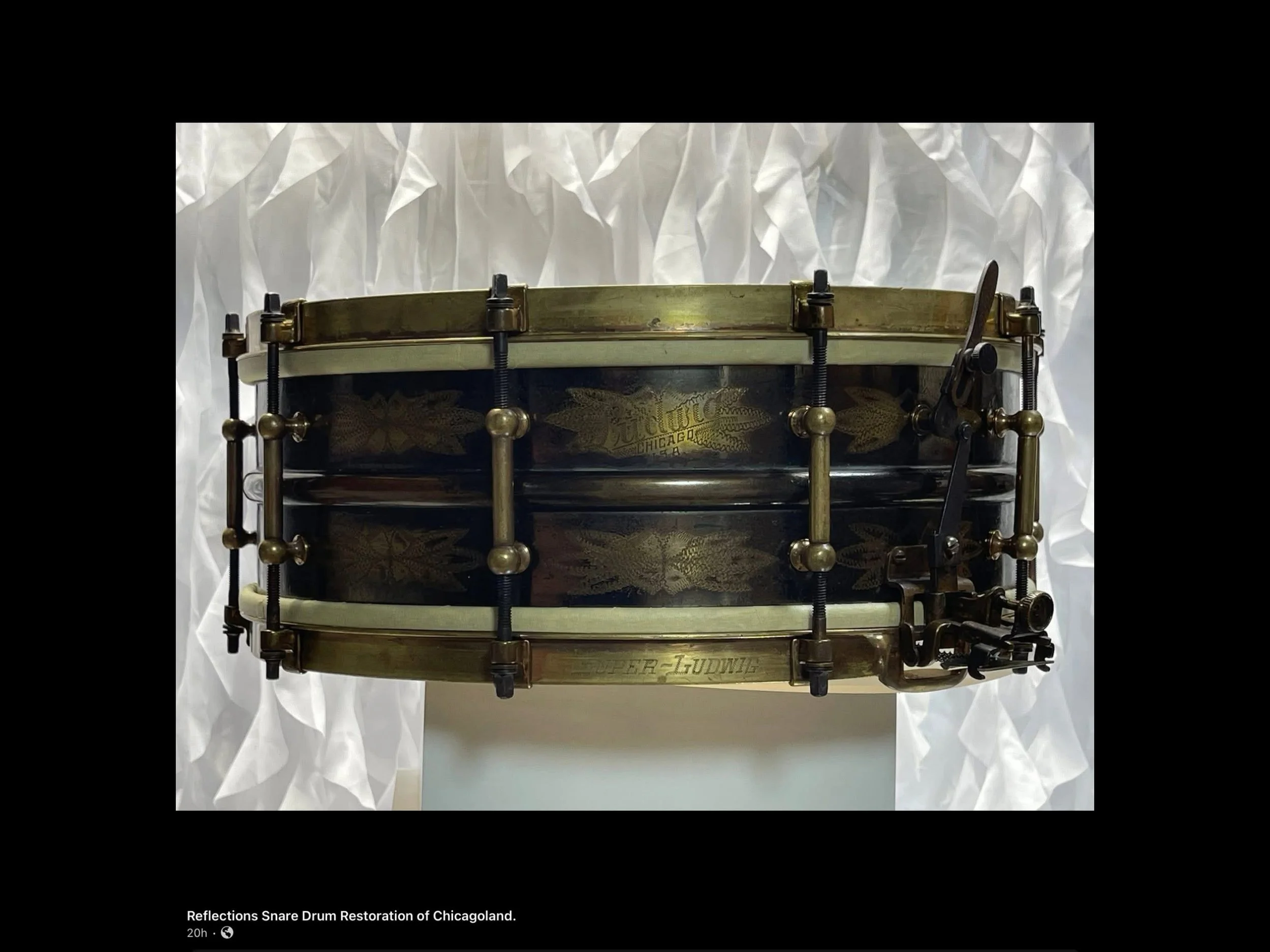
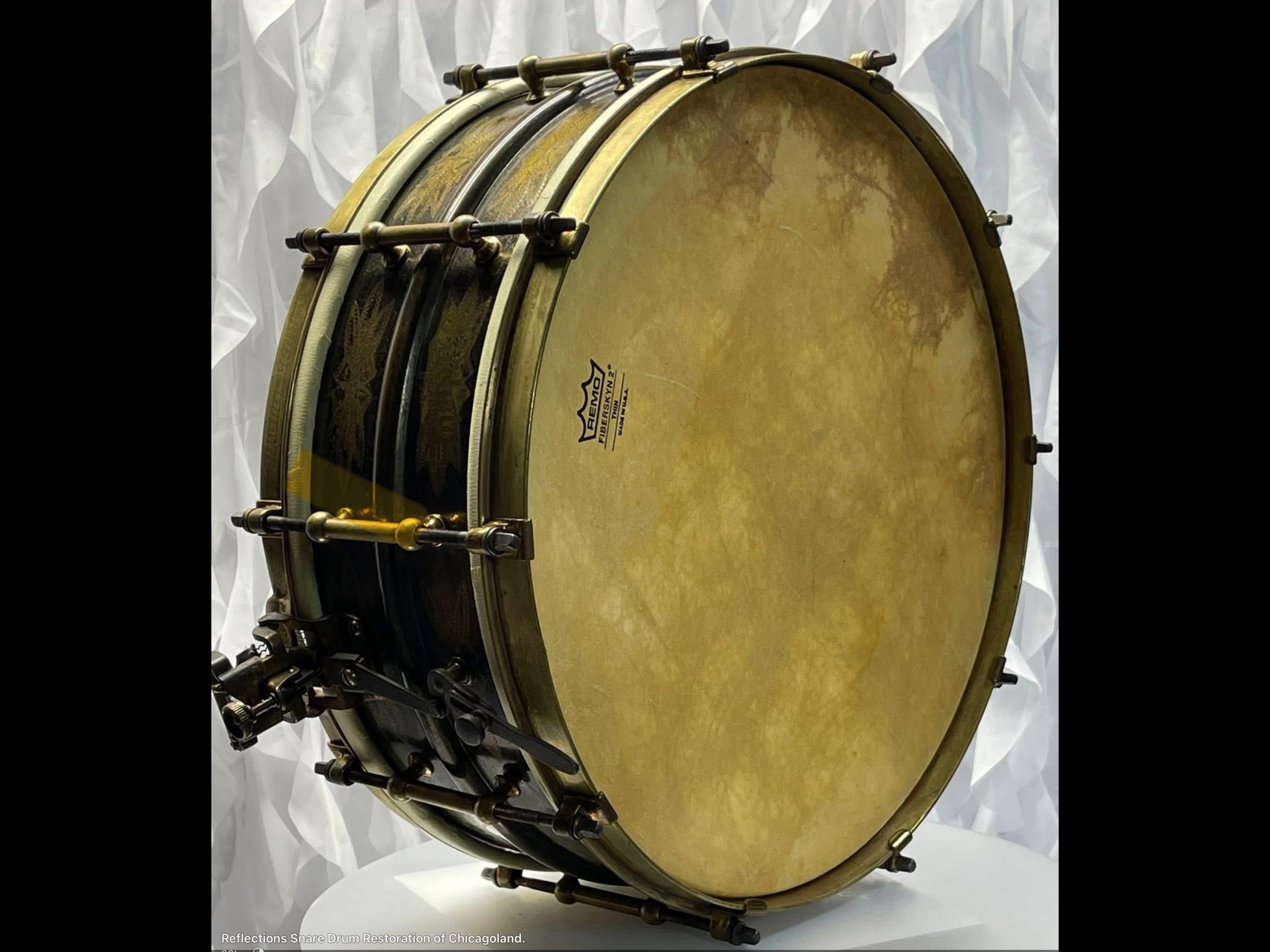
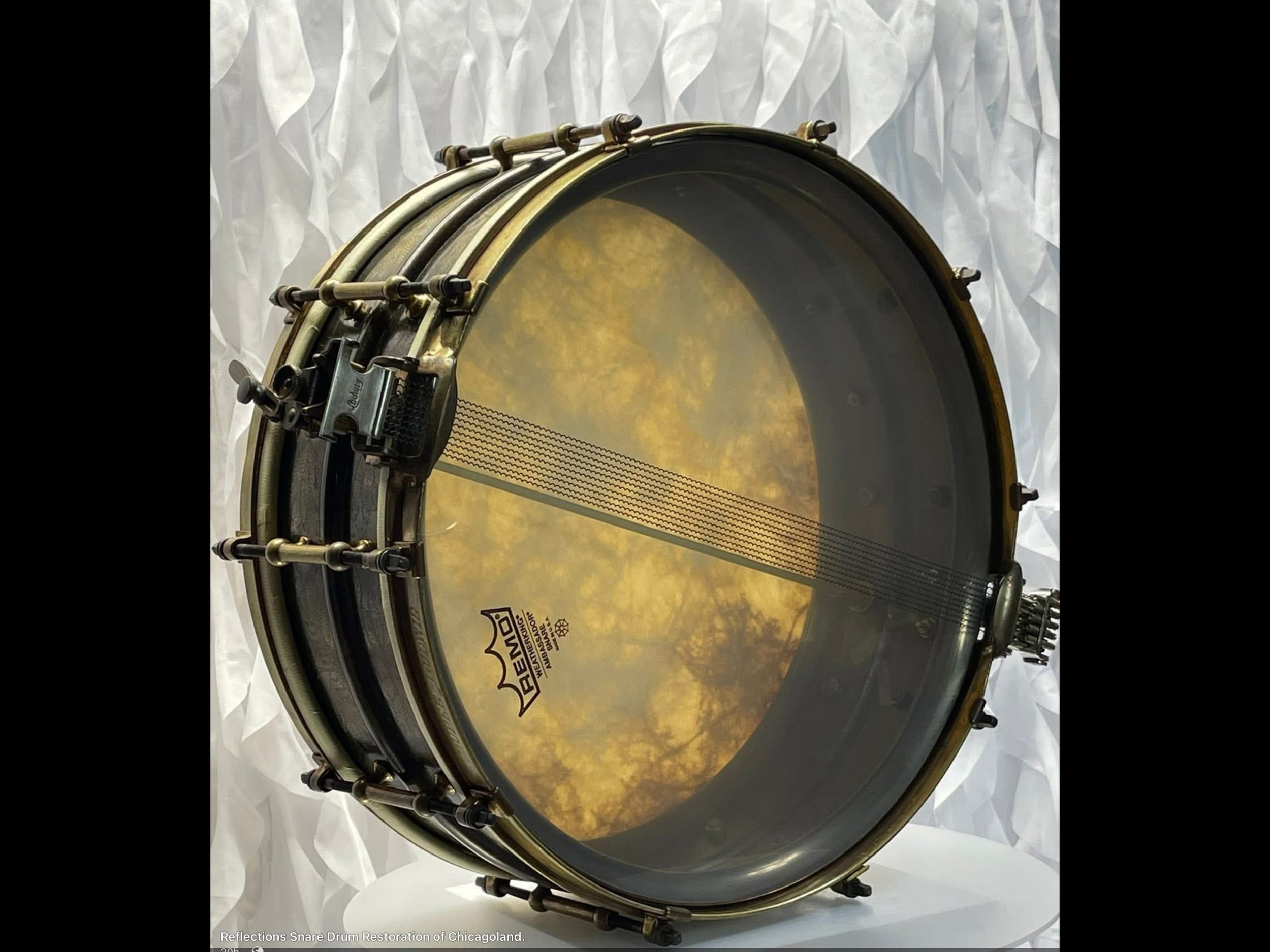
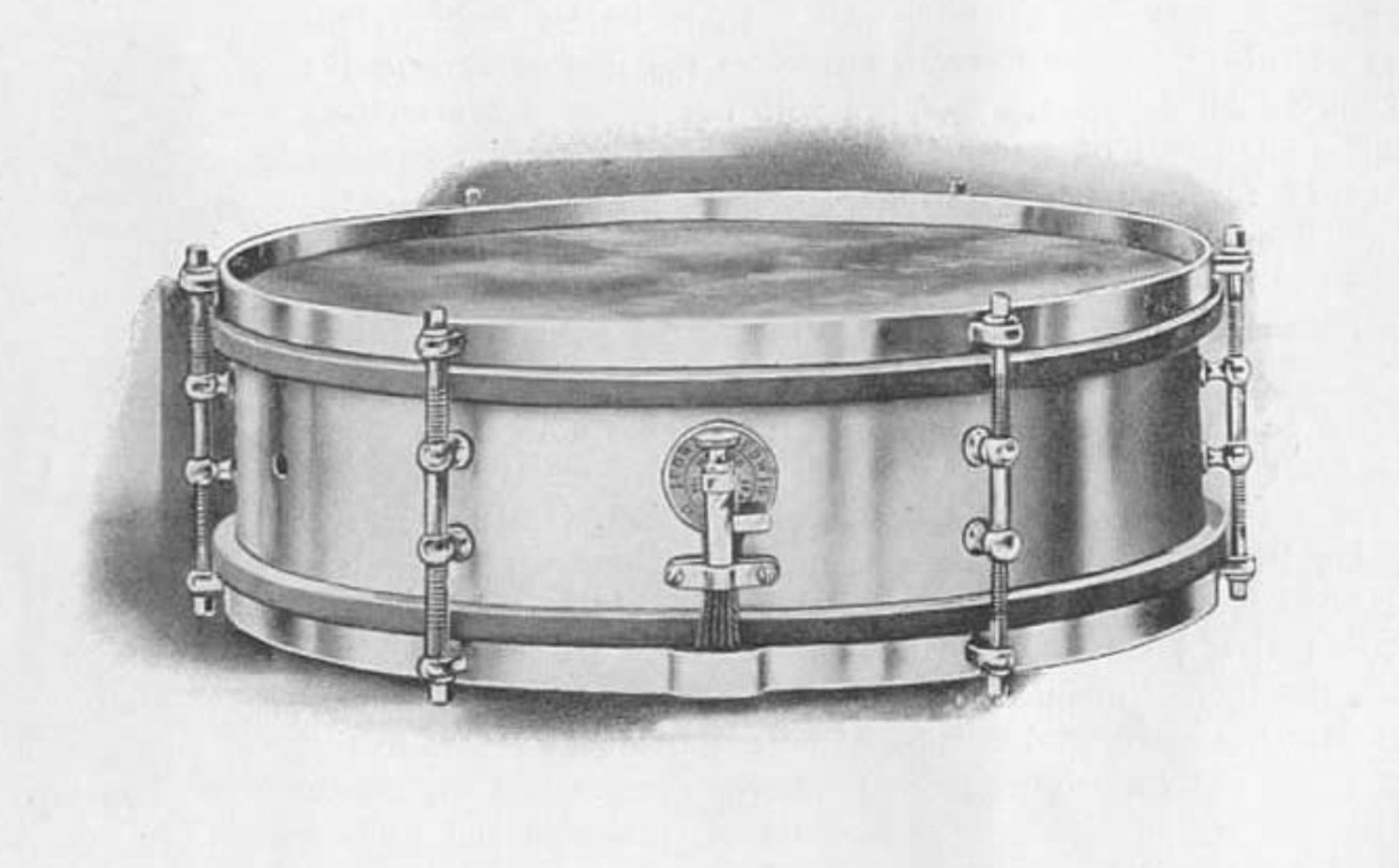
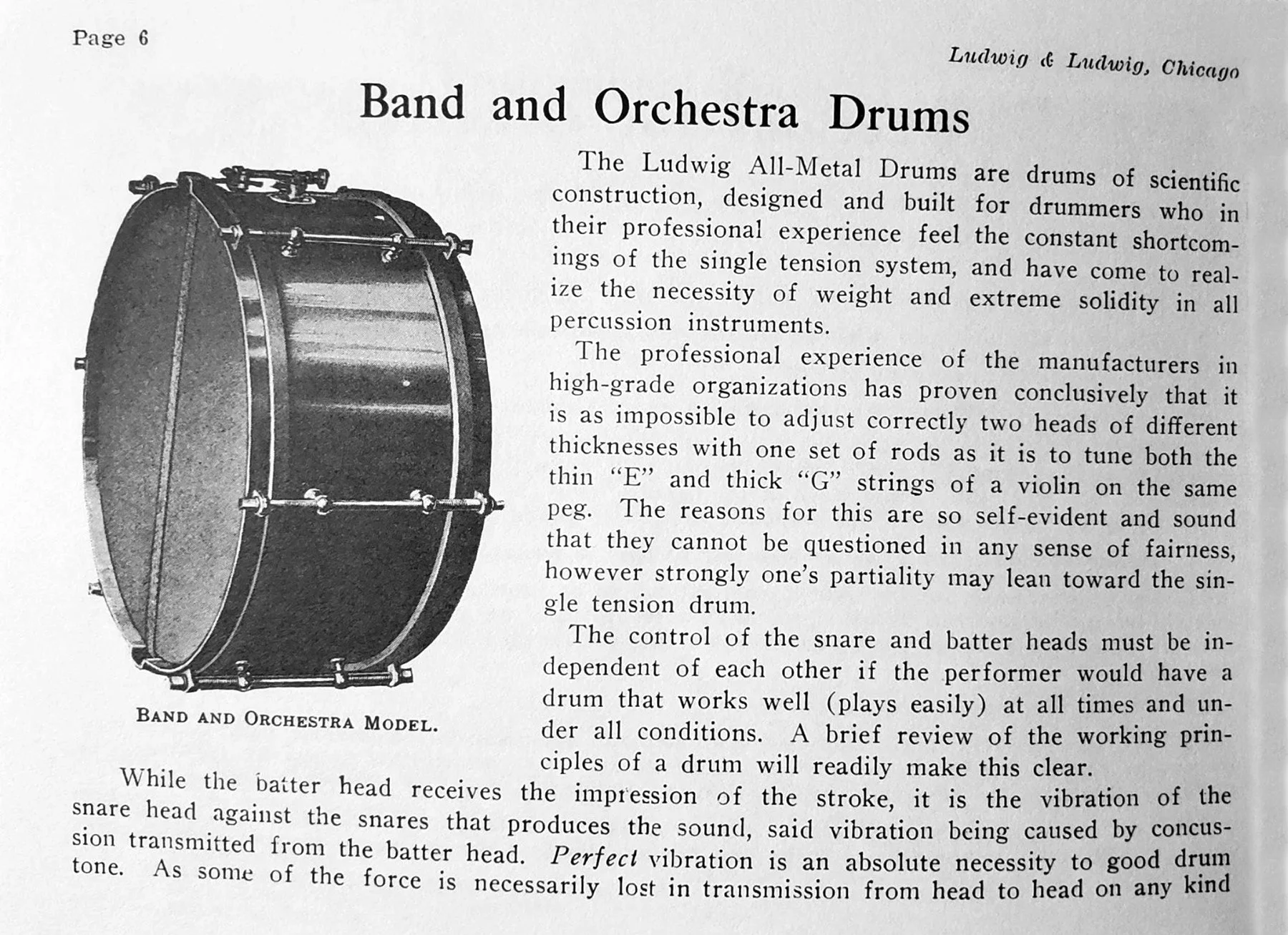
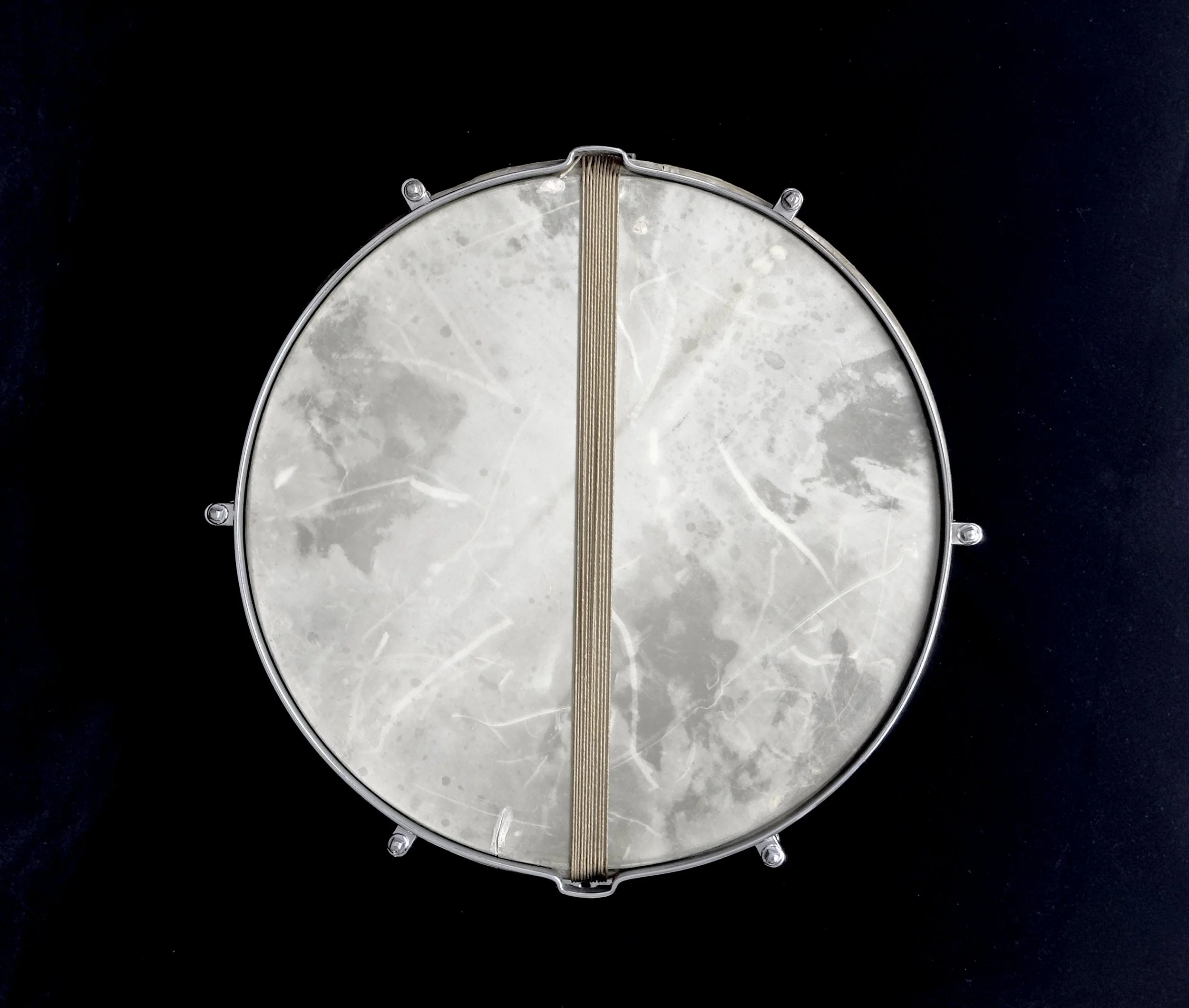
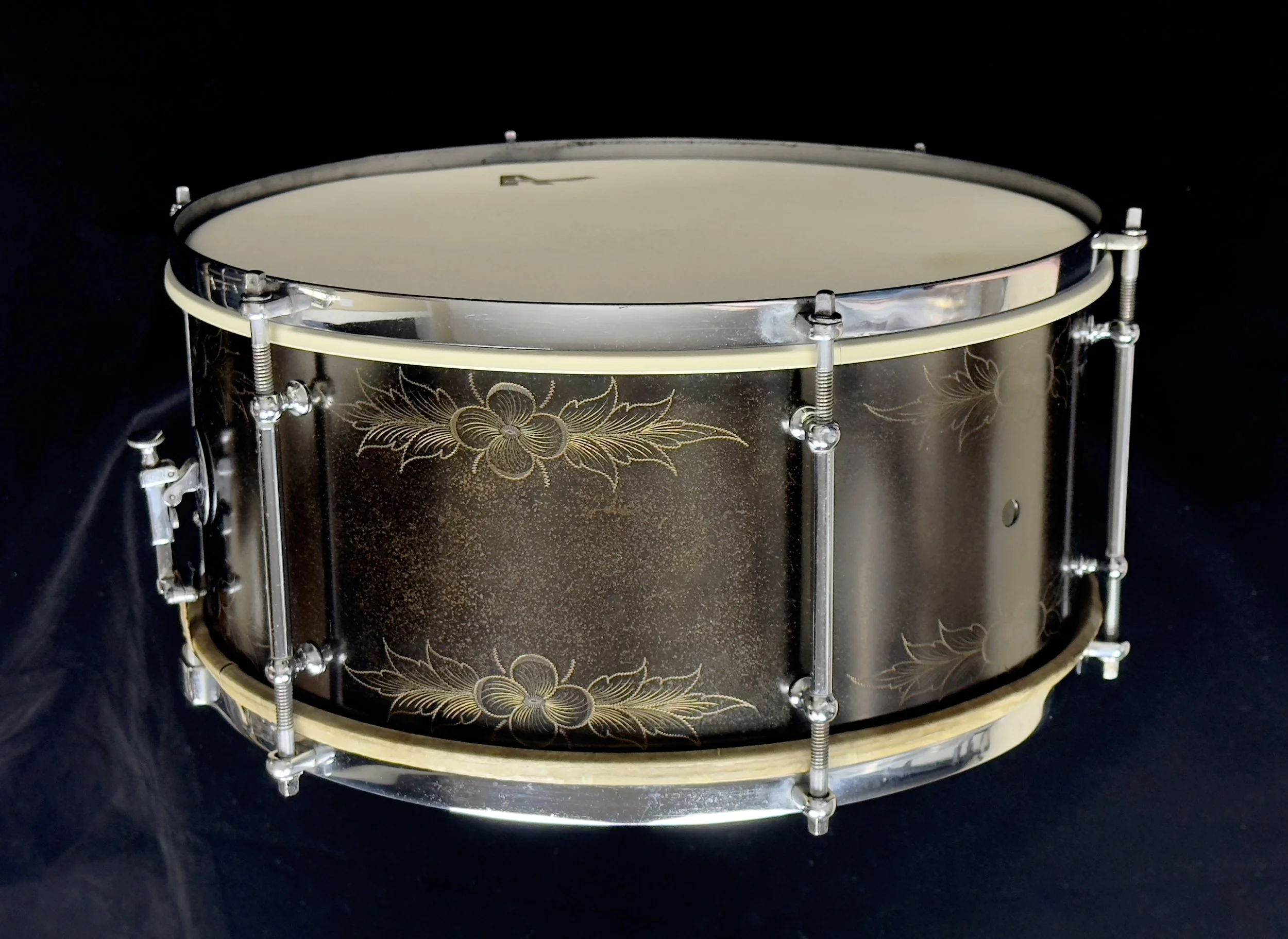
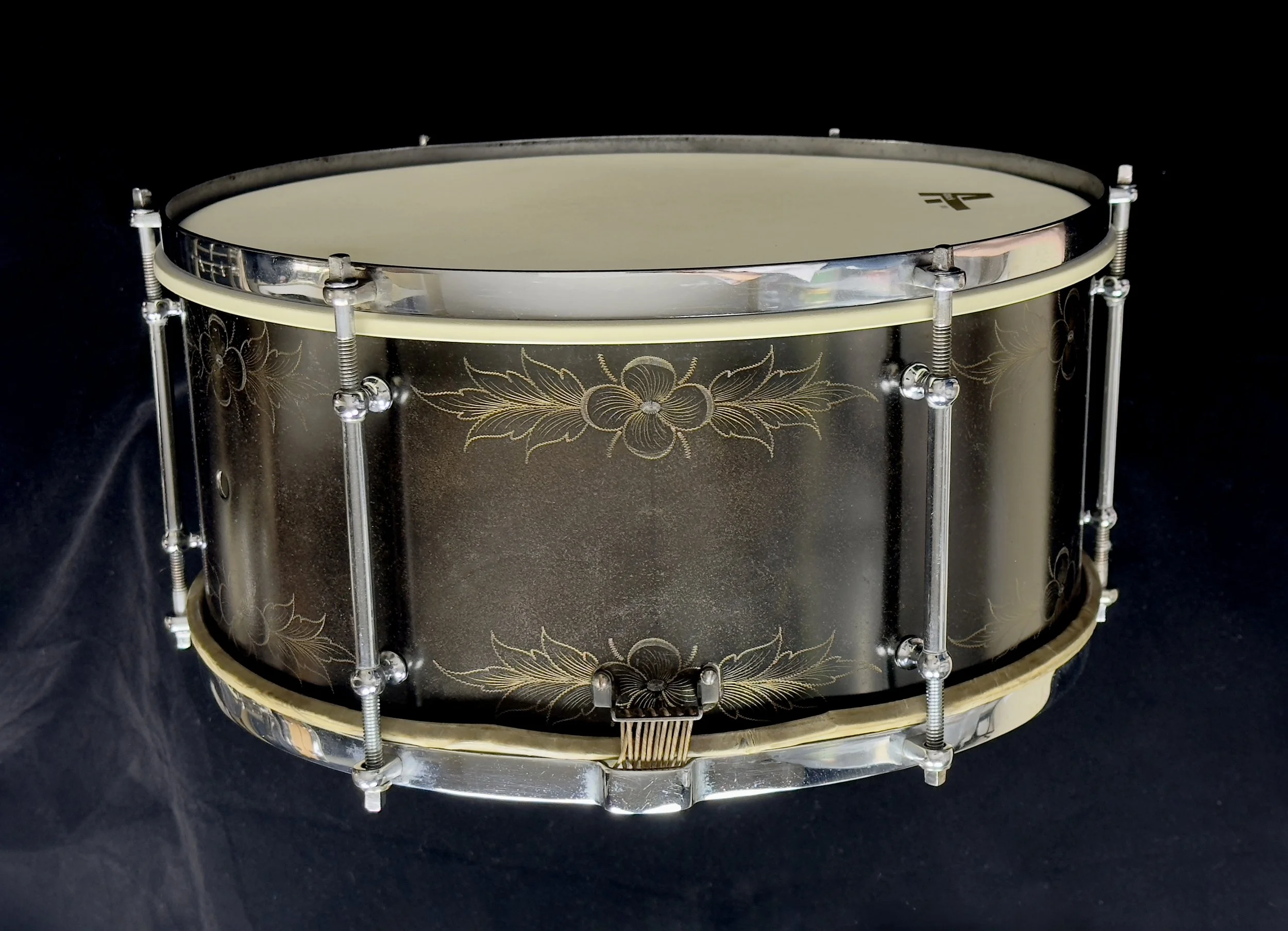
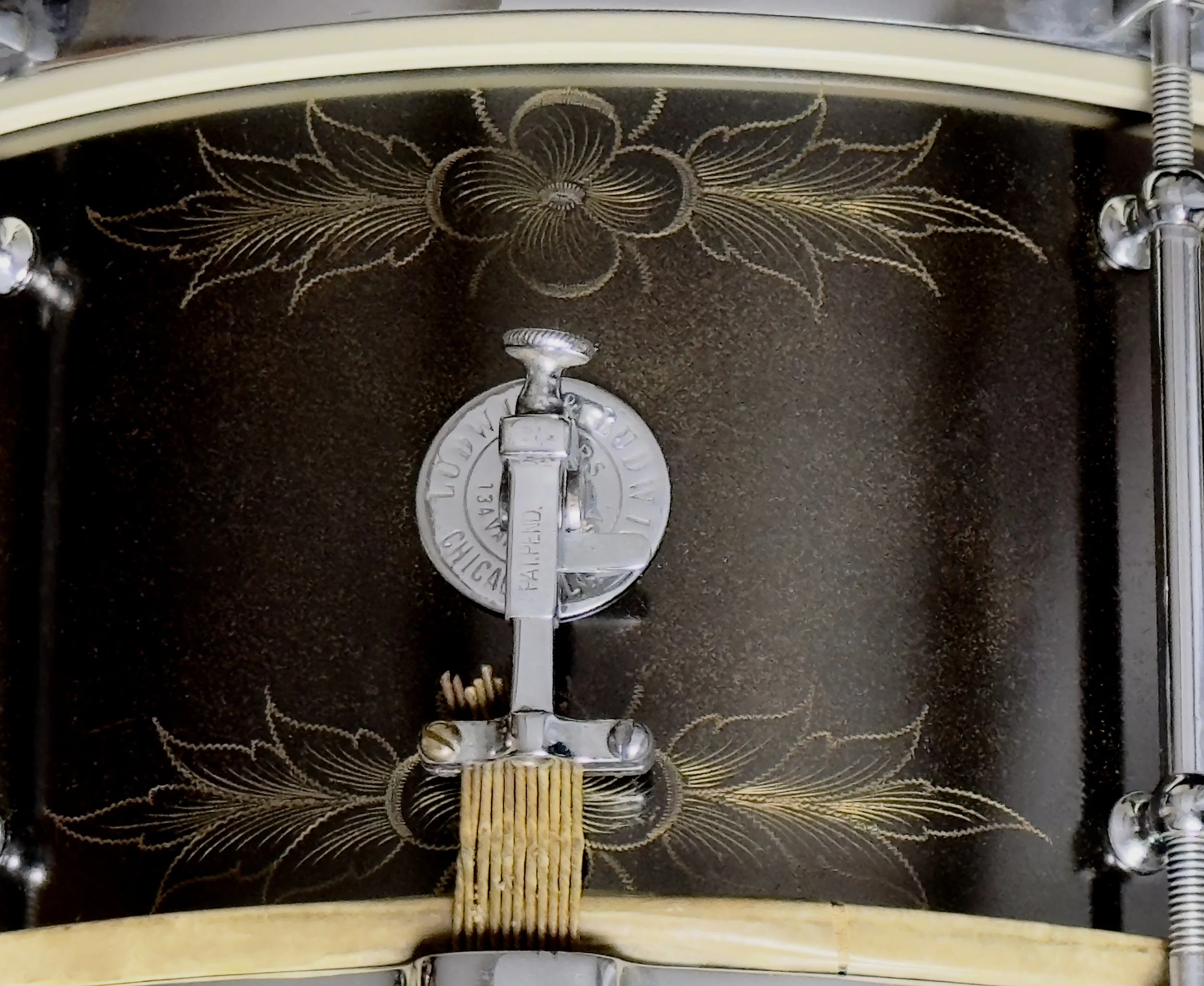
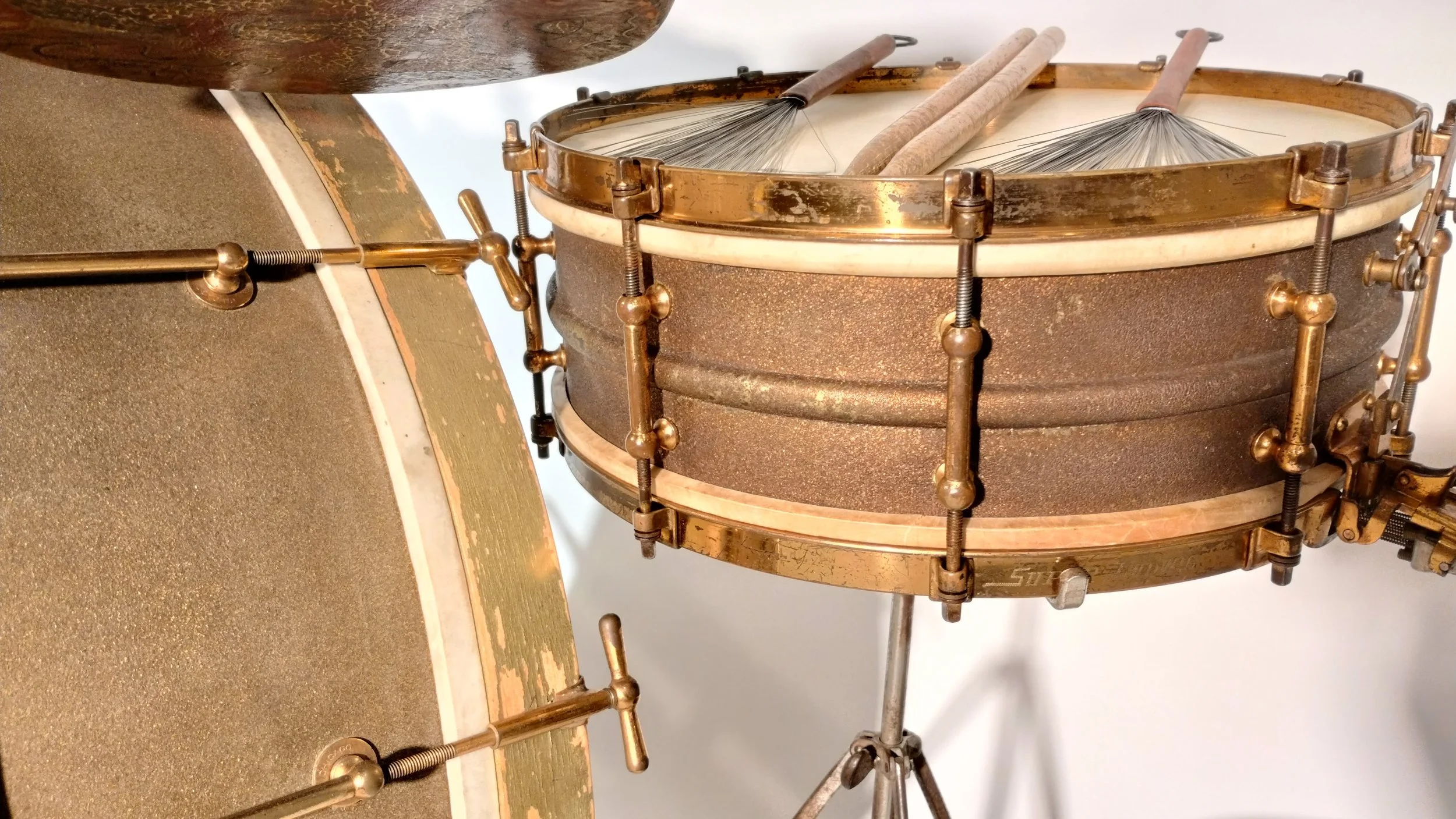
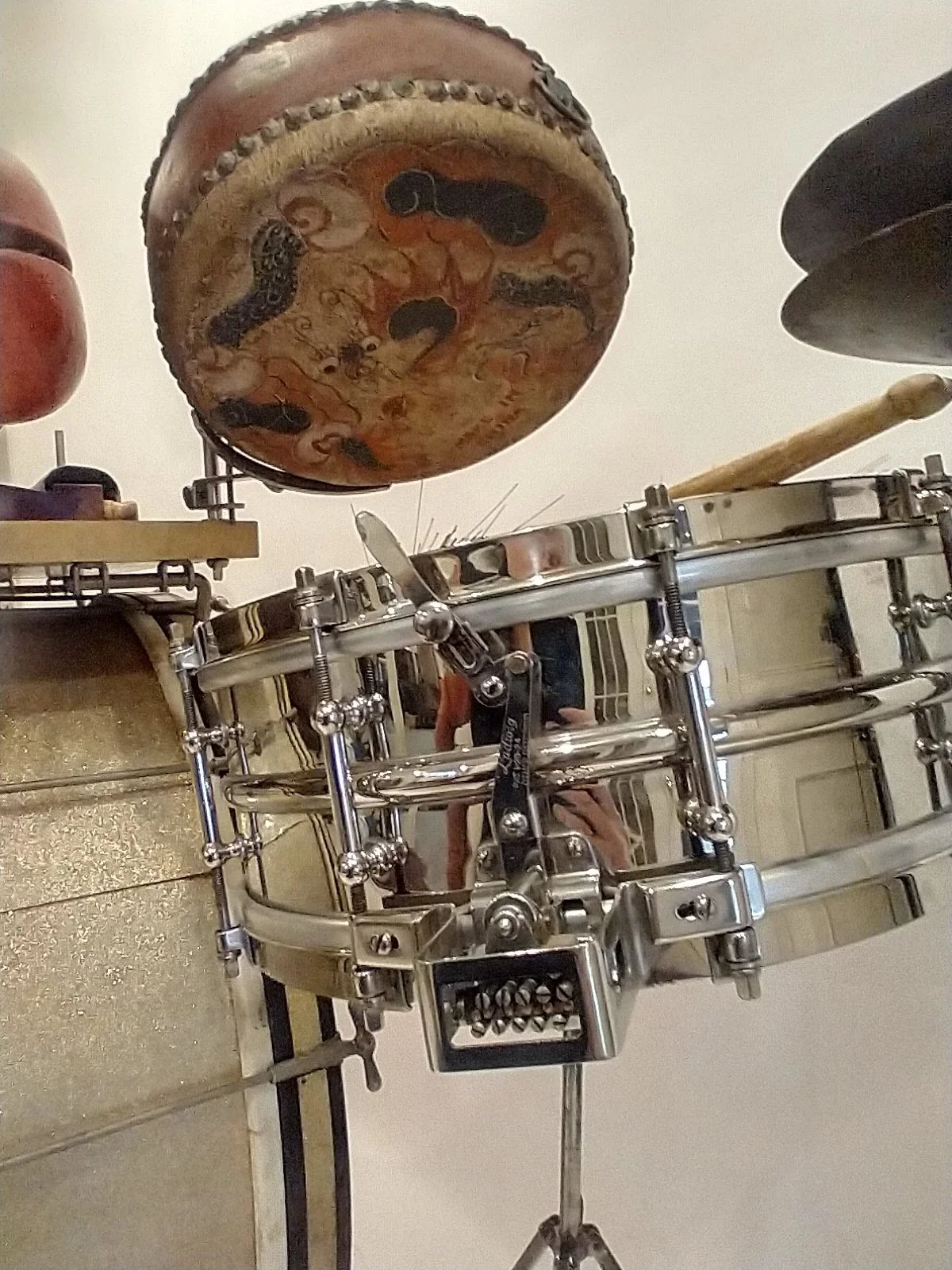
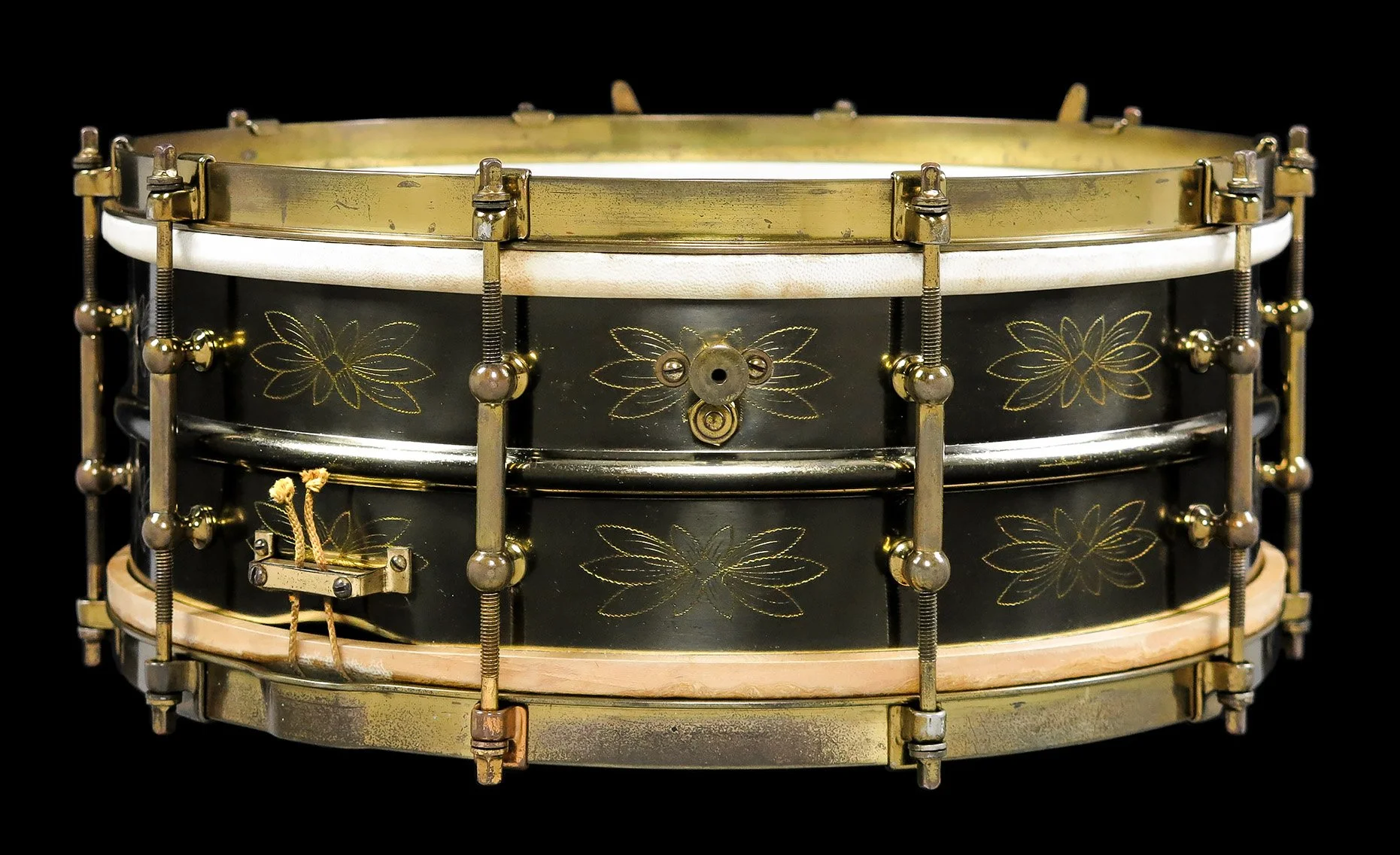
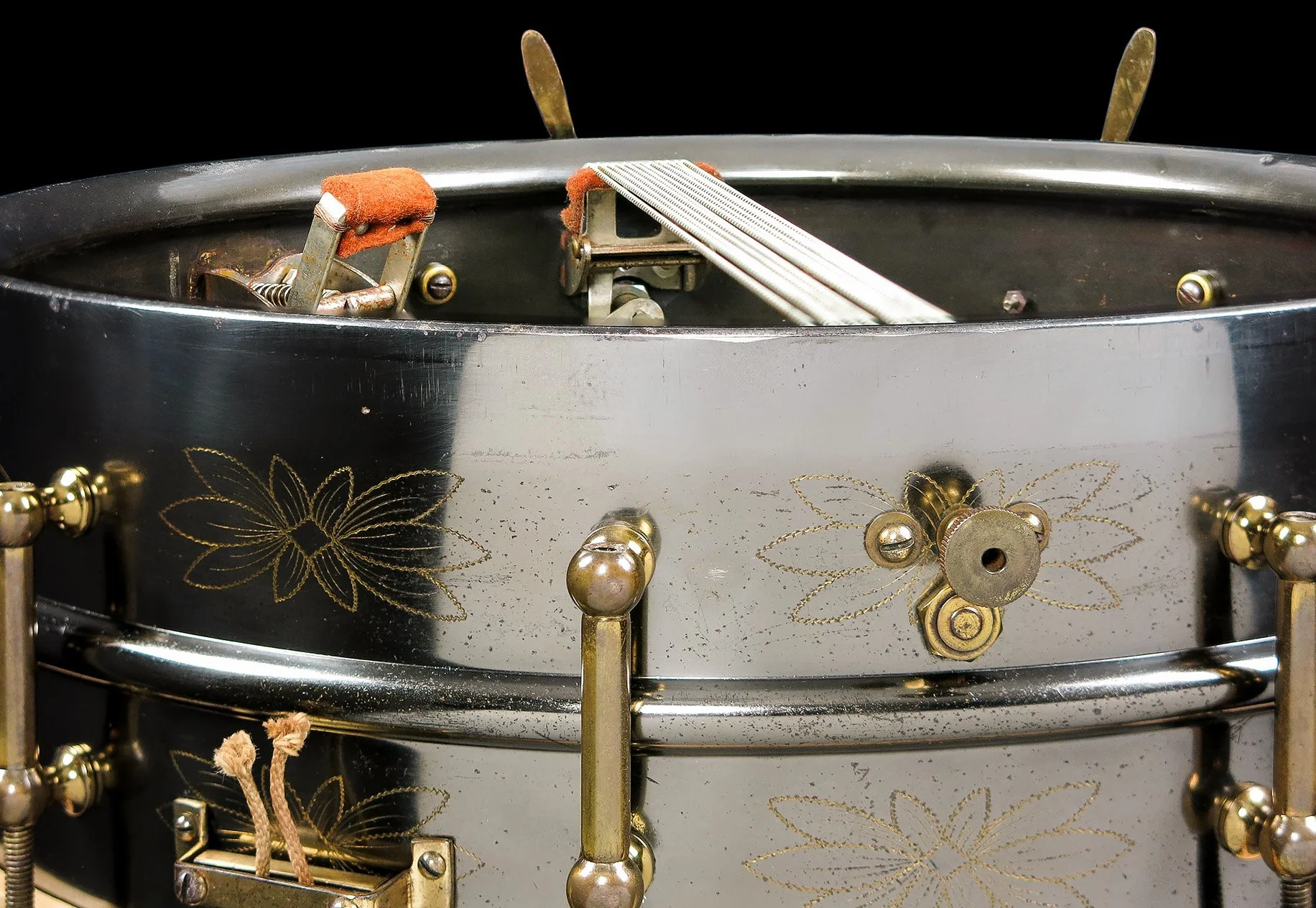
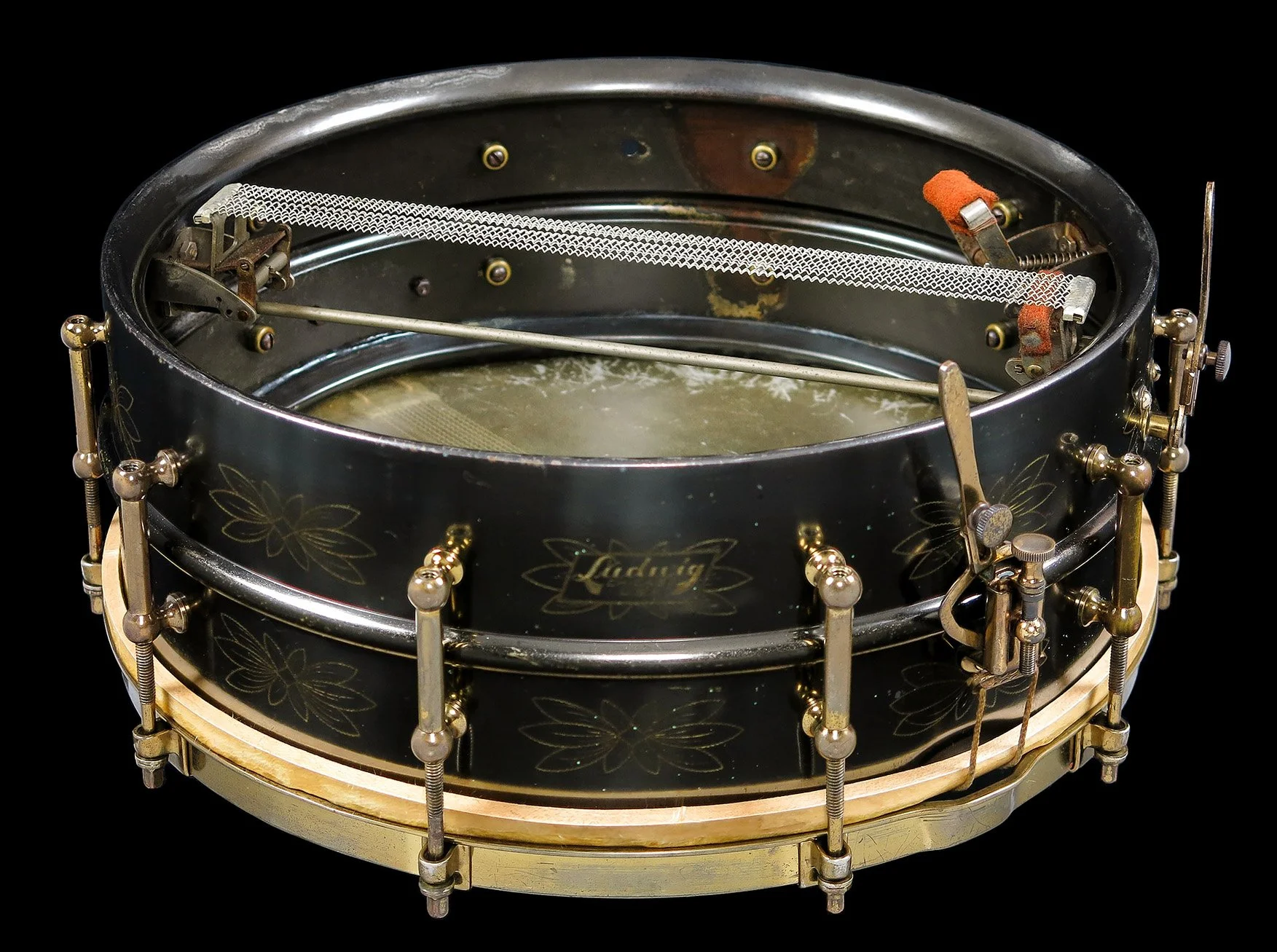
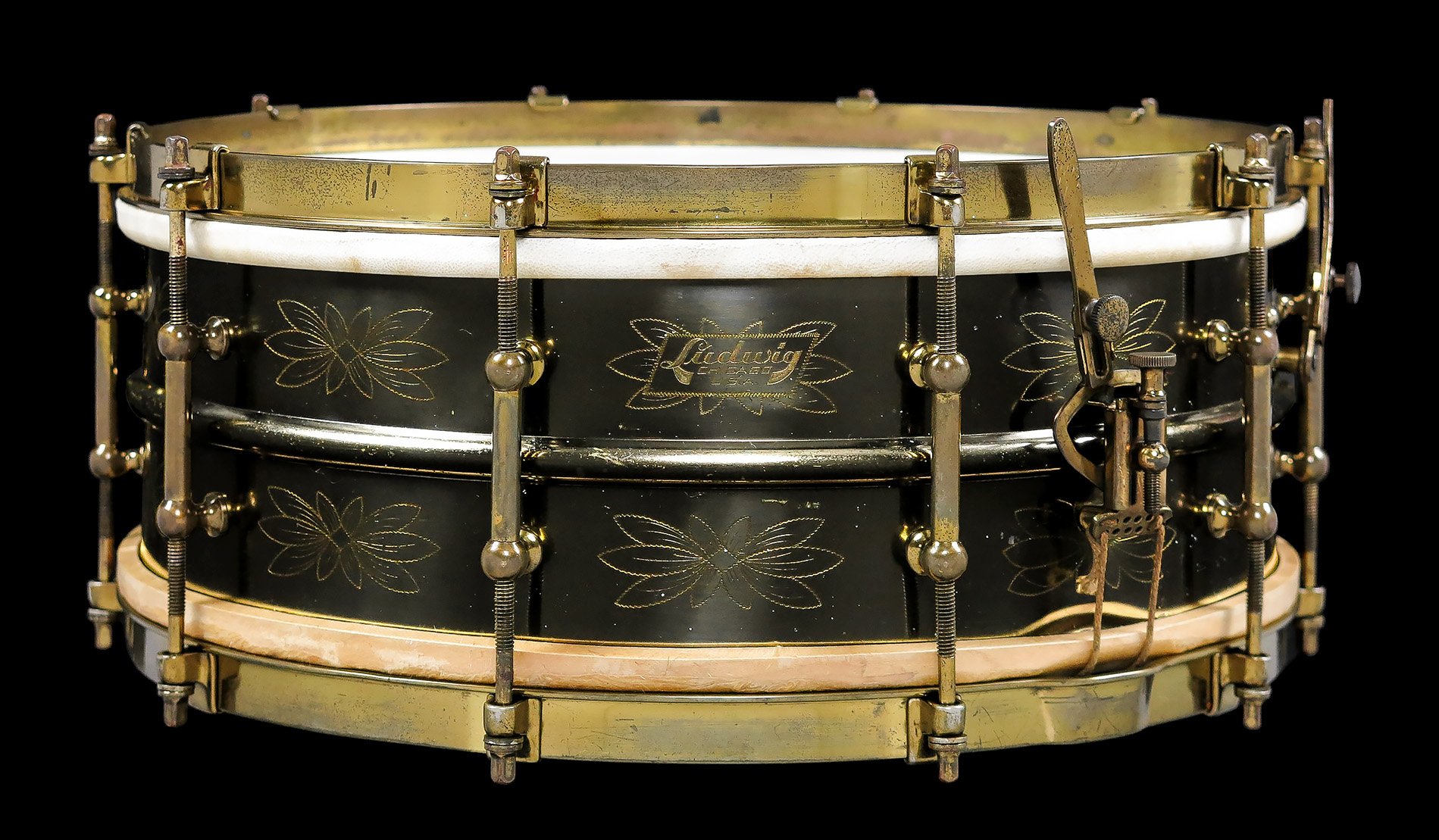
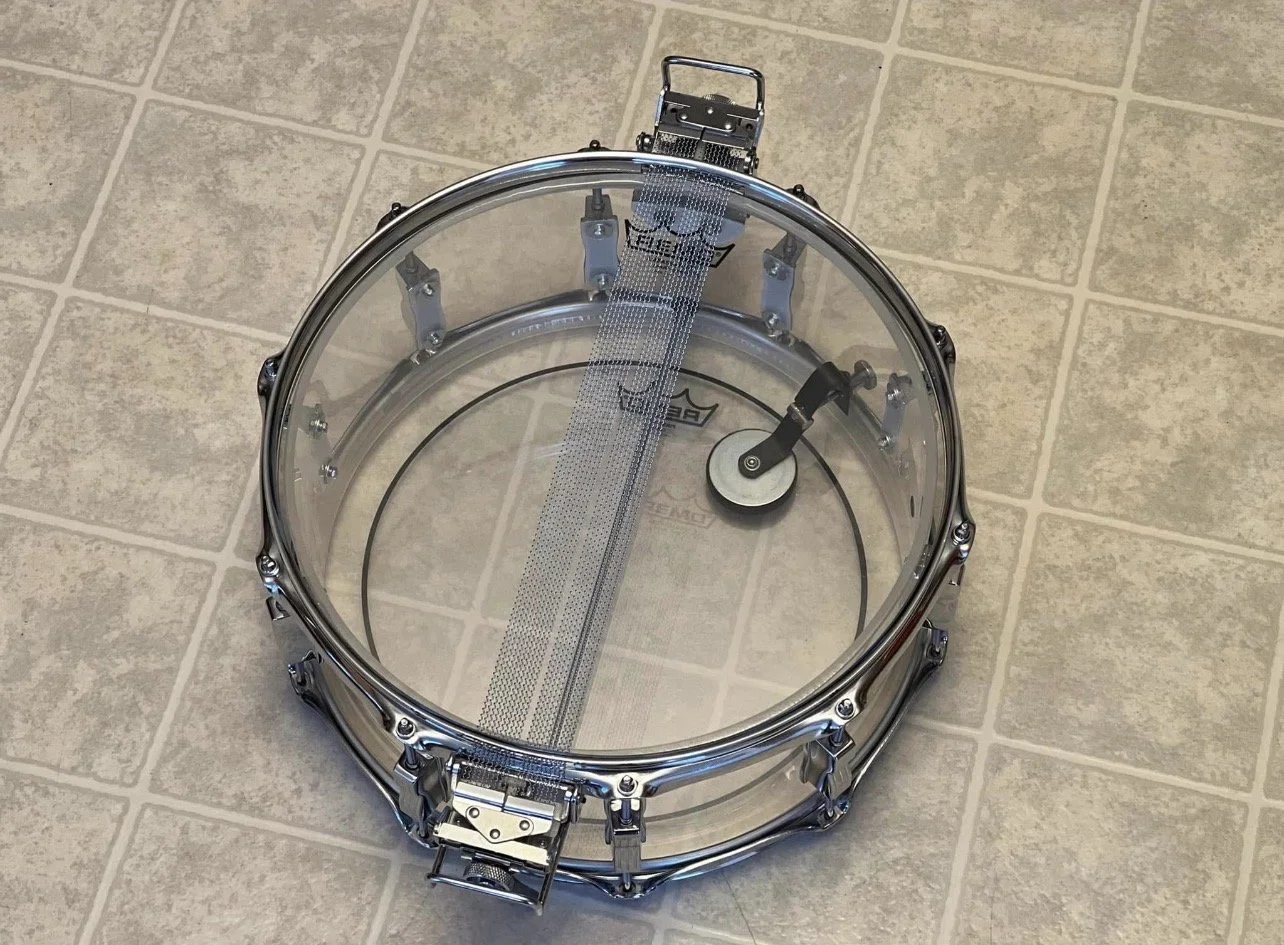
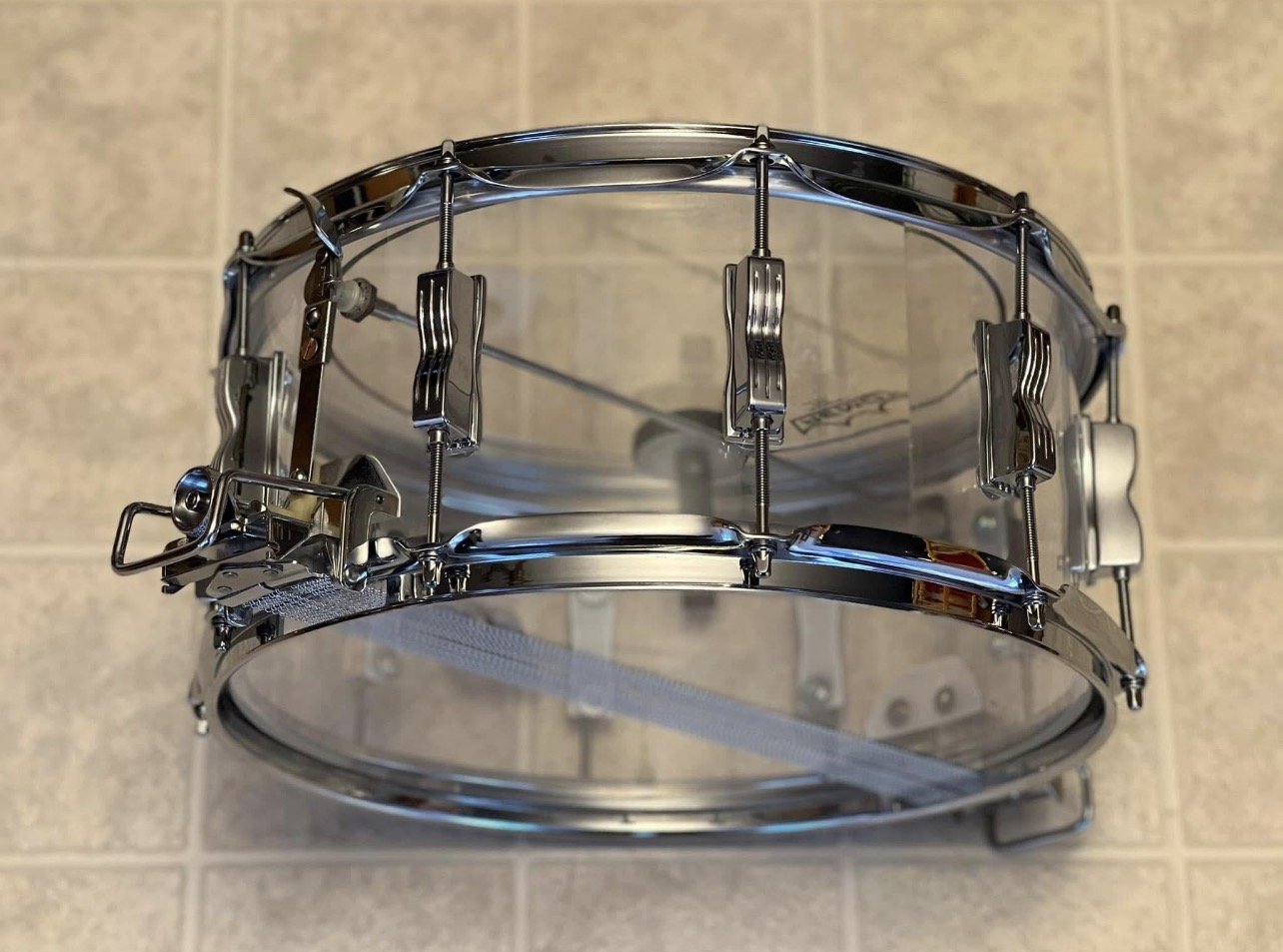
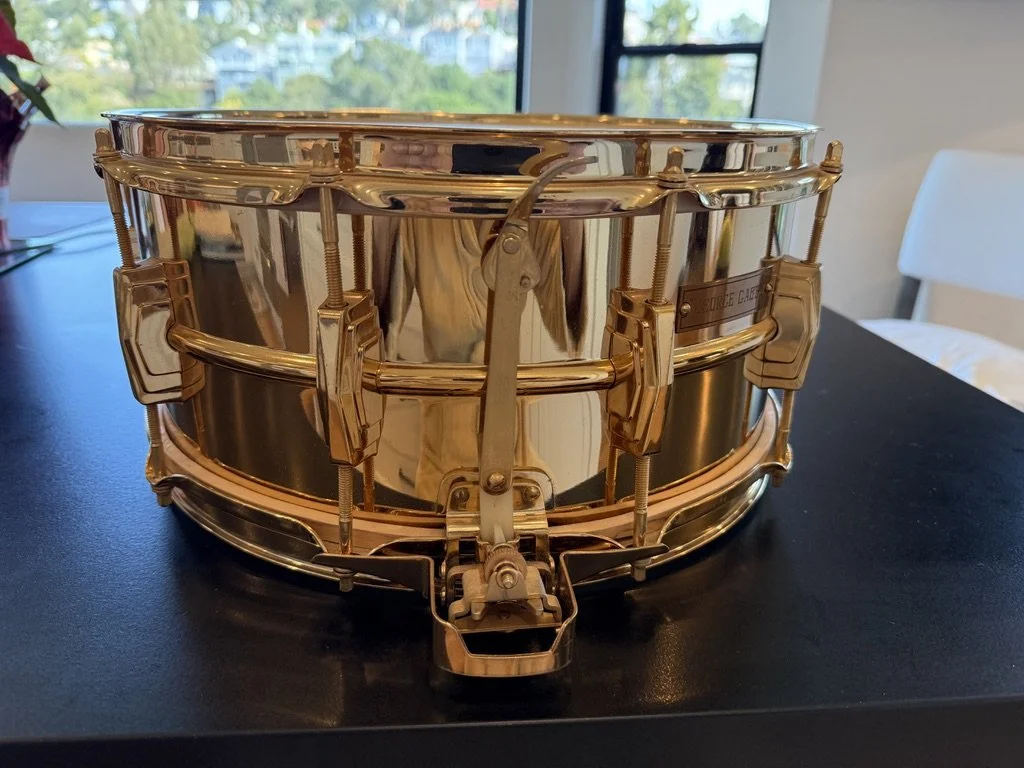
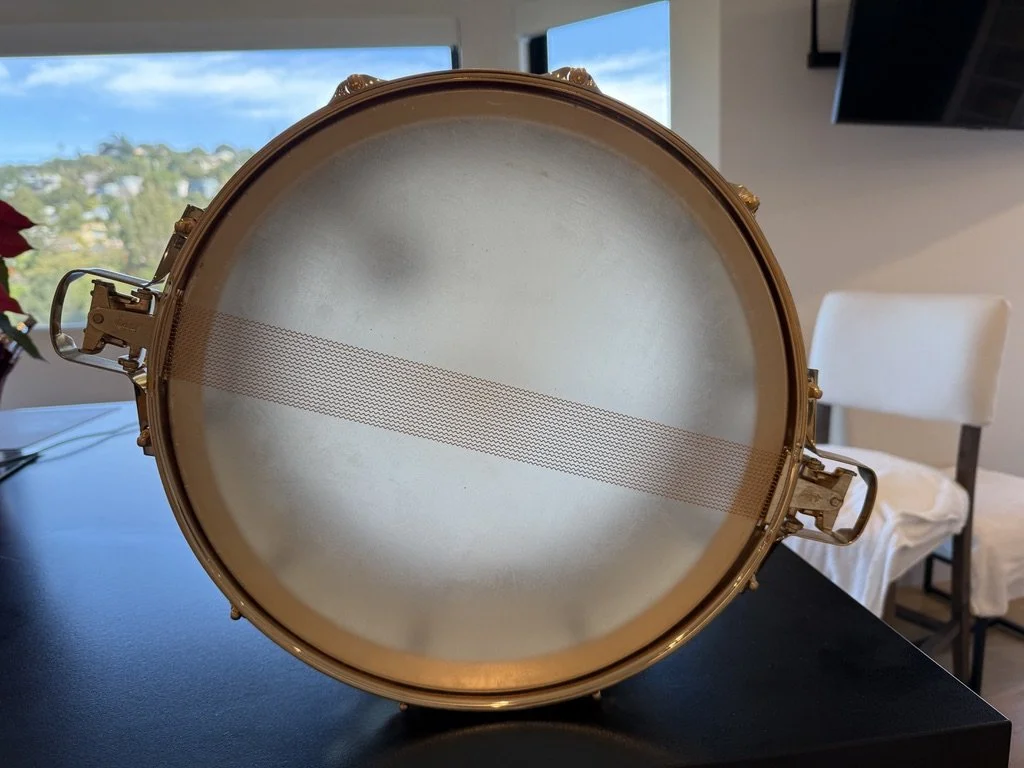
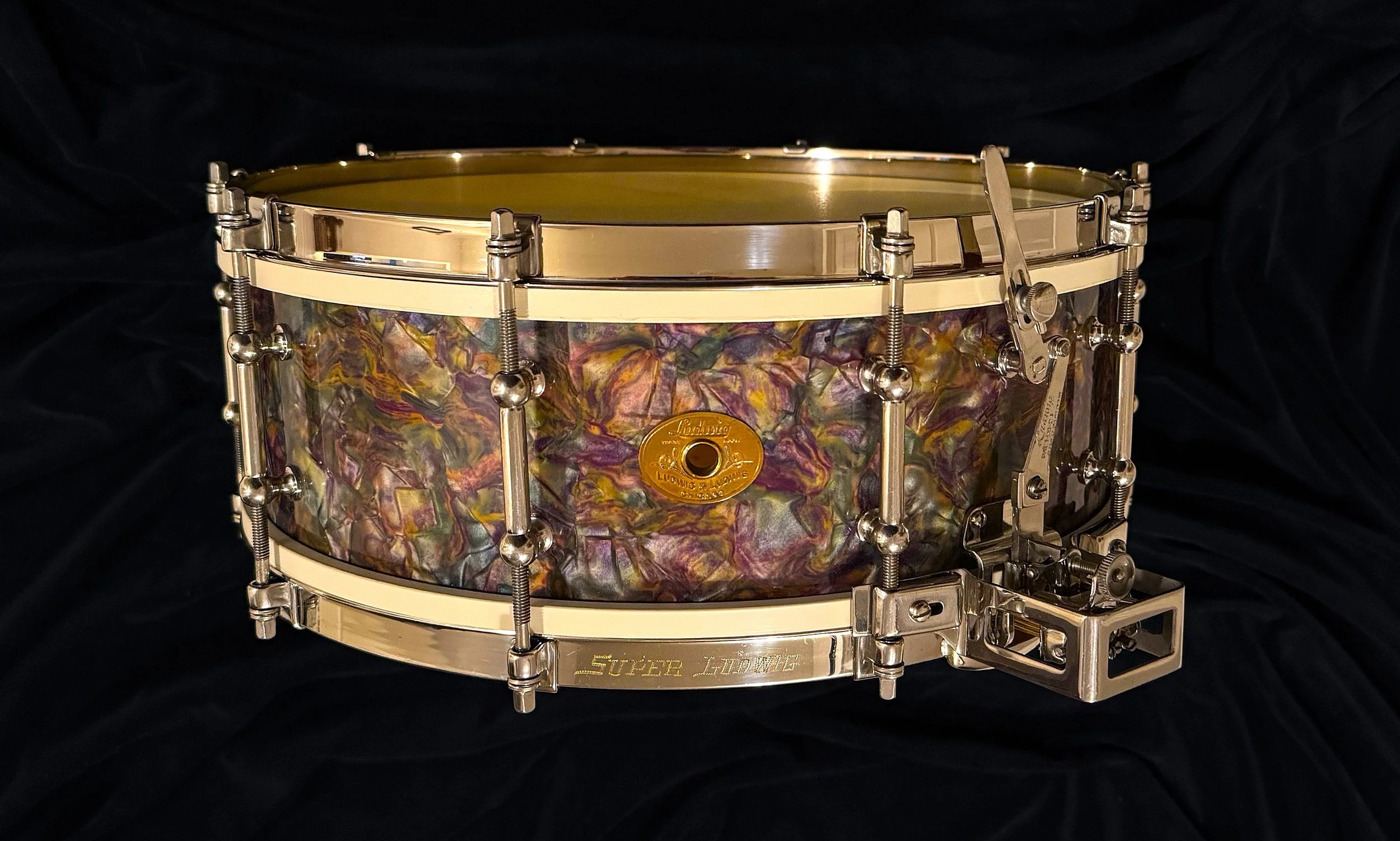
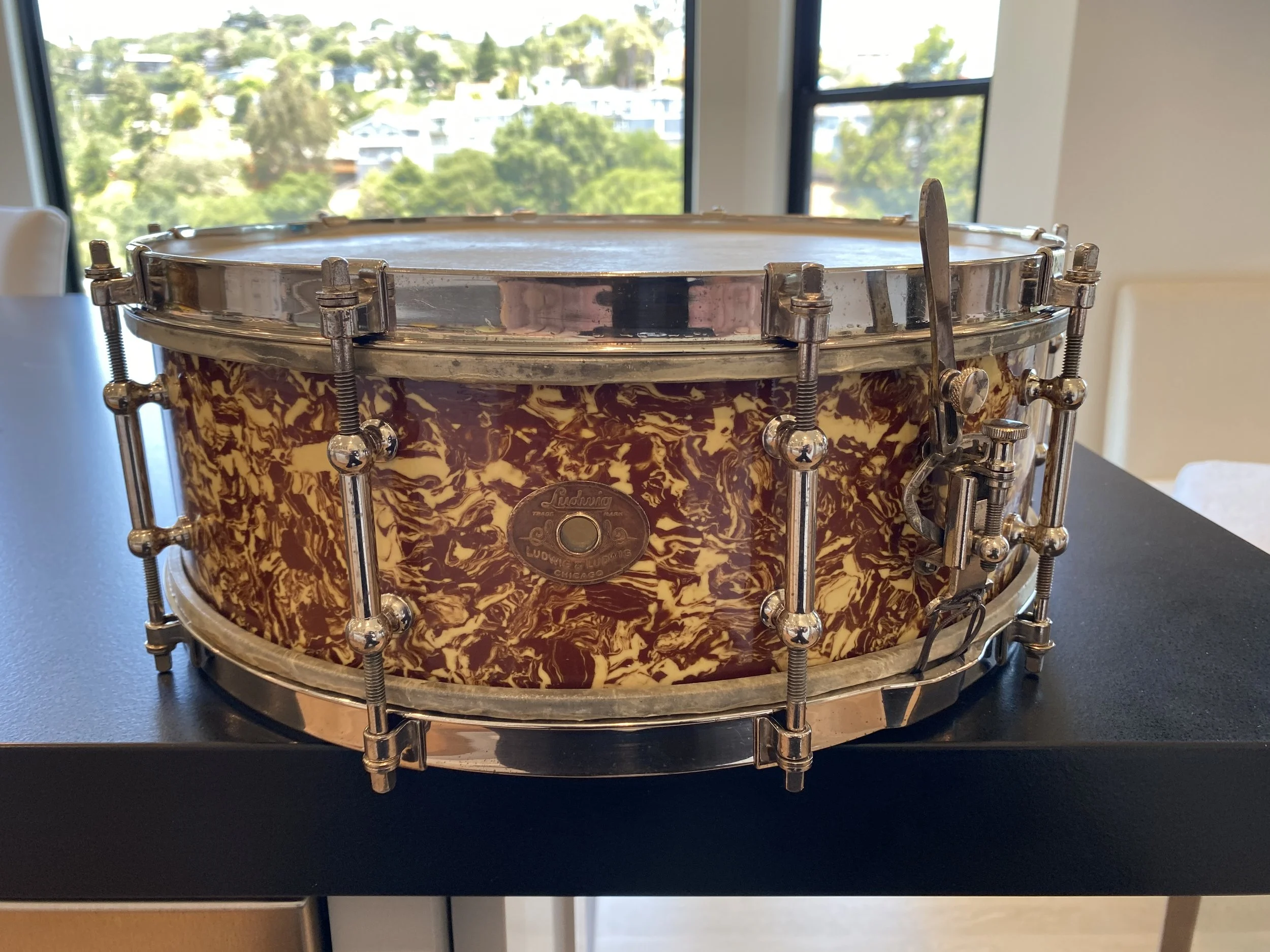
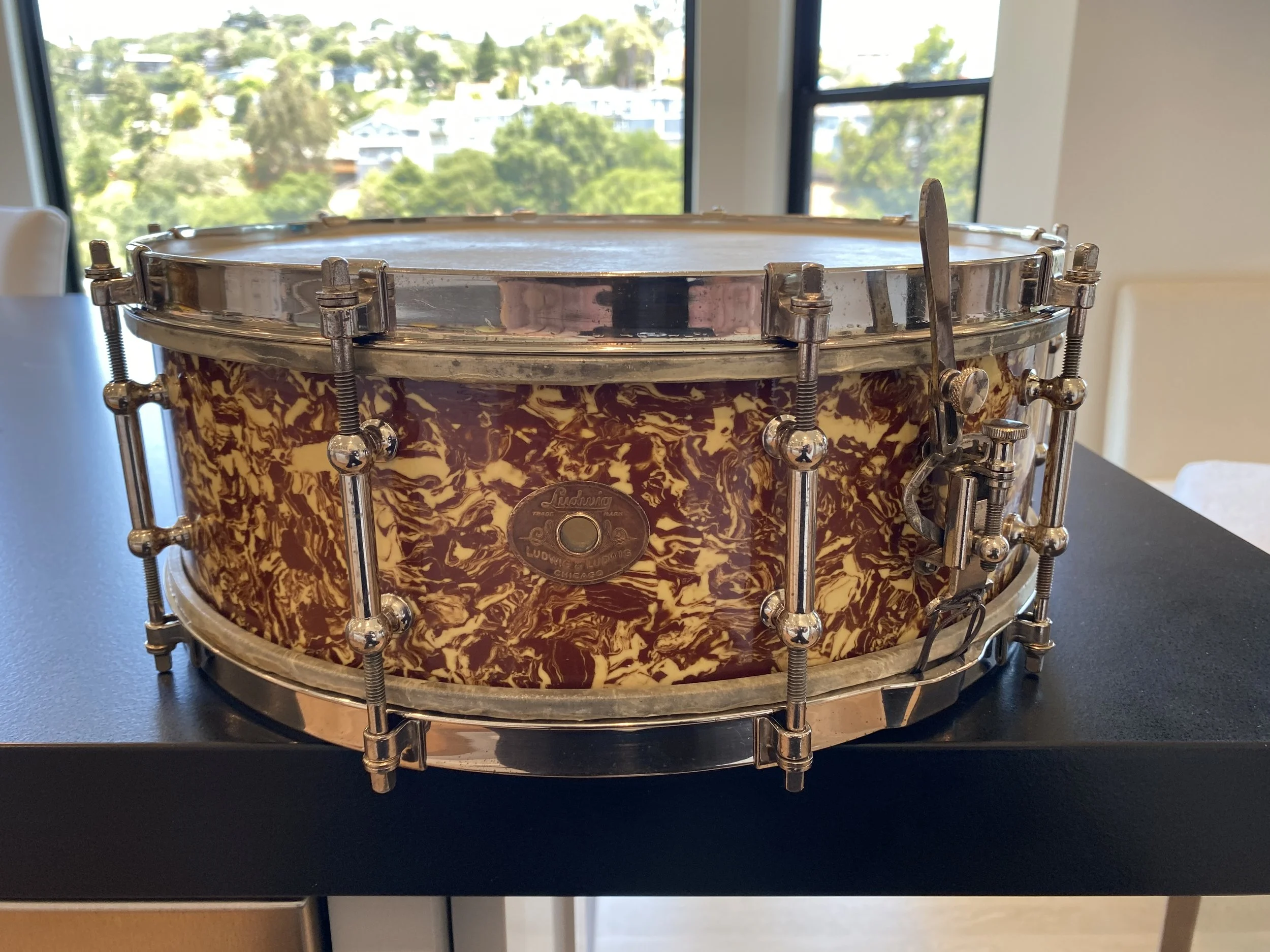
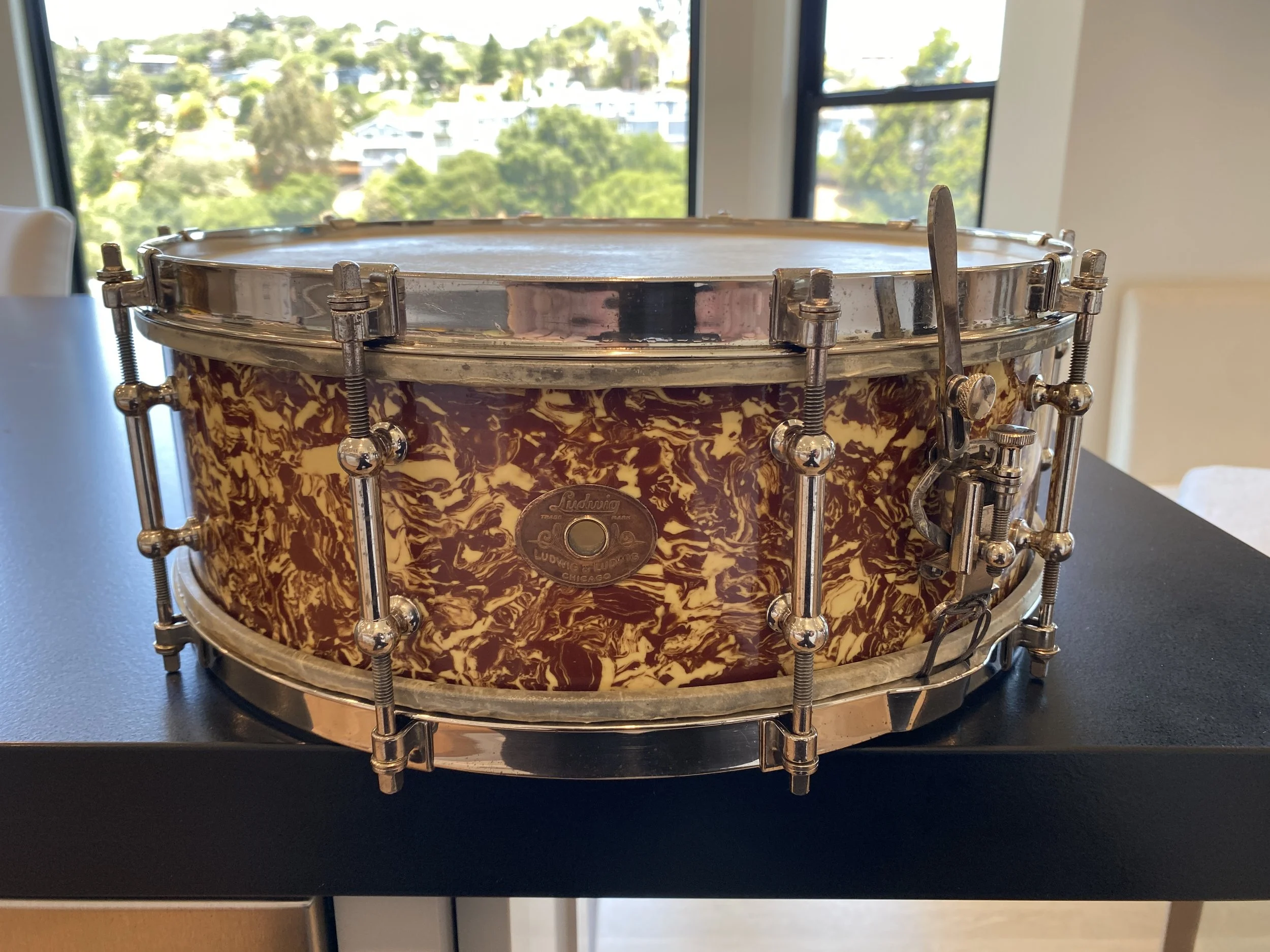
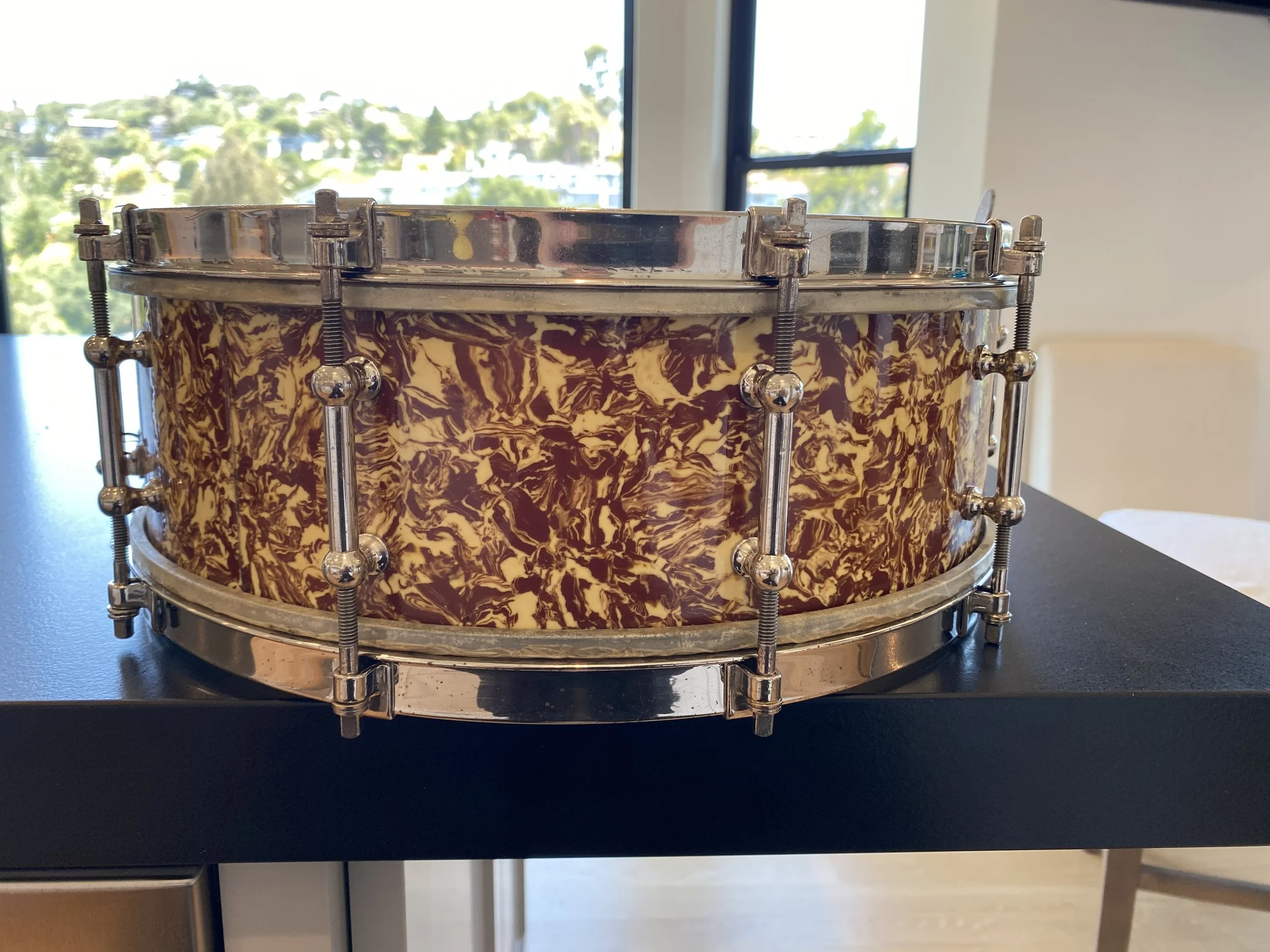
When you look at the parallel snare system — what most people refer to as the Super-Sensitive mechanism — you’re seeing Ludwig trying to solve a very specific problem. Not volume. Not durability. Control.
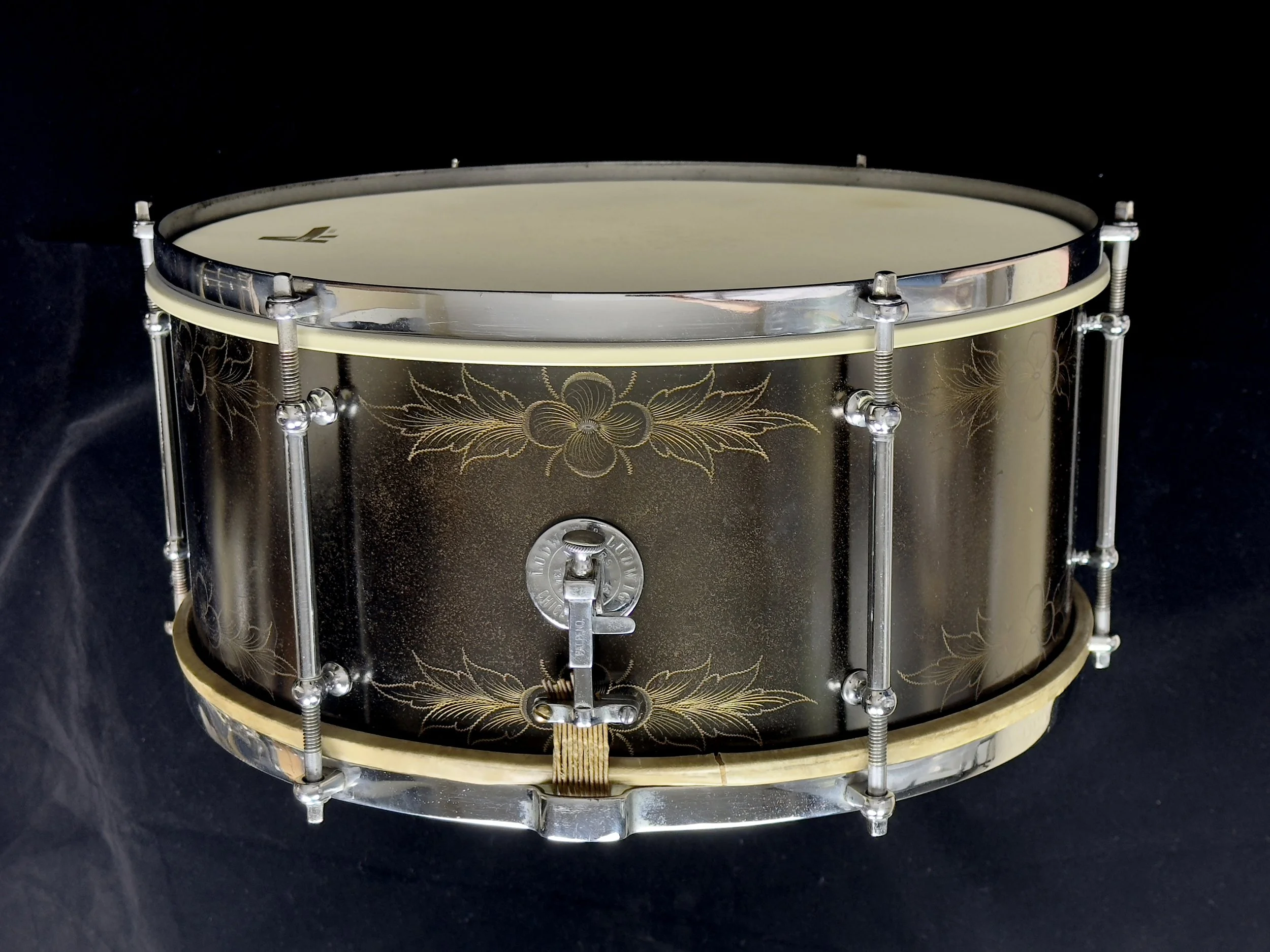
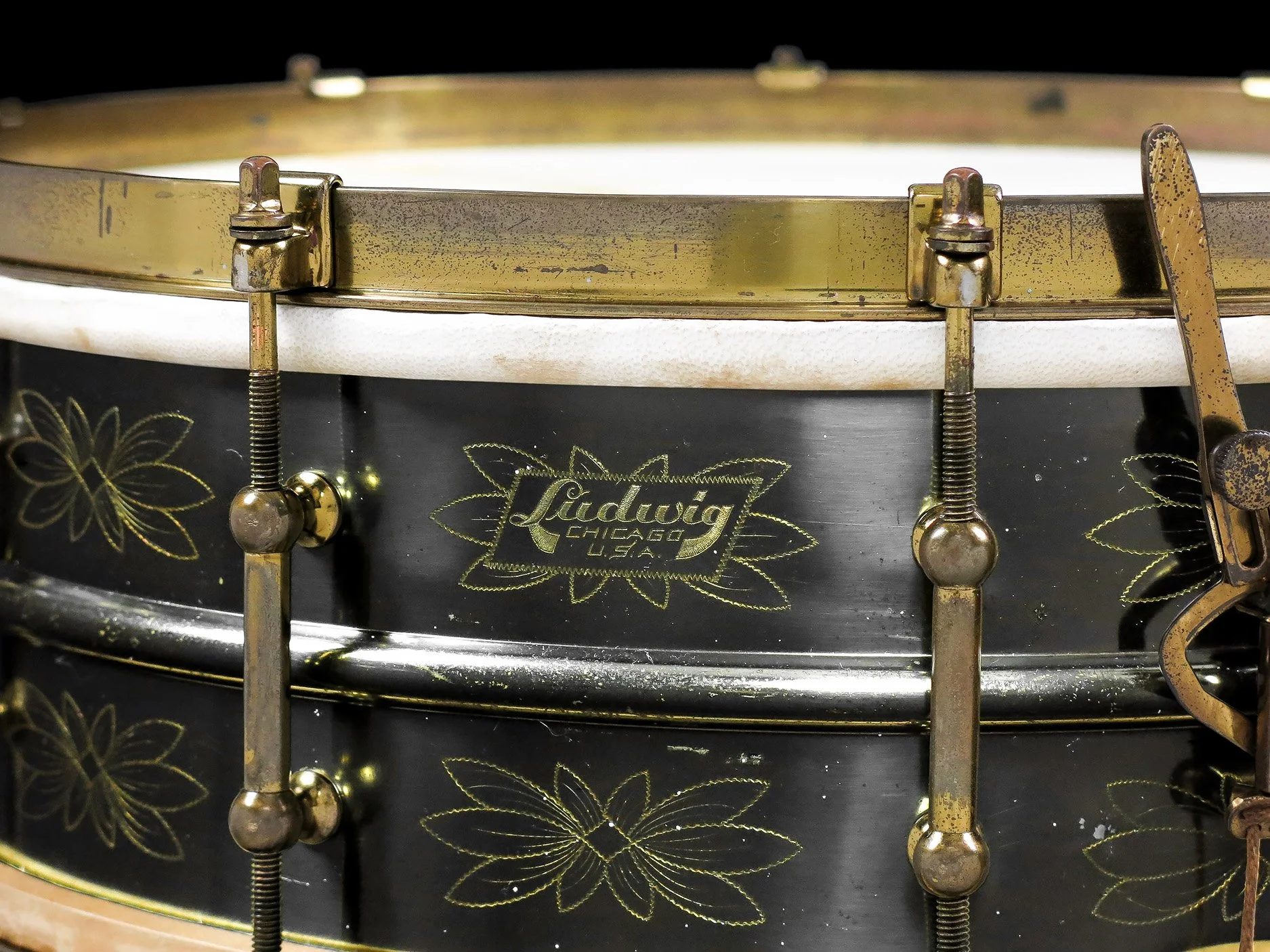
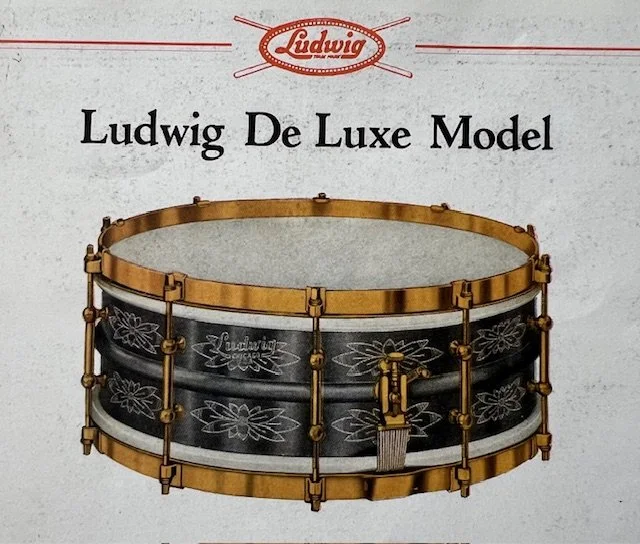
Read moreI decided to take a gamble. A pretty big gamble, actually. I bid high, thinking there was at least a chance this mystery drum could be an early engraved Ludwig De Luxe/Black Beauty.
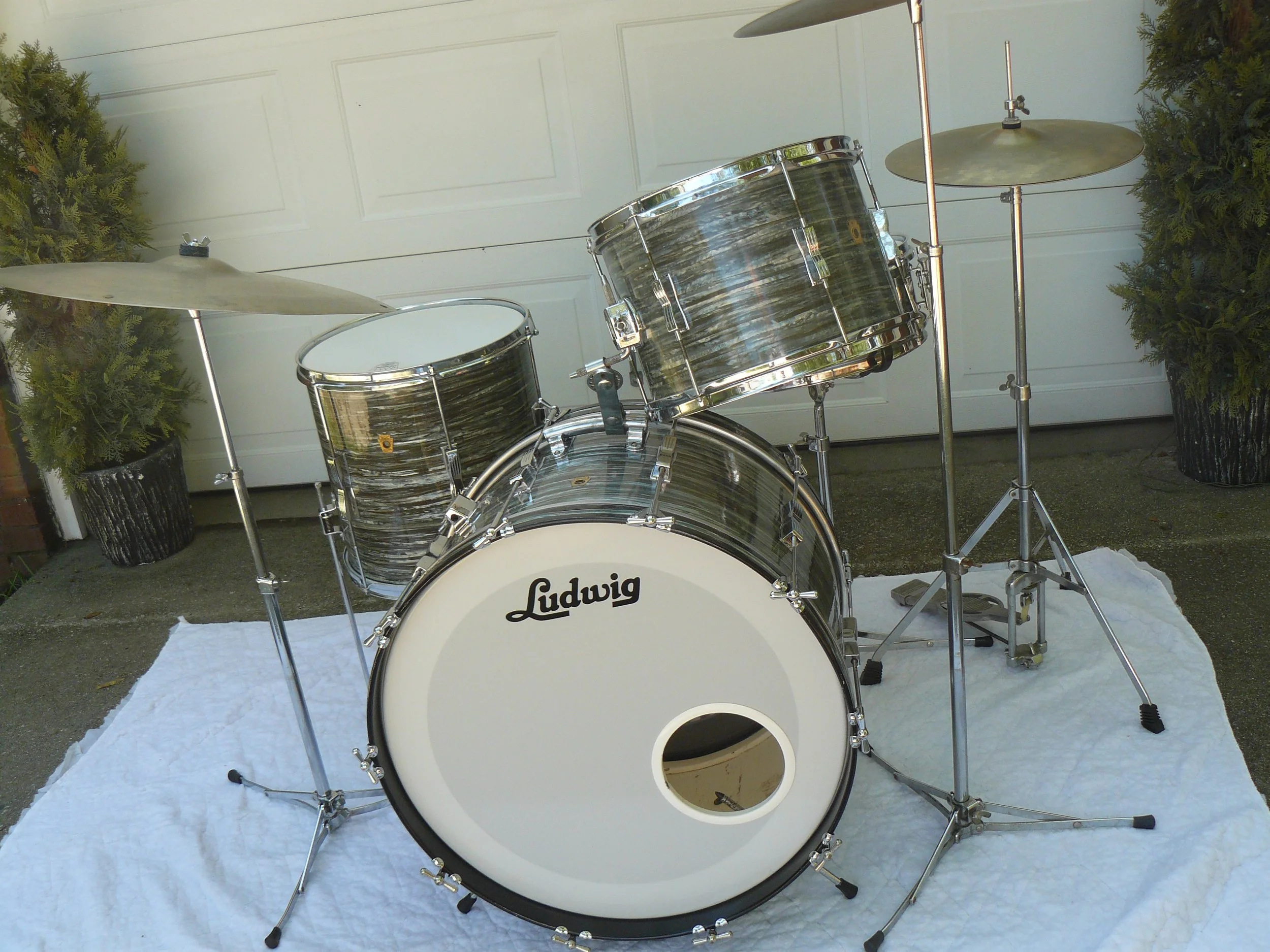
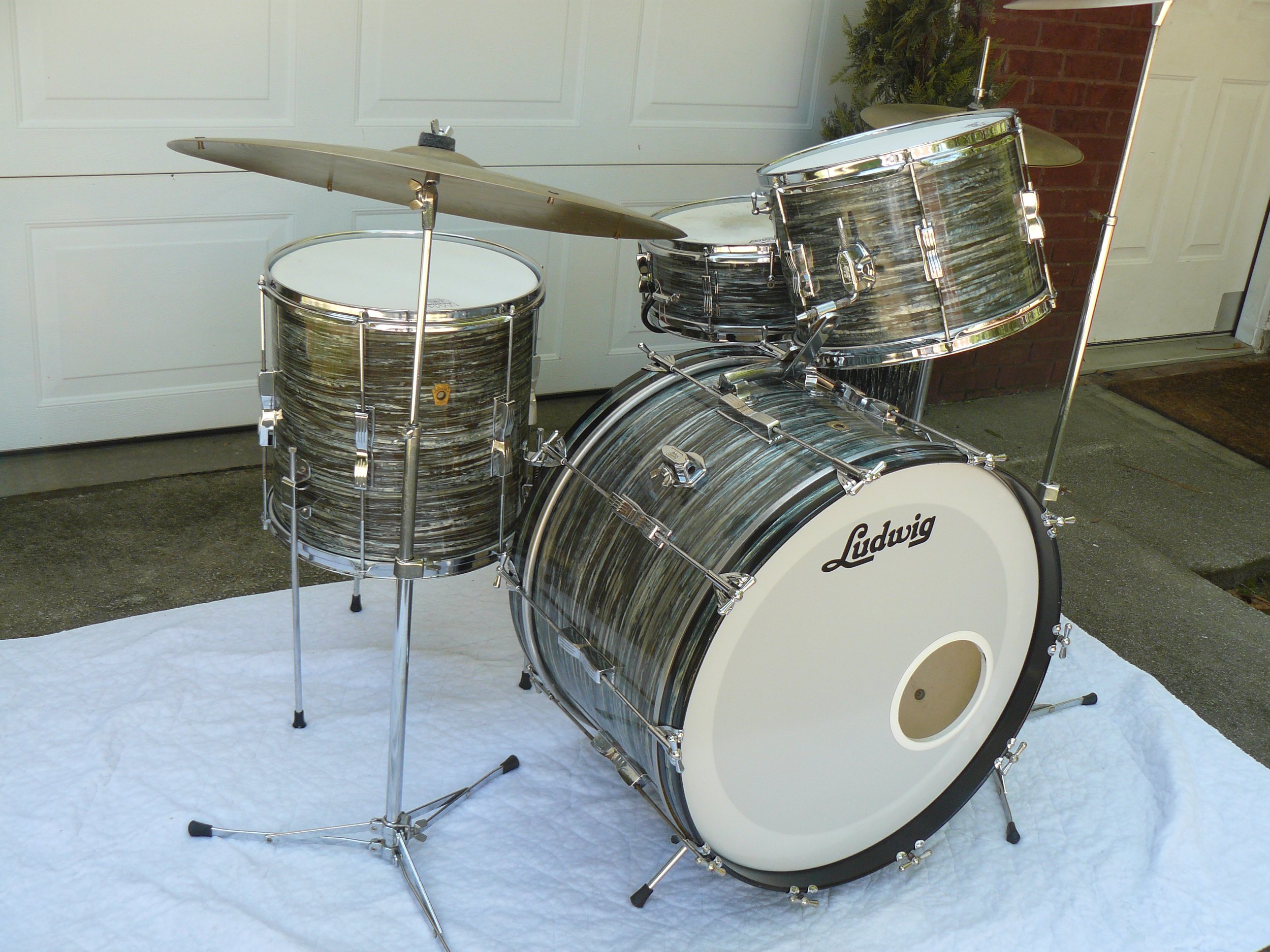
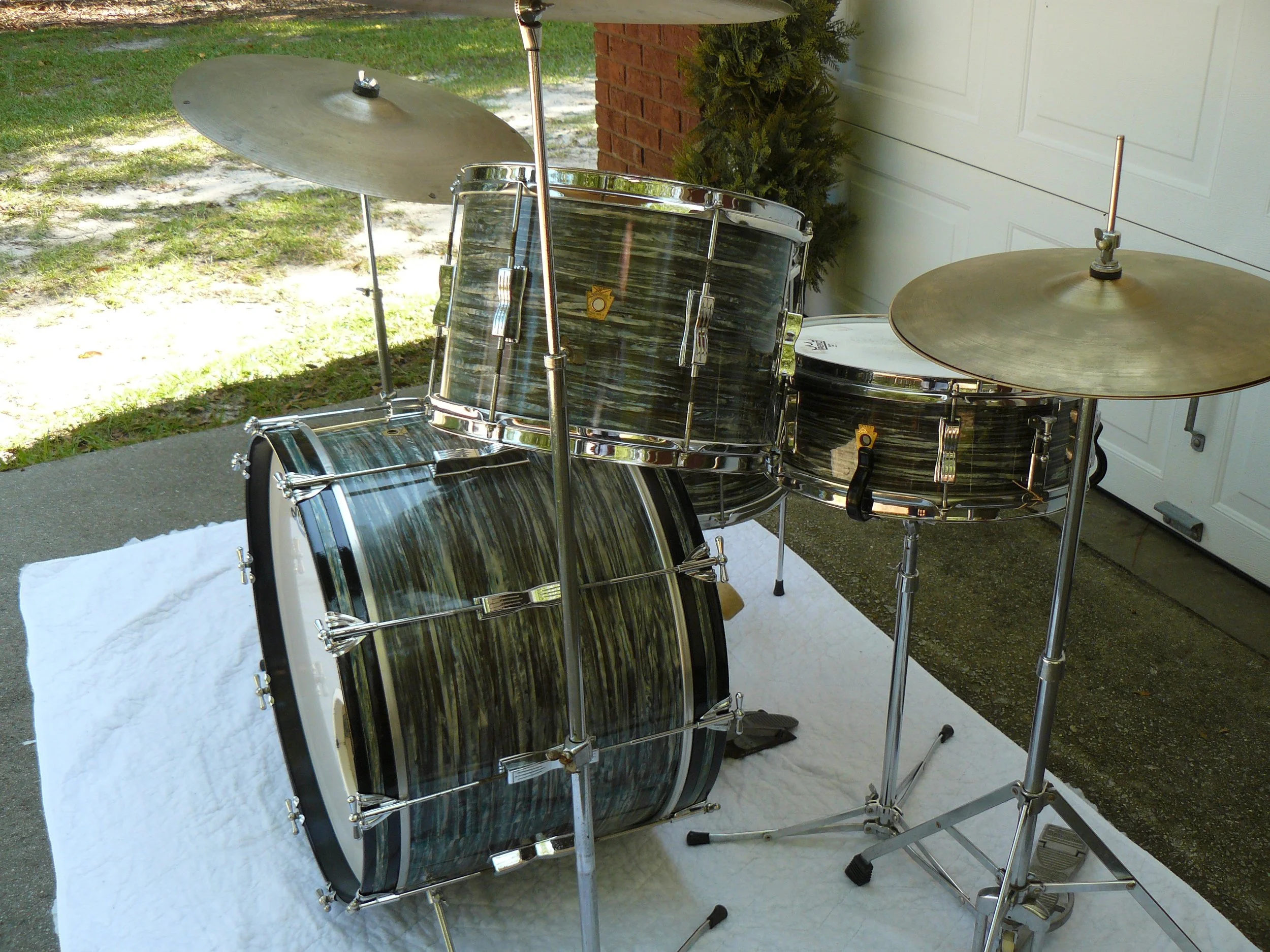
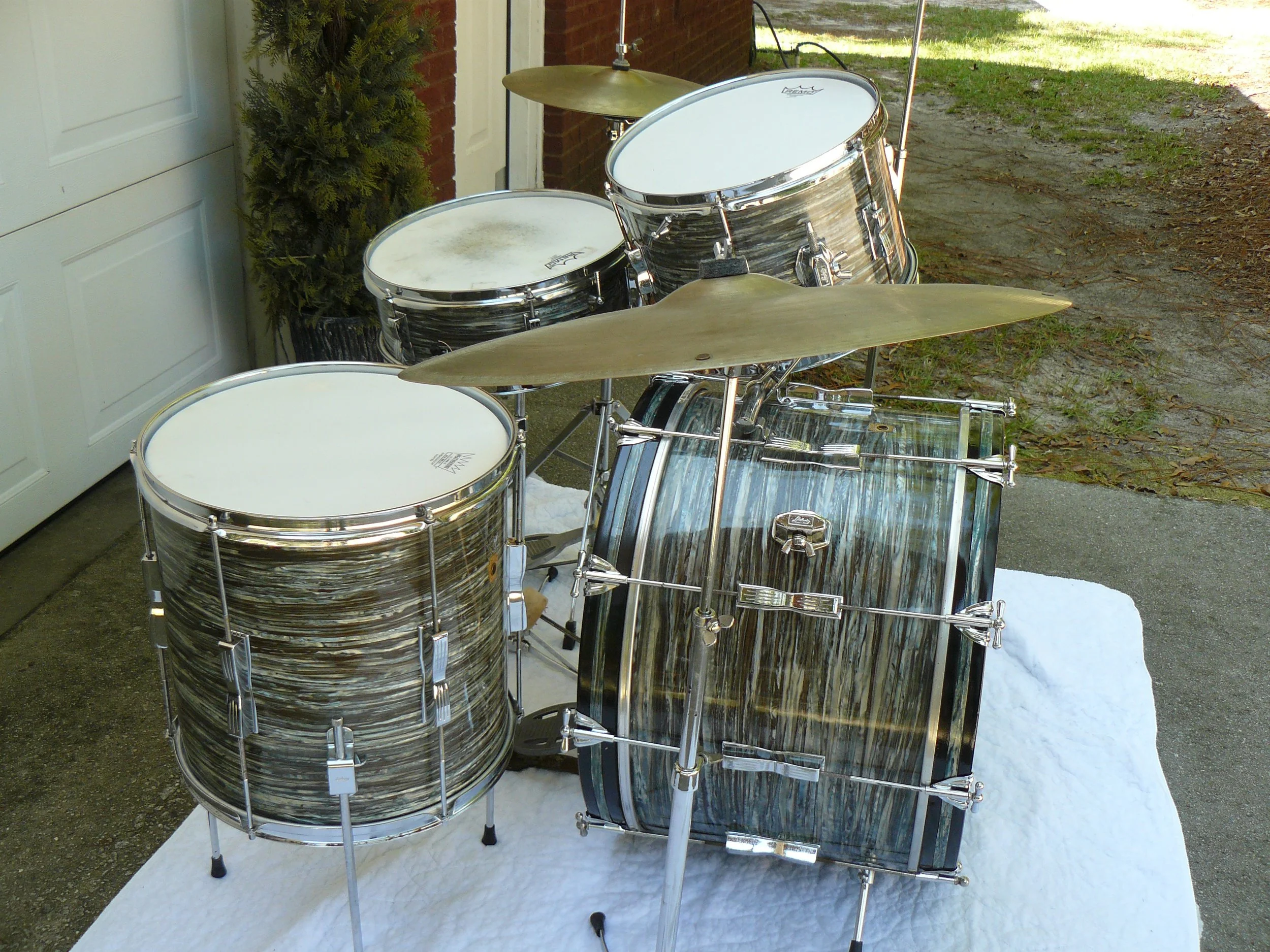
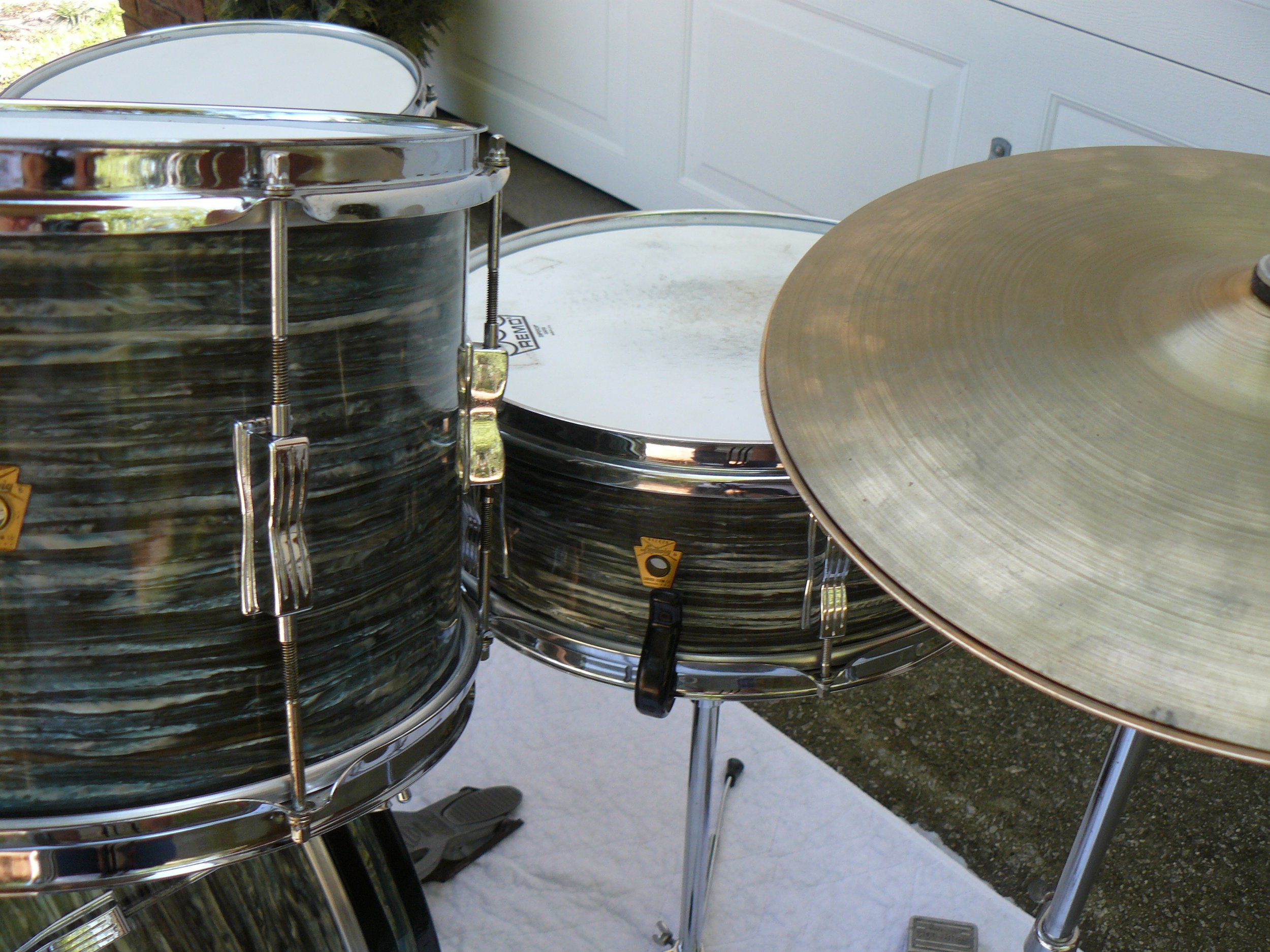
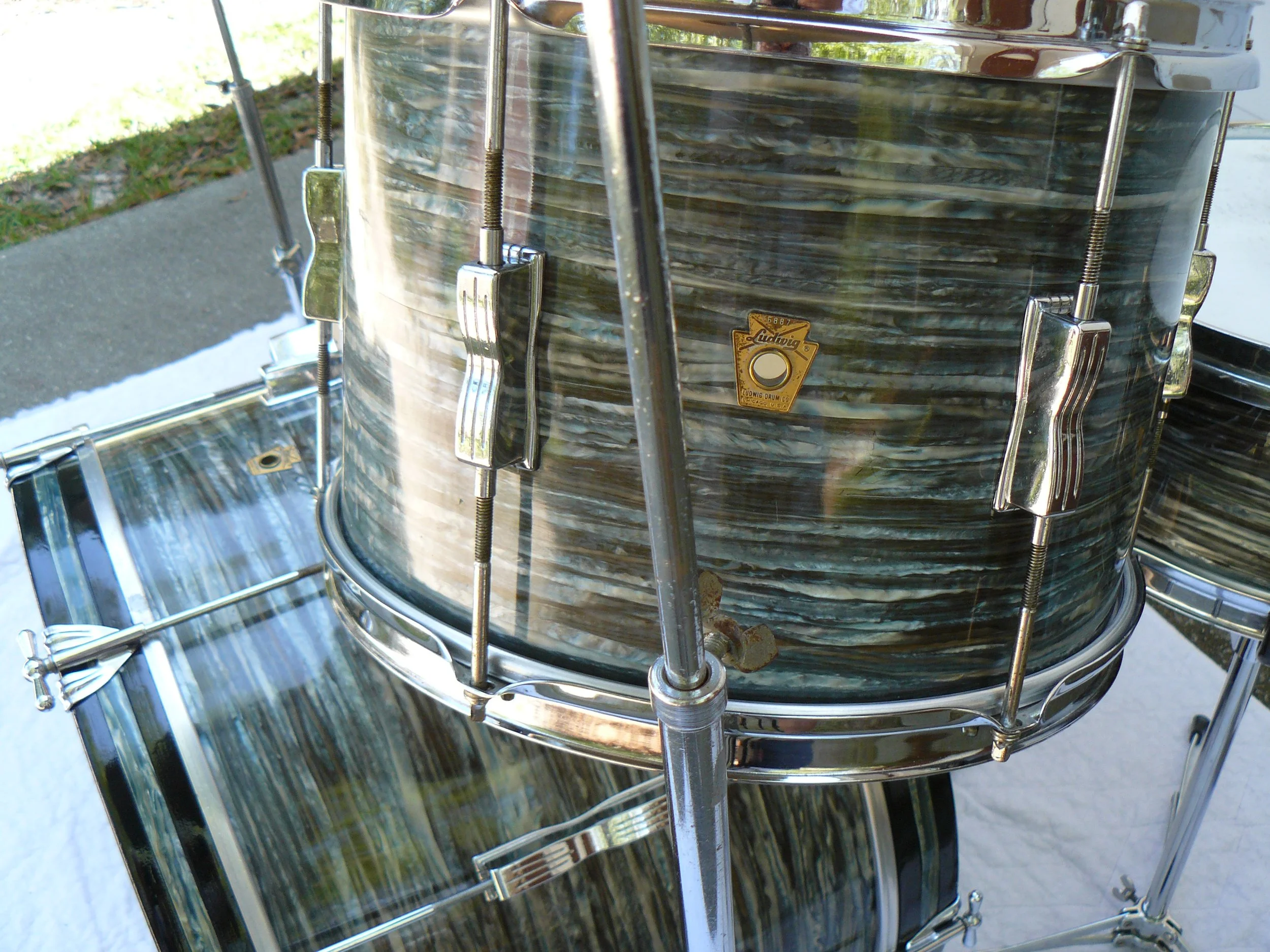
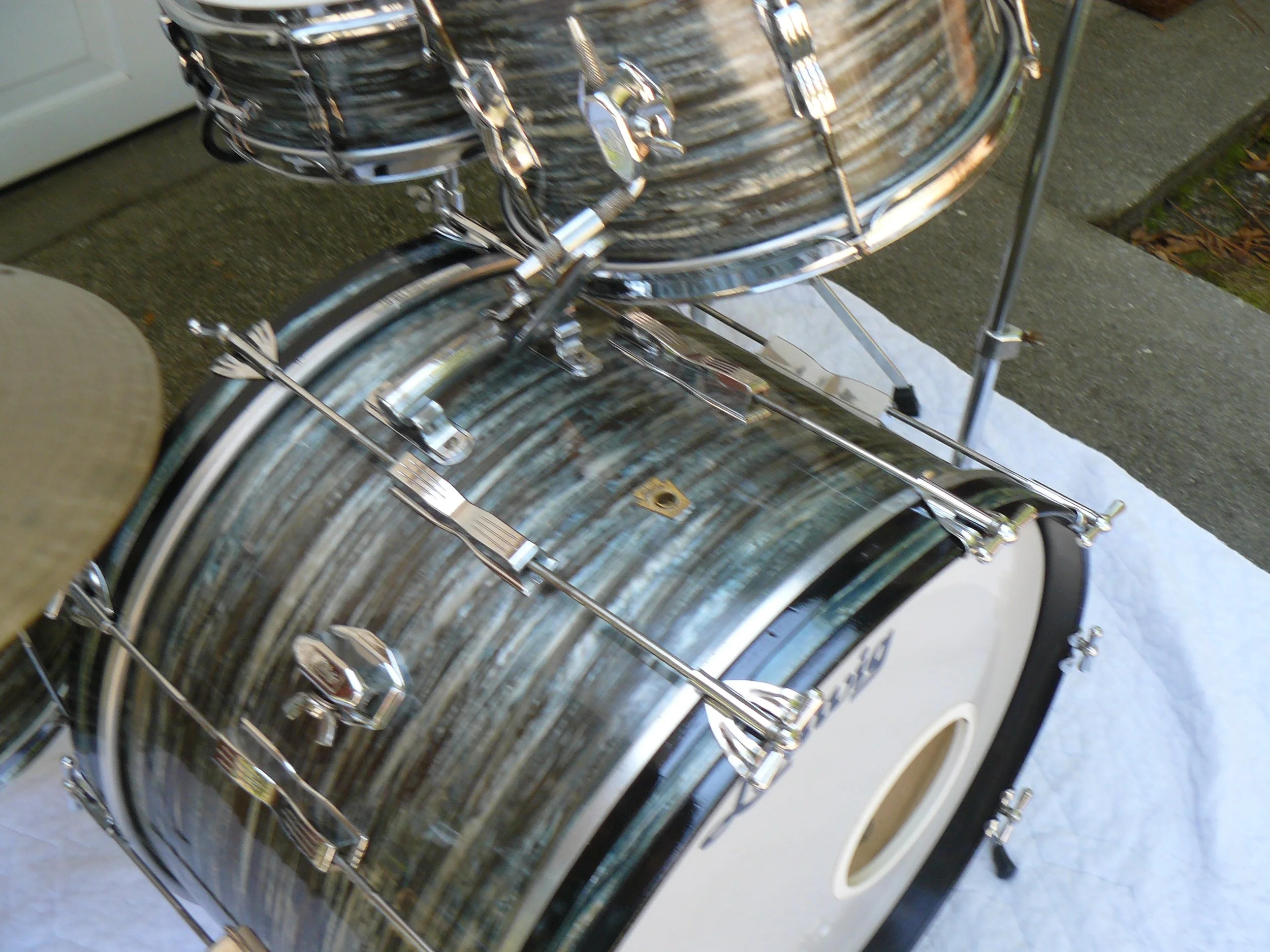
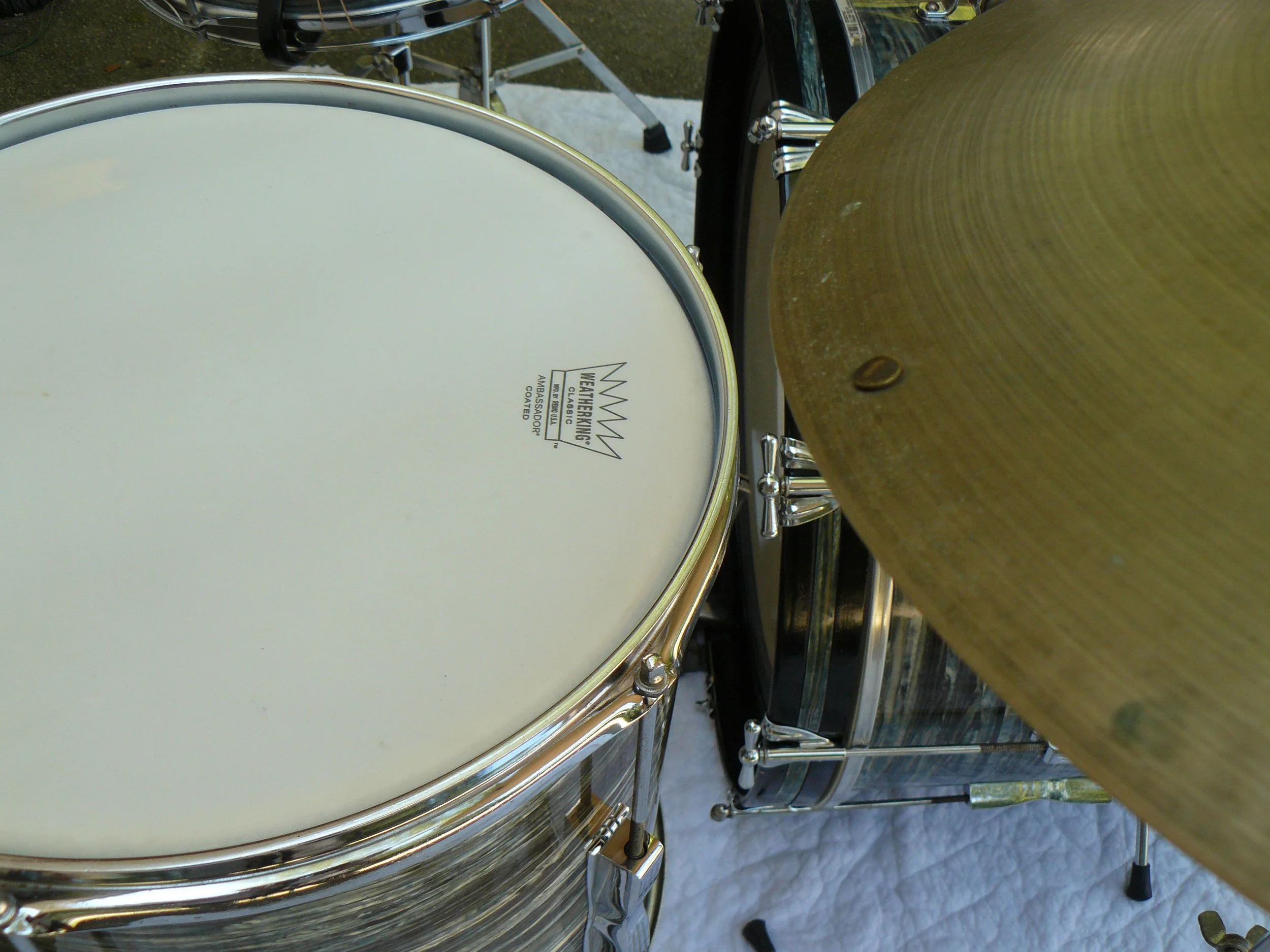
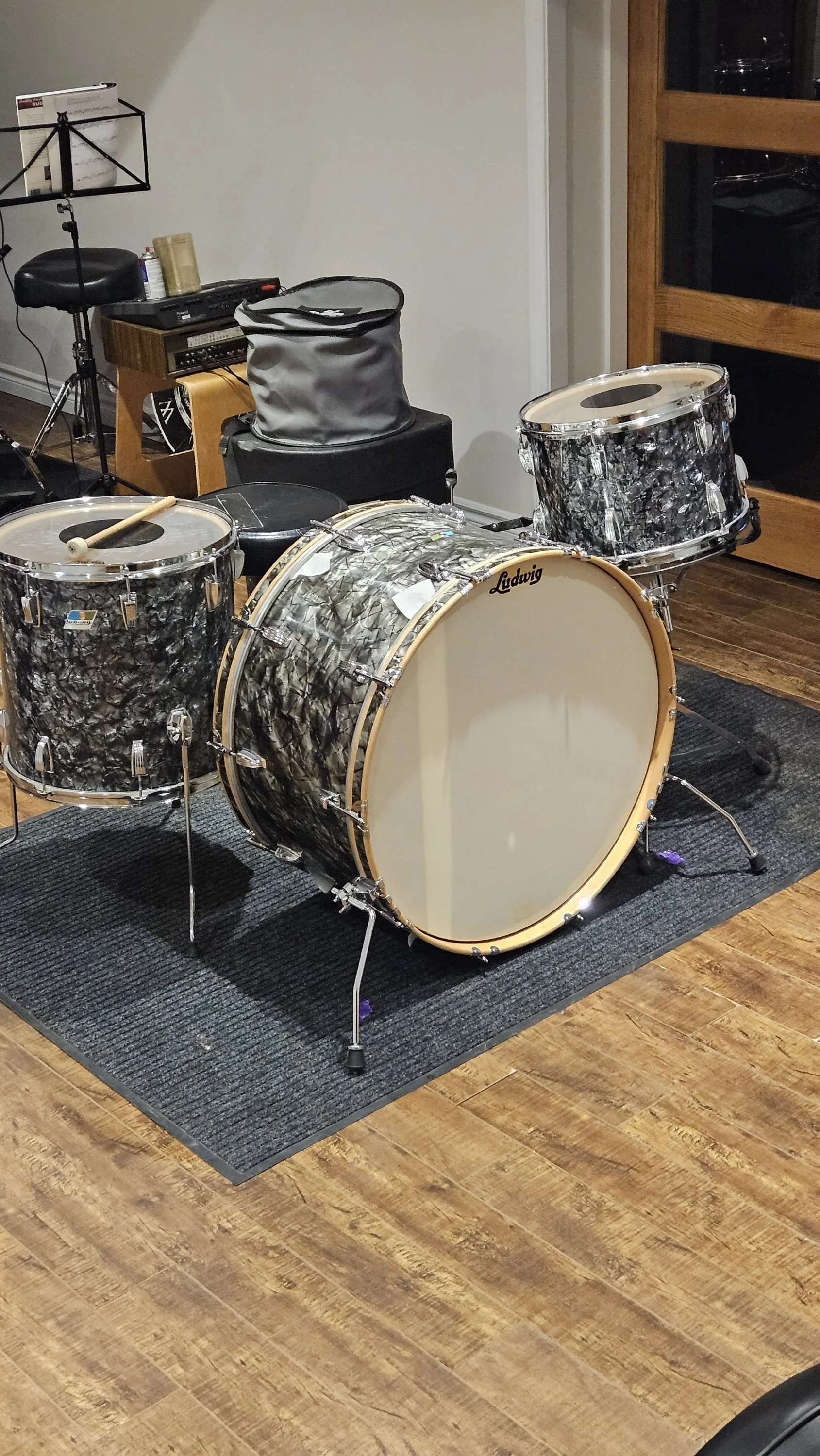
Read moreMy wife and I went to the Music City Drum Show this year held July 18-19 in Nashville, Tennessee at the fairground's exhibition center. We had a wonderful time and bought this very nice 1967 Ludwig Club Date set and matching snare that I want to tell you all about
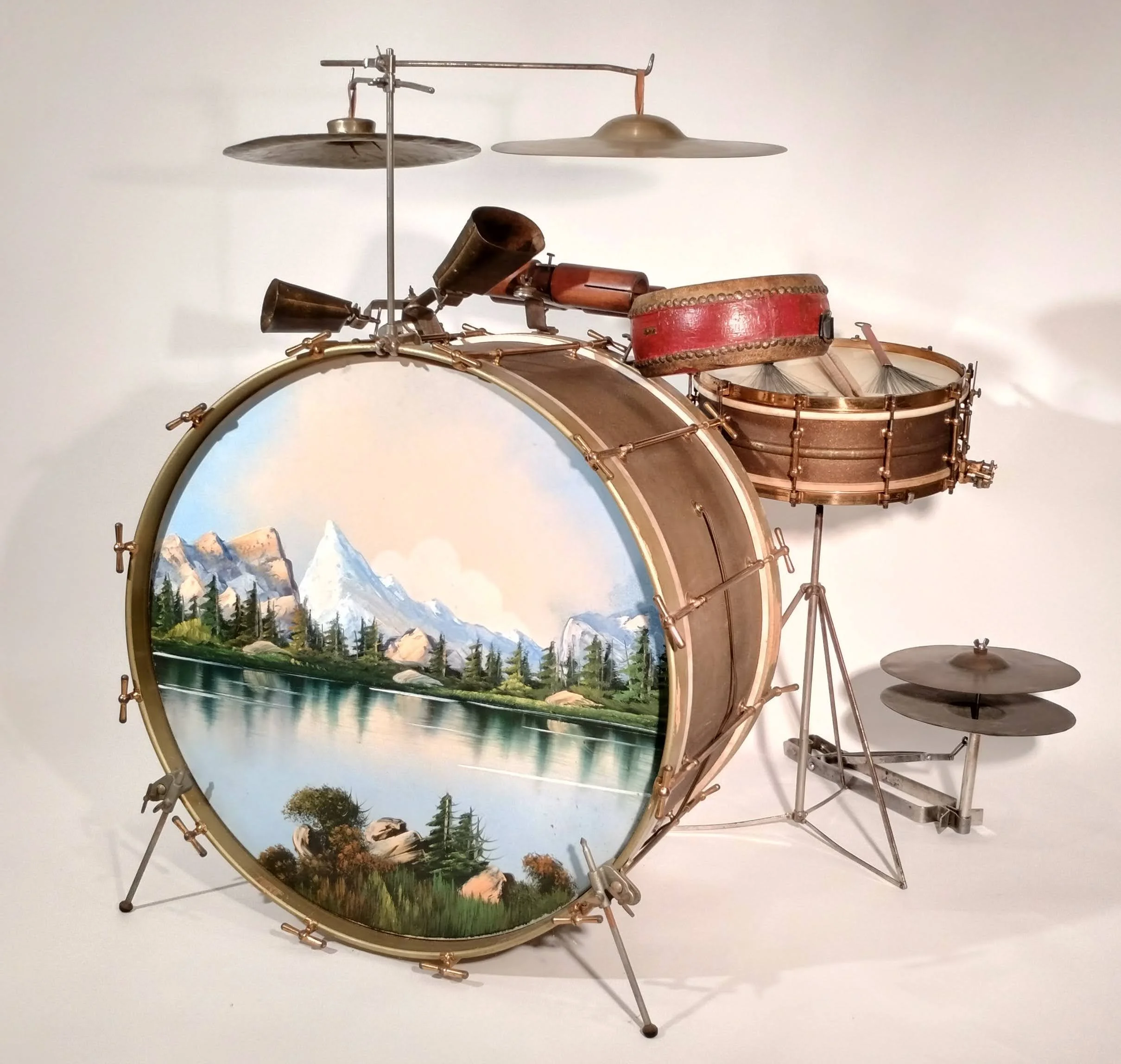
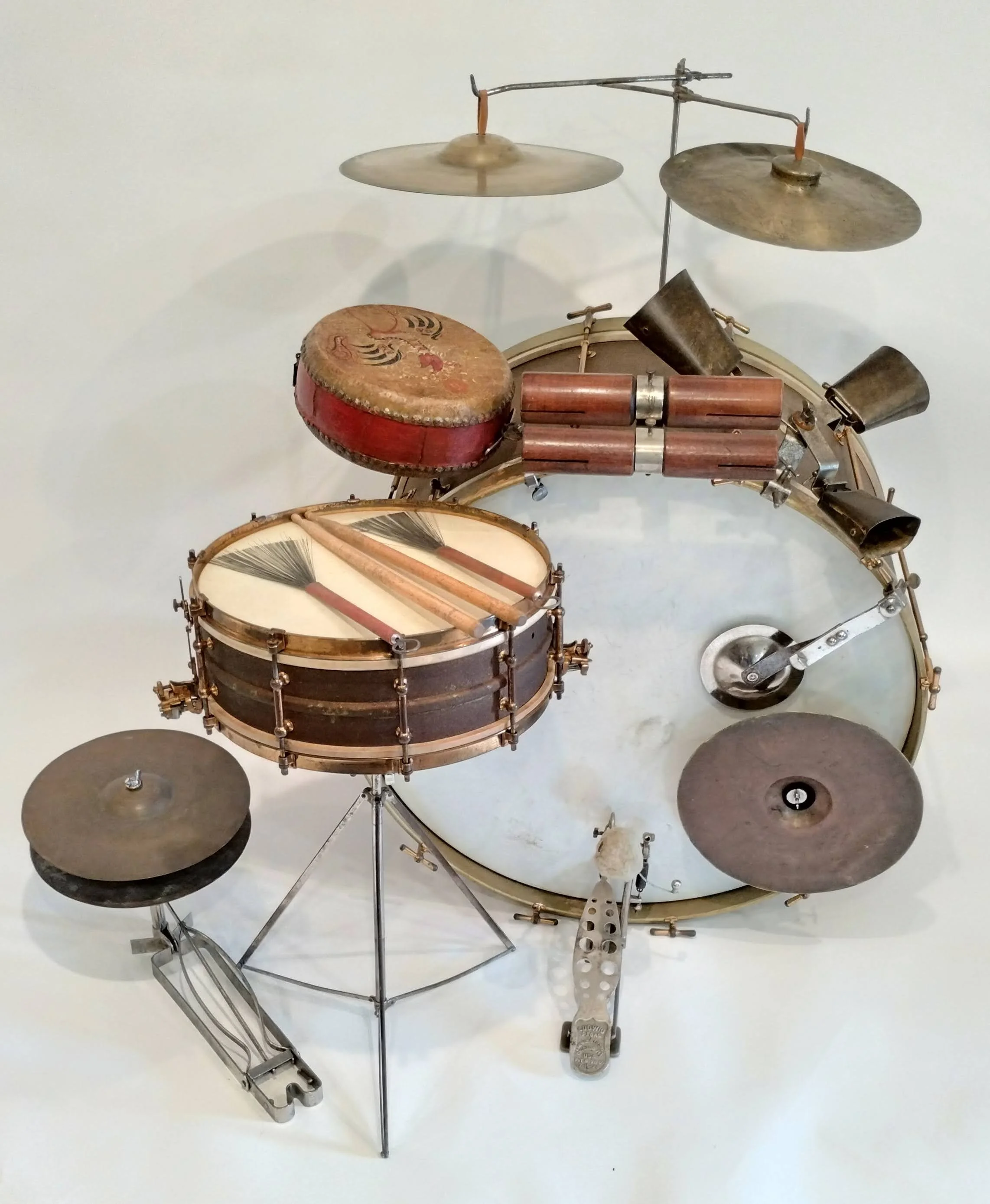
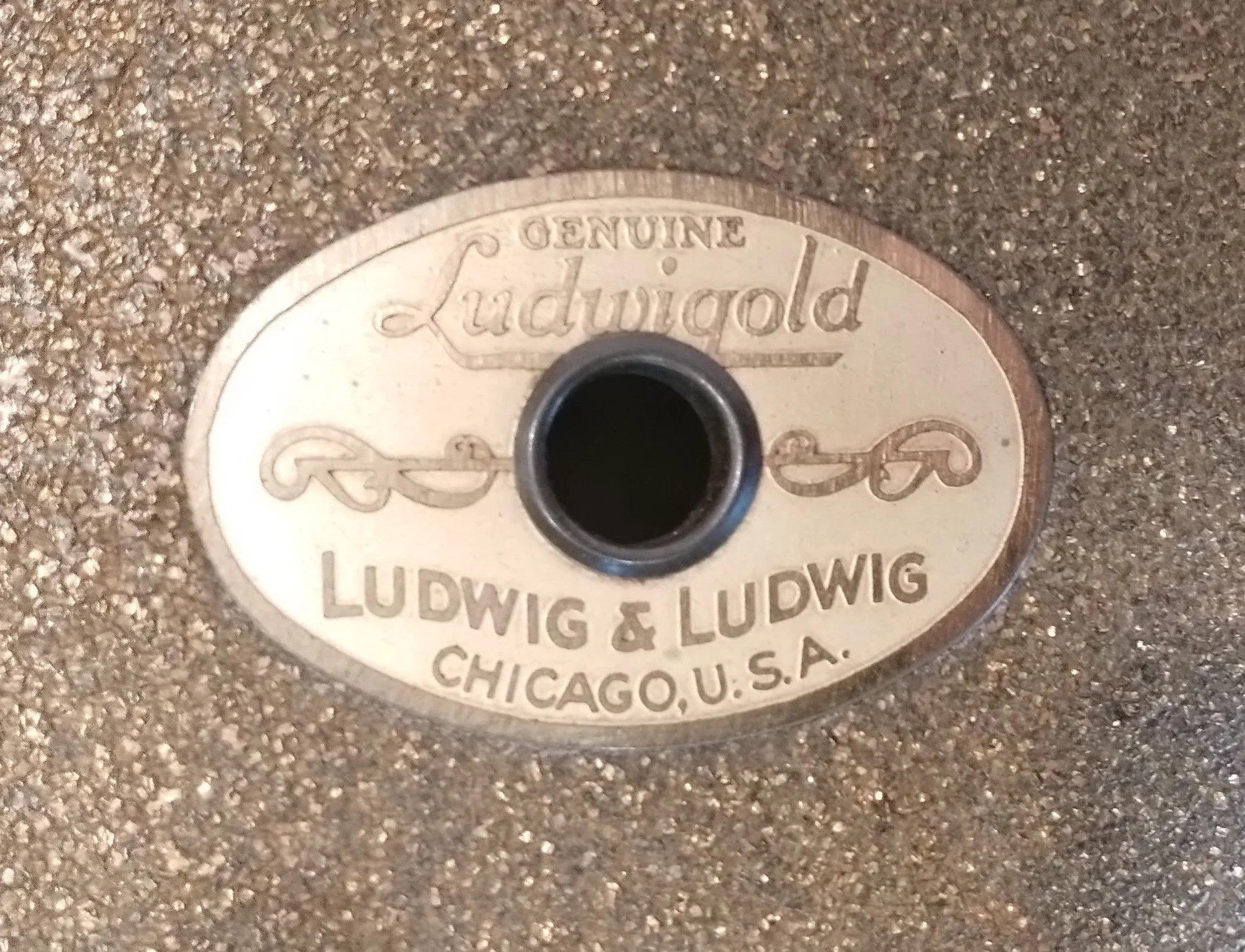
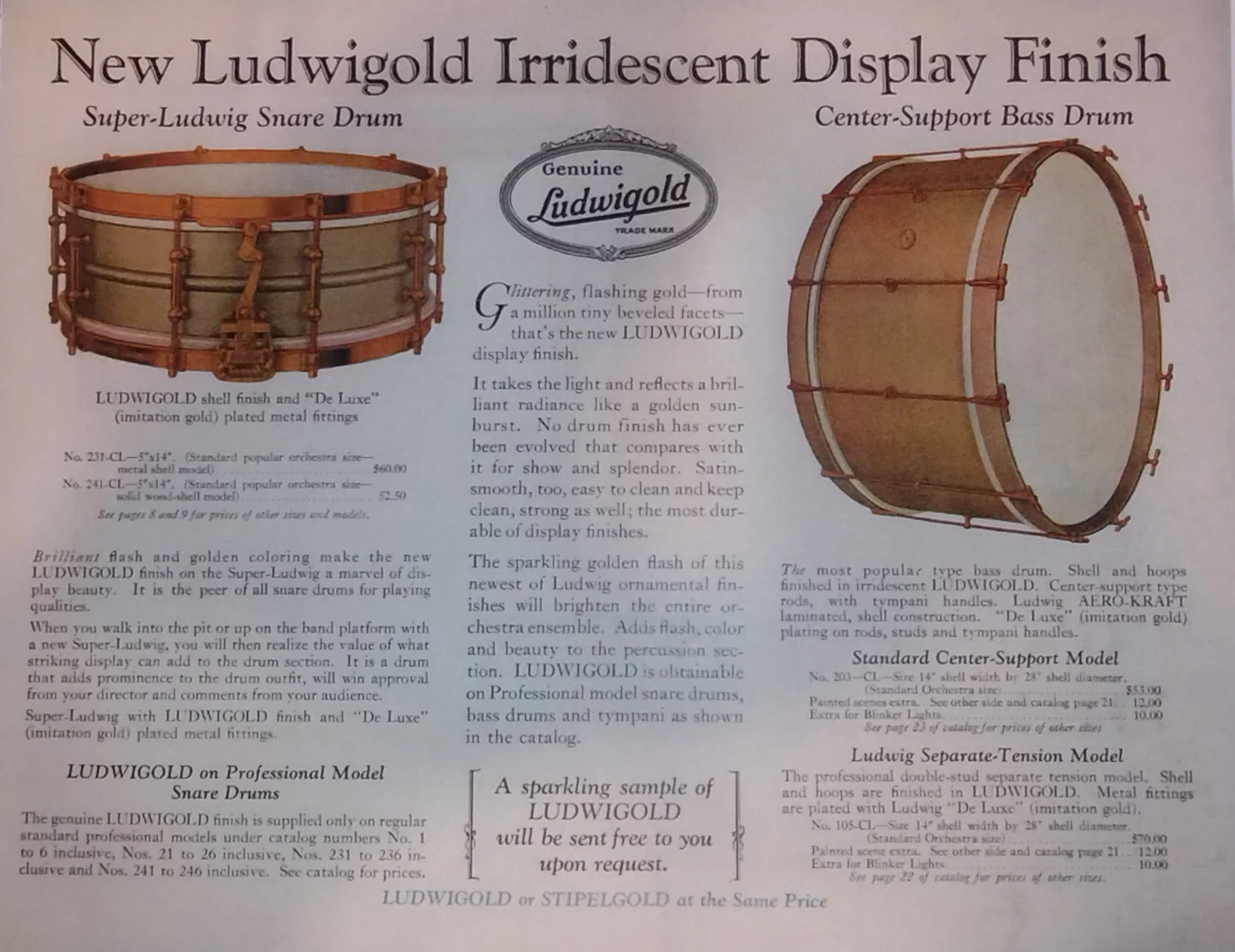
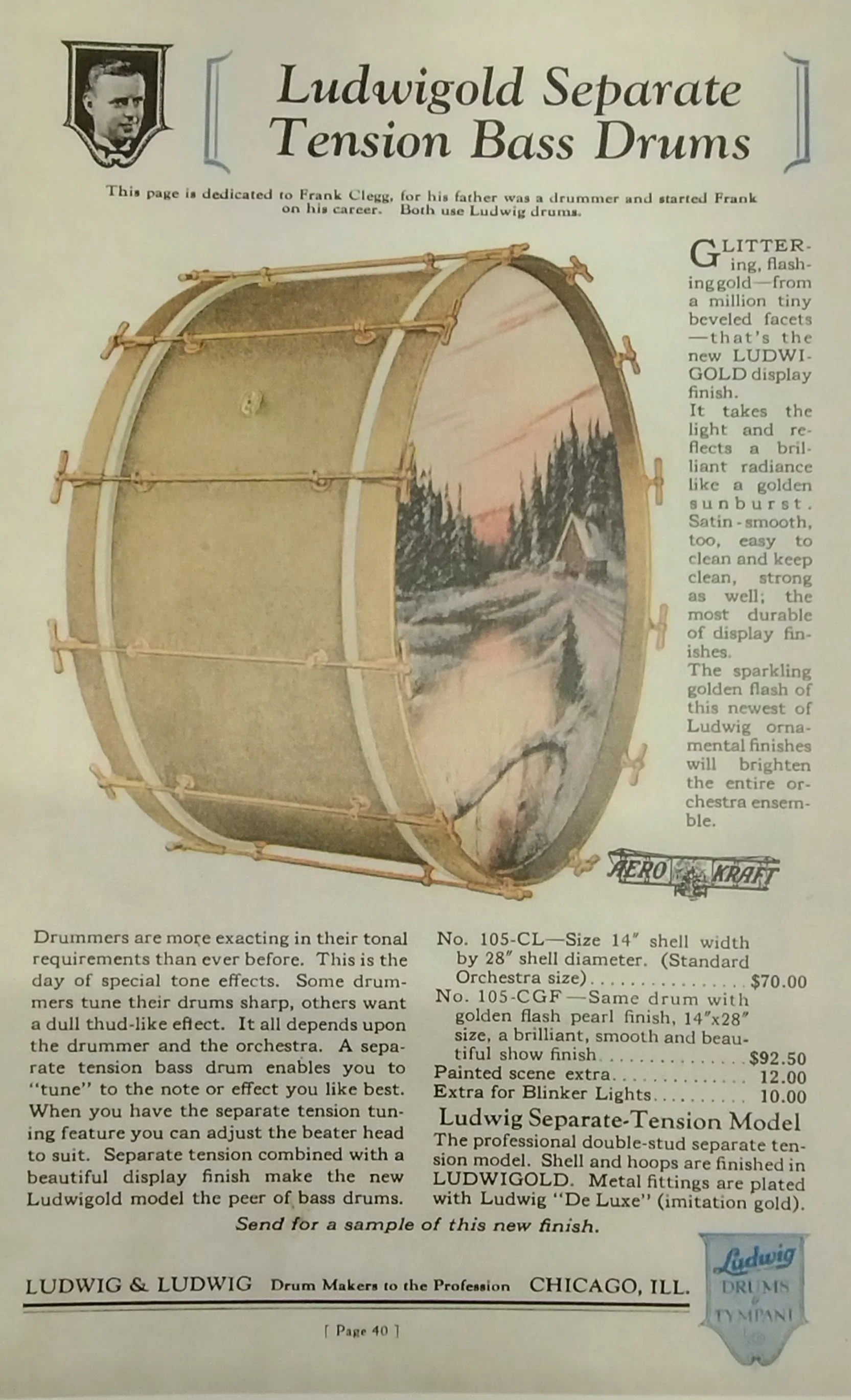
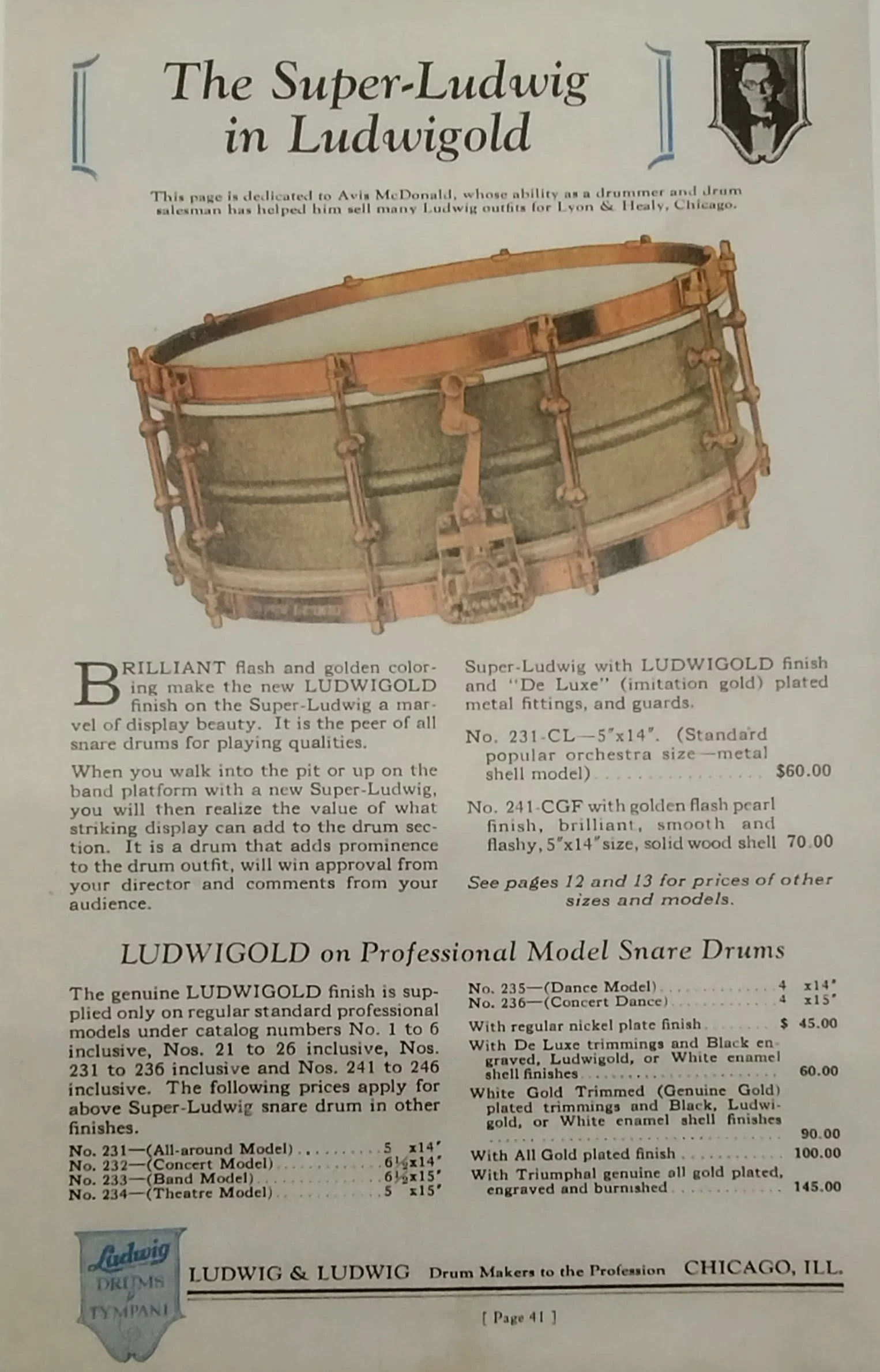
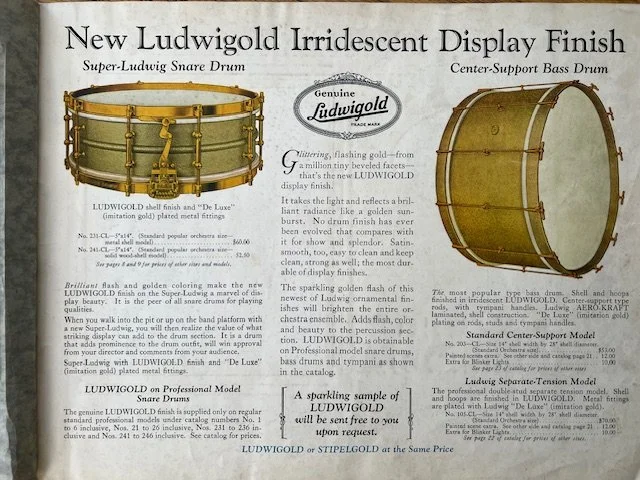
Read moreThe Ludwigold finish was only available from 1927-1930, that’s why I am dating this set as 1928.
Read moreLet’s consider this month’s trap set examples as important steppingstones to the modern-day drum set.
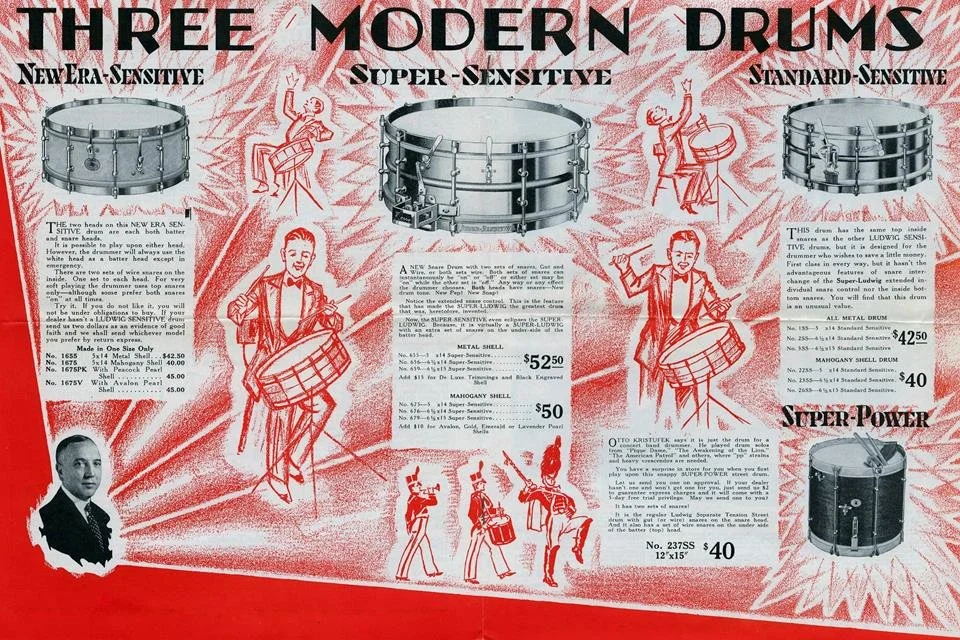
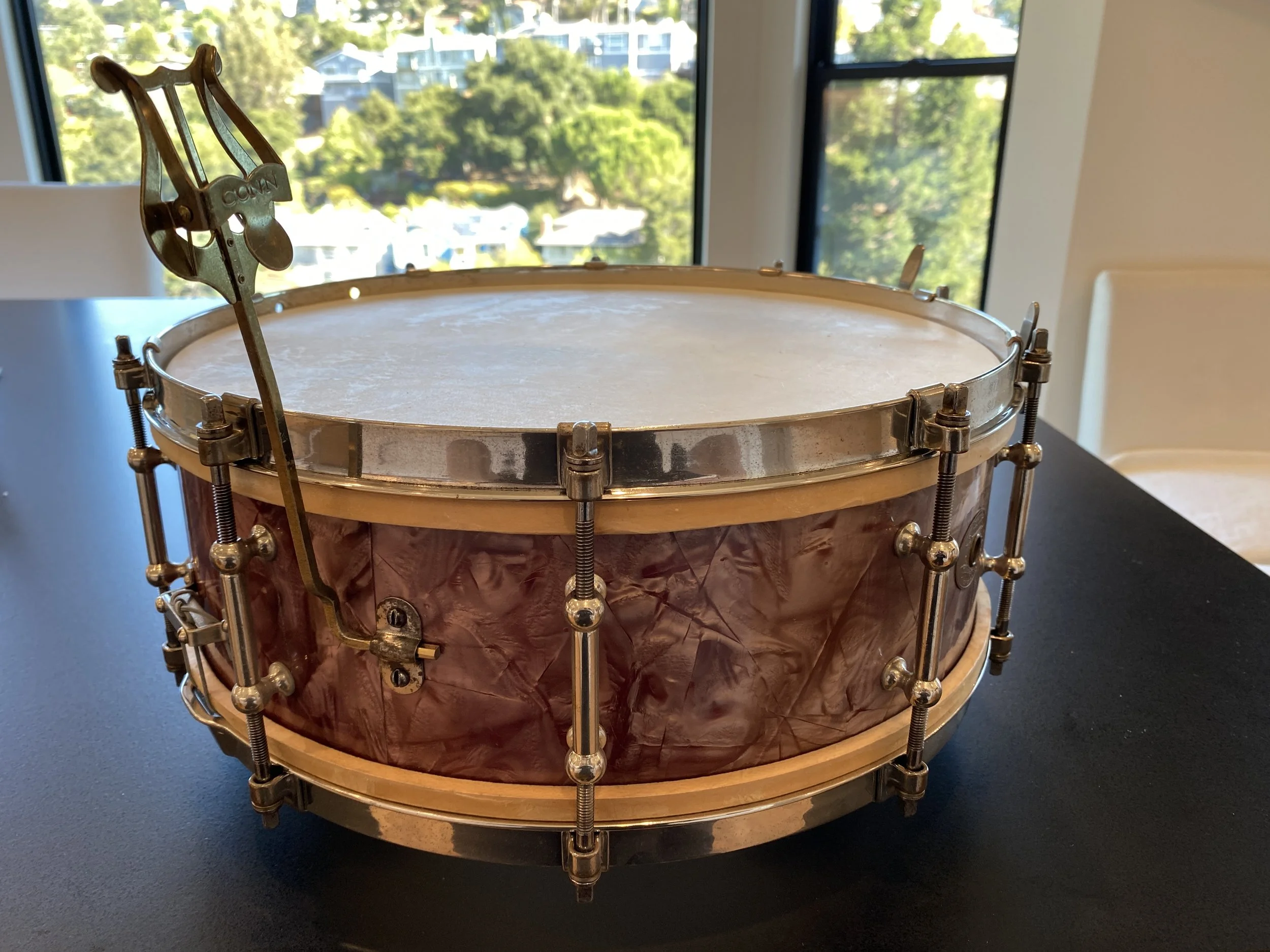
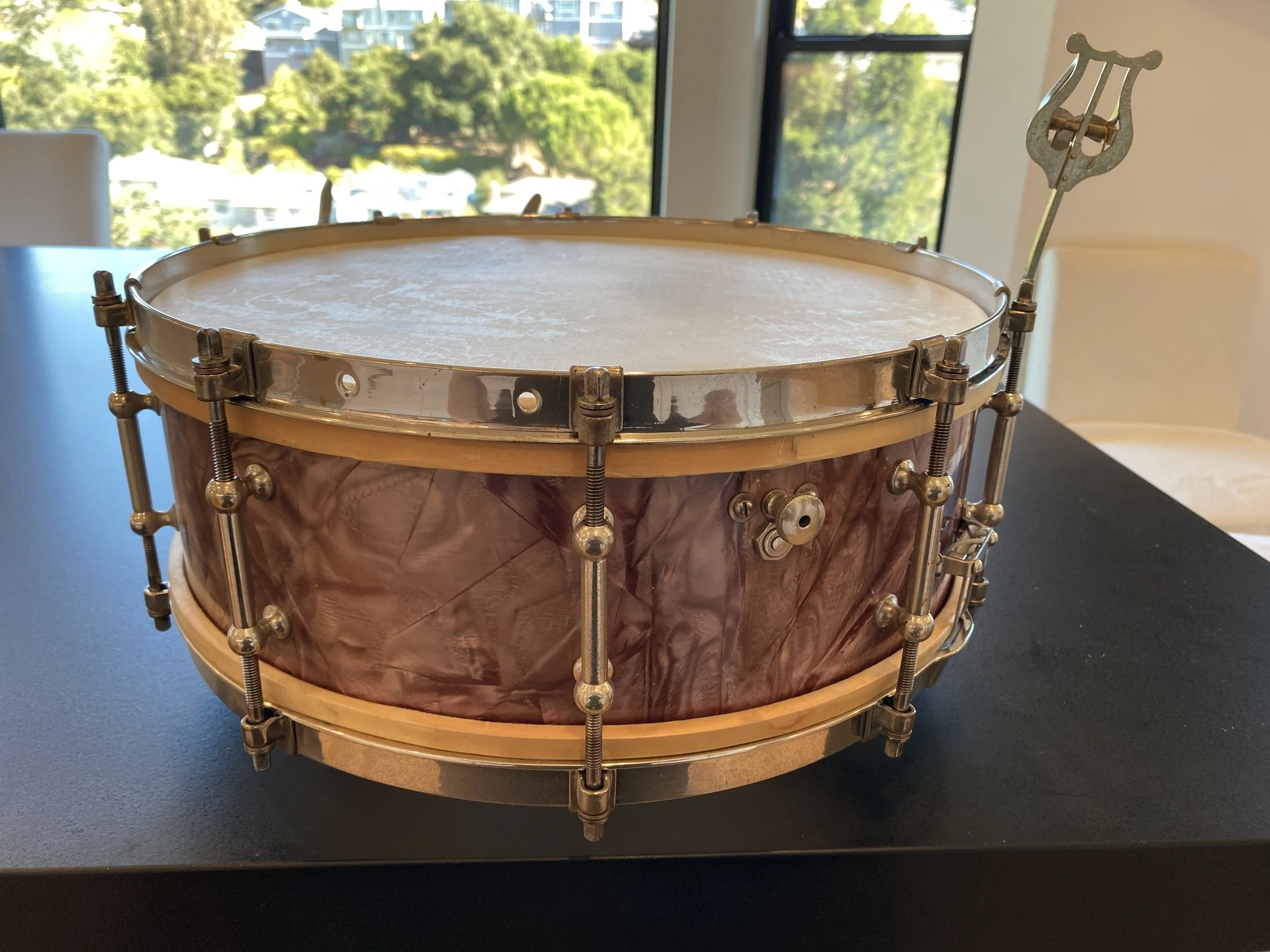
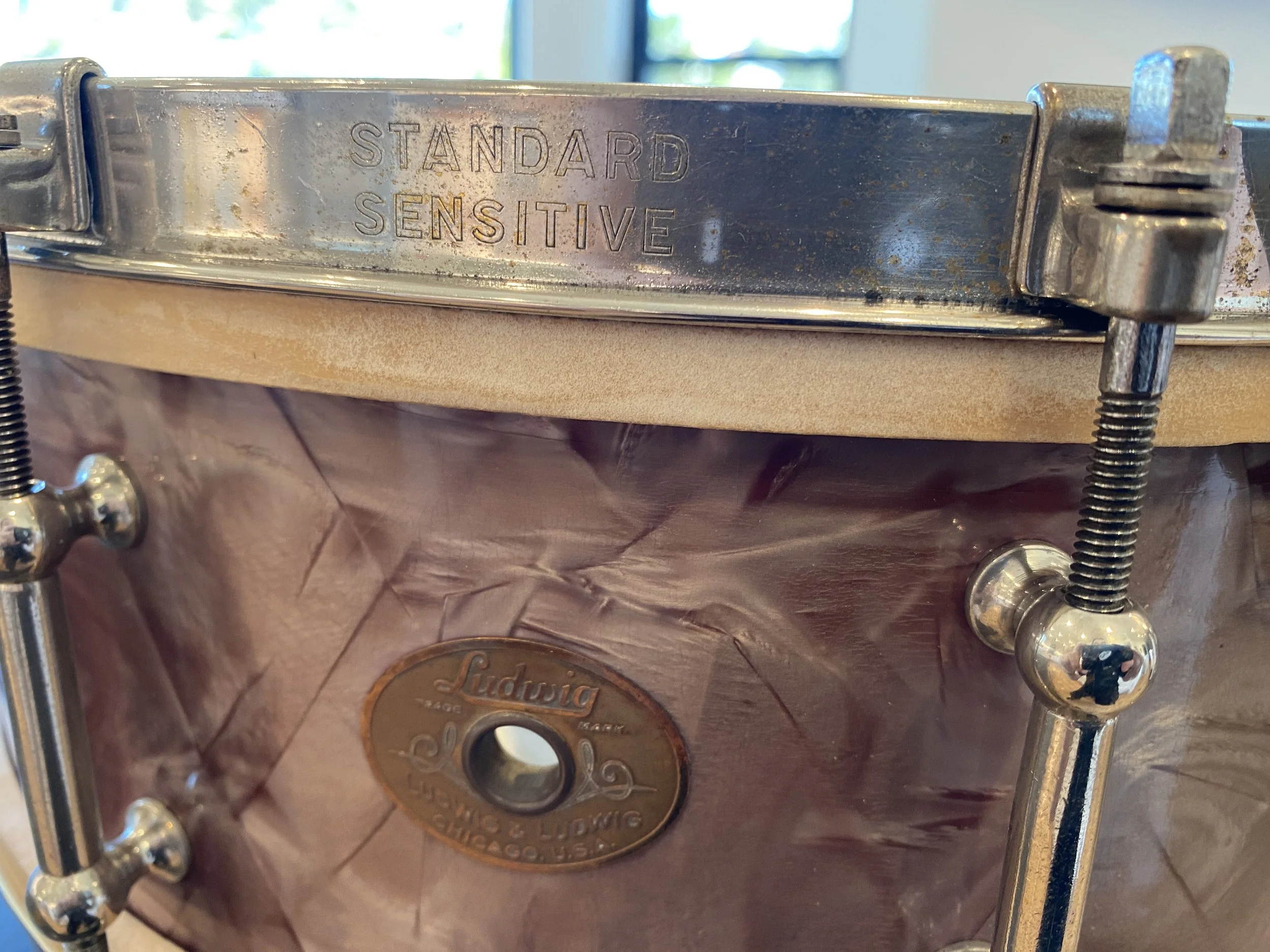
Read moreLudwig released 4 new models in 1929 : Super-Sensitive, New Era-Sensitive, Super-Power, and the Standard Sensitive.
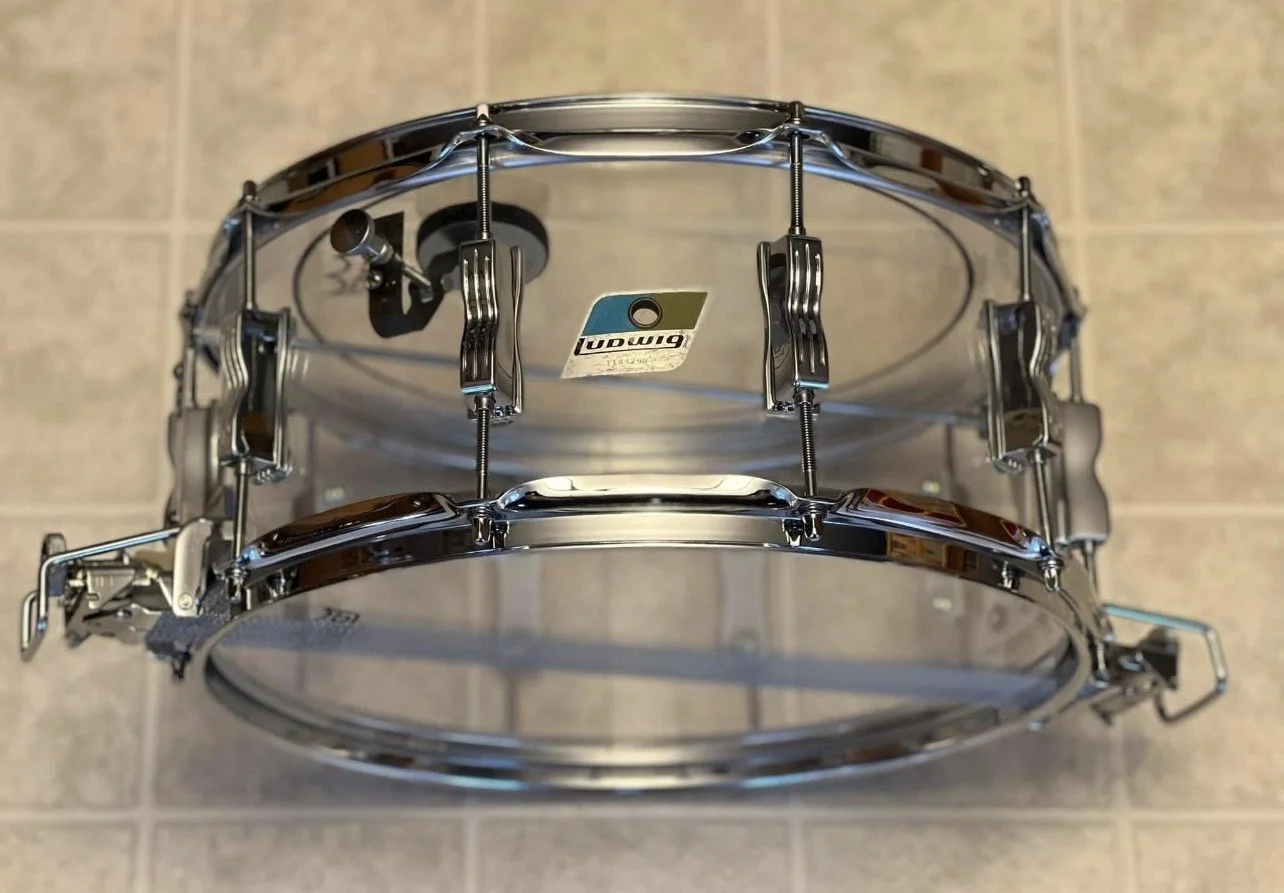
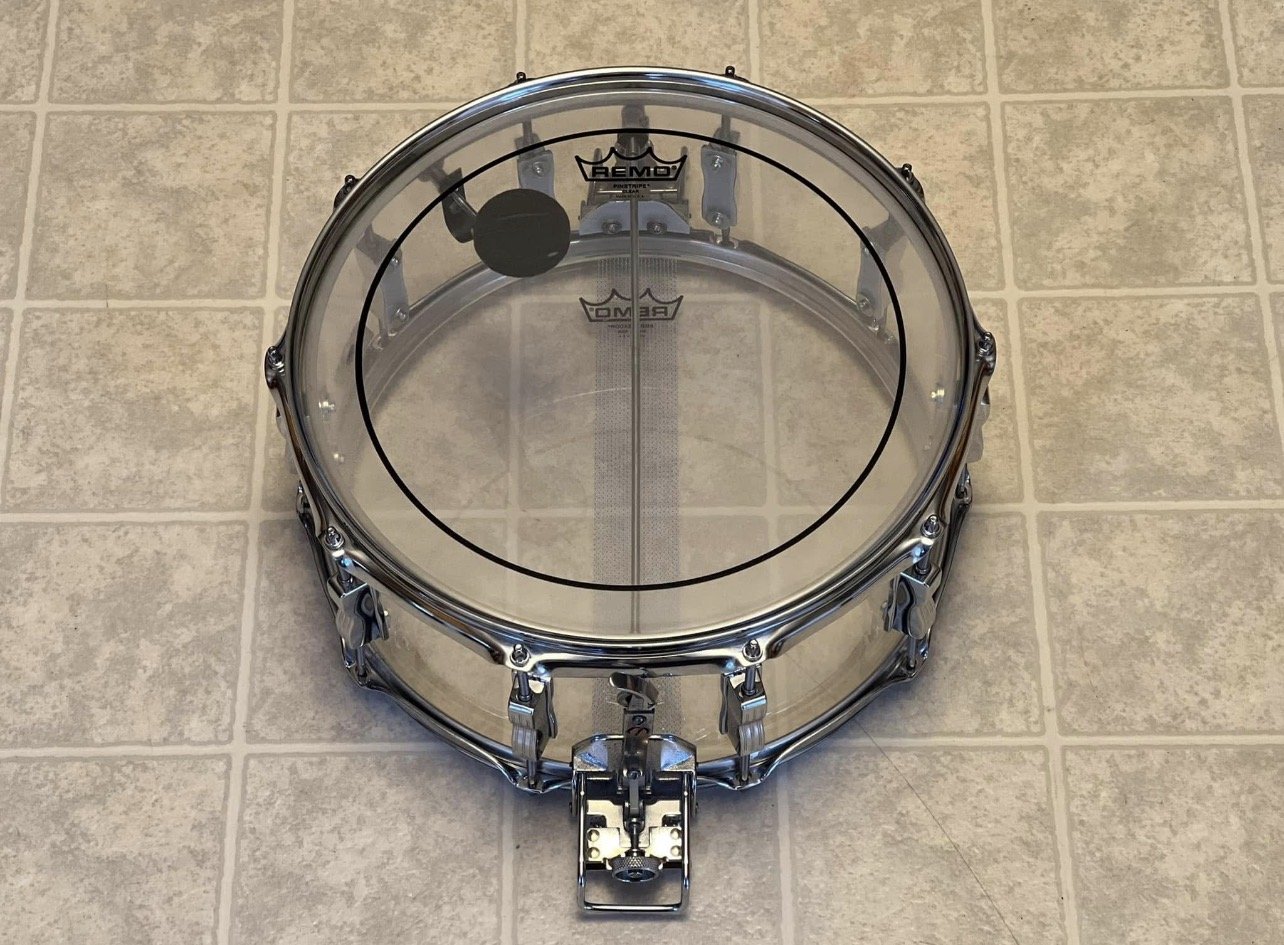
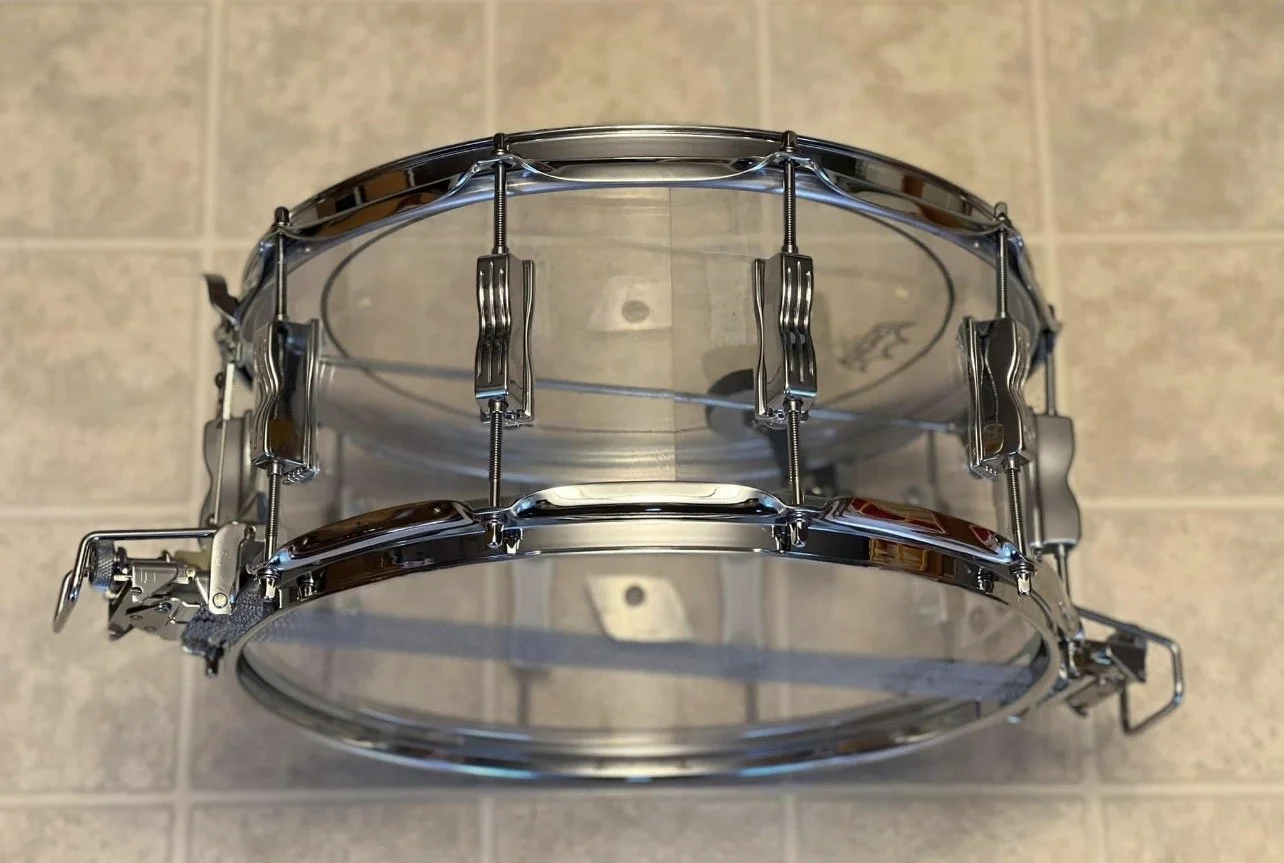
Read more This is my very rare 1970s 6.5” x 14” Color Code No. 2201-Clear Ludwig No. 415KP Vistalite Super Sensitive Blue & Olive Pointy Badge Snare Drum.
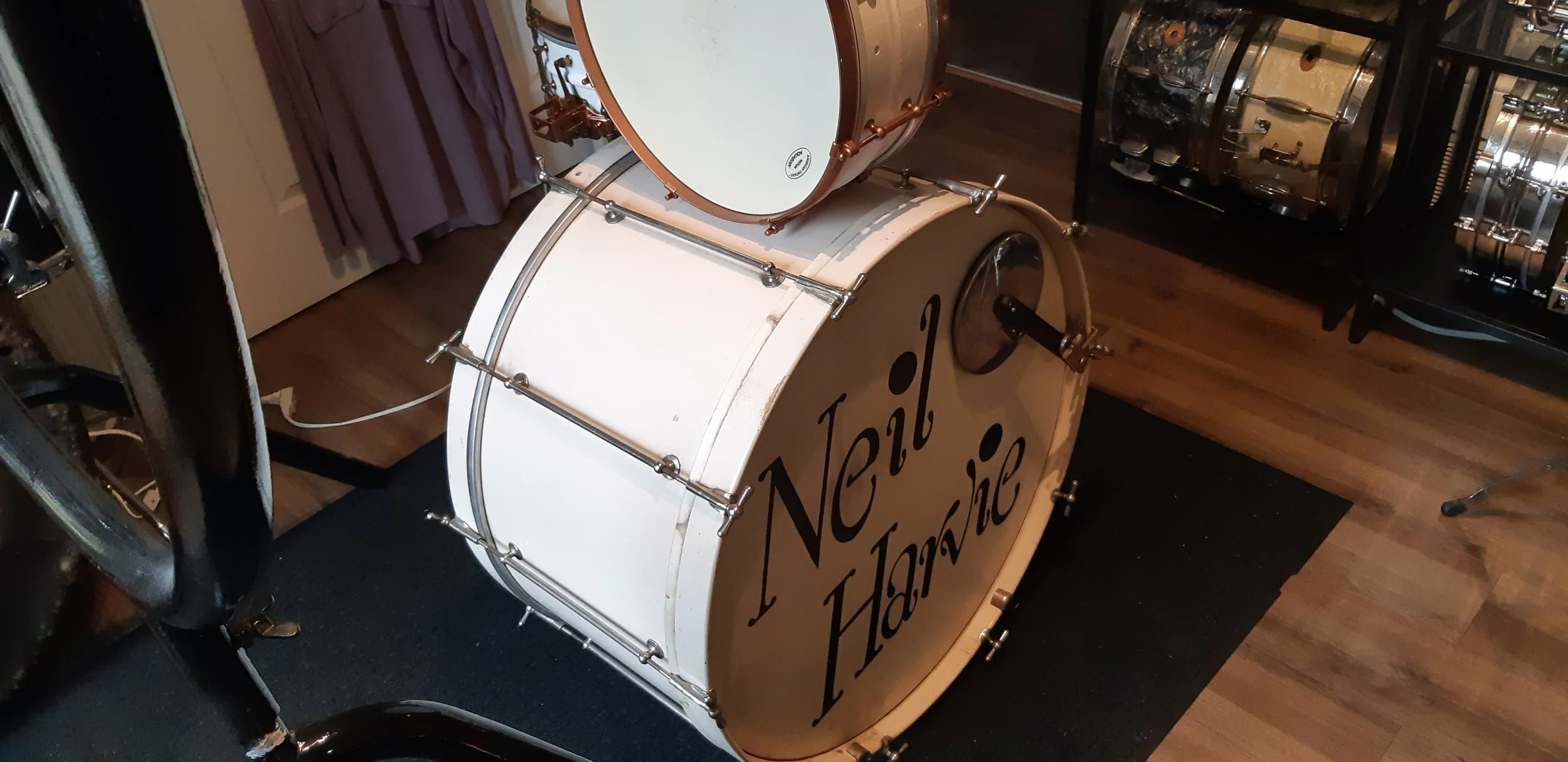
Read moreI have attached a number of pictures of the finished bass drum. I have also included a picture of a Black Diamond Pearl kit I use that includes a bass drum from the 1940’s and toms from the 1970’s. It sounds amazing.
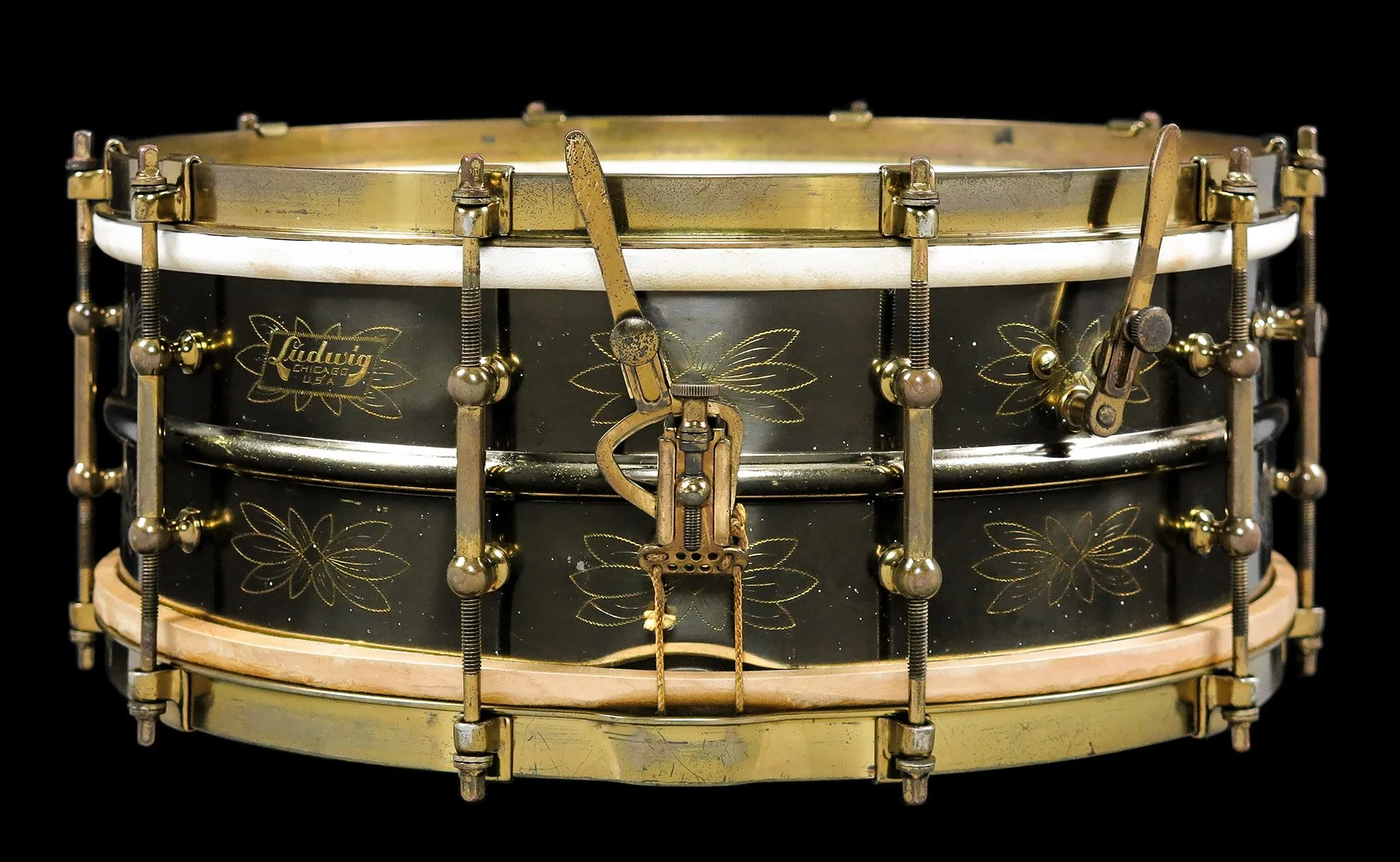
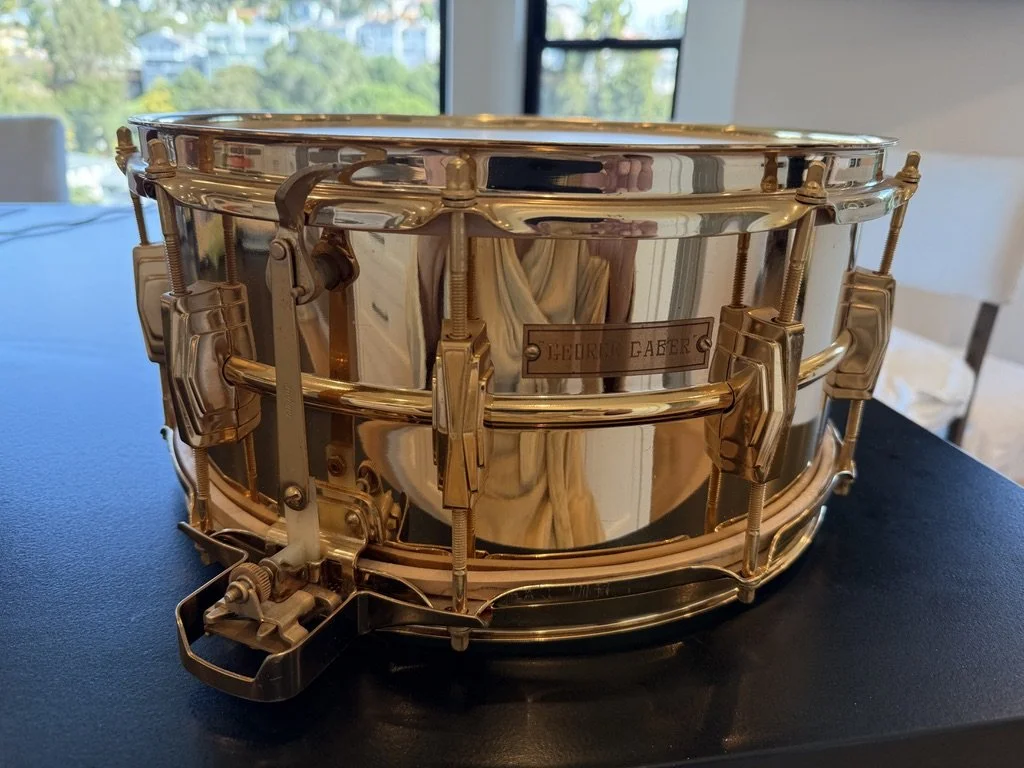
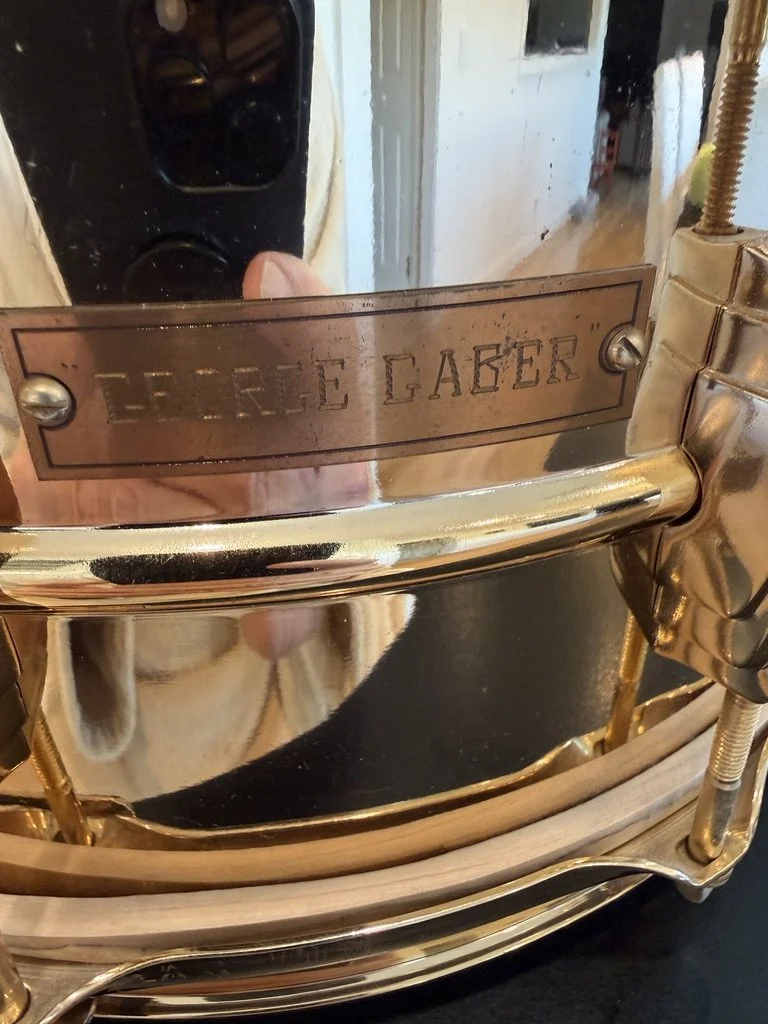
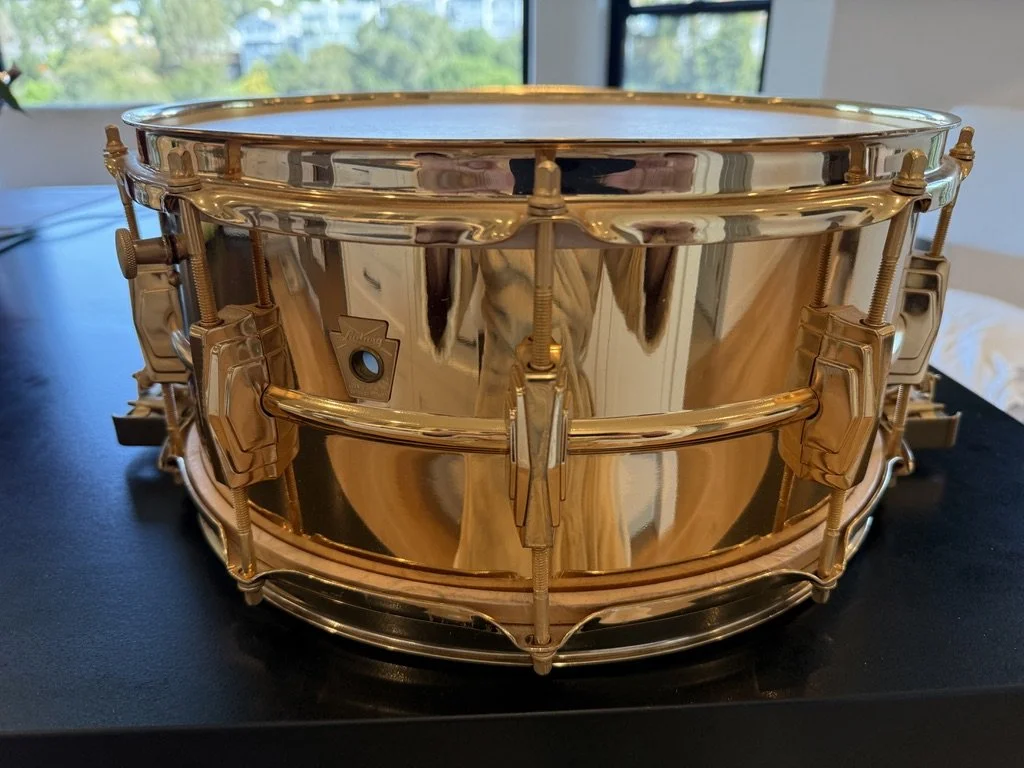
Read moreLudwig produced (presented) only 5 of these snare drums that were gold plated with name plaques.
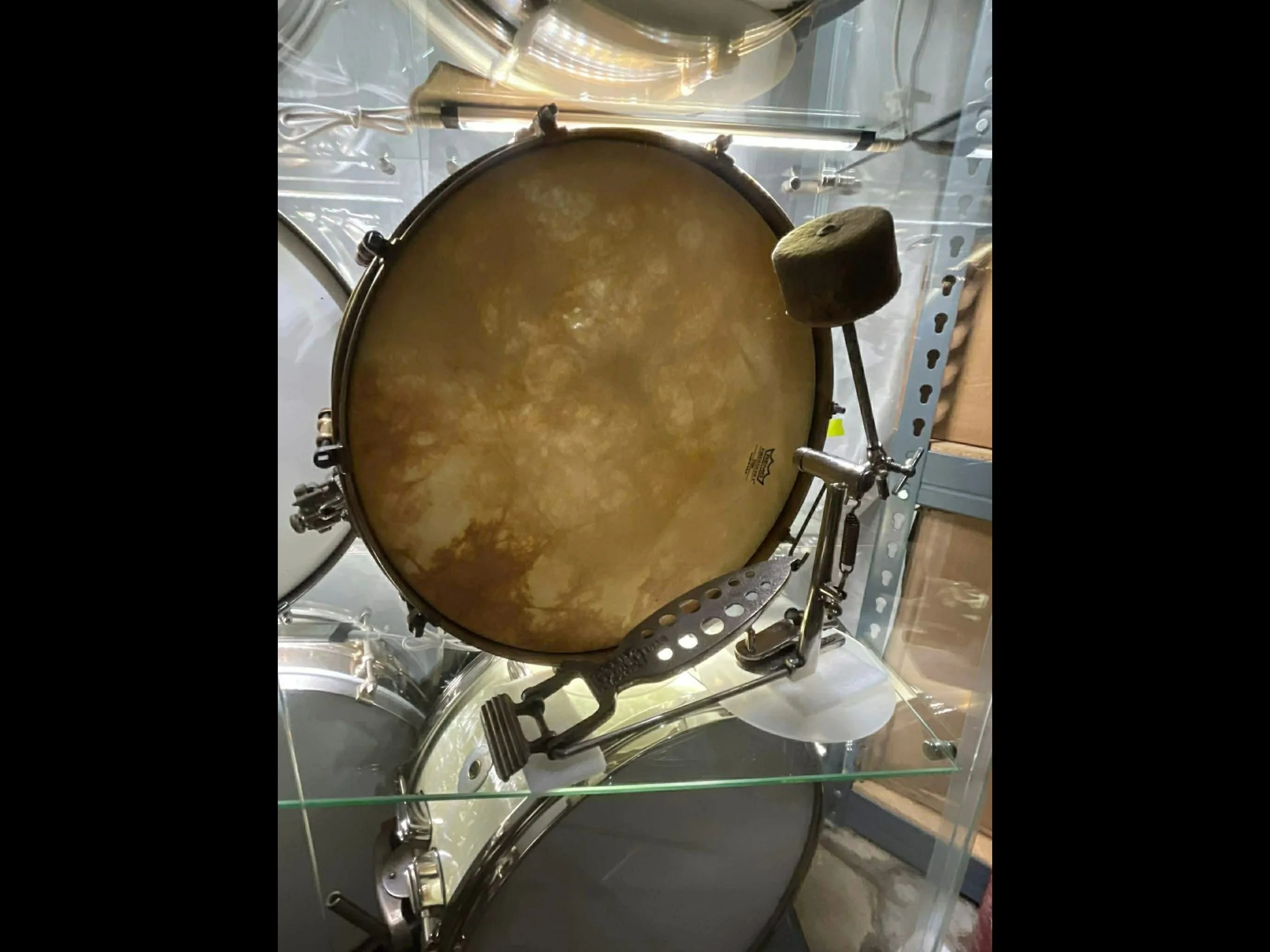
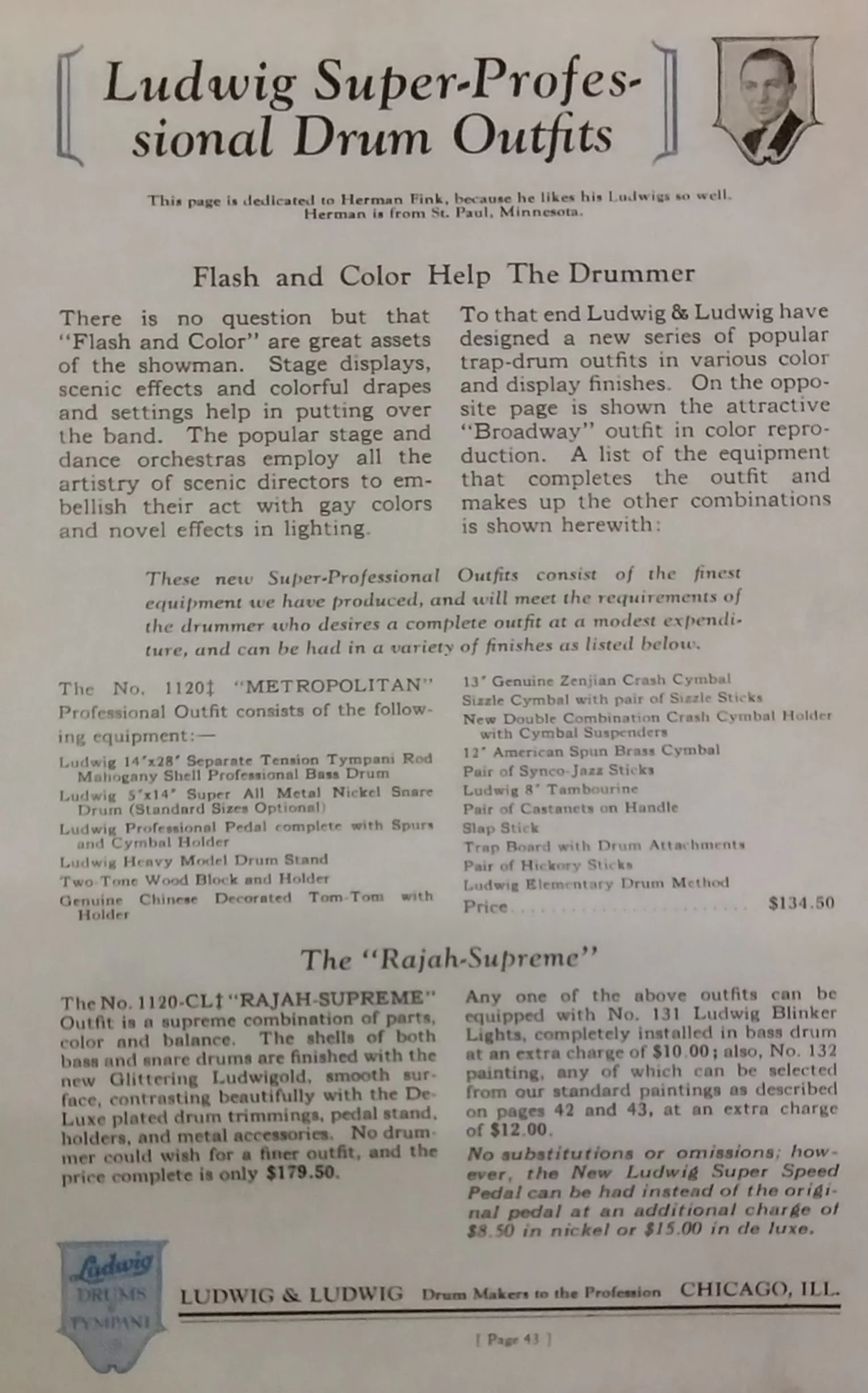
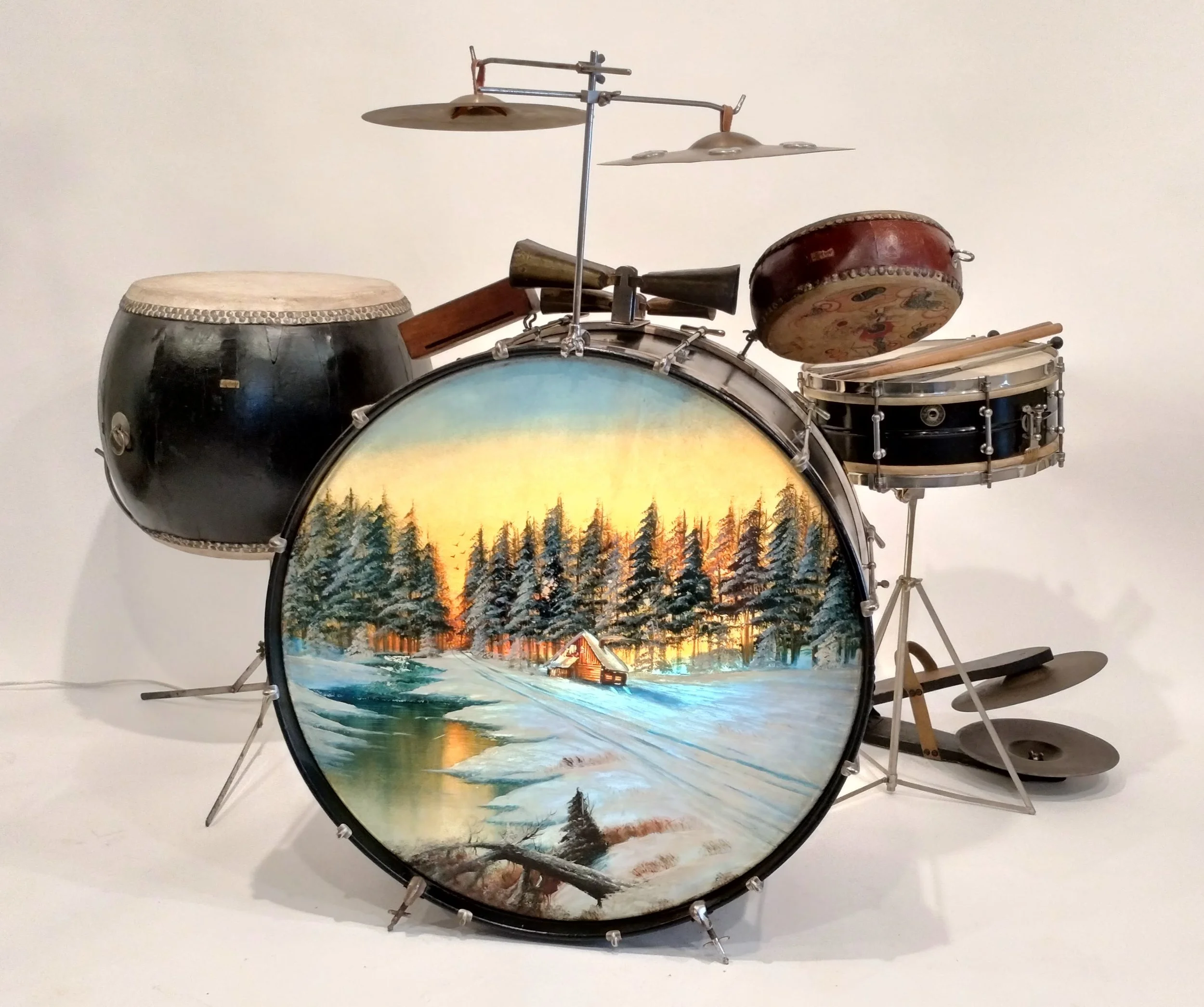
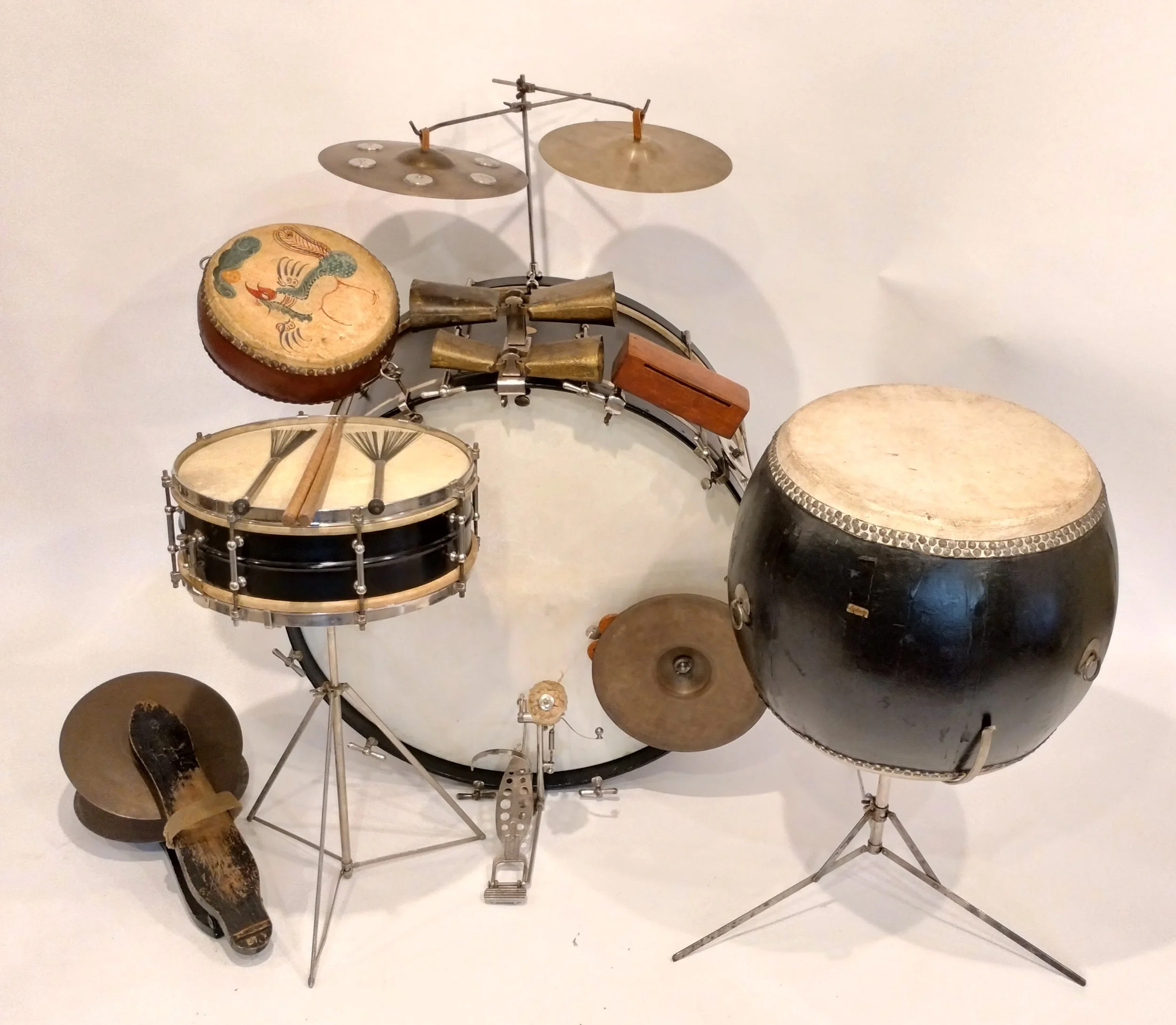
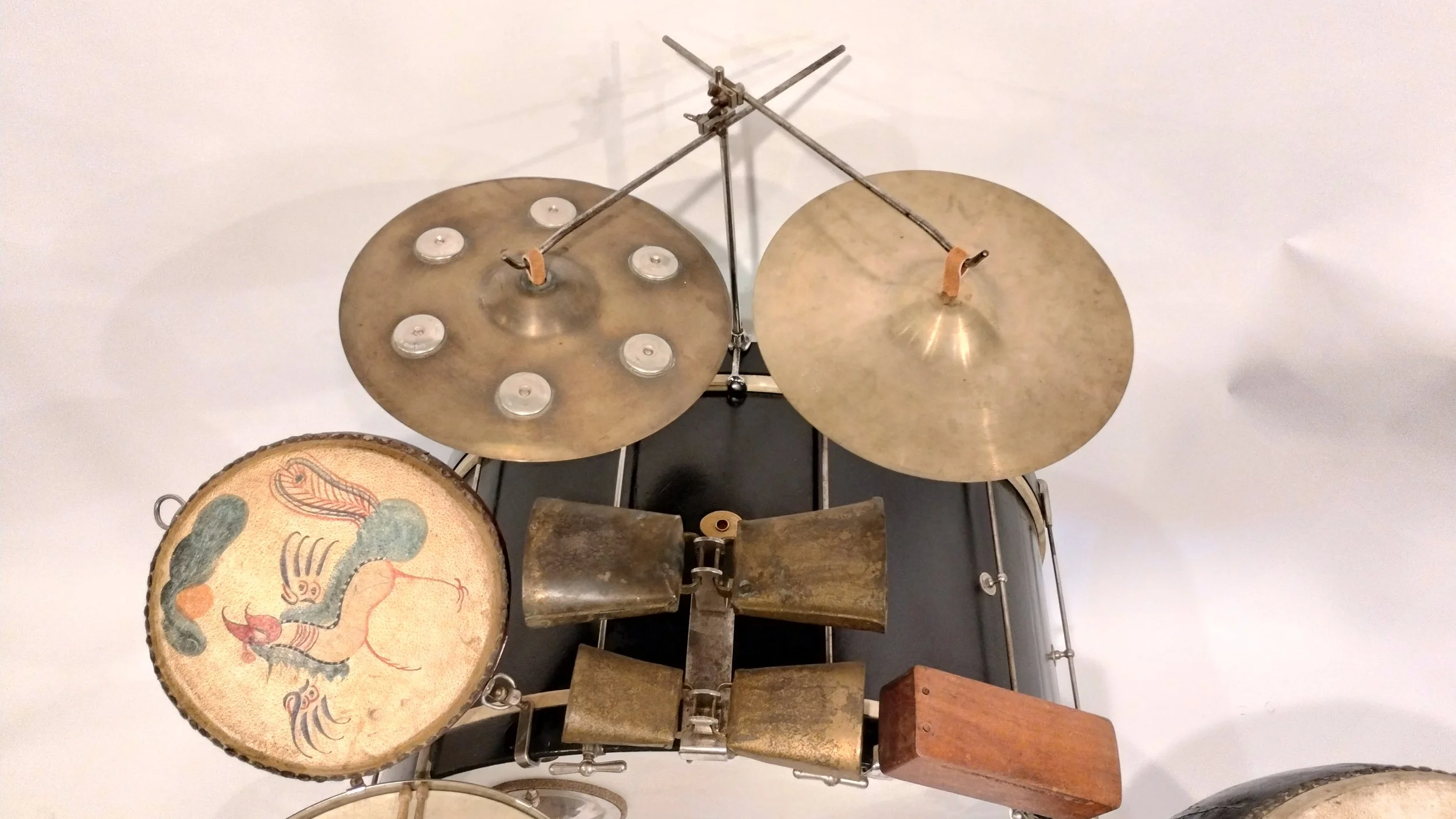
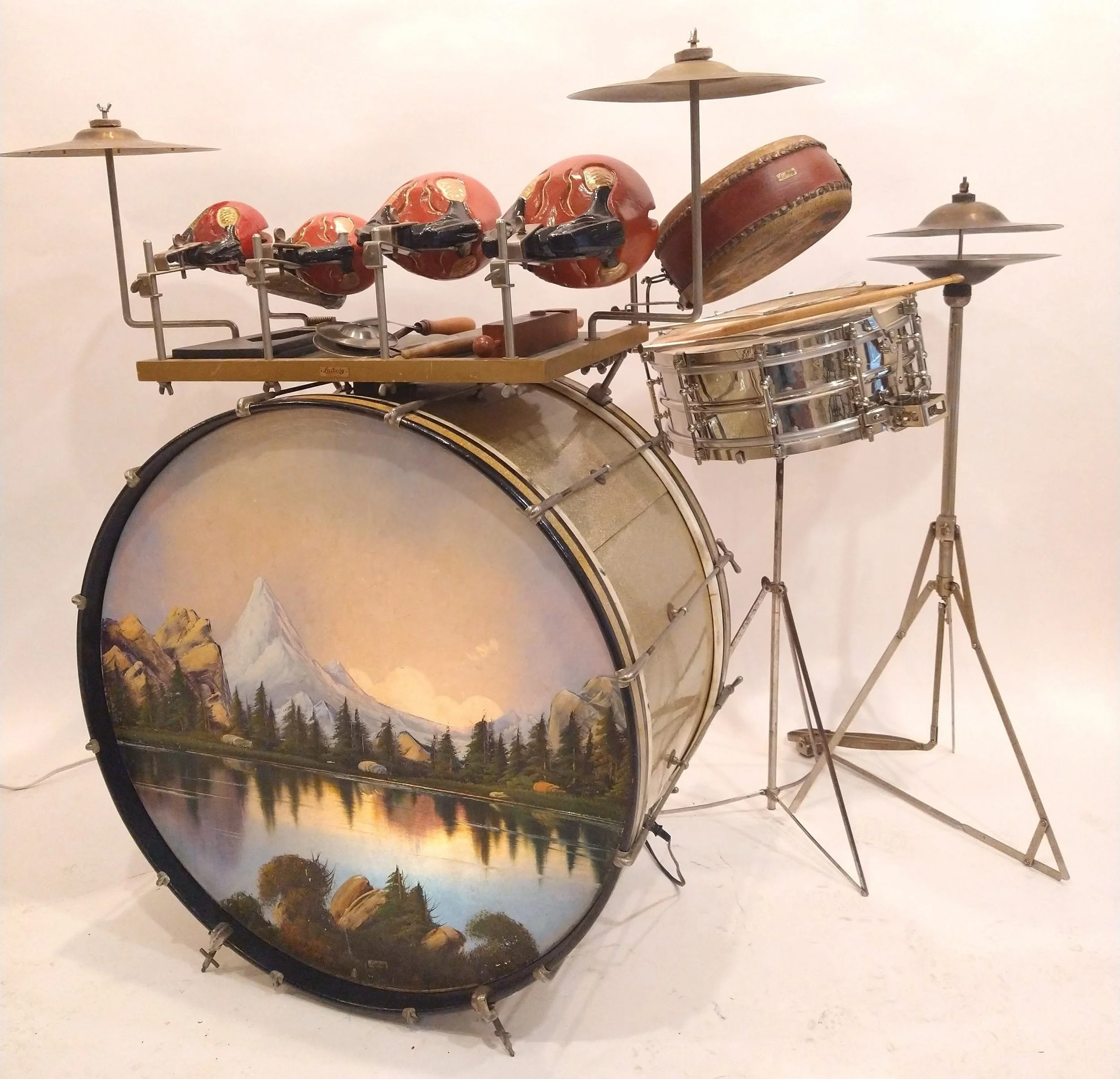
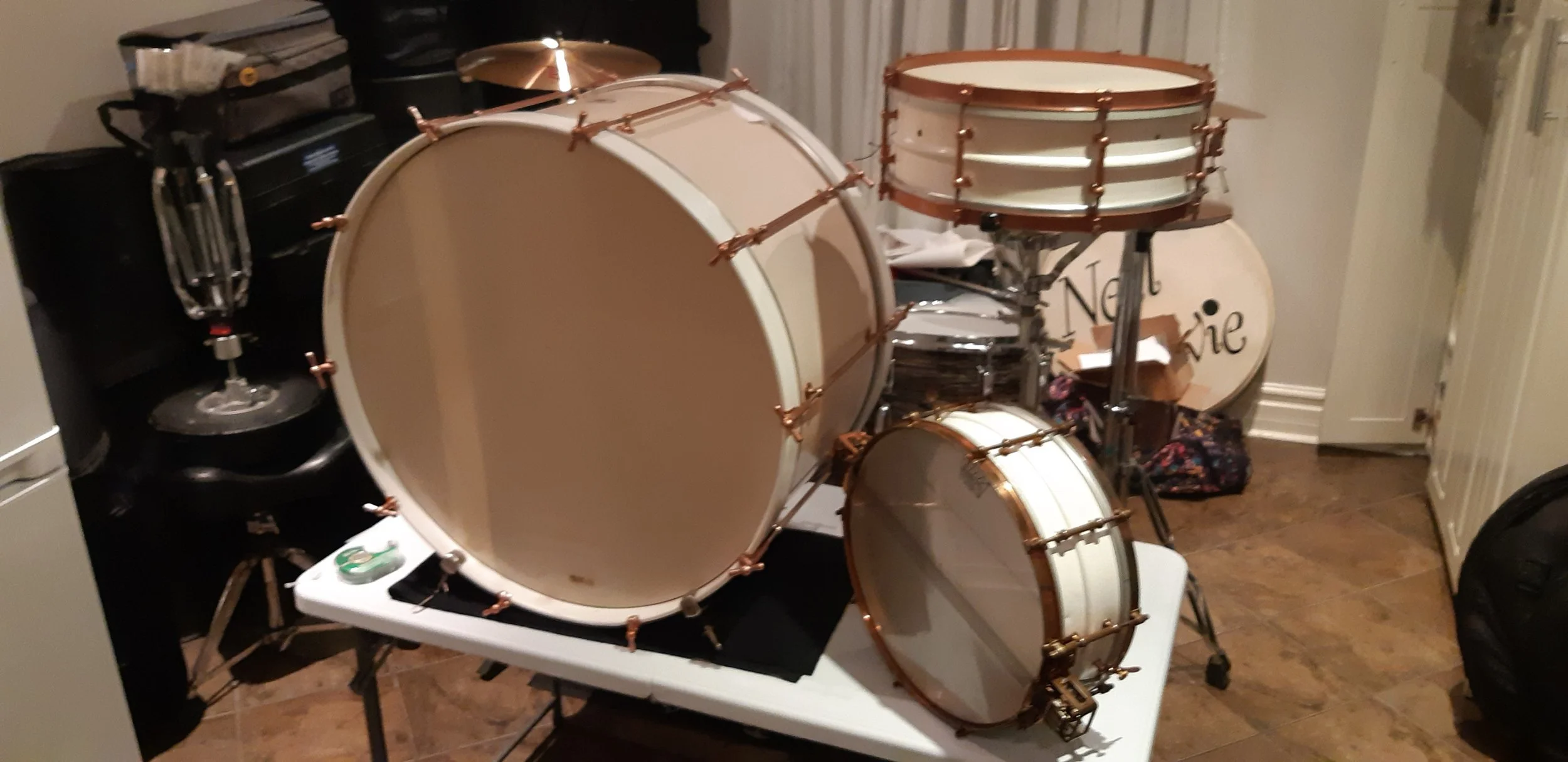
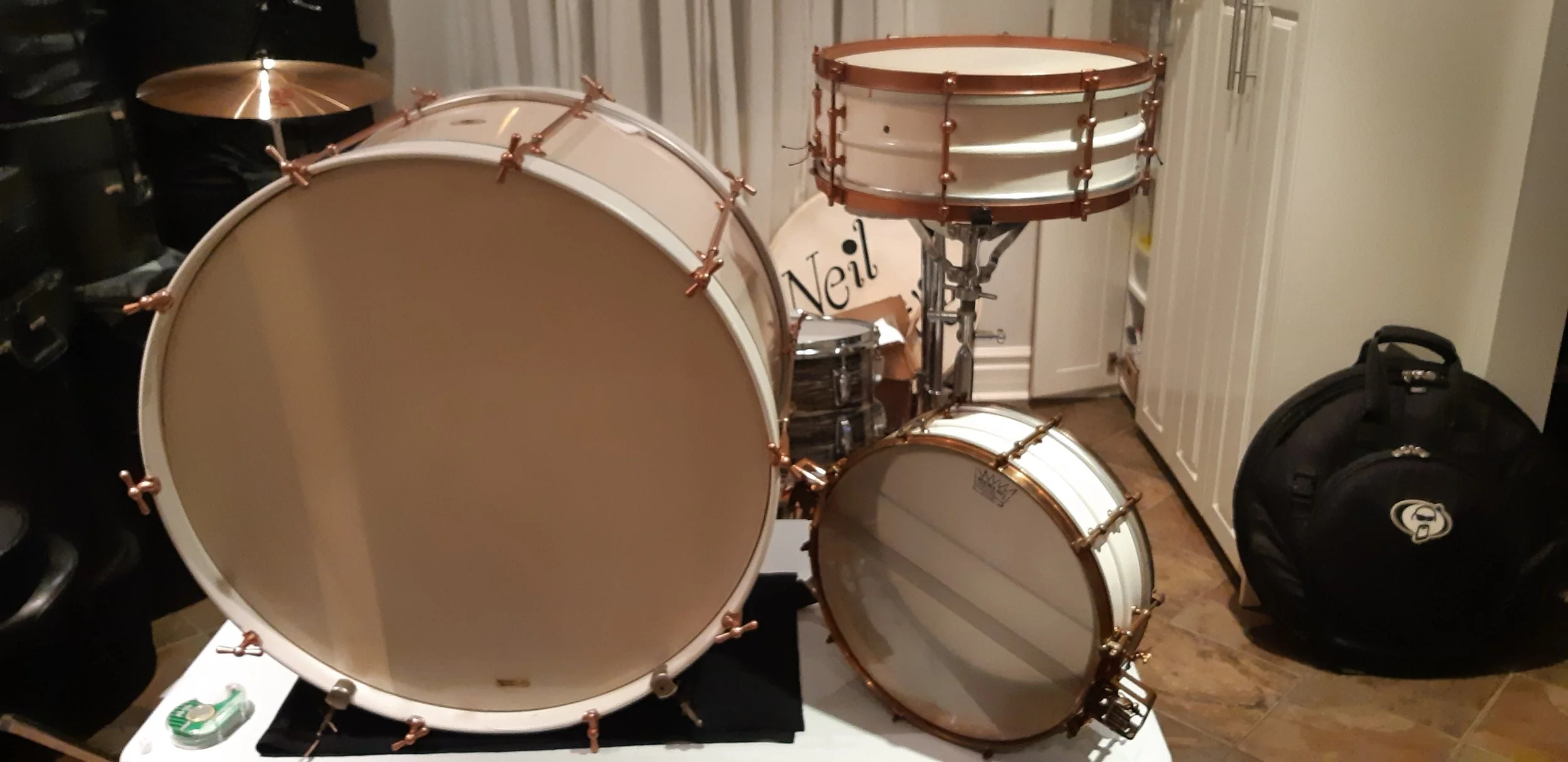
Read moreThis would have been an above standard professional drum kit for a working drummer that was playing in orchestras, vaudeville, and theaters for silent films in the 1920-30s.
Read more“In my humble view, this century young visual and sonic masterpiece features one of the most beautiful finishes to ever adorn a drum”
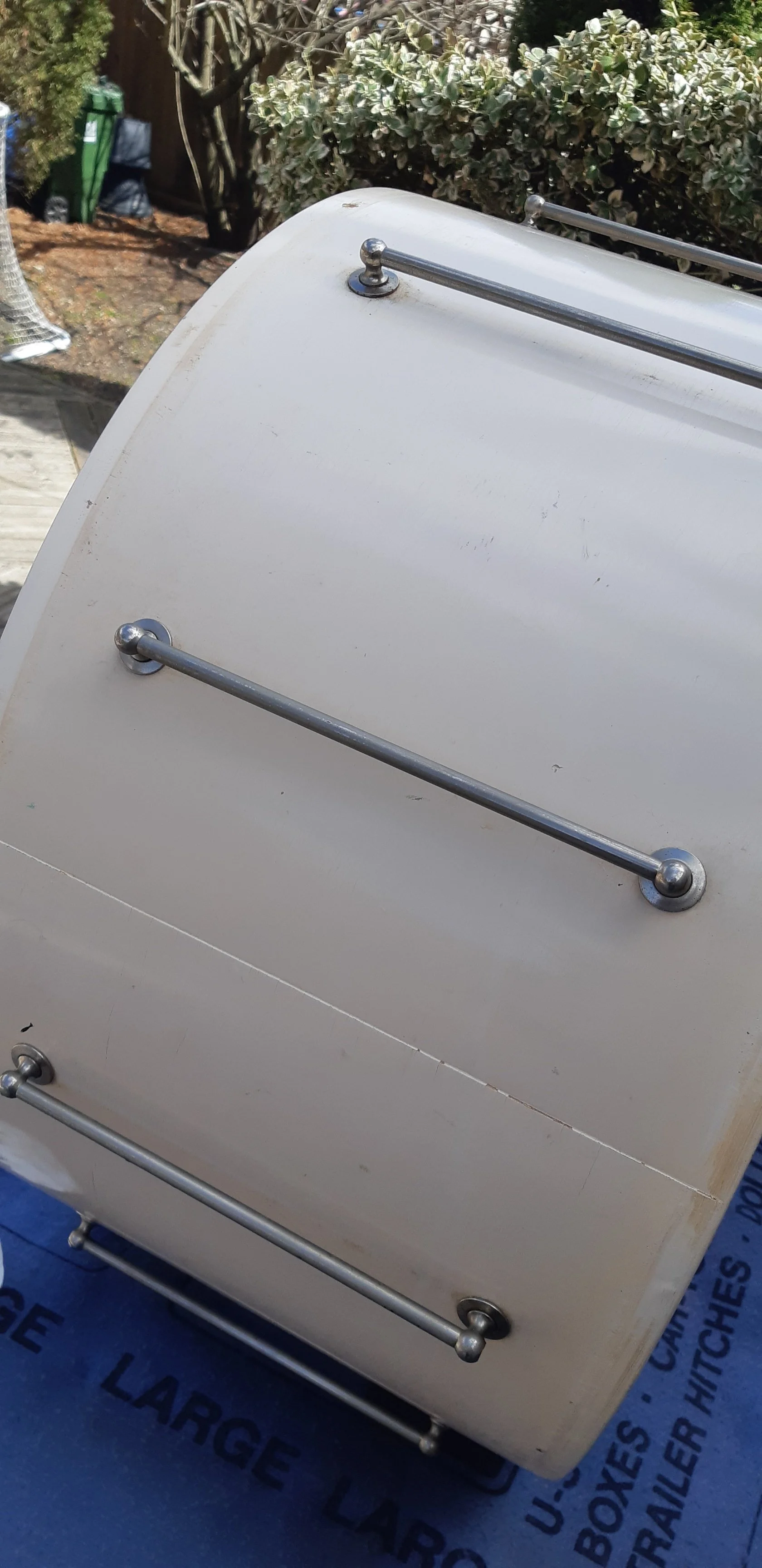
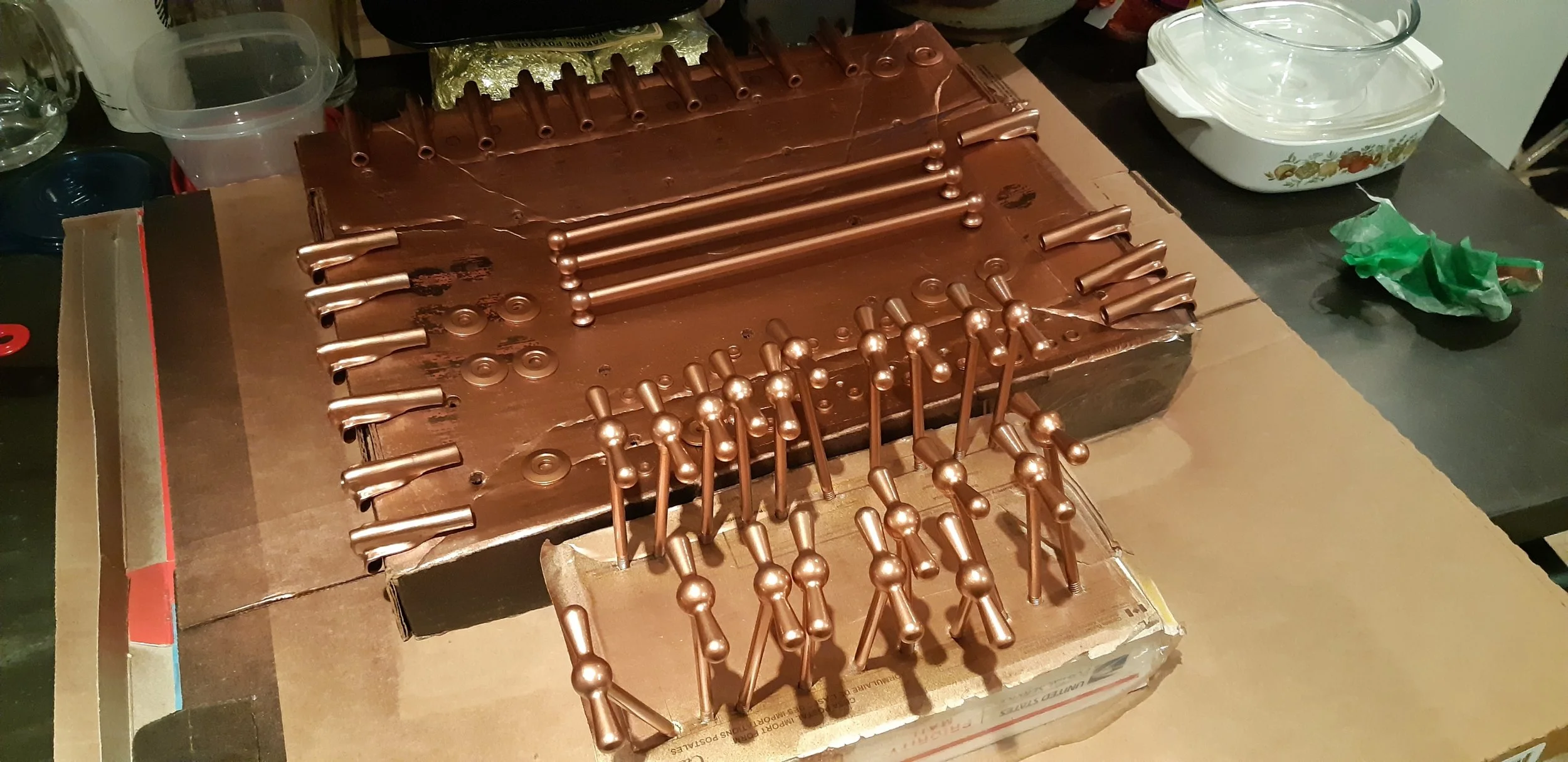
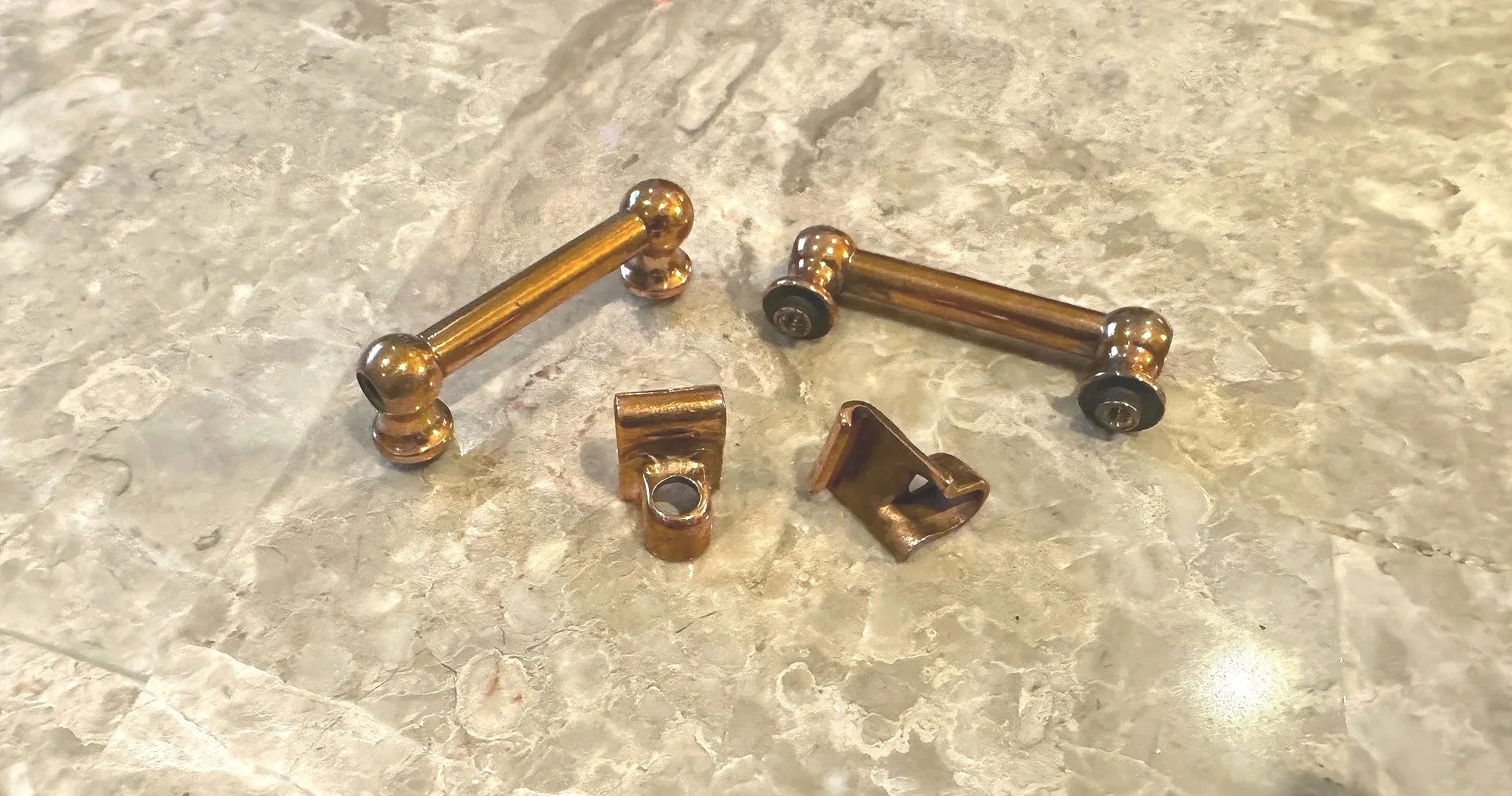
Read morePresenting the most durable and authentic looking replacements for missing or cracked/broken factory original Rim Clips, Tube Lugs and Tension Rods.
Designed and precision manufactured to meet the specification tolerance and appearance requirements for factory original fittings on 1920’s and 30’s Ludwig & Ludwig snare drums in both Deluxe (new or aged) and Bright Nickel finishes.
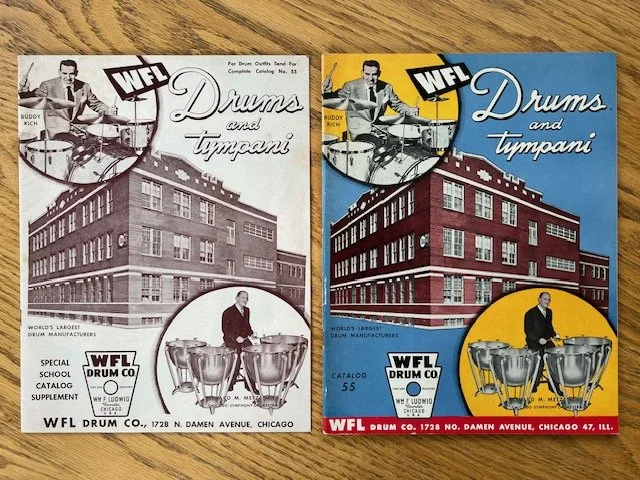
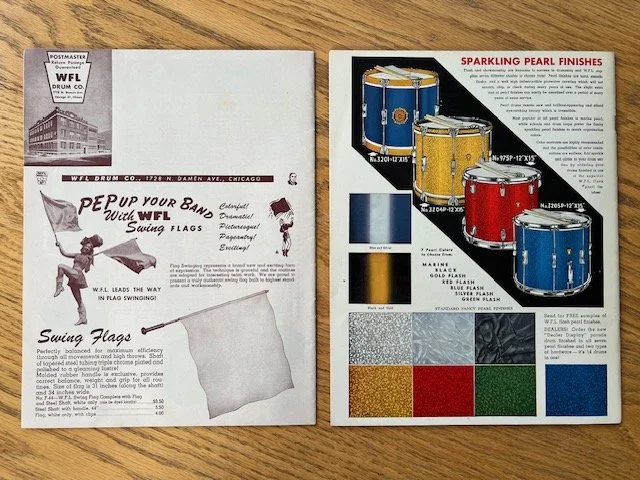
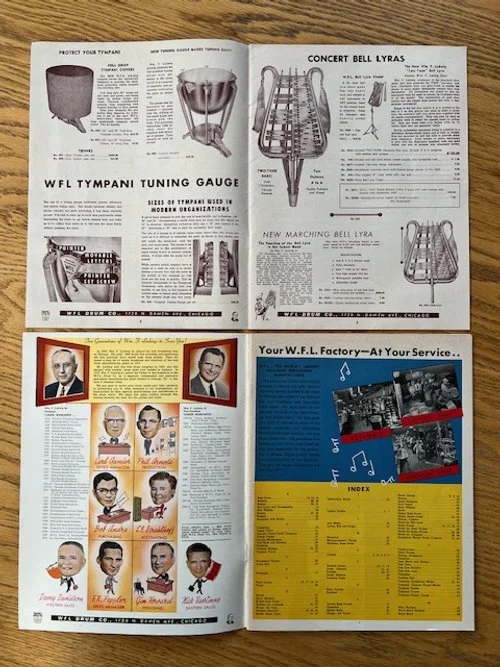
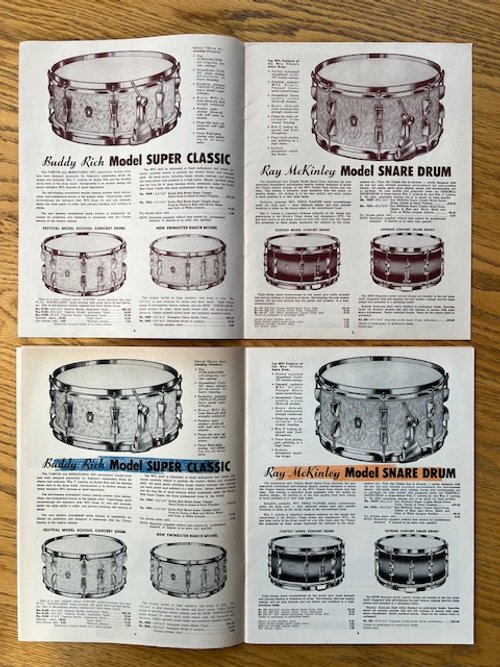
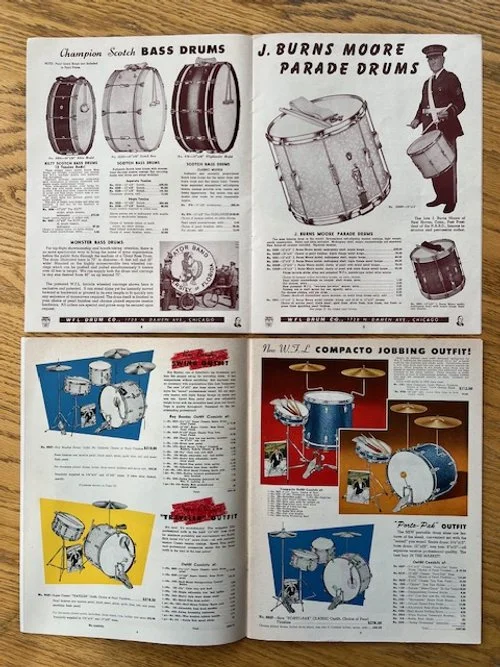
Read more955 WFL Black & White and Colorized versions of the 1955 catalog with a few big differences.
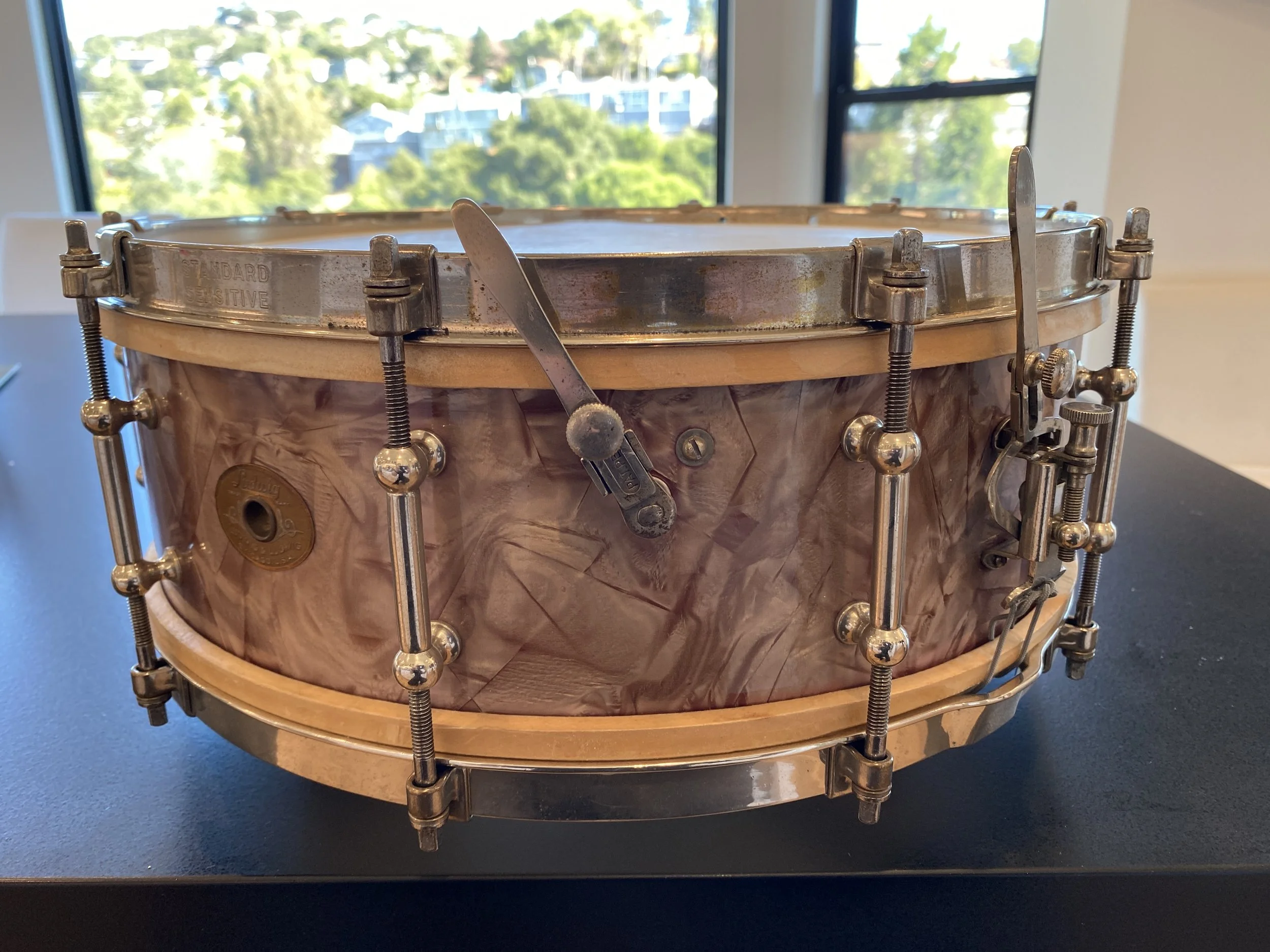
Read moreThis is a very rare snare drum. Of the 3 dance/band Sensitive models introduced in 1929 I feel that the Standard-Sensitive is the rarest although I would not argue if the New-Era Sensitive was also thought of as the rarest.
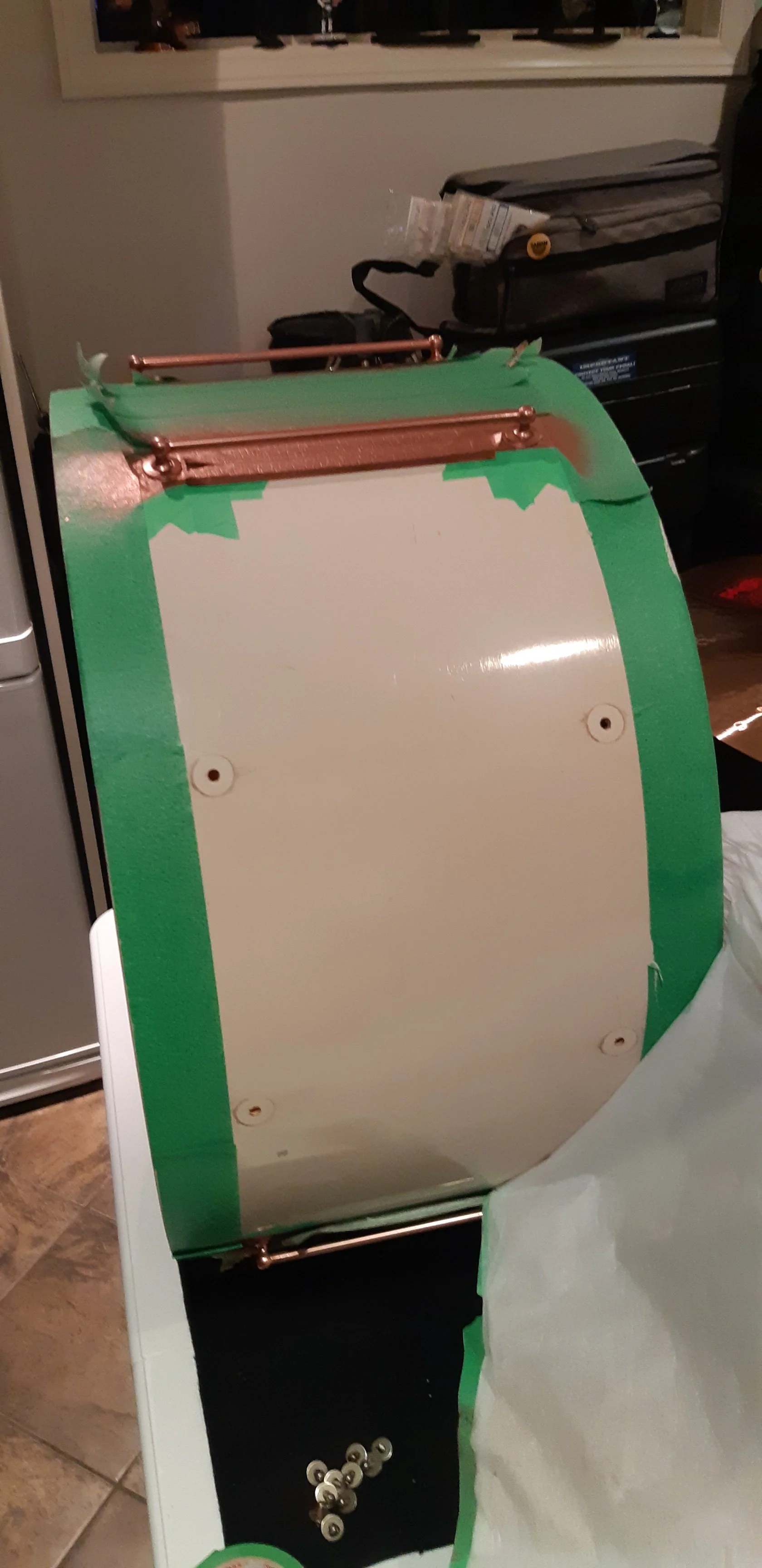
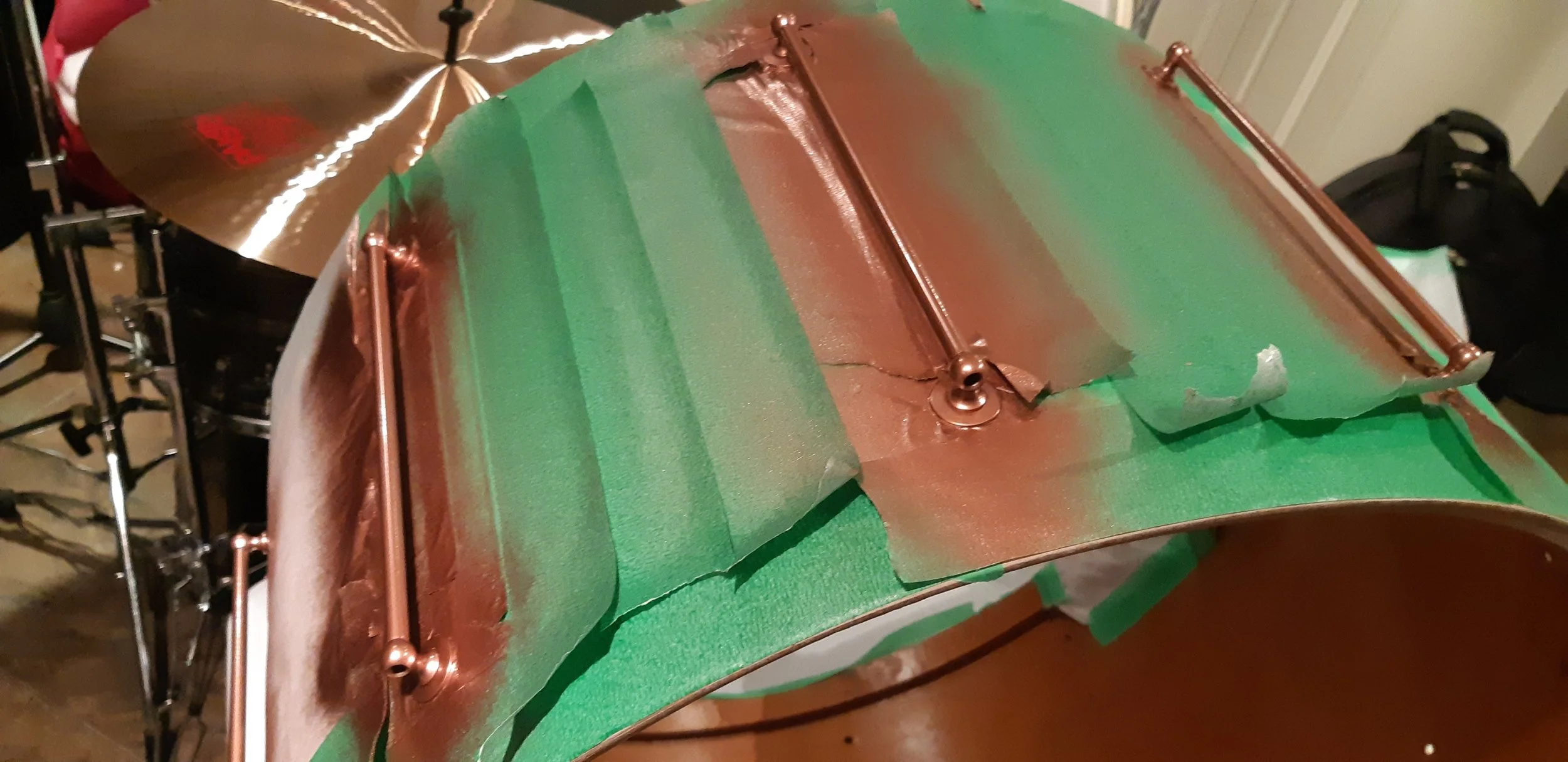
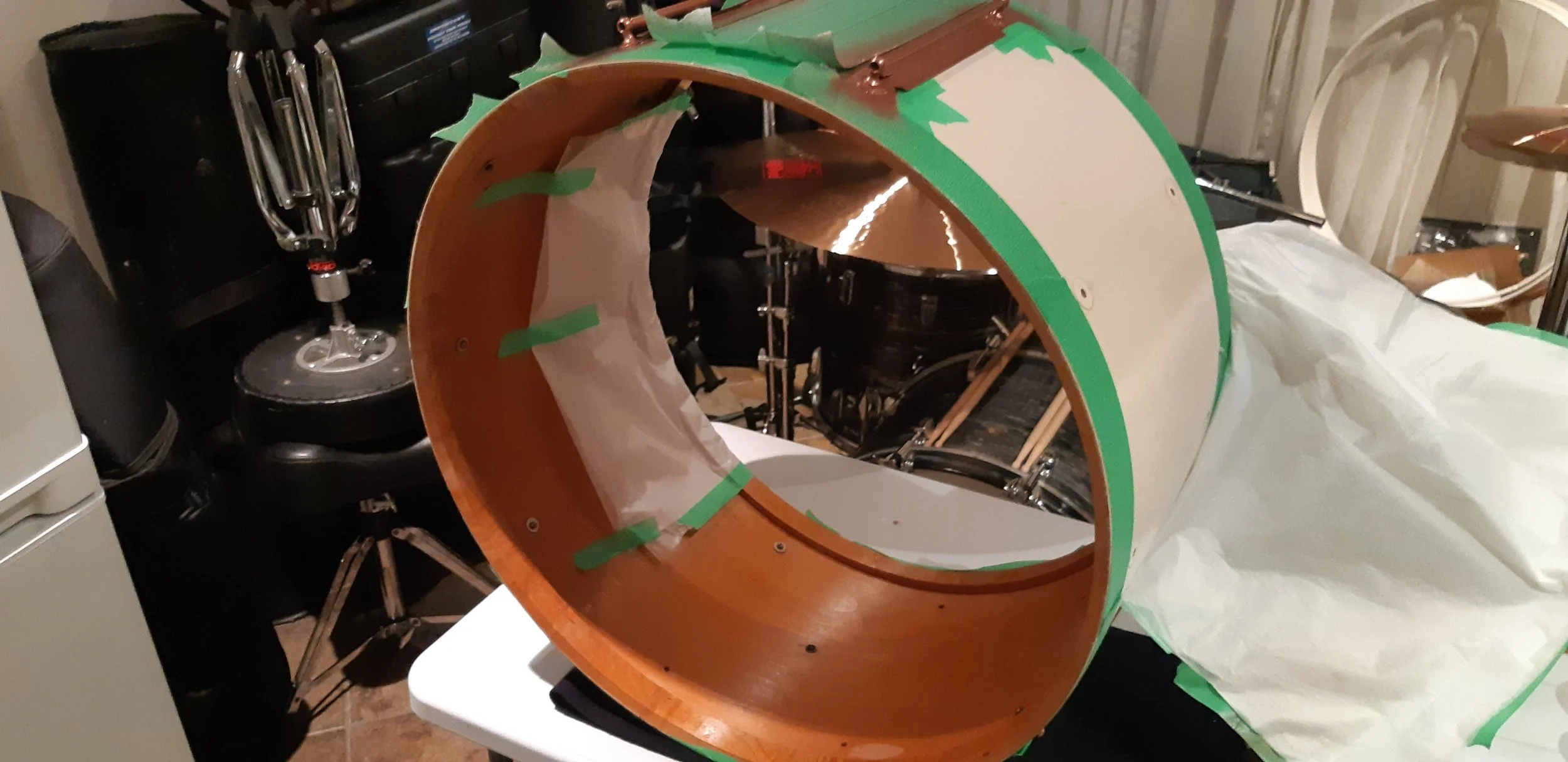
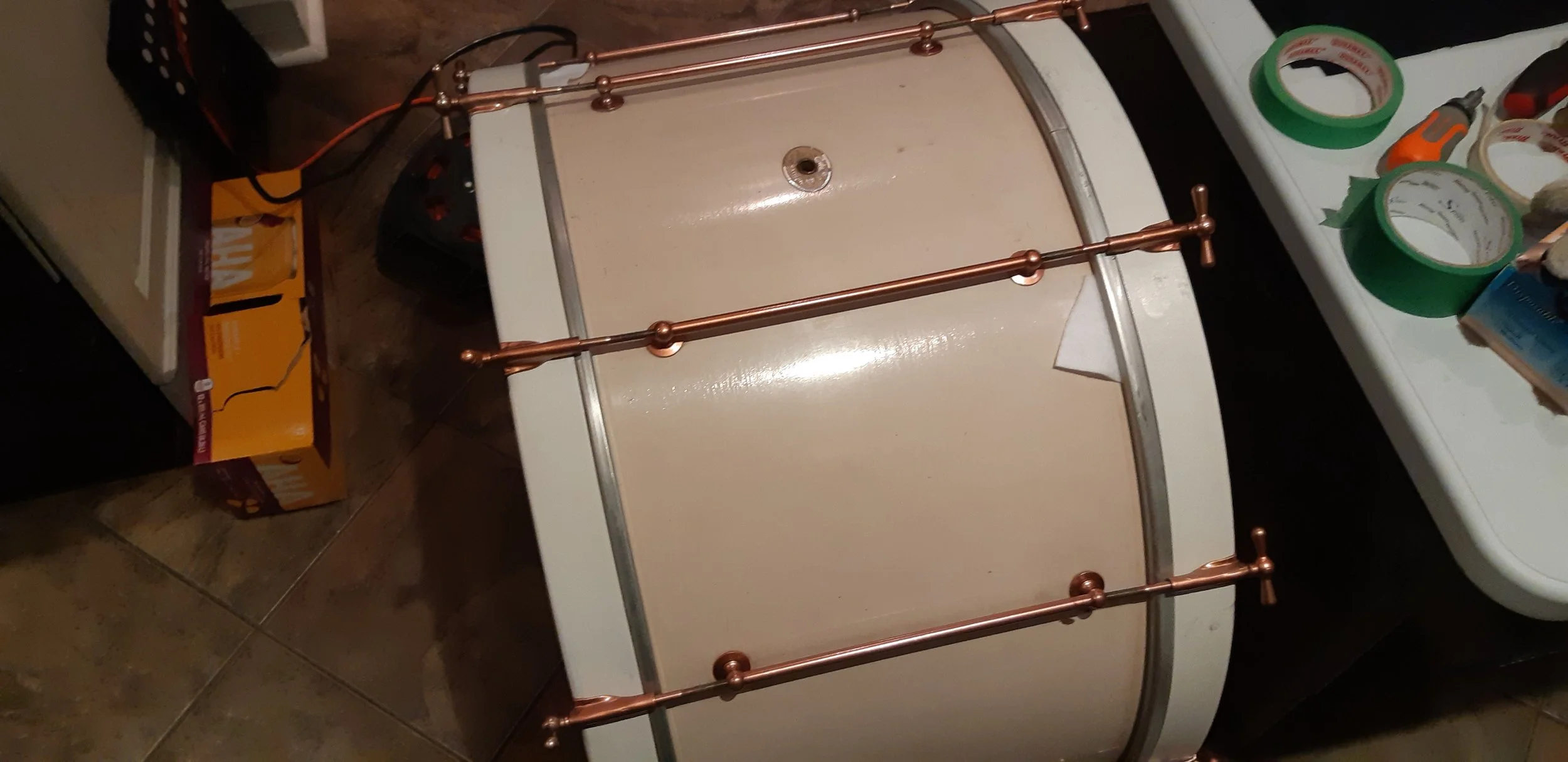
Read moreI first applied a high solids filling primer to completely fill in the wood grain, followed by a commercial textured coating to effect the irregular surface feature of this finish. The intermediate and final colour coats were achieved with an antique brass lacquer finish, onto which I sprinkled brass metal flakes. I then repeated this application sequence a few more times to add depth of finish, before applying a clear lacquer to produce the final ‘satin smooth’ appearance and feel. Additionally, each piece of the copper re-plated hardware was then treated with my ‘aged patina’ process to simulate almost 100-year-old Deluxe finish.
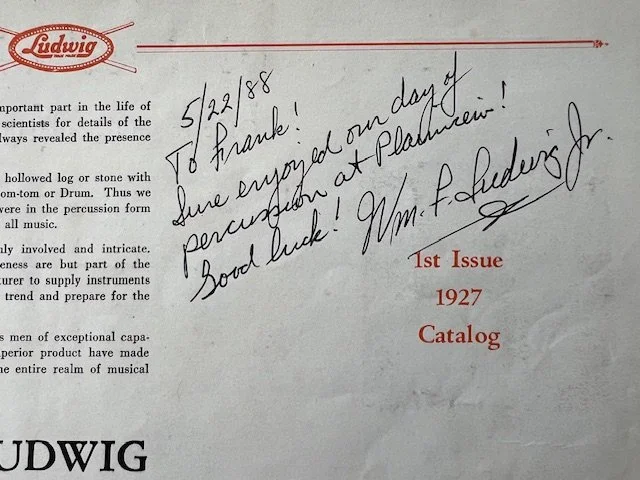
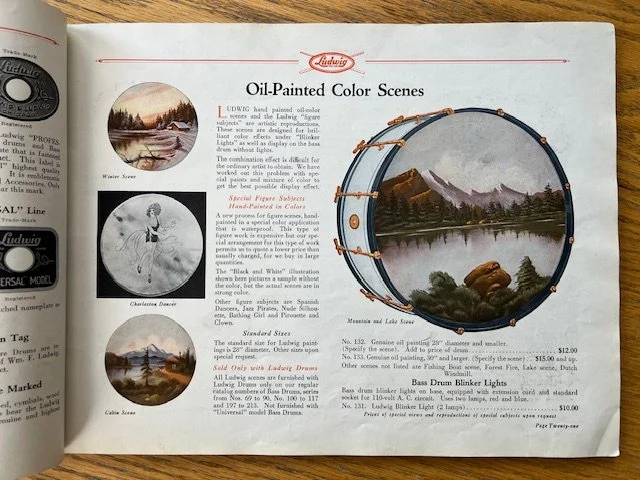
Read more It has some beautiful graphics inside, including color pictures of the Black Beauty “Ludwig Deluxe Model” and the “New Ludwigold Irridescent Display Finish”
Read moreThis one is a bit of a transitional oddity, nothing earthshaking but a little quirky.
Read moreOnly six tubular lugs were installed, probably to conserve metal because eight or ten lugs were typical for 15” snare drums before the war.
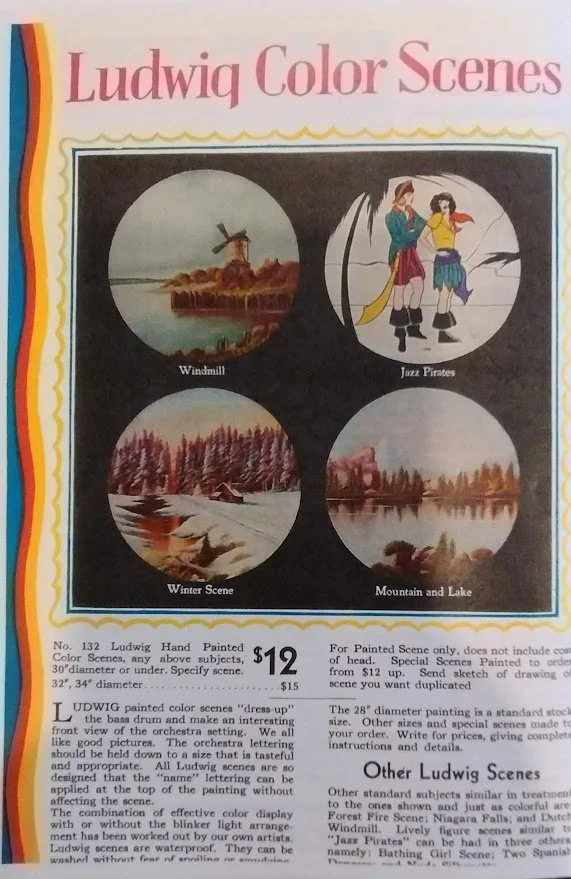
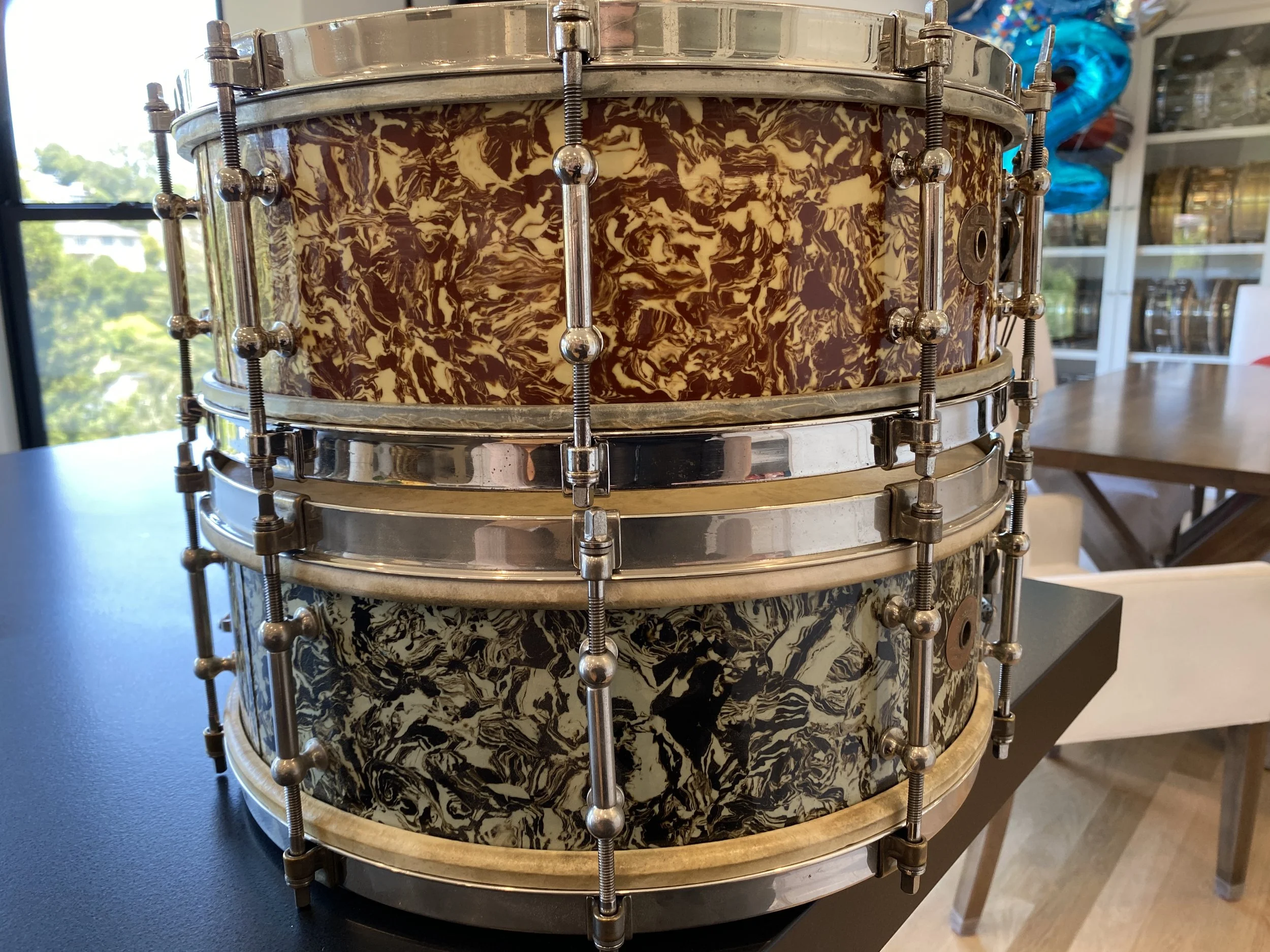
Read moreWe have to go to the Ludwig Drummer Magazines of that time or to dealer flyers to learn of the special “Hotsy-Totsy" and "Mottled Sepia" finishes offered in 1928.
Read more